We use cookies to make your experience better.
To comply with the new e-Privacy directive, you agree to the privacy policy and our use of cookies

Best Card Payment Machines with No Monthly Fee for UK Businesses
Best Card Payment Machines with No Monthly Fee for UK Businesses
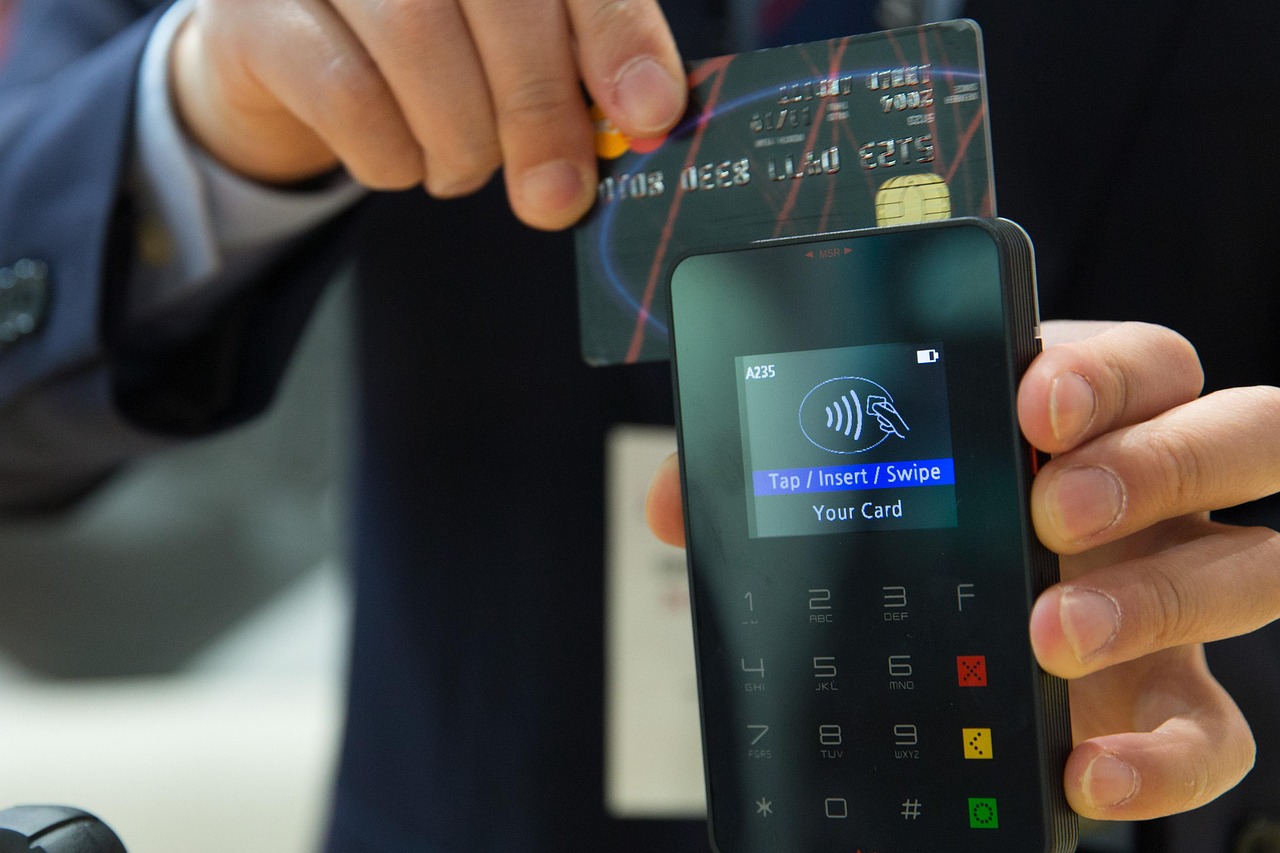
For many UK businesses, card acceptance is non-negotiable — but signing up to a monthly contract with a fixed standing charge can feel like an unnecessary commitment, particularly for seasonal traders, start-ups or lower-volume retailers. The good news is that there are legitimate, well-supported card payment solutions available in the UK that carry no recurring monthly fee whatsoever, charging instead on a pure pay-per-transaction basis. Understanding how these models work, what they genuinely cost across a typical trading year, and how they integrate with a broader EPOS setup is the difference between a smart financial decision and a costly one.
What "No Monthly Fee" Actually Means for Card Machines
A card machine described as having no monthly fee means there is no fixed standing charge applied to your account simply for holding or using the terminal — regardless of whether you process one transaction or one thousand. You pay only when you take a payment, usually as a percentage of each transaction's value.
This is distinct from:
- Rental agreements, where you pay a monthly lease for the hardware itself
- Gateway fees, charged by some providers for connecting your terminal to the payment networks
- PCI compliance fees, levied by certain acquirers for maintaining card security certification
- Minimum monthly service charges (MMSC), where a provider tops up your bill if your transaction fees don't reach a set floor
Reading the full fee schedule — not just the headline — is therefore essential. A terminal advertised as "no monthly fee" may still carry some of the above. Always request a complete breakdown before committing.
How No-Standing-Charge Card Machines Work: Transaction Rates Explained
Rather than recovering costs through a fixed monthly retainer, providers operating on a pay-as-you-go model embed their margin into per-transaction rates. These are typically expressed as a percentage of the transaction value, sometimes with a small pence-per-transaction floor for very low-value sales.
The main rate types you'll encounter
- Blended (flat) rates: A single percentage applies across all card types — consumer debit, consumer credit, corporate cards and international cards alike. Simple to understand; typically the model used by entry-level card readers.
- Interchange-plus (cost-plus) pricing: You pay the actual interchange cost set by the card schemes (Visa, Mastercard) plus a fixed margin for the provider. More complex to read, but often cheaper for businesses with a good card mix and reasonable volume.
- Tiered pricing: Transactions fall into "qualified", "mid-qualified" or "non-qualified" buckets at different rates. Least transparent — use with caution.
For most small UK businesses on a pay-as-you-go card machine, blended rates are the norm. Indicative market rates for these arrangements currently sit typically between 1.4% and 2.5% per transaction, depending on the provider and your average transaction value. For context, businesses processing a higher monthly card volume will usually find that a monthly plan with lower per-transaction rates becomes more economical. See our detailed comparison below.
Types of No-Monthly-Fee Card Payment Solutions Available in the UK
The UK market offers several hardware and software categories worth considering, each suited to different trading contexts.
Compact card readers (mobile/portable)
Small Bluetooth or Wi-Fi connected readers that pair with a smartphone or tablet app. Ideal for market traders, mobile services, pop-up retailers and sole traders. Hardware cost is low — typically from around £20 to £80 as a one-off purchase. Transaction fees apply on every payment.
Standalone portable terminals
Self-contained terminals with a built-in SIM or Wi-Fi, accepting chip-and-PIN, contactless and mobile payments. More robust than compact readers, suited to counter or tableside use. Hardware is available outright or through certain provider programmes. Our guide to the best wireless card machines for small businesses in the UK covers the key options in detail.
Software-based (tap-to-pay) solutions
Some providers now enable a modern smartphone with NFC to accept contactless payments without any separate hardware. An increasingly attractive zero-capital option for very low-volume sellers.
Integrated payment terminals
For businesses running a full EPOS setup, an integrated payment terminal connects directly to the till, eliminating manual amount entry and reconciliation errors. These can sometimes be structured on a pay-per-transaction basis within a broader EPOS package. Our guide to EPOS systems with integrated card payments in the UK explores this in depth.
No Monthly Fee vs Fixed Monthly Plan: Which Saves You More?
This is the question every business owner should answer with their own numbers before choosing. The crossover point — where a monthly plan becomes cheaper than pay-as-you-go — depends on two variables: your monthly card turnover and your average transaction value.
| Monthly Card Turnover | Pay-As-You-Go (approx. 1.75% blended) | Monthly Plan (approx. 0.75% + £20–£30/month) | Indicative Better Value |
|---|---|---|---|
| Under £1,000 | ~£17.50 | ~£27.50–£37.50 | Pay-as-you-go |
| £1,000–£3,000 | ~£17.50–£52.50 | ~£27.50–£42.50 | Borderline — compare carefully |
| £3,000–£8,000 | ~£52.50–£140 | ~£42.50–£80 | Monthly plan likely cheaper |
| Over £8,000 | £140+ | £80–£110 | Monthly plan — significant saving |
Figures above are indicative only, based on commonly available market structures at time of writing. Your actual costs will vary by provider, card mix and negotiated rates. Always request a personalised quote.
The conclusion is straightforward: pay-as-you-go card machines suit lower-volume or irregular traders well, but become increasingly expensive as turnover grows. If your monthly card takings are consistently above £3,000, a structured monthly plan — especially one bundled with an EPOS system — will almost always offer better overall value. You can explore the wider cost argument in our article on monthly EPOS subscription versus outright purchase.
What to Watch Out For: Costs Beyond the Headline Rate
A pay-as-you-go card machine can still carry meaningful costs that don't feature in the advertised rate. Scrutinise the following before you commit.
- Hardware cost: Some "free" terminal promotions recoup the hardware cost through elevated transaction fees. Calculate the true cost over 12 months.
- Card-not-present surcharges: Phone or online payments often attract a higher rate than face-to-face transactions — sometimes significantly so.
- International and corporate card premiums: Blended rates sometimes exclude non-consumer European cards, which attract higher interchange; charges can appear as a separate line item.
- Refund fees: Some providers charge a fee per refund processed, or retain the original transaction fee even on voided sales.
- Chargeback fees: If a customer disputes a payment, certain providers levy an administration charge per chargeback case.
- PCI non-compliance fees: Failing to complete an annual PCI DSS self-assessment questionnaire can trigger monthly penalty charges — sometimes without clear prior notice. The UK Cards Association and the Payment Card Industry Security Standards Council are the authoritative sources on compliance obligations.
- Settlement timing: Pay-as-you-go providers sometimes operate longer settlement windows (e.g. T+3 to T+5 working days) compared to established acquirers, which can affect cash flow.
How to Integrate a Card Machine with Your EPOS System
A standalone card machine that requires manual amount entry is a bottleneck and a source of keying errors. For any business running a dedicated till, integrating the card terminal with the EPOS software is worth prioritising.
What integrated payments look like in practice
When a sale is finalised on the till, the payment amount is pushed automatically to the card terminal. The customer taps, inserts or swipes; the authorisation result returns to the EPOS; the receipt is printed. No double-keying, no discrepancies at end-of-day reconciliation.
Integration options
- Native integration: The EPOS provider has a direct API connection to a specific payment partner. Usually the cleanest and most reliable route.
- Third-party payment gateway: A middleware layer connects the EPOS to the acquirer. Functional, but adds another vendor relationship to manage.
- Semi-integrated: The terminal communicates with the EPOS over a local network connection. Common with traditional acquiring banks.
If you are setting up a new retail environment, our practical buyer's guide to till systems for small businesses explains how to evaluate the full hardware and software stack, not just the payment layer. Businesses moving away from older equipment will also find our article on switching from a cash register to a modern EPOS system a useful starting point.
To see how integrated payments work within EPOS Direct's own platform, you can book a retail EPOS software demo or, for food-service businesses, explore the restaurant EPOS software demo — both free and available online.
How to Choose the Right Payment Solution for Your UK Business
No single card machine model suits every business. Work through these decision points honestly before settling on a solution.
1. What is your realistic monthly card volume?
Use three to six months of actual takings data, not an optimistic projection. If you are genuinely below £2,000 per month in card payments, pay-as-you-go likely wins on cost. Above that, run the numbers against a monthly plan.
2. Do you need mobility?
Market traders, mobile beauty therapists, tradespeople and event caterers need a terminal that works anywhere. Fixed countertop terminals suit retail and hospitality sites with a defined service point.
3. Will you need to scale?
A sole trader's card reader will not serve a growing business with multiple tills and staff management requirements. Plan for where you expect to be in 18 months, not just today. Our UK buyer's guide to till systems for small shops addresses scalability in practical terms.
4. How important is EPOS integration?
If you run inventory management, loyalty programmes, staff clock-in or detailed reporting through your till software, a loosely connected card reader creates friction. Proper integration is a meaningful operational gain. Talk to an expert online about how EPOS Direct approaches integrated payment setups.
5. What is your support expectation?
Entry-level pay-as-you-go card readers typically come with app-based or email support. If a card machine goes down during a busy Saturday lunch service, that is a serious problem. Consider what level of support — including hours of availability and response time guarantees — is genuinely adequate for your trading pattern.
Conclusion: Making an Informed Decision on Card Payment Costs
A card machine with no standing monthly charge is a genuinely useful tool for the right business — specifically those with lower, irregular or seasonal card volumes who benefit from a simple, predictable cost structure without the commitment of a contract. For businesses beyond that profile, the economics often shift decisively in favour of an integrated monthly plan, particularly when combined with a capable EPOS system that streamlines operations end-to-end.
EPOS Direct UK works with independent retailers, hospitality businesses, pharmacies and many other sectors across the UK every day, helping owners build payment and EPOS setups that are both financially sound and operationally robust. Explore the full range of solutions and current offers on the EPOS Direct UK home page, or request a free demo to see how an integrated system could work for your business.
Written by the EPOS Direct UK team, who support UK businesses daily in selecting, implementing and getting the most from their EPOS and payment systems.
Frequently asked questions
- Are there any genuinely free card machines available for UK businesses?
- Some providers offer the card terminal itself at no upfront cost when you sign up for their service, but 'free' typically means you pay a higher per-transaction rate instead. Providers like SumUp and Square offer this model in the UK, charging roughly 1.69%–1.75% per transaction with no monthly fee. The machine itself may cost between £29 and £149 to purchase outright depending on the model.
- How much do I actually pay per transaction if I choose a no monthly fee card machine?
- In the UK, no monthly fee card machines typically charge between 1.49% and 1.75% per card transaction, with no distinction between debit and credit cards in most entry-level plans. For a business taking £5,000 per month in card sales, that equates to roughly £75–£87.50 in transaction fees. By contrast, a fixed monthly plan might charge £15–£30 per month with rates as low as 0.3%–0.7%, which could work out cheaper at higher volumes.
- Can I connect a no monthly fee card reader to my existing till or EPOS system?
- Yes, many modern card readers can be integrated with EPOS systems via Bluetooth, USB, or API connections. However, compatibility varies by provider and terminal model. Dedicated EPOS providers like EPOS Direct offer integrated payment solutions that pair seamlessly with your till software, giving you unified sales reporting and faster checkout — which standalone no-fee card readers often cannot match.
