We use cookies to make your experience better.
To comply with the new e-Privacy directive, you agree to the privacy policy and our use of cookies


Cloud-Based POS Systems for UK Businesses: The Complete Buyer's Guide
Cloud-Based POS Systems for UK Businesses: The Complete Buyer's Guide
Cloud-based point-of-sale technology has quietly become the default choice for forward-thinking UK retailers and hospitality operators — and for good reason. Unlike legacy till systems bolted to a single location, a cloud POS stores your sales data, stock levels and reporting in a secure remote environment, accessible from any device with an internet connection. This guide covers everything you need to make a confident, well-informed decision: how the technology works, what it genuinely costs, which features matter most, and how to choose the right hardware and software for your specific business.
What Is a Cloud-Based POS System and How Does It Work?
A cloud POS system processes transactions and stores operational data on remote servers — typically hosted by the software provider — rather than on a local machine. Your terminal (whether that is a tablet, a dedicated touchscreen, or a smartphone) communicates with those servers over a secure internet connection, syncing sales, inventory and customer data in real time.
Crucially, most modern cloud POS solutions also support offline mode: transactions are queued locally and synced automatically once connectivity is restored. This removes the single biggest concern operators raise — "what happens if the broadband goes down?" — and makes the technology genuinely viable even in venues where connectivity is inconsistent.
Because the software lives in the cloud, updates are pushed automatically. There are no manual installs, no version mismatches across tills, and no requirement for an on-site IT engineer. For most UK small and mid-sized businesses, this represents a fundamental shift in how they manage their technology stack.
Key Benefits for UK Retail and Hospitality Businesses
The advantages of cloud POS extend well beyond convenience. Here are the benefits that genuinely move the needle for UK operators:
- Real-time visibility across locations. Multi-site retailers and restaurant groups can view live sales figures, stock positions and staff performance from a single dashboard — no end-of-day reconciliation calls between managers.
- Faster compliance with UK regulations. Making Tax Digital (MTD) obligations and the requirement to provide VAT-compliant receipts are easier to meet when your POS generates accurate, timestamped digital records automatically. Always verify current HMRC guidance at GOV.UK.
- Scalability without capital expenditure. Adding a new till, a new site or a seasonal kiosk is a matter of provisioning a licence and connecting a device — not purchasing an entirely new on-premise server.
- Integrated payments. Cloud POS platforms typically integrate directly with card readers and payment processors, eliminating the reconciliation gap between your card machine totals and till reports. See our guide on a card machine and till system combined for a deeper look at how this integration works in practice.
- Remote management. Owners who run multiple sites — or who simply want to check Sunday trading figures from home — can access reports, update menus and adjust pricing without being physically present.
Essential Features to Look for
Not all cloud POS platforms are equal. When evaluating options, prioritise features that reflect your actual operational workflow rather than a headline feature list.
For retail businesses
- Barcode scanning and integrated stock management with low-stock alerts
- Variant and matrix stock handling (sizes, colours, styles) — especially relevant for fashion; our article on the best EPOS systems for clothing shops explains this in detail
- Customer loyalty programmes and purchase history
- Ecommerce integration (Shopify, WooCommerce and similar platforms)
- Gift card and promotion management
For hospitality and food & beverage operators
- Table management and covers tracking
- Kitchen display system (KDS) integration
- Course-by-course ordering and split-bill functionality
- Allergen and nutritional information flags — required under UK food labelling law
- Online ordering and delivery platform integration
Universal must-haves
- Role-based user permissions and staff clock-in/clock-out
- End-of-day Z-reports and detailed sales analytics
- Reliable offline mode with automatic sync
- UK-based customer support (ideally telephone, not just a ticketing system)
- GDPR-compliant data handling and regular security audits by the provider
You can explore EPOS Direct's full feature set — including retail, restaurant and pharmacy modules — by visiting our EPOS software hub. If you want to see specific modules in action before committing, you can book a retail EPOS software demo or a restaurant EPOS software demo — both are free and take around 30 minutes.
Cloud POS vs Traditional EPOS: Which Is Right for Your Business?
The decision is rarely black and white, but the following comparison table makes the key trade-offs clear.
| Criterion | Cloud POS | Traditional On-Premise EPOS |
|---|---|---|
| Upfront hardware cost | Lower — often tablet-based | Higher — dedicated terminals and local servers |
| Ongoing software cost | Monthly/annual subscription | One-off licence fee, periodic upgrade costs |
| Data accessibility | Anywhere, any device | On-site only (unless VPN configured) |
| Software updates | Automatic, included | Manual, often chargeable |
| Internet dependency | Required (offline mode available) | None for core functions |
| Multi-site management | Native — single dashboard | Complex — requires additional infrastructure |
| Best suited to | Growing businesses, multi-site operators, hospitality | Businesses with very limited connectivity or specific legacy integrations |
For the vast majority of UK businesses opening or upgrading today, cloud POS is the more flexible and cost-efficient path. Traditional on-premise systems retain an advantage only in environments with genuinely unreliable internet and no viable mobile fallback — an increasingly rare scenario. For a broader view of modern EPOS options, our complete guide to EPOS and POS systems covers the full landscape.
How Much Does a Cloud POS System Cost in the UK?
Pricing in this market follows two models: a subscription (software-as-a-service) fee covering the platform, plus a separate hardware investment. The following ranges are indicative guidance based on typical UK market pricing and should not be taken as exact quotes — always request a tailored proposal.
Software subscription costs
- Entry-level / single-till: typically from around £20–£50 per month
- Mid-tier (multi-till, advanced reporting, loyalty): typically £50–£150 per month
- Multi-site or enterprise: typically £150–£400+ per month depending on number of sites and integrations
Hardware costs
- Tablet-based starter kit (tablet, stand, card reader, receipt printer): typically from £300–£600 as a bundle
- Dedicated touchscreen terminal setup (15" EPOS terminal, cash drawer, scanner, printer): typically £700–£1,500 per till point
- Additional peripherals (barcode scanners, kitchen printers, customer-facing displays): vary widely by specification
Some providers — including EPOS Direct — offer bundled packages that combine hardware and software at a predictable monthly cost, which can make budgeting more straightforward for smaller operators. If budget is a primary concern, our guide to the most affordable EPOS systems for small businesses is worth reading alongside this one.
Payment processing fees (charged per transaction by your acquirer, not your POS provider) are a separate cost. UK rates for card-present transactions typically range from around 0.3% to 1.75% depending on card type, volume and your processing agreement.
Choosing the Right Hardware
Software decisions rightly dominate the conversation, but hardware choices have a direct impact on day-to-day operational speed and customer experience.
Terminals and screens
A dedicated all-in-one EPOS terminal offers robustness and a professional appearance suited to high-volume retail or restaurant environments. Tablet-based setups (iPad or Android) offer flexibility and lower entry costs, and are well suited to mobile ordering, market stalls or pop-up retail. Consider screen size relative to your workflow: a 15-inch screen is comfortable for complex multi-category menus; a compact 10-inch tablet works well at a kiosk or service counter.
Card readers and payment integration
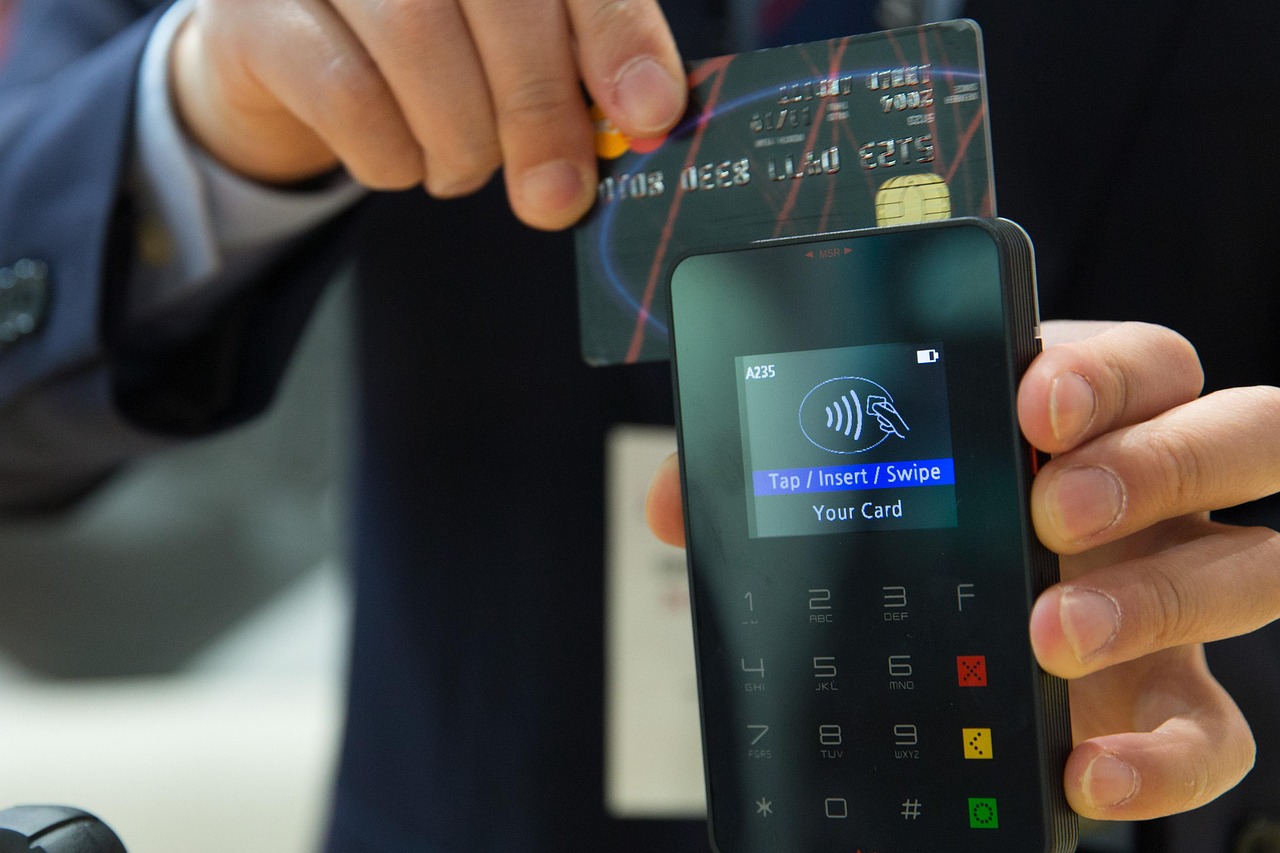
Integrated card readers — those that communicate directly with your POS rather than requiring a manual key-entry of amounts — eliminate a significant source of human error and speed up checkout. Wireless card readers give your staff freedom to take payments tableside or anywhere on the shop floor. Our guide to the best wireless card machines for small businesses covers the key considerations in detail.
Barcode scanners and receipt printers
For retail environments, a corded 1D/2D scanner at the till point remains the fastest way to process transactions. Receipt printers — thermal, typically 80mm — are still expected by many UK customers and are required for certain transaction types. Ensure any hardware you choose is confirmed as compatible with your chosen POS software before purchasing.
Is a Cloud POS System Suitable for a Small Business?
This is one of the most common questions smaller operators ask, and the straightforward answer is: yes, often more so than for large enterprises. Small businesses benefit disproportionately from automatic updates, remote access and the absence of an on-premise server to maintain. A sole trader running a boutique, a café owner managing a small team, or a market trader needing a mobile solution all represent ideal use cases for cloud POS. Our guide to the best till systems for small businesses explores this further, including advice on what to prioritise when your budget is tight.
The key practical consideration for small businesses is internet reliability at the trading location. If your premises have a stable broadband connection (or a 4G/5G backup), a cloud POS will serve you well. If connectivity is genuinely intermittent, confirm that the platform you are evaluating has a robust offline mode before signing up.
Why UK Businesses Choose EPOS Direct
EPOS Direct is a UK-based provider supplying point-of-sale hardware and software to independent retailers, hospitality businesses, pharmacies and multi-site operators across Great Britain. Our team works directly with business owners at every stage — from initial consultation through to installation, training and ongoing support — which means the advice you receive is grounded in practical, sector-specific experience rather than a generic sales script.
Our cloud POS platform is designed specifically for UK trading conditions: VAT-compliant receipts, Making Tax Digital-ready reporting, and payment integrations with UK-based acquirers. Hardware is sourced, configured and supported by our UK team, so you are not navigating overseas support channels when something needs attention.
For businesses in the retail sector, you can view our current retail EPOS offers or, for restaurants and cafés, explore our hospitality and restaurant EPOS packages. A full overview of everything we offer — from hardware bundles to software licensing — is available on the EPOS Direct home page.
Written by the EPOS Direct UK team, who work with UK retail, hospitality and specialist businesses every day to help them select, deploy and get the most from their POS systems.
Ready to Move Forward?
The right cloud POS system will save your team time, give you accurate real-time data and grow alongside your business — whether you are opening your first site or rationalising technology across multiple locations. The best next step is a conversation with someone who understands your sector.
Talk to an EPOS Direct expert online for immediate guidance, or request a free demo to see how our platform performs in a real-world scenario relevant to your business. There is no obligation, and our team will not push you towards a solution that does not fit your needs.
Frequently asked questions
- Can I access my sales data remotely with a cloud POS system?
- Yes. One of the biggest advantages of a cloud-based POS is real-time remote access. You can monitor live sales figures, staff performance, stock levels and reports from any internet-connected device — whether you're in the back office, at home or managing multiple sites across the UK.
- How much does a cloud POS system typically cost for a small UK business?
- Costs vary depending on the number of terminals and features required. In the UK, you can generally expect to pay anywhere from £20 to £80 per month per terminal for cloud POS software on a subscription basis. Hardware bundles — including a touchscreen terminal, receipt printer and card reader — typically start from around £500 to £1,200 as a one-off purchase or can be spread via finance options. EPOS Direct offers tailored packages so you only pay for what your business actually needs.
- Will a cloud-based till system still work if my internet goes down?
- Most quality cloud POS systems, including those supplied by EPOS Direct, include an offline mode that allows you to continue processing sales during an internet outage. Transactions are stored locally and automatically synced to the cloud once connectivity is restored, so you never have to turn customers away due to a temporary connection issue.
