We use cookies to make your experience better.
To comply with the new e-Privacy directive, you agree to the privacy policy and our use of cookies

Offline EPOS Systems for UK Businesses: How to Keep Trading When the Internet Goes Down
Offline EPOS Systems for UK Businesses: How to Keep Trading When the Internet Goes Down
Modern EPOS systems can absolutely work without an internet connection — and for many UK businesses, that offline capability is not a luxury but a fundamental operational requirement. Whether a broadband outage lasts two minutes or two hours, the right system keeps taking payments, printing receipts, and tracking stock without missing a beat. This guide explains exactly how offline EPOS technology works, what to look for when choosing a system, and how to protect your business from the very real cost of downtime.
Why Internet Outages Are a Serious Business Risk
A dropped connection at the wrong moment — a busy Saturday lunchtime, a market fair, a wedding service — can bring a purely cloud-dependent till to a complete standstill. Staff cannot process sales, queues build, and customers leave. For high-footfall retail and hospitality businesses, even a short outage can represent a meaningful loss of revenue and, harder to recover, a loss of customer trust.
UK broadband reliability has improved considerably, but outages remain an everyday reality. Patchy rural coverage, congested town-centre networks, and the occasional infrastructure fault mean that no business should treat a live internet connection as guaranteed. An offline-capable EPOS system removes that single point of failure entirely.
If you are weighing up system options more broadly, our practical guide to the best till systems for small businesses in the UK covers the wider buying landscape in detail.
How Offline EPOS Technology Actually Works
The key distinction is between locally installed and cloud-only architecture. A well-designed offline-capable system stores its core application, product database, pricing, and transaction logic directly on the terminal's local hardware — typically a dedicated EPOS unit running a robust operating system. Sales, stock adjustments, and customer data are written to local storage in real time.
When an internet connection is available, the terminal syncs with a central cloud or back-office server, pushing completed transactions and pulling down any updates — new products, price changes, or promotions set up in the management portal. When connectivity drops, the terminal simply continues operating against its last-synced local dataset. Once the connection is restored, it reconciles automatically, usually within seconds.
What happens to card payments when you go offline?
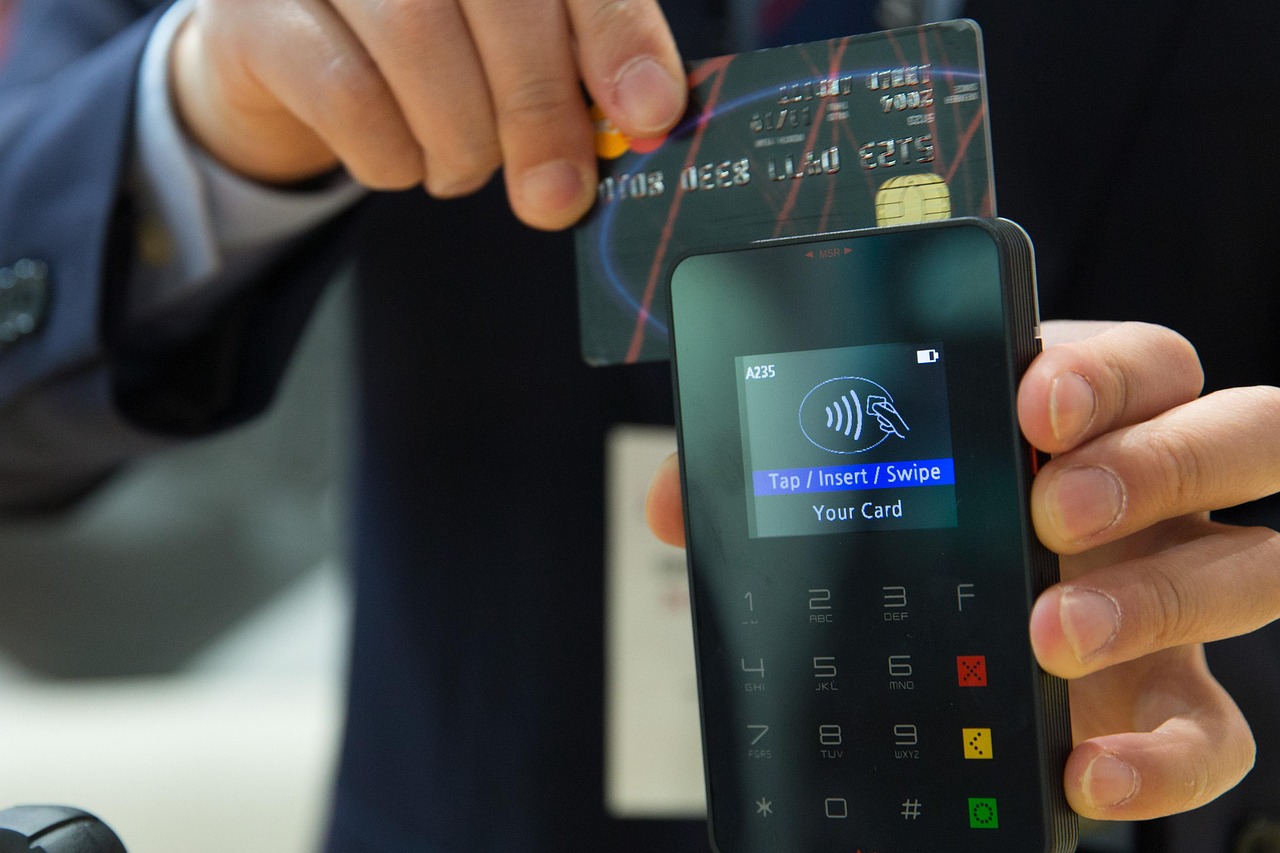
This is the question most buyers ask first, and rightly so. Integrated card payment terminals from reputable providers include an offline authorisation mode: the terminal captures card data locally and queues the authorisation, processing it the moment connectivity returns. There is an inherent risk — a card that would have been declined may temporarily go through — but processors set conservative offline transaction limits precisely to manage this exposure. For most retail and hospitality environments the risk is manageable, particularly when weighed against the alternative of refusing all card payments entirely.
For a deeper look at combining card acceptance with your till, read our guide to card machine and till system combined solutions for UK businesses.
Key Features to Look for in an Offline-Capable System
Not all systems marketed as "offline-ready" offer the same depth of functionality. Use this checklist when evaluating any provider:
- Full sales processing offline — the system must accept cash and card transactions without degraded functionality, not simply enter a read-only mode.
- Local product and pricing database — all SKUs, barcodes, modifiers, and promotions must be stored on-device, not fetched from the cloud on demand.
- Automatic, conflict-free sync — on reconnection, the system should reconcile transactions intelligently without manual intervention or data loss.
- Receipt printing continuity — local receipt printers should remain operational; avoid systems that rely on a cloud print service.
- Offline reporting — managers should be able to run basic Z-reads and session reports from the terminal even without internet access.
- Stock deduction in real time — inventory levels should decrement locally during offline periods so that when sync occurs, stock accuracy is preserved.
- Clear connectivity status indicators — staff should always know at a glance whether the system is online, syncing, or operating in offline mode.
Offline EPOS vs Cloud-Only Systems: An Honest Comparison
The table below sets out the practical differences between solution architectures — helping you match the right approach to your operational reality.
| Capability | Offline-Capable EPOS (Hybrid) | Cloud-Only EPOS |
|---|---|---|
| Sales processing without internet | ✔ Full functionality retained | ✘ Typically unusable or severely limited |
| Card payment processing offline | ✔ Queued authorisation with processor limits | ✘ Usually not possible |
| Stock tracking during outage | ✔ Local deduction, syncs on reconnection | ✘ Stock data often frozen or lost |
| Receipt printing during outage | ✔ Works via local printer connection | Often ✘ if cloud print service required |
| Remote back-office management | ✔ Full cloud portal when online | ✔ Full cloud portal when online |
| Multi-site central reporting | ✔ Consolidated once synced | ✔ Real-time (internet required) |
| Setup complexity | Moderate — requires initial configuration | Lower — browser or app-based |
| Best suited to | Retail, hospitality, market traders, rural businesses | Businesses with guaranteed stable broadband |
Which UK Businesses Need Offline Capability the Most?
While any business benefits from resilience, certain sectors face a disproportionate risk from connectivity loss:
Retail
Independent shops, fashion boutiques, garden centres, and convenience stores often operate in locations where broadband quality varies. A queue that cannot move during an outage damages both revenue and reputation. For retailers evaluating the full cost picture, our guide to the most affordable EPOS systems for small businesses in the UK is a useful companion read.
Hospitality and Food & Beverage
Restaurants, cafés, pubs, and quick-service operators cannot afford a frozen till during a dinner service. Kitchen printing, table management, and split billing all need to continue seamlessly. Offline capability is especially critical for venues in rural areas or listed buildings with limited structural cabling options. You can explore our hospitality and restaurant EPOS offers or book a restaurant EPOS software demo to see the system in action.
Market Traders and Mobile Vendors
Sellers at farmers' markets, craft fairs, and outdoor events depend on mobile connectivity, which is inherently less reliable than fixed broadband. A system that operates confidently on local storage — with card queuing and offline stock tracking — is not optional in these environments.
Pharmacies
Compliance, stock accuracy, and prescription point-of-sale all demand reliability that cannot be contingent on a live internet connection. Our dedicated pharmacy EPOS software demo shows how a resilient, locally-grounded system handles these requirements.
What Does an Offline-Capable EPOS System Cost in the UK?
Pricing varies by terminal count, software tier, and whether you include integrated card processing. As honest indicative guidance for the UK market:
- Entry-level single-terminal setups — hardware and software combined typically start from around £300–£500 for a basic configuration, with monthly software fees from approximately £30–£60 per terminal.
- Mid-range hospitality or retail systems — a two- to four-terminal setup with stock management, staff management, and integrated card payments typically falls between £800 and £2,000 in upfront hardware, with monthly fees in the region of £50–£120 per terminal depending on features.
- Multi-site or full-featured enterprise configurations — bespoke pricing applies; monthly software costs per site often range from £100 upwards, with hardware and installation quoted separately.
These are indicative market ranges only — your actual costs will depend on your specific configuration. For a transparent, no-obligation quote based on your business, talk to an expert online or request a call back from the EPOS Direct team.
If integrated card payments are a priority alongside your till, our guide to EPOS systems with integrated card payments in the UK explains the key decisions involved.
How EPOS Direct's Systems Keep Your Business Running Offline
EPOS Direct's UK-designed systems are built on a hybrid architecture: every terminal runs the full application and a locally synchronised database, so sales, stock, and printing continue without interruption the moment connectivity is lost. There is no manual mode to switch into — the transition is automatic and invisible to staff.
Card payments through integrated terminals use queued offline authorisation, subject to processor-set limits that protect businesses from excessive exposure. When connectivity returns — whether after 30 seconds or 30 minutes — the system reconciles all offline transactions and pushes them to the cloud back-office, preserving a complete, auditable record.
The back-office management portal, accessible from any browser, provides real-time reporting, multi-site oversight, staff permissions, menu and product management, and promotional scheduling — all of which sync down to terminals automatically. Whether you run a single village shop or a group of restaurants, the architecture scales without changing the fundamentally resilient local-first design.
Visit our EPOS Direct home page to explore current offers, system configurations, and sector-specific solutions across retail, hospitality, and pharmacy.
Getting Started: Choosing and Setting Up Your System
The practical steps to selecting and deploying an offline-capable system are more straightforward than many buyers expect:
- Define your must-have offline functions — sales, card, stock, printing, reporting. Prioritise the features your staff cannot work without.
- Assess your connectivity environment — speak to your broadband provider about average uptime and consider a 4G/5G backup router for belt-and-braces resilience.
- Choose hardware suited to your environment — countertop EPOS terminals for fixed retail, robust handheld units for tableside ordering, or portable setups for market traders.
- Confirm card terminal offline limits with your processor — understand the per-transaction and session limits that apply during connectivity loss.
- Arrange staff training before go-live — ensure every team member knows how to identify offline mode and what the protocol is for high-value transactions during an outage.
- Test offline mode before relying on it — disconnect your network deliberately during setup and run through a full transaction cycle to validate behaviour.
If you would like to see the software before committing, a retail EPOS software demo or free system demo gives you a no-pressure look at the full feature set in action.
Conclusion
An internet outage should be a minor inconvenience, not a business emergency. The right EPOS system — one built on locally-grounded, hybrid architecture — keeps your tills open, your card payments flowing, and your stock records intact regardless of what your broadband connection is doing. For UK businesses operating in unpredictable connectivity environments, this resilience is simply part of what a professional EPOS solution must deliver.
EPOS Direct's offline-ready systems are designed and supported in the UK, with expertise across retail, hospitality, and pharmacy. To find the right configuration for your business, talk to an expert online today or request a free demo — and trade with confidence, whatever the connection.
Written by the EPOS Direct UK team, who work with independent retailers, hospitality operators, and specialist businesses across the United Kingdom every day, helping them choose and configure EPOS systems built for real-world conditions.
Frequently asked questions
- Can an EPOS system still process card payments when the internet is down?
- It depends on the system and payment terminal. Some offline EPOS solutions can store card transactions locally and process them in a queue once connectivity is restored, but true offline card authorisation is rare. Most UK merchants pair an offline EPOS till with a standalone PDQ terminal that uses a mobile network as a backup. EPOS Direct can advise on the right payment hardware combination for your setup.
- How much does an offline-capable EPOS system cost for a small UK business?
- For a single-till setup in the UK, expect to pay roughly £300–£800 for entry-level hardware with offline functionality, rising to £1,000–£2,500 for a more complete retail or hospitality bundle including a touchscreen terminal, receipt printer, cash drawer, and barcode scanner. Monthly software licences typically range from £20–£80 per month depending on features. EPOS Direct offers tailored quotes so you only pay for what your business actually needs.
- Will my stock levels and sales reports stay accurate if I sell offline?
- Yes — a well-designed offline EPOS system records every transaction locally on the device. Once your internet connection is restored, the system automatically syncs all offline sales data to the cloud, updating stock levels, sales reports, and customer records in real time. Always check that any system you consider explicitly supports two-way sync on reconnection, as not all budget solutions handle this reliably.
