We use cookies to make your experience better.
To comply with the new e-Privacy directive, you agree to the privacy policy and our use of cookies


Best EPOS Systems with Integrated Card Payments UK (2026 Guide)
EPOS Systems with Integrated Card Payments UK: The Complete 2026 Guide
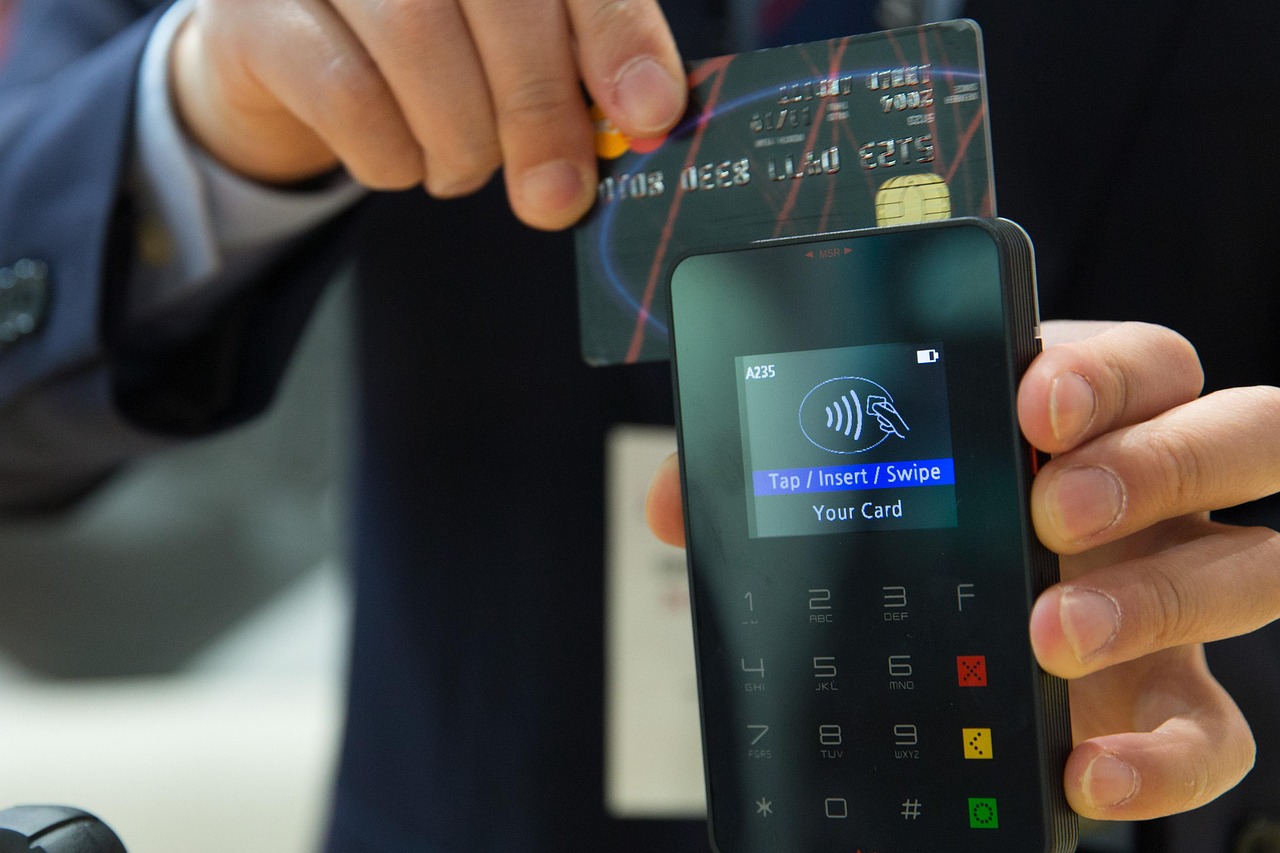
An EPOS system with integrated card payments combines your point-of-sale software, hardware and payment terminal into a single, unified solution — eliminating the reconciliation headaches that come from running separate till and card systems. For UK businesses processing card transactions (which now account for the vast majority of retail and hospitality payments), integration is no longer a luxury: it is the operational baseline. This guide walks through everything you need to know to choose, cost and deploy the right integrated solution for your business in 2026.
What Does "Integrated Card Payments" Actually Mean?
Many business owners discover too late that their card terminal and till system are technically separate products that happen to sit on the same counter. A genuinely integrated solution means the two communicate in real time: when a sale is processed on the EPOS, the exact amount is pushed automatically to the payment terminal, the transaction result is returned to the till, and both records update simultaneously. No manual keying, no end-of-day discrepancy chasing, no double-entry.
There are three common integration models in the UK market:
- Native integration — the payment processing is built directly into the EPOS software and hardware ecosystem from a single provider.
- API/middleware integration — the EPOS connects to a third-party payment gateway or acquirer via a certified API, allowing businesses to choose their own card processor.
- Semi-integrated — the terminal handles payment security independently (keeping cardholder data off the till), but the EPOS and terminal still exchange transaction data automatically.
For most small and mid-sized UK businesses, semi-integrated and native solutions offer the best balance of security (the cardholder data environment is contained to the terminal) and operational simplicity.
Key Benefits of Integrating Card Payments with Your EPOS
The business case for integration goes well beyond convenience. Here is what operators consistently report after making the switch:
Faster, more accurate transactions
Staff no longer type amounts into a separate terminal. The till pushes the exact basket total, reducing human error and shaving seconds off every transaction — measurable at busy periods in retail and hospitality alike.
Cleaner end-of-day reporting
Because every card transaction is matched to a corresponding EPOS record, your daily sales report, card settlement report and stock deduction all tally automatically. Managers spend minutes — not hours — on the close-down reconciliation.
Reduced shrinkage risk
Manual keying on a separate terminal creates an opportunity for fraud: a staff member can ring a lower amount into the card machine than the till records. Integration closes that gap entirely.
Richer business intelligence
With payment method, product line, time of sale and operator ID all captured in one record, integrated systems surface insights — peak hours, average basket values, popular payment methods — that disconnected setups simply cannot produce.
Simplified PCI DSS compliance
Reducing the number of systems that touch cardholder data shrinks your PCI DSS scope. Semi-integrated architectures in particular keep sensitive card data entirely within the certified terminal, which simplifies your annual Self-Assessment Questionnaire. For authoritative guidance on PCI DSS requirements, refer to the PCI Security Standards Council.
Which UK Businesses Benefit Most?
Integration delivers value across almost every trading environment, but the case is most compelling in these sectors:
- Retail — from independent boutiques and clothing retailers to multi-site chains, where high transaction volumes make manual keying errors costly.
- Hospitality and restaurants — table-service environments where the bill is calculated at the EPOS and must be presented to the guest on a terminal without any retyping.
- Pharmacies — where split payments (part NHS, part private) and prescription management must reconcile cleanly with card settlements.
- Quick-service and counter-service food businesses — where queue speed depends on frictionless payment handoff.
- Mobile and market traders — where a compact, wireless-capable setup handles the whole transaction on one device.
If you are a smaller operation exploring your first proper setup, our guide to the best till systems for small businesses in the UK is a useful starting point before diving into integration specifics.
Top Features to Look for in an Integrated EPOS and Card Payment System
Payment method coverage
Your terminal must accept chip-and-PIN, contactless (including Apple Pay and Google Pay), and ideally online/QR payments if you sell across channels. Check that your acquirer is certified for all major card schemes — Visa, Mastercard, Amex — if relevant to your customer base.
Real-time data sync
Sales, stock and payment records should update instantly, not in batches. Batch syncing creates windows where your live stock position and your settled payments diverge.
Cloud-based reporting
Access to dashboards from any device means managers and owners can monitor performance remotely — essential for multi-site operators or owners who are not always on the shop floor.
Offline resilience
A robust system should continue processing sales locally during an internet outage and sync automatically when connectivity is restored. Confirm how your provider handles offline card transactions before you commit.
Hardware flexibility
Consider whether you need countertop terminals, handheld devices for tableside payments, or a mix. For businesses that trade away from a fixed counter, our guide to the best wireless card machines for small businesses covers what to look for in a portable setup.
Integration depth with third-party software
Accounting (Xero, QuickBooks, Sage), loyalty platforms, online ordering and booking systems should all be able to pull data directly from your EPOS rather than requiring manual exports.
What Does an Integrated EPOS and Card Payment System Cost in the UK?
Pricing varies by hardware specification, number of terminals, software tier and acquirer rates. The table below gives honest indicative ranges for the UK market; treat these as a planning guide rather than quotations.
| Business Type | Typical Hardware Setup | Indicative Monthly Software Cost | Indicative Card Processing Rate | Typical Upfront Hardware Range |
|---|---|---|---|---|
| Solo trader / market stall | 1 tablet + integrated card reader | From ~£20–£40/month | ~1.5%–2.5% per transaction | ~£100–£300 |
| Small retail or café (1–2 tills) | Countertop EPOS terminal + PIN pad | ~£40–£80/month | ~0.8%–1.8% (often volume-tiered) | ~£500–£1,500 |
| Restaurant / pub (full-service) | Main till + 2–4 handheld terminals | ~£70–£150/month | ~0.7%–1.5% (negotiable at volume) | ~£1,500–£4,000 |
| Multi-site retail or hospitality group | Multiple counters, back-office server or cloud | ~£150–£400+/month (per site pricing varies) | Often bespoke / interchange-plus | ~£3,000–£10,000+ |
Important: all figures above are indicative market ranges based on typical UK deployments and should not be taken as quotes. Card processing rates depend heavily on your monthly card turnover, average transaction value, card mix (consumer vs. commercial) and your chosen acquirer. Always request itemised quotes and compare total cost of ownership — hardware, software, transaction fees and any support contract — rather than headline prices alone.
If keeping monthly outgoings predictable is a priority, it is worth reading our overview of card machines with no monthly fee to understand the trade-offs between flat-rate and percentage-based pricing models.
For a broader look at keeping total system costs down, our guide to the most affordable EPOS systems for small businesses walks through where costs can be trimmed without compromising capability.
How EPOS Direct UK's Integrated Payment Systems Work
EPOS Direct UK supplies complete, integrated point-of-sale solutions built specifically for UK retail, hospitality and specialist sectors such as pharmacy. Rather than bolting a third-party card terminal onto existing software as an afterthought, the approach is to engineer the payment flow into the core EPOS architecture — so the terminal, the software and the reporting layer all speak the same language from the first transaction.
For retail businesses
Retail setups include barcode scanning, stock management, supplier ordering and customer loyalty — all feeding into a single sales record that reconciles with card settlements automatically. You can explore the retail EPOS software demo to see the payment integration in action, or view current retail EPOS offers for hardware-and-software package options.
For hospitality and restaurants
Table management, kitchen display routing and tableside payment are handled as a unified workflow. A server sends an order to the kitchen, closes the bill at the table and the payment terminal confirms settlement — all without a separate device interaction. Browse hospitality and restaurant EPOS offers or try the restaurant EPOS software demo.
For pharmacies
Pharmacy-specific workflows — including prescription management and split-payment handling — are integrated with card payment processing. The pharmacy EPOS software demo demonstrates how these flows work in practice.
For a fuller picture of the EPOS Direct product range and how systems are structured across sectors, the complete guide to EPOS Direct UK's systems covers architecture, hardware options and sector-specific capabilities in depth.
How to Choose the Right Integrated EPOS System for Your Business
The right system is the one that fits your specific trading model — not the one with the longest feature list. Use this decision framework:
- Map your transaction flow first. How does a sale move from order to payment in your business today? Where do errors or delays occur? The integrated system you choose must smooth those specific friction points, not introduce new ones.
- Clarify your acquirer position. Do you want the EPOS provider to supply payment processing, or do you have an existing acquirer relationship you want to retain? Both models are valid — just confirm compatibility before signing anything.
- Ask about total cost of ownership, not monthly software fees alone. Factor in hardware (purchase or lease), transaction fees, support, training and any integration costs with existing software such as your accounting platform.
- Assess multi-site or growth requirements. If you plan to open a second location within 18 months, choose a system that scales centrally rather than one you will need to replace entirely.
- Verify offline capability. UK broadband and mobile connectivity is generally reliable, but any business that cannot afford downtime — a busy lunchtime service, a Saturday retail peak — needs confirmed offline fallback.
- Request a live demonstration with payment processing active. Seeing the till-to-terminal handoff live, with real hardware, is the only reliable way to validate integration quality before you commit.
For small business owners weighing up their options more broadly, the complete 2026 guide to EPOS systems for small businesses provides a practical framework for evaluating the whole market. You can also explore the EPOS Direct UK home page for current offers, sector-specific solutions and further guidance across the full product range.
If you are still weighing up whether a combined till-and-card-machine setup is right for you versus separate devices, the dedicated guide to card machine and till system combinations sets out the options side by side.
Ready to Move Forward?
Choosing a well-integrated EPOS and payment solution is one of the highest-leverage decisions a UK business makes — it touches every transaction, every reporting cycle and every customer interaction at the point of sale. Getting it right from the outset saves significant time, cost and disruption down the line.
The EPOS Direct UK team works with businesses across retail, hospitality, pharmacy and beyond every day. Whether you are replacing a legacy system, setting up for the first time or scaling to multiple sites, the right starting point is a conversation with someone who understands both the technology and your sector.
Talk to an EPOS expert online to discuss your requirements, or request a free demo and see integrated card payments working live within an EPOS Direct system built for your business type.
Written by the EPOS Direct UK team, who support UK businesses across retail, hospitality and specialist sectors with EPOS and integrated payment solutions every day.
Frequently asked questions
- What does 'integrated card payments' mean on an EPOS system?
- Integrated card payments means your card terminal is directly linked to your EPOS software, so the transaction total is automatically sent to the payment terminal — removing the need for manual entry, reducing errors, and speeding up the checkout process.
- Can I use any card payment provider with an EPOS system in the UK?
- Not always. Some EPOS systems are locked to a specific payment processor, while others are open to third-party providers. EPOS Direct UK offers flexible integrated solutions compatible with leading UK payment processors, so you can choose the deal that suits your business.
- Is an integrated EPOS and card payment system suitable for small businesses in the UK?
- Yes. Integrated EPOS systems are available for businesses of all sizes. Many UK small retailers and hospitality venues benefit from the time savings, accurate reporting, and reduced human error that come with an all-in-one integrated setup.
