We use cookies to make your experience better.
To comply with the new e-Privacy directive, you agree to the privacy policy and our use of cookies


Key Benefits of a Modern Till System for UK Retail and Hospitality
The Real Benefits of Upgrading to a Modern Till System

Upgrading your till setup is one of the most impactful operational decisions a UK retailer, restaurateur or independent business owner can make. A modern EPOS system does far more than process sales — it actively reduces costs, eliminates manual errors, accelerates service and gives you the business intelligence to grow with confidence. If your current setup is a standalone cash register or an ageing touch-screen terminal bolted together with spreadsheets, it is almost certainly costing you more than you realise.
Why Your Current Till Could Be Costing You Money
Older and basic till setups have hidden costs that compound quietly over time. Manual price entry invites human error — overcharges that frustrate customers, undercharges that erode margins. Without automated stock tracking, you are either over-ordering (tying up cash) or running out at peak times (losing sales). And because older systems rarely integrate with card terminals, accounting software or online channels, staff spend hours reconciling figures that a modern system would handle automatically.
Beyond lost revenue, there is a compliance cost. UK businesses are legally required to keep accurate VAT records, and HMRC's Making Tax Digital (MTD) initiative is steadily expanding the scope of digital record-keeping obligations. A system that cannot export clean, structured data makes MTD compliance harder and audit-readiness nearly impossible. You can check current MTD requirements directly on the HMRC Making Tax Digital guidance pages.
The bottom line: what looks like a low-cost legacy setup is often the most expensive option once you factor in lost sales, stock waste, staff time and compliance exposure.
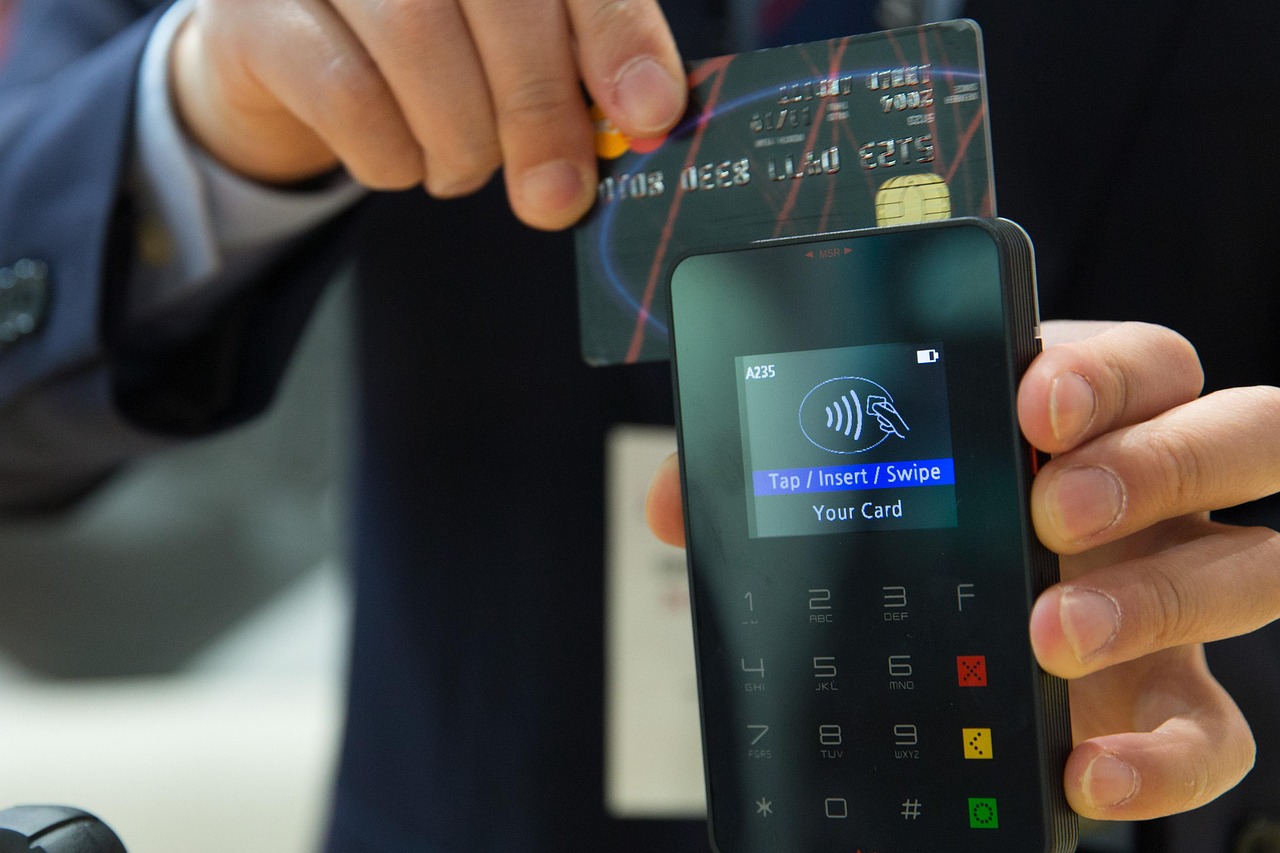
Faster Transactions and Shorter Queues: The Speed Advantage
Queue abandonment is a measurable business problem. When a customer joins a long line and walks away, that revenue is gone — and in a competitive high street environment, they may not return. Modern EPOS terminals process sales in seconds: items are scanned or tapped, integrated card payments complete in moments, and digital receipts are issued instantly without waiting for paper to print.
Where speed improvements show up most clearly
- Barcode and QR scanning: eliminates manual price look-up for every transaction.
- Integrated contactless and chip-and-PIN: no switching between a separate card machine and till — one tap completes the sale.
- Split payments and quick-cash buttons: speed up common transactions that would otherwise require calculation.
- Table and order management (F&B): kitchen display systems receive orders the moment a server confirms them, reducing verbal handoffs and errors.
If you are evaluating how to combine your payment hardware with your till, our guide to card machine and till system integration covers everything you need to know about a unified setup.
Smarter Stock Control: How Real-Time Inventory Tracking Changes Operations
One of the clearest practical advantages of a modern till system is live inventory management. Every sale automatically deducts the correct item from your stock count. Every return adds it back. At any point, a manager can see exactly what is on the shelf, what is on order and what has not moved in thirty days — without counting a single item by hand.
Practical inventory features to expect
- Low-stock alerts: automated notifications when items fall below a set threshold, so reorders happen before you run out.
- Supplier purchase orders: generated directly from the till system and sent digitally, removing a manual admin step.
- Variant tracking: for clothing, footwear or any product with sizes and colours, the system tracks each SKU individually — critical for accurate availability.
- Wastage and shrinkage reporting: flags discrepancies between expected and actual stock so you can investigate losses early.
For clothing and fashion retailers specifically, where size-run management is particularly complex, take a look at our dedicated resource on EPOS systems for clothing shops, which covers variant management and seasonal stock in detail.
Built-In Reporting That Shows You Exactly Where Your Profits Come From
Data is only useful if it is presented clearly and quickly. A well-designed EPOS system surfaces the reports a business owner actually needs — without requiring a spreadsheet export and two hours of formatting.
Reports that drive better decisions
- Best and worst sellers: identify which products to promote and which to discontinue or discount.
- Hourly and daily sales patterns: schedule staff efficiently by understanding exactly when your busiest periods occur.
- Margin reporting by product and category: gross turnover is flattering; margin tells the truth.
- Staff performance reports: track sales by employee without intrusive surveillance — useful for commission structures and training.
- End-of-day X and Z reports: standard till reconciliation, produced automatically and filed digitally.
Cloud-based EPOS software means these reports are accessible from any device — so whether you are on the shop floor, at home or reviewing a second site remotely, the same data is always in front of you. Explore the EPOS Direct software platform to see how dashboards and reporting are structured in practice.
Integrated Payments, Receipts and VAT: Cutting the Admin Burden
The administrative overhead of running a business is one of the most consistent complaints we hear from UK independent retailers and hospitality operators. A modern till system attacks that overhead at its root by connecting every transaction — card, cash, split payment — into a single unified record that feeds automatically into your accounting and VAT reporting.
What integration actually means in practice
- Card terminal receipts and till receipts are the same transaction — no manual reconciliation between two separate systems.
- VAT is calculated and separated correctly at the point of sale, including mixed-rate baskets (standard-rated and zero-rated items in one transaction).
- End-of-day totals export directly to accounting platforms — significantly reducing the time your bookkeeper or accountant spends on data entry.
- Digital receipt options (email or SMS) reduce paper costs and give you a searchable transaction archive.
If you are still using a separate card machine and want to understand the cost and operational implications of going wireless, our practical guide to wireless card machines for small businesses is worth reading before you commit to any hardware.
What Does a Modern Till System Actually Cost?
This is one of the most common questions from business owners evaluating an upgrade, and it deserves a straight answer. Pricing in the UK market varies based on hardware specification, number of terminals, software tier and whether you opt for a purchase or lease arrangement.
| Setup Type | Typical Hardware Cost (one-off) | Typical Software / Monthly Fee | Best Suited To |
|---|---|---|---|
| Entry-level single terminal | Typically from £300–£600 | From around £20–£40/month | Market stalls, micro-retailers, pop-ups |
| Small business EPOS (1–2 tills) | Typically £600–£1,500 per terminal | From around £40–£80/month | Independent shops, cafés, salons |
| Mid-market retail / hospitality | Typically £1,500–£3,000 per terminal | From around £80–£150/month | Multi-department stores, restaurants, pubs |
| Multi-site / enterprise | Quoted on requirement | Custom pricing, typically £150+/month | Chains, franchises, larger hospitality groups |
All figures are indicative ranges based on typical UK market conditions as of 2025–2026 and should be treated as general guidance only. Actual pricing depends on specification, supplier and contract terms. Always request a personalised quote.
Some suppliers offer finance and lease options that spread hardware cost over 12–36 months, making enterprise-grade systems accessible to smaller businesses. If budget is a primary consideration, our guide to affordable EPOS systems for small businesses walks through the most cost-effective options available in the UK without compromising on essential features.
How a Modern Till System Grows With Your Business
Scalability is a term that gets used loosely, but in the context of EPOS it has a very specific meaning: your system should become more useful as your business grows, not a bottleneck that forces an expensive overhaul every few years.
Scalability features to look for
- Multi-site management: add a second location and manage both from the same software dashboard, with consolidated reporting.
- eCommerce integration: connect your physical till to an online store so inventory updates across both channels simultaneously.
- Loyalty and CRM tools: as your customer base grows, built-in loyalty programmes and customer profiles become increasingly valuable.
- Additional user roles: define different access levels for cashiers, supervisors and managers without buying separate licences for each function.
- API integrations: connect to third-party platforms — delivery aggregators, accounting software, HR systems — as your operation becomes more complex.
Cloud-based architecture is central to all of this. Unlike on-premises server systems that require physical upgrades, cloud EPOS receives feature updates automatically and stores your data securely off-site — meaning your system on day one is materially more capable than it would have been even two years earlier, with no hardware change required.
What to Look for When Choosing a Till System in the UK
With dozens of suppliers in the UK market, the choice can feel overwhelming. These are the criteria that separate a genuinely strong system from one that looks appealing in a brochure but frustrates in daily use.
| Selection Criterion | Why It Matters | Questions to Ask a Supplier |
|---|---|---|
| UK-based support | When your till goes down mid-service, you need a human answer — fast | What are your support hours? Is phone support included? |
| Offline mode | Internet outages happen; your till must still process sales | How does the system behave when connectivity drops? |
| Payment integration | Avoid the cost and complexity of separate card terminals | Which payment providers are natively integrated? |
| Sector fit | A retail system is not optimal for F&B; features must match your workflow | Can I see a demo specific to my type of business? |
| Contract terms | Long lock-in contracts with heavy exit fees are a material risk | What is the minimum contract length and exit process? |
| Data ownership | Your sales history is a business asset — you must be able to export it | Can I export all my data in a standard format at any time? |
Sector-specific demos are particularly valuable. If you run a restaurant or café, a restaurant EPOS software demo will show you table management, kitchen display and cover flow in the context of how your team actually works. Retailers will get far more from a retail EPOS software demo than from a generic walkthrough. And for pharmacy operators navigating prescription management and compliance requirements, there is a dedicated pharmacy EPOS software demo available.
For a thorough overview of small business options across sectors, the practical buyer's guide to till systems for small businesses covers the full range of considerations in one place.
The Direct Answer: What Are the Core Benefits of Upgrading?
A modern till system reduces transaction times, eliminates stock management errors, automates VAT and reporting, integrates seamlessly with card payments, and gives business owners real-time data to make faster, more profitable decisions. For most UK independent businesses, the operational savings and revenue protection delivered by an upgrade outweigh the investment within the first year of use.
Ready to See the Difference for Yourself?
EPOS Direct UK works with independent retailers, restaurants, cafés, pharmacies and multi-site businesses across the United Kingdom every day, helping them find and implement the right system for their specific operation. Whether you are just starting to research your options or ready to make a decision, we can help you move forward with confidence.
- Request a free demo — see the system working in a context relevant to your business.
- Talk to an expert online — get straightforward answers to your specific questions without a sales pitch.
- View our retail EPOS offers or explore our hospitality and restaurant EPOS offers for current packages and pricing.
- Visit the EPOS Direct UK home page for more information, offers and the full range of systems we provide.
Written by the EPOS Direct UK team, who work with UK businesses across retail, hospitality and specialist sectors every day to specify, install and support EPOS and POS systems that genuinely perform.
Frequently asked questions
- How much does a till system cost for a small UK business?
- For a small UK retail or hospitality business, entry-level EPOS till systems typically start from around £300 to £600 for a basic hardware bundle including a touchscreen terminal, receipt printer and card reader. Cloud-based software subscriptions usually run from £20 to £60 per month depending on features. More complete setups with barcode scanners, cash drawers and multi-user licences can range from £800 to £1,500+. EPOS Direct offers competitive packages tailored to your sector, and many businesses find the system pays for itself quickly through reduced shrinkage and faster service.
- Will a new till system work with my existing card payment provider?
- Most modern EPOS till systems are designed to integrate with a wide range of payment providers, including major UK acquirers and card terminals. EPOS Direct systems support integrated card payments so that the till and payment terminal communicate directly, eliminating manual entry errors and speeding up checkout. It is worth checking compatibility with your current provider before purchasing, and an EPOS Direct adviser can confirm this during a free consultation.
- How long does it take to set up and train staff on a new till system?
- A straightforward single-terminal till system can typically be set up and ready to trade within one to two days, including basic product loading and payment configuration. Staff training on a well-designed touchscreen EPOS system usually takes just a few hours, as the interfaces are built to be intuitive. EPOS Direct provides on-site installation support and ongoing UK-based customer service to make the transition as smooth as possible.
