We use cookies to make your experience better.
To comply with the new e-Privacy directive, you agree to the privacy policy and our use of cookies


Top Handheld POS Systems for UK Restaurants: What to Look For & Which to Choose
The Best Handheld POS Systems for UK Restaurants: A Complete Buyer's Guide

Handheld POS terminals have moved from luxury to operational necessity for UK restaurants that want faster table turns, fewer order errors, and a more polished guest experience. The right device lets your floor staff take orders, split bills, and process card payments tableside — all without a single trip to a fixed till. This guide covers everything an owner or manager needs to know: the key features that matter, honest pricing guidance, and a practical framework for matching a handheld system to your specific operation.
Why UK Restaurants Are Moving to Handheld POS Terminals
The shift is driven by three converging pressures: rising labour costs, tighter margins, and guests who expect frictionless service. A handheld terminal removes the constant relay between table and till, which typically accounts for a meaningful slice of a server's walking time during a busy service. Fewer steps per cover means a team can handle more tables without additional headcount.
Contactless and chip-and-PIN payments at the table are also increasingly expected by diners across the UK. Since the introduction of Strong Customer Authentication (SCA) requirements under the FCA's implementation of PSD2, card-present tableside payments often carry lower friction and fewer declined transactions than redirected online-style flows — worth verifying with your payment processor, but a recognised operational benefit in the industry.
Beyond speed, handheld ordering eliminates transcription errors. Orders fire directly from the device to the kitchen printer or display screen, removing the intermediate step where verbal or hand-written notes get misread. For busy operations — weekend brunches, Friday dinner service, high-volume pub dining — that accuracy dividend compounds quickly.
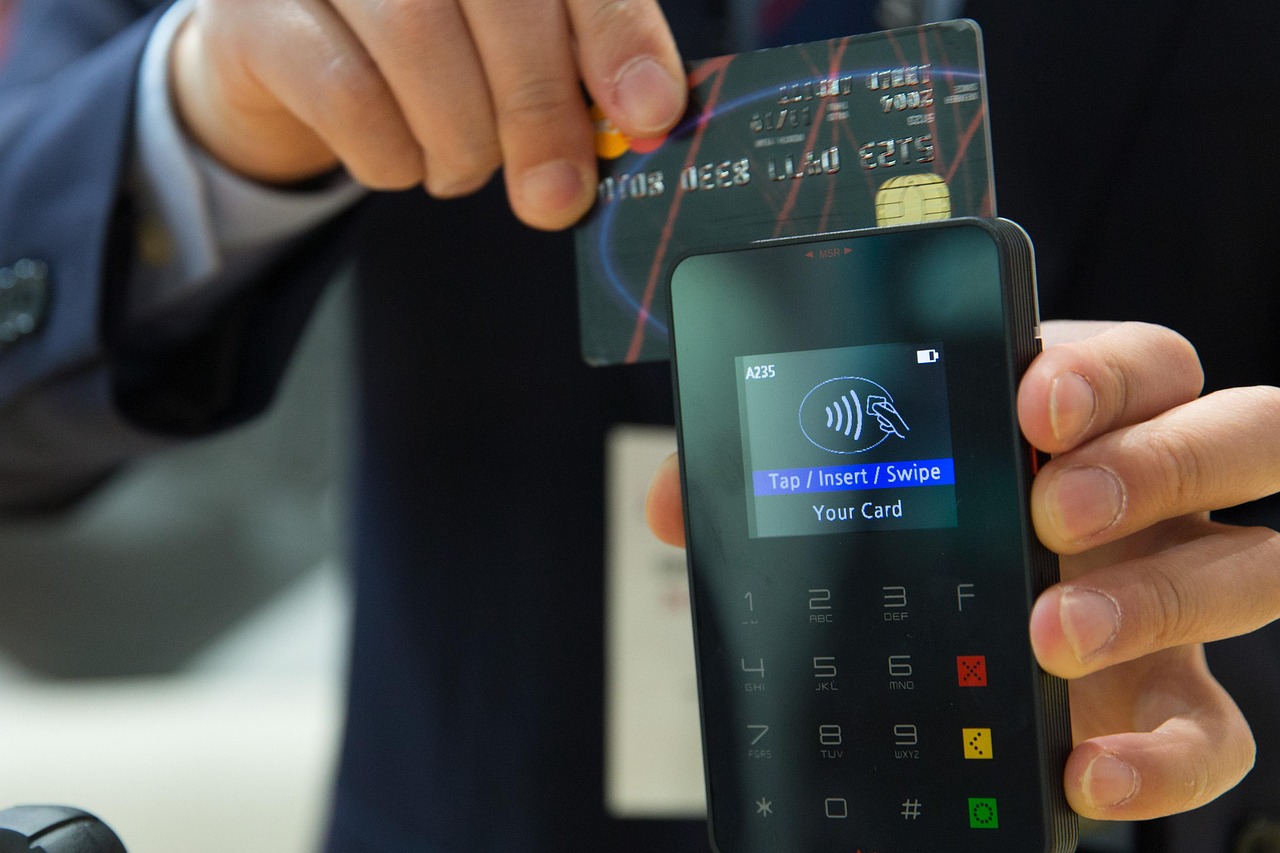
Key Features to Look for in a Restaurant Handheld POS System
Not all handheld devices are equivalent. These are the criteria that separate genuinely useful restaurant tools from underpowered consumer tablets dressed up with a case and a card reader.
Hardware Robustness
- IP rating: Look for at least IP54 (splash and dust resistant). A spilled drink mid-service should not end the device's shift.
- Drop resistance: Rugged-grade handhelds rated to survive a 1–1.5 metre drop onto concrete are standard in serious hospitality deployments.
- Battery life: A full service shift — lunch and dinner combined — can run eight to twelve hours. Confirm the rated battery life under active use, not standby.
- Screen size and brightness: A 5–6 inch display is typically ideal for floor use; ensure it is legible in direct sunlight for terrace or beer-garden service.
Software Capabilities
- Table mapping and course management (starters, mains, desserts firing independently)
- Item modifiers — allergy notes, cooking preferences, substitutions — attached directly to the order line
- Split-bill and partial-payment functionality
- Real-time menu 86ing (marking items as sold out) that propagates instantly across all handhelds
- Integration with kitchen display systems (KDS) or kitchen printers
- Loyalty scheme and gift card support for returning guests
Payment Integration
The handheld should support chip-and-PIN, contactless (including Apple Pay and Google Pay), and — increasingly in the UK — QR code pay-at-table as a complementary option. A fully integrated payment flow, where the amount is sent directly from the POS to the card terminal without manual re-keying, is non-negotiable for a professional setup. You might also find our guide to combining a card machine and till system useful for understanding how these integrations work across a broader stack.
Connectivity and Reliability
Wi-Fi is standard; look for dual-band (2.4GHz and 5GHz) support and the ability to operate in offline mode so orders can still be taken if the internet drops momentarily. 4G-enabled handhelds are worth considering for outdoor or event-style venues.
What Does a Handheld POS System Cost in the UK?
Pricing varies considerably depending on whether you are buying hardware outright, leasing it, or taking it as part of a managed service contract. The following ranges are indicative of the UK market and should be treated as a starting framework, not a quote.
| Setup Type | Typical Hardware Cost (per device) | Typical Software / Subscription | Best Suited To |
|---|---|---|---|
| Entry-level tablet handheld (consumer tablet + card reader) | From approximately £150–£350 | From around £30–£60 per month per terminal | Small cafés, single-site takeaways |
| Mid-range purpose-built handheld | From approximately £400–£700 | From around £50–£100 per month per terminal | Casual dining, pubs, QSR operators |
| Enterprise rugged handheld (integrated payment) | From approximately £700–£1,200+ | Typically site-licence or per-device; from around £80–£150 per month | Multi-site restaurants, high-volume hospitality groups |
| Full system (handhelds + fixed EPOS + KDS + setup) | Typically from £1,500 upward for a starter bundle | Varies; often bundled at a site licence level | Full-service restaurants, hotel F&B |
Many operators in the UK prefer monthly plans that bundle hardware, software, support, and payment processing — making costs predictable. If avoiding recurring fees is a priority for your business model, our overview of EPOS systems with no monthly fee explores that approach in detail. For a broader view of small business payment hardware costs, the wireless card machine guide for small businesses provides useful benchmarks.
Handheld POS vs Traditional Fixed Tills: Which Is Right for Your Restaurant?
This is the question most owners reach when they start evaluating their options, and the honest answer is: most modern restaurants benefit from both in combination rather than one in isolation.
| Factor | Fixed EPOS Till | Handheld POS Terminal |
|---|---|---|
| Order accuracy | Good — order entered at till, relayed to kitchen | Excellent — orders go direct from table to kitchen |
| Table-turn speed | Moderate — multiple trips required | High — billing and payment completed tableside |
| Staff efficiency | Lower at peak service | Higher — one device per server handles the full cycle |
| Upfront cost | Moderate to high per terminal | Moderate per device; scales easily |
| Guest experience | Standard | Premium — payment at table, no awkward card machine handover |
| Reliability (power outage) | Affected by power loss | Battery-powered; continues operating |
| Best for | Bar service, takeaway counters, click-and-collect | Table service, fine dining, outdoor dining |
A hybrid approach — a central fixed EPOS station for administration, reporting and bar service, paired with handhelds on the floor — delivers the best of both. If you are exploring how fixed and mobile systems compare more broadly, our guide to till system alternatives covers the landscape in practical terms.
How to Match a Handheld POS System to Your Restaurant Type
Generic advice rarely translates cleanly to the diversity of UK restaurant operations. Here is how the decision changes by venue type.
Full-Service and Fine Dining Restaurants
Prioritise a premium-finish handheld with a full-colour table map, course-by-course ordering, and seamless integrated payment. The device itself becomes part of the brand experience — a clunky or slow unit undermines the atmosphere you have worked to create. Look for systems that support detailed modifiers and can handle complex multi-course tasting menus.
Casual Dining and Gastropubs
Volume and durability matter more than premium aesthetics here. A rugged mid-range handheld with fast boot-up time, straightforward modifier flows, and a reliable Wi-Fi stack will serve a busy gastropub better than a sleek but fragile consumer tablet. Split-bill functionality is heavily used in this segment and should be tested thoroughly before purchase.
Quick Service Restaurants (QSR) and Fast Casual
Speed of transaction is everything. Look for handhelds that support one-tap item selection, rapid payment processing, and integration with loyalty programmes. Offline mode is critical — a queue backing up because the internet dropped is an unacceptable failure point in a QSR environment.
Cafés and Coffee Shops
A lighter, more affordable handheld paired with a compact fixed EPOS for the counter often strikes the right balance. If your operation is predominantly counter service with occasional table runs, you may not need the enterprise-grade ruggedness of a full hospitality handheld. Our small business EPOS guide explores cost-effective entry points for operators at this scale.
Hotels and Multi-Outlet F&B Operations
Multi-site reporting, centralised menu management, and the ability to route orders across different outlets (bar, restaurant, room service) are the defining requirements. Enterprise-grade systems with cloud-based back-office dashboards and role-based access controls become essential at this level. Explore the EPOS Direct software platform to see how these capabilities are handled in practice, or request a restaurant EPOS software demo tailored to your operation.
Practical Questions Buyers Should Be Asking Before They Commit
Does the handheld integrate directly with my existing kitchen setup?
This is often the most overlooked question at the point of sale. A handheld that cannot fire orders directly to your kitchen printer or display screen creates a manual relay step that defeats much of the purpose. Ask the supplier to demonstrate the end-to-end flow: order taken on handheld → appears on kitchen display → bill sent to guest → card payment processed — all without leaving the table.
What happens if the Wi-Fi goes down mid-service?
Offline resilience varies significantly between systems. Some handhelds queue orders locally and sync when connectivity resumes; others simply stop functioning. In a busy Friday night service, a connectivity gap of even a few minutes can cause significant disruption. Confirm explicitly what the offline capability covers — ordering, payment, or both.
How does the system handle VAT and Making Tax Digital compliance?
UK restaurants are subject to specific VAT rules — food and drink carry different rates in certain circumstances, and HMRC's Making Tax Digital (MTD) initiative requires digital record-keeping for VAT-registered businesses. Your POS system should produce VAT-itemised receipts, support correct rate application per product category, and ideally integrate with cloud accounting software. Always verify the specifics with your accountant; HMRC's MTD guidance is available directly on GOV.UK.
Why EPOS Direct Is a Trusted Choice for UK Restaurant Owners
EPOS Direct has supported UK hospitality businesses across the full spectrum — from independent neighbourhood restaurants to multi-site pub groups and hotel F&B operations. The team works exclusively with UK operators, which means advice is grounded in the realities of UK licensing, VAT, payment regulation, and the specific pressures of the British hospitality market — not adapted from overseas playbooks.
Hardware is purpose-built for the rigours of restaurant service: rugged, IP-rated, with integrated payment processing that removes the friction of separate card terminals. The software stack covers table management, kitchen display integration, stock control, and staff management — and is built to scale from a single site to a national estate. You can view the current hospitality and restaurant EPOS offers or visit the EPOS Direct home page for the latest deals and information.
Support matters as much as the technology itself. EPOS Direct provides UK-based technical support, so if something goes wrong during a Saturday night service, you are not waiting in a global queue. For businesses assessing payment hardware options alongside POS systems, the guide to card payment machines for small businesses provides useful context on how the pieces fit together.
Written by the EPOS Direct UK team, who work with UK restaurant and hospitality operators every day to help them find the right EPOS solution for their business.
Ready to Find the Right Handheld POS System for Your Restaurant?
The right handheld POS terminal reduces errors, accelerates table turns, and gives your guests a genuinely better experience — but only if it matches your venue type, service style, and operational demands. Generic choices rarely deliver the return that a properly specified system does.
EPOS Direct's team of UK hospitality specialists can walk you through the right configuration for your restaurant, from a single-site café to a multi-outlet group. Talk to an expert online to get tailored guidance, or request a free demo and see the system in action before you commit to anything.
Frequently asked questions
- How much does a handheld POS system typically cost for a restaurant in the UK?
- Costs vary depending on the setup size and software included. In the UK, a single handheld POS terminal typically starts from around £300–£600 for the hardware alone. Full restaurant packages — including software licences, a base station, receipt printer, and payment integration — commonly range from £800 to £2,500+. Many providers, including EPOS Direct, also offer monthly subscription or leasing options to spread the cost, starting from approximately £30–£80 per month per terminal.
- Can a handheld POS system work without a Wi-Fi connection in a busy restaurant?
- Most modern handheld POS systems are designed to operate on a local network and can function offline or in offline-mode for core functions like order taking and printing. However, card payment processing and real-time syncing to your kitchen display or back-office reports typically require a stable Wi-Fi or 4G connection. It is recommended to use a dedicated restaurant-grade Wi-Fi router to ensure reliability during peak service.
- What is the difference between a handheld POS system and a standard card reader for restaurants?
- A handheld POS system is a full point-of-sale terminal in a portable form — it manages orders, sends tickets to the kitchen, tracks table status, processes payments, and generates reports. A standard card reader (such as a basic SumUp or Square device) only processes card payments and has no order or restaurant management capability. For restaurants wanting to streamline tableside ordering, reduce errors, and improve table turnover, a dedicated handheld POS system offers significantly more operational value.
