We use cookies to make your experience better.
To comply with the new e-Privacy directive, you agree to the privacy policy and our use of cookies


Getting Started with Card Payment Machines: A Plain-English Guide for New Business Owners
Card Payment Machines for Beginners: Everything You Need to Know Before You Start
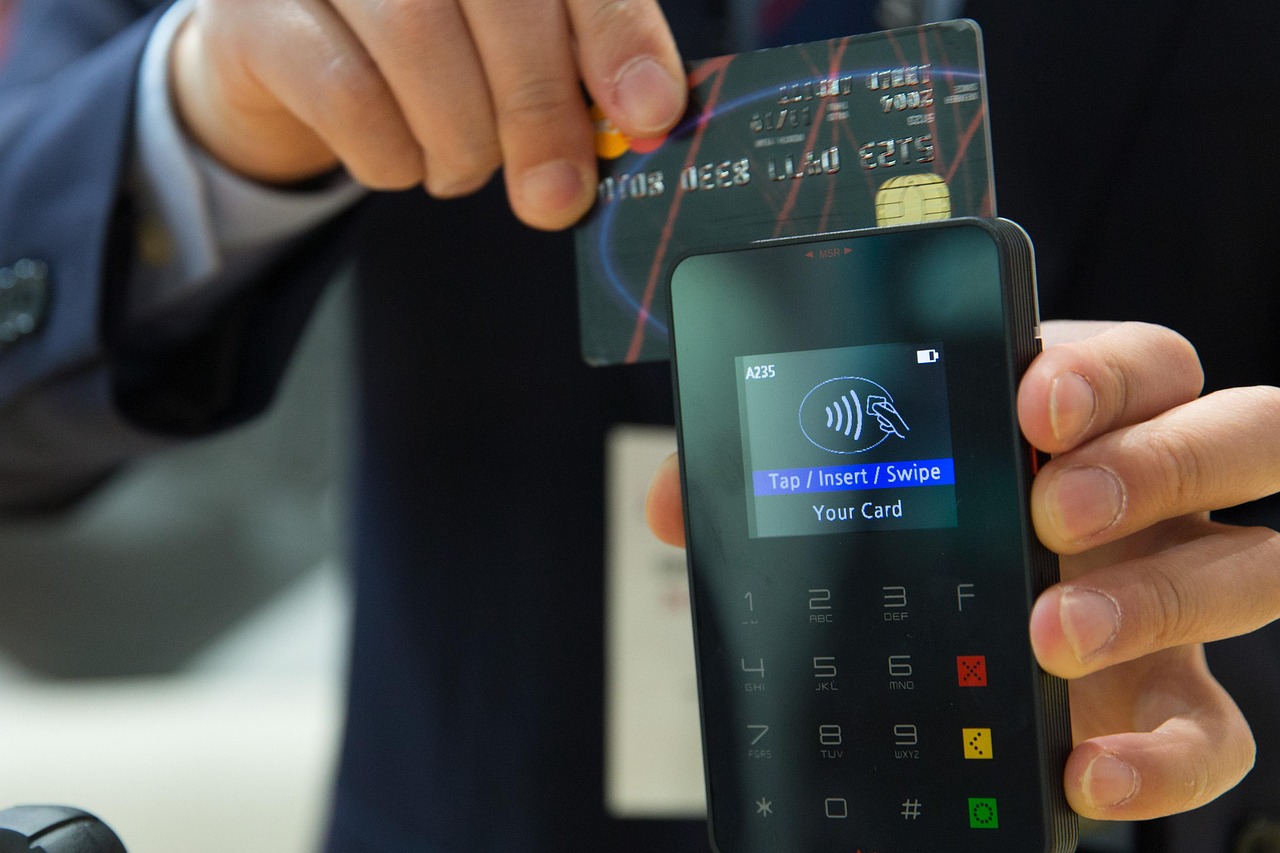
A card payment machine is one of the most important tools a new UK business will buy — yet the market is crowded with jargon, confusing fee structures and hardware that may not suit your trading environment. The good news is that the fundamentals are straightforward: once you understand how the technology works, what the real costs look like and how a card reader fits into your wider till setup, you can make a confident, well-informed choice from day one. This guide, written by the EPOS Direct UK team who support UK businesses with payment and EPOS solutions every day, covers everything a first-time buyer needs to know.
What Is a Card Payment Machine and How Does It Work?
At its core, a card payment machine — sometimes called a card terminal or card reader — is a device that securely captures your customer's payment card details and communicates with their bank to authorise and transfer funds to your merchant account. The process happens in seconds and involves several parties: the card network (Visa or Mastercard), the cardholder's issuing bank, and your acquiring bank or payment processor.
Modern terminals support three contact methods:
- Chip and PIN — the customer inserts their card and enters a four-digit PIN, typically required for transactions above the contactless limit.
- Contactless — the customer taps their card or mobile wallet (Apple Pay, Google Pay) against the reader. The UK contactless limit is currently set by card networks and is subject to periodic review; always check the current threshold with your payment provider.
- Magnetic stripe — a legacy fallback, rarely used on UK-issued cards today.
Payments are encrypted end-to-end and must comply with PCI DSS (Payment Card Industry Data Security Standard), a global framework that protects cardholder data. Your payment provider will guide you through compliance obligations — typically a short annual self-assessment questionnaire for small businesses.
The Main Types of Card Readers Available to UK Businesses
Not all terminals are built for the same trading environment. Understanding the categories will immediately narrow your shortlist.
Countertop terminals
Fixed to a counter and connected via Ethernet or broadband, countertop terminals are the most reliable option for businesses with a permanent checkout point — a high-street retailer, pharmacy or reception desk. They offer a stable connection, faster processing and are generally the most cost-effective hardware to run over time.
Portable (cordless) terminals
These operate over Wi-Fi or Bluetooth and are ideal for table service in cafés and restaurants, market stalls with indoor Wi-Fi, or anywhere staff need to bring the payment to the customer. Battery life varies; most commercial-grade models comfortably cover a full trading day. Our guide to the best wireless card machines for small businesses explores this category in depth.
Mobile card readers
Compact devices that pair with a smartphone or tablet via Bluetooth and process payments through an app. Popular with sole traders, market vendors and mobile service providers (beauticians, tradespeople). Transaction fees tend to be higher per payment, but there is usually no fixed contract — useful if your volume is low or seasonal.
Integrated EPOS terminals
A card reader built into or directly connected to a full EPOS till system. Sales, stock and payment data all sync in real time, eliminating manual reconciliation. This is the most powerful setup for growing businesses and is covered in detail in our guide to combining a card machine with a till system.
Choosing the Right Terminal for Your Business Size and Setting
The right hardware depends on three practical questions: Where will you take payments? How many transactions do you process each month? And what data do you need to manage alongside payments?
| Business Type | Recommended Terminal Type | Key Priority | Consider Upgrading When… |
|---|---|---|---|
| Sole trader / mobile service | Mobile card reader (app-based) | Portability, no monthly fee | Monthly volume makes per-transaction fees costly |
| Market stall / pop-up | Mobile or portable reader with 4G | Reliable connectivity away from Wi-Fi | You trade at a fixed pitch regularly |
| Small independent shop | Countertop or integrated EPOS | Speed, reliability, stock visibility | You need multi-user or multi-location management |
| Café / restaurant | Portable or integrated hospitality EPOS | Table-side payments, order management | Split bills and kitchen display screens become essential |
| Clothing or fashion retailer | Integrated retail EPOS with card terminal | Inventory by size/colour, returns management | From day one if you carry significant stock |
| Pharmacy | Integrated EPOS with compliant card terminal | Prescription management, regulated stock control | Compliance needs typically mean integrated from the start |
If you run a clothing business and are weighing up till technology more broadly, our detailed breakdown of the best EPOS systems for clothing shops addresses the specific demands of fashion retail — from variant management to end-of-season reporting.
Understanding Fees, Contracts and Hidden Costs
This is where most beginners get caught out. Card payment pricing in the UK involves several overlapping charges, and providers do not always present them consistently.
Transaction fees
Every card payment incurs a fee, usually expressed as a percentage of the transaction value (sometimes with a small fixed pence element). For consumer debit cards, rates are typically lower than for credit cards, and foreign-issued cards often carry a premium. Indicative ranges for small businesses in the UK typically fall between approximately 0.5% and 2.5% per transaction, depending on the provider, your card mix and your monthly volume.
Monthly or rental fees
Many providers charge a monthly terminal rental or service fee, commonly ranging from around £10 to £40 per month per terminal for commercial-grade hardware. Some app-based readers have no monthly fee but charge higher per-transaction rates instead — a trade-off worth modelling against your expected volume. Our dedicated guide to card machines with no monthly fee helps you assess whether a pay-as-you-go model suits your cashflow.
Settlement times
How quickly money lands in your bank account varies by provider — typically one to three business days. Cash-flow-sensitive businesses should clarify this upfront.
Contracts and exit costs
Some providers lock you into 12-, 18- or 24-month contracts with early termination charges. Others offer rolling monthly agreements. Read the small print: minimum monthly transaction requirements, PCI non-compliance fees and chargeback handling charges can all add to your effective cost.
What to ask any provider before signing
- What is the all-in rate for UK consumer debit, UK consumer credit and foreign cards separately?
- Are there any minimum monthly transaction values or fees?
- What are the PCI DSS compliance requirements and what happens if I miss the annual assessment?
- What is the contract length and what does early exit cost?
How to Set Up Your First Card Payment Machine: A Step-by-Step Overview
Getting your first terminal live is simpler than most beginners expect. Here is the typical journey:
- Open a merchant account. This is a specialist bank account that holds card payment funds before they settle to your business bank account. Many modern payment providers bundle this service into their offering.
- Choose your hardware. Select a terminal type that matches your trading environment (see the table above). Reputable providers will help you identify the right model.
- Complete identity and business verification. Providers are legally required to conduct Know Your Customer (KYC) checks under UK anti-money laundering regulations. Have your Companies House registration number (if applicable), proof of ID and proof of address to hand.
- Configure your terminal. Most modern devices arrive pre-configured or walk you through setup via an on-screen menu. You will set your business name (as it appears on receipts), tip prompts if needed, and connectivity (Wi-Fi credentials or SIM for 4G models).
- Run test transactions. Most providers allow you to process a low-value test payment before going live. Do this with both a chip and PIN card and a contactless payment.
- Train your team. Even if you are a sole trader, familiarise yourself with refund procedures, end-of-day settlement reports and how to handle a declined card gracefully with a customer.
If you would rather see a live demonstration before committing, you can request a free demo from EPOS Direct UK — an excellent way to see integrated payment and EPOS workflows in practice.
Connecting Your Card Reader to an EPOS Till System
For many businesses, a standalone card reader is only part of the picture. Connecting it to a proper EPOS system transforms it from a simple payment tool into the hub of your entire business operation — linking sales data, stock levels, staff management and reporting in one place.
Integration works in two main ways:
- Semi-integrated: the EPOS software sends the transaction amount to the terminal automatically; the customer completes payment on the terminal; the result is passed back to the till. No double-keying, reduced errors.
- Fully integrated: a single unified system where card payments, receipts, stock adjustments and loyalty points all update simultaneously. This is the setup used by professional retailers and restaurants.
A fully integrated setup typically requires EPOS software with native payment gateway support or a direct API connection to your payment processor. EPOS Direct UK's software platform supports both retail and hospitality environments — you can explore our EPOS software to understand the full capability, or book a retail EPOS software demo to see it handling live payments alongside inventory and reporting.
For businesses exploring the broader landscape of till technology, our practical buyer's guide to till systems for small businesses covers the full decision-making framework — from software features to hardware bundles.
Common Beginner Mistakes to Avoid
Experience supporting thousands of UK businesses reveals the same pitfalls coming up again and again. Avoid these from the outset:
- Choosing hardware based on price alone. The cheapest reader may carry the highest per-transaction rates. Always model your total annual cost using realistic transaction volumes.
- Ignoring connectivity requirements. A Wi-Fi-only portable terminal is useless at an outdoor event or in a basement café with a weak signal. Match your connectivity option to your actual trading environment.
- Failing to reconcile card takings daily. Discrepancies between your terminal's settlement report and your bank statements are far easier to investigate on the day they occur than weeks later.
- Not understanding chargebacks. A customer can dispute a card payment through their bank. Know your provider's process for responding to chargeback claims and keep clear transaction records.
- Overlooking PCI DSS obligations. Failing to complete your annual self-assessment questionnaire can result in monthly non-compliance fees from your provider — typically added quietly to your bill.
- Locking into a long contract too early. Your payment volume and business model may change significantly in year one. Where possible, start on a shorter contract and renegotiate once you have real trading data.
If cost is a primary concern as you start out, our guide to the most affordable EPOS systems for small businesses identifies where it is safe to economise and where cutting corners will cost you more in the long run.
What Does a Card Payment Setup Actually Cost for a UK Small Business?
To give you a realistic sense of the investment involved, here are indicative ranges based on common small business setups in the UK. These are approximate guidance figures, not quotes — your actual costs will depend on provider, volume and contract terms.
- App-based mobile reader (no contract): hardware typically from around £20–£50 one-off; per-transaction rates typically 1.5%–2.5%.
- Standalone countertop terminal (monthly rental): typically £10–£30 per month, with per-transaction rates often lower than app-based alternatives.
- Integrated EPOS system with card terminal: EPOS software subscriptions typically from around £30–£80 per month for a single-site small business; hardware bundles vary significantly based on specification. Our complete guide to EPOS systems for small businesses covers the full cost landscape.
The key question is not "what is the cheapest option?" but "what is my total cost of payments over twelve months?" — factoring in transaction fees, monthly charges, hardware amortisation and any compliance or chargeback fees. If you would like a tailored conversation about the right structure for your business, you can talk to an expert online at EPOS Direct UK without any obligation.
Your Next Step
Taking card payments for the first time does not need to be complicated — but the choices you make at the outset, from terminal type to fee structure to EPOS integration, will shape your day-to-day operations and your cost base for years to come. Getting the fundamentals right from day one is always the better investment.
EPOS Direct UK works with independent retailers, hospitality businesses and service providers across the United Kingdom to build payment and EPOS setups that grow with their businesses. Visit our home page for current offers and full product information, or take the next step by requesting a free demo — our team will walk you through a live system tailored to your business type, with no pressure and no jargon.
Frequently asked questions
- How much does a card payment machine typically cost for a small UK business?
- Costs vary depending on the type. Portable card readers from providers like SumUp or Square start from around £19 to £49 as a one-off hardware purchase, with per-transaction fees of roughly 1.69% to 2.5%. Countertop or integrated EPOS-linked terminals may involve a monthly rental of £15 to £40 or a purchase price of £100 to £300+. For businesses processing higher volumes, a merchant account with a fixed monthly fee often works out cheaper overall. Always compare the total cost of ownership, not just the upfront price.
- Do I need a business bank account to accept card payments in the UK?
- Most traditional merchant account providers require a UK business bank account. However, some newer portable card reader providers allow you to receive funds into a personal account initially, making them popular with sole traders just starting out. As your business grows, a dedicated business account gives you better separation of finances and is often required to access lower transaction rates.
- Can I use a card payment machine without an internet connection?
- Most modern card readers require either a Wi-Fi or 4G mobile data connection to process payments in real time. Some devices offer an offline mode that temporarily stores transactions and processes them once connectivity is restored, though this carries a small risk of declined payments going undetected. If you trade at markets or outdoor events, look for a machine with built-in 4G SIM capability to ensure reliable connectivity.
