We use cookies to make your experience better.
To comply with the new e-Privacy directive, you agree to the privacy policy and our use of cookies

Best Card Machines with No Monthly Fee for UK Businesses
Best Card Machines with No Monthly Fee for UK Businesses
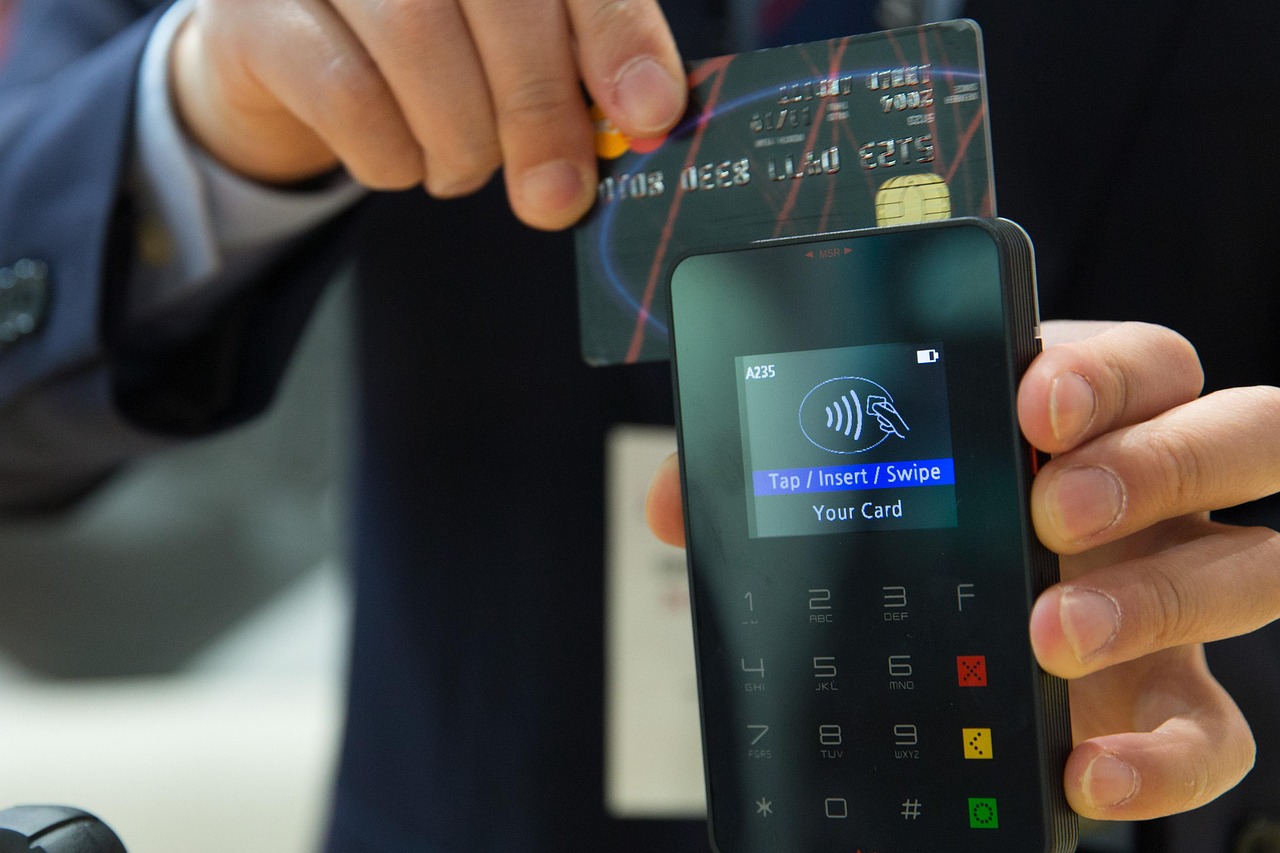
For many UK businesses, the appeal of a card machine with no fixed monthly charge is straightforward: you pay only when customers pay you. Several payment providers now offer exactly this model, making card acceptance genuinely accessible for seasonal traders, mobile operators, and low-volume retailers. Understanding precisely what you get — and where the real costs lie — is essential before committing to any payment solution.
What "No Monthly Fee" Actually Means for Card Machine Users
A card machine described as carrying no monthly fee means there is no standing charge simply for having the device on hand. You are not billed during quiet periods, over winter closures, or when trade is slow. This is genuinely different from traditional merchant accounts, which typically carry fixed monthly service fees regardless of transaction volume.
However, "no monthly fee" is a description of one cost component, not a promise that the device or service is free overall. The revenue has to come from somewhere, and it invariably does — most commonly through the transaction rate charged on every card payment processed. Understanding this distinction separates savvy buyers from those who later feel misled.
What the fee structure typically covers (or doesn't)
- Hardware cost: You will usually pay an upfront price for the device itself, ranging from approximately £29 to £79 for entry-level portable readers, with more capable countertop terminals sitting higher.
- Transaction fees: These are charged as a percentage of each sale — commonly between 1.5% and 2.5% for consumer credit and debit cards, though the exact rate varies by provider and card type.
- No standing charge: This is the genuine benefit — no minimum monthly spend, no dormancy fee, no rolling contract.

How No Monthly Fee Card Machines Make Their Money
Payment providers offering fee-free standing charges are not charities. Their commercial model depends on transaction revenue, and a higher per-transaction percentage is the standard trade-off. This is perfectly fair, but it has real implications for businesses processing significant volumes.
The key cost mechanisms to examine
- Blended transaction rates: Many no-monthly-fee providers use a single "blended" rate applied to all card types. This simplifies billing but can be more expensive than interchange-plus pricing for businesses with a high proportion of basic debit card transactions.
- Premium card surcharges: Business credit cards and some international cards attract higher rates — occasionally significantly so. Check whether these are included in the headline rate or charged separately.
- Payout timing: Some providers hold funds for one to three business days before settlement. For cash-flow-sensitive operations, this matters more than it might initially appear.
- Refund fees: Not all providers return the transaction fee on a refunded sale. Confirm this before signing up, particularly in retail environments with active returns policies.
- Connectivity costs: If the device uses a SIM rather than Wi-Fi, check whether data costs are included or charged separately.
A practical question worth asking any provider: "If I process £10,000 in card sales next month, what is the total I will pay — including all fees, card types, and any other charges?" The answer reveals far more than the headline rate.
No Monthly Fee Card Machine Options Available in the UK
The UK market has several well-established providers in this space. Rather than listing them as recommendations (rates, terms, and product ranges change frequently — always verify directly with each provider), it is more useful to understand the categories of solution available and what distinguishes them.
| Solution Type | Typical Hardware Cost | Typical Transaction Rate | Best For | Key Limitation |
|---|---|---|---|---|
| Compact card reader (e.g. dongle/Bluetooth reader) | From approx. £29–£49 | 1.69%–2.5% blended | Mobile traders, market stalls, pop-ups | Limited receipting; no EPOS integration |
| Smart portable terminal | From approx. £49–£99 | 1.5%–2.5% blended | Cafés, small shops, sole traders | Basic reporting; not scalable for multi-site |
| Countertop terminal (no-monthly-fee model) | From approx. £79–£149 | 1.4%–2.0% depending on volume | Fixed retail or hospitality counters | Higher upfront cost; still limited back-office data |
| Integrated EPOS with card payments | From approx. £299–£799+ per terminal | Often lower negotiated rates via EPOS provider | Retailers, restaurants, growing businesses | Higher initial investment; typically involves a software subscription |
For businesses considering wireless flexibility specifically, our guide to the best wireless card machines for small UK businesses explores the leading portable options in detail, including connectivity and battery considerations.
Transaction Rates vs Monthly Fees: Which Model Actually Costs Less?
This is the question that matters most, and the answer depends almost entirely on your monthly card turnover. The arithmetic is simple but rarely done carefully enough.
A straightforward comparison framework
Consider two hypothetical models:
- Model A — No monthly fee: £0 per month standing charge; 1.75% per transaction.
- Model B — Monthly fee model: £20–£30 per month; 0.9%–1.2% per transaction.
At £1,500 in monthly card sales, Model A costs approximately £26 in transaction fees. Model B costs £20–£30 in standing charges plus £13–£18 in transaction fees — a combined £33–£48. Model A wins clearly.
At £5,000 in monthly card sales, Model A costs approximately £87 in transaction fees. Model B costs £20–£30 plus approximately £45–£60 — a combined £65–£90. The models are broadly comparable, with Model B edging ahead at higher volumes.
At £15,000 monthly, the transaction-fee saving from a lower-rate monthly-fee model becomes substantial. This is the crossover point where a traditional merchant account with a fixed monthly charge typically becomes the more economical choice.
A genuinely useful resource for thinking through ongoing cost structures is our article on monthly EPOS subscriptions versus outright purchase, which applies similar logic to the broader payment and software decision.
Don't overlook the hidden transaction costs
Average transaction size also matters. A business processing many small transactions (coffee shop, for instance) will pay a higher effective cost per pound than a furniture retailer with fewer but larger sales, even at the same percentage rate.
Who Should Seriously Consider a No Monthly Fee Card Machine?
This payment model suits a specific business profile well — and suits others rather poorly. Being honest about which category you fall into saves money and frustration.
Strong candidates
- Seasonal and event-based businesses: Agricultural shows, Christmas markets, summer festivals — businesses that trade intensively for weeks and are dormant for months pay nothing during quiet periods.
- Start-ups and sole traders in early growth: Low and unpredictable volumes make a fixed monthly cost a genuine liability before the revenue base is proven.
- Mobile and visiting professionals: Tradespeople, therapists, tutors, and personal trainers who take occasional card payments benefit from simplicity without overhead.
- Cash-primary businesses adding card as a secondary option: A market trader who still accepts mostly cash but wants to capture card-paying customers doesn't need a full merchant account.
Less well-suited businesses
- High-volume retailers or restaurants processing £8,000+ per month in card payments.
- Businesses requiring detailed sales reporting, inventory tracking, or staff management — none of which standalone card readers provide.
- Multi-site operations needing consolidated data and central management.
How a Full EPOS System Compares to a Standalone Card Machine
A standalone card reader and a full EPOS system solve related but fundamentally different problems. A card reader processes payments. An EPOS system manages your entire operation — stock, sales data, customer records, reporting, staff permissions, and integrated payments — with the card machine as one component of a larger whole.
What a full EPOS solution adds
- Real-time stock management and low-stock alerts
- Detailed sales analytics by product, time, and team member
- Customer loyalty and CRM tools
- Kitchen display integration for hospitality
- Multi-site management from a single dashboard
- Integrated card payments at competitive negotiated rates
For most growing businesses, the operational value of an integrated EPOS system quickly outweighs the difference in payment processing costs. Our detailed guide to EPOS systems with integrated card payments in the UK covers how combined solutions work and what to look for in a provider.
If you are currently using a cash register and considering the transition, our practical walkthrough on switching from a cash register to a modern EPOS system explains what the process involves and what to expect.
EPOS Direct UK offers fully integrated retail and hospitality EPOS solutions with payment processing built in. You can explore our current retail EPOS offers or view our hospitality and restaurant packages to understand what integrated payment processing looks like in practice.
How to Choose the Right Payment Solution for Your UK Business
With the market offering everything from a £29 Bluetooth reader to a multi-terminal integrated EPOS suite, narrowing down to the right solution requires clarity on a handful of concrete criteria.
Key questions to answer before you decide
- What is your realistic monthly card turnover? Use actual figures if you have them, or honest projections if you are starting out. This single number does most of the work in the fee-model comparison.
- Do you need the data, or just the payment? If knowing which products sell best, when your busiest periods are, and which staff member processed which sale has operational value, a standalone card reader will not serve you well.
- How will the device connect? Wi-Fi dependency is a meaningful risk for outdoor markets, remote sites, or listed buildings with poor coverage. SIM-enabled devices cost more but offer reliability where it counts.
- What is your growth trajectory? A solution that fits today's volume may cost significantly more at next year's volume. Build in a review point and understand what switching costs look like.
Practical guidance by business type
- Independent retailers: Review our buyer's guide to till systems for small shops alongside payment options — the two decisions are more connected than they first appear.
- Small businesses broadly: Our practical buyer's guide to till systems for small businesses covers the full decision landscape with honest comparison criteria.
- Businesses evaluating competitors: If you're comparing providers side by side, our complete 2026 competitor comparison guide lays out how different systems stack up on features, pricing models, and support quality.
When you are ready to see what an integrated solution looks like for your specific business type, the EPOS Direct UK team offers personalised guidance. Talk to an expert online to discuss your requirements without obligation, or request a free demo to see the platform in action.
What Does a No Monthly Fee Card Machine Cost in the UK? A Clear Summary
To answer cost intent directly: for most UK businesses, a no monthly fee card machine involves a one-off hardware cost of approximately £29–£99 for a portable reader, with transaction fees typically in the range of 1.5%–2.5% per card payment. There are no standing charges, no minimum monthly spend, and no long-term contract commitment with most providers in this category.
The total cost of ownership depends entirely on how much you process. At lower volumes (under approximately £3,000–£5,000 per month in card sales), this model is generally competitive. At higher volumes, a merchant account with a modest monthly fee and lower per-transaction rate will often prove less expensive over twelve months. Run the numbers for your own business before deciding — the maths is straightforward and the difference can be significant.
For businesses that need more than just payment processing — including stock management, sales reporting, and a professional customer experience — EPOS Direct UK's full range of solutions offers integrated payment options alongside complete EPOS functionality, often at rates that compare favourably once the value of the broader system is factored in.
Final Thoughts
A no monthly fee card machine is a genuinely useful tool for the right business — particularly those with lower or seasonal card volumes, mobile operations, or businesses just beginning to accept card payments. The model is transparent, low-risk, and easy to start. The trade-off is a higher per-transaction cost that compounds quickly at scale.
For businesses with growth ambitions, a clear and growing customer base, or a need for operational data beyond payment receipts, an integrated EPOS solution will almost certainly deliver greater value — and competitive integrated payment rates. EPOS Direct UK specialises in exactly this space, helping UK retailers and hospitality businesses choose, implement, and grow with the right system.
To find the solution that fits your business today and scales with you tomorrow, request a free demo from EPOS Direct UK or request a call back from our team at a time that suits you.
Written by the EPOS Direct UK team, who work with independent retailers, hospitality operators, and service businesses across the United Kingdom every day to help them find the right EPOS and payment solution for their needs.
Frequently asked questions
- Are there any hidden costs with a no monthly fee card machine?
- Yes, in most cases. Providers that charge no monthly fee typically offset this with higher per-transaction rates, usually between 1.69% and 2.5% per card payment in the UK. Some also charge for next-day settlement, card reader replacements, or access to advanced reporting. Always read the full fee schedule before committing, as a busy business can end up paying significantly more than it would on a fixed monthly plan.
- How much does a no monthly fee card reader typically cost to buy in the UK?
- Most no monthly fee card readers in the UK are sold as a one-off hardware purchase ranging from around £19 to £149 depending on the provider and model. Some providers offer the device free of charge but apply a slightly higher transaction rate to recoup the cost over time. For example, entry-level readers from providers like SumUp or Square retail between £19 and £49, while more capable countertop units can cost more. EPOS Direct can advise on integrated payment hardware that suits your full till setup.
- When does it make more financial sense to pay a monthly fee for a card machine?
- If your business takes more than roughly £2,000–£3,000 per month in card payments, a plan with a small monthly fee and lower transaction rate (often 0.3%–1% for card-present transactions) will typically save you money overall. The crossover point depends on the specific rates offered, but higher-volume retailers, restaurants, and hospitality venues almost always benefit from a contracted plan rather than a pay-as-you-go no monthly fee option.
