We use cookies to make your experience better.
To comply with the new e-Privacy directive, you agree to the privacy policy and our use of cookies


Best Card Payment Machines for Small Businesses in the UK: A Practical Buyer's Guide
Card Payment Machines for Small Businesses: How to Choose the Right One in the UK
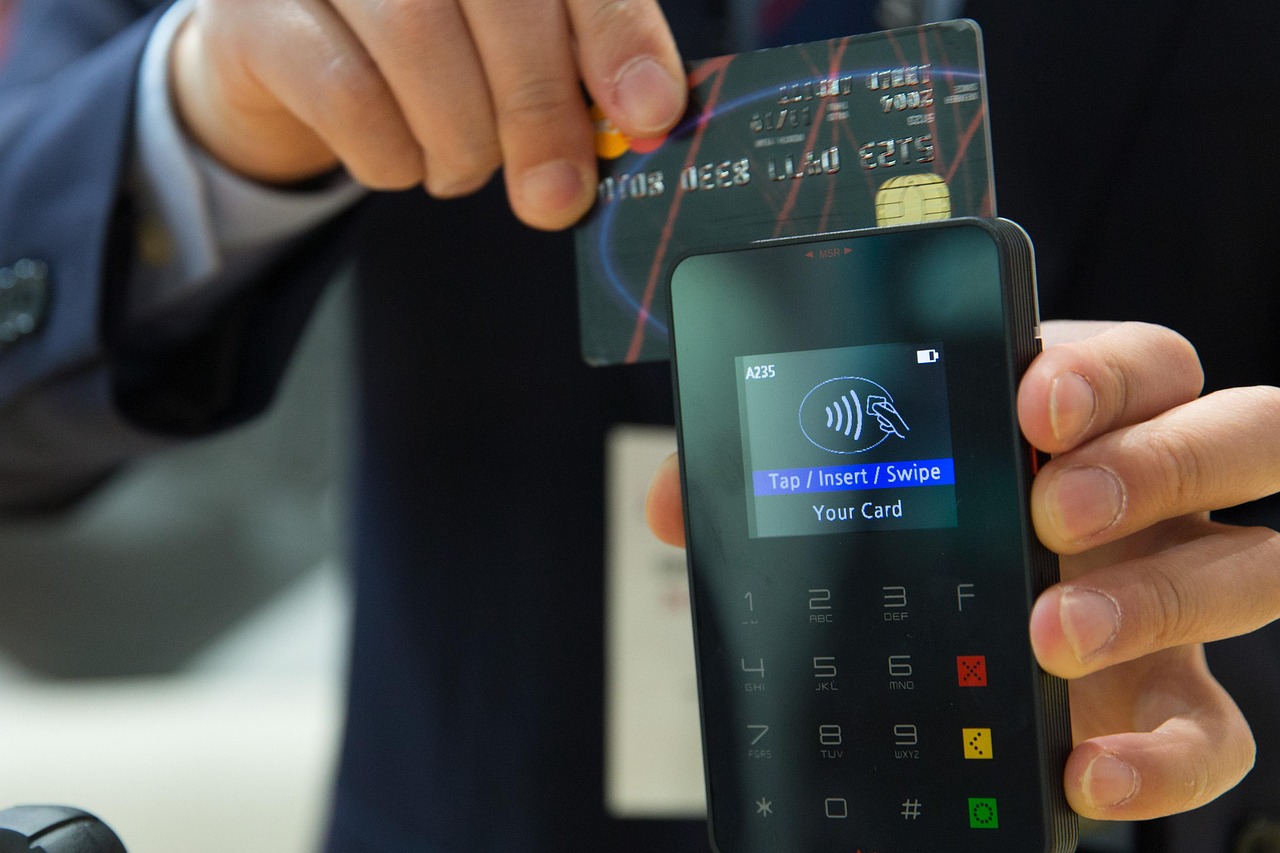
Choosing the right card payment terminal is one of the most commercially consequential decisions a small business owner makes in the UK today. Get it right and you reduce friction at the point of sale, increase average transaction values, and project professionalism to every customer who walks through your door. This guide cuts through the noise to help you select a solution that genuinely fits your business — from a sole-trader market stall to a growing multi-till retail or hospitality operation.
Written by the EPOS Direct UK team, who work with independent retailers, restaurants, cafés and service businesses across the United Kingdom every day.
Why Accepting Card Payments Is No Longer Optional for UK Small Businesses
UK Finance data consistently shows that debit card payments now account for the majority of consumer transactions in Britain, with cash use declining year on year. More importantly for business owners, a significant proportion of customers will abandon a purchase entirely if card acceptance is unavailable. That represents lost revenue, not a minor inconvenience.
Beyond consumer preference, contactless and card payments offer operational advantages: faster queue times, fewer cash-handling errors, lower risk of theft, and cleaner end-of-day reconciliation. For businesses that integrate their payment terminal with a full EPOS system, sales data flows automatically into stock management and reporting — eliminating the manual double-entry that eats into staff time.
If you are still weighing up whether a dedicated EPOS solution makes sense alongside card acceptance, our guide to the best till systems for small businesses in the UK is an excellent companion read.
Types of Card Payment Terminals: Countertop, Portable and Mobile Explained
Not every machine suits every environment. Understanding the core hardware categories is the starting point for a smart procurement decision.
Countertop Terminals
Designed for fixed-point transactions — typically a reception desk, shop counter or bar — countertop terminals connect via Ethernet or broadband and offer highly reliable connectivity. They are well suited to businesses where customers always come to the payment point rather than the other way around.
Portable (Wireless) Terminals
Operating over Wi-Fi or Bluetooth within a defined range, portable terminals allow staff to take payment at the table, in a changing room, or anywhere on your premises. This is the default choice for table-service restaurants, salons and larger retail floors. For a focused look at this category, see our guide to the best wireless card machines for small businesses in the UK.
Mobile (SIM-Based) Terminals
Connecting via a mobile data SIM, these devices are built for businesses operating away from a fixed premises — market traders, mobile beauticians, tradespeople, food-truck operators and pop-up retailers. They work wherever there is a mobile signal, making them genuinely location-independent.
Key Features to Look For in a Small Business Card Reader
Hardware specifications matter less than most vendors suggest. What genuinely determines day-to-day value is the combination of feature set, software integration and support quality. Prioritise the following:
- Contactless & NFC acceptance: Visa, Mastercard, Maestro, American Express, Apple Pay and Google Pay should all be supported as standard. Contactless limits in the UK have risen significantly in recent years — verify the current limit on the UK Finance or Payment Systems Regulator websites.
- Receipt options: Printed receipts remain legally important for certain transaction types; email and SMS receipts are increasingly expected by customers and reduce paper costs.
- Battery life: For portable and mobile terminals, a full trading day on a single charge (typically eight hours or more of active use) is the minimum acceptable standard.
- Software integration: A terminal that connects to your EPOS software eliminates manual reconciliation. This is arguably the single most important feature for growth-minded businesses.
- Reporting dashboard: Real-time visibility of sales by payment method, time of day and product category gives you actionable intelligence, not just a transaction log.
- PCI DSS compliance: All UK merchants accepting card payments must comply with the Payment Card Industry Data Security Standard. Ensure any terminal and provider you choose supports PCI DSS compliance; your acquiring bank or payment facilitator will provide guidance specific to your merchant category.
What Does a Card Payment Terminal Cost in the UK?
Cost is the question every small business owner asks first — and the honest answer is that the total cost of card acceptance depends on several interacting factors. Here is a realistic breakdown of what to expect in the current UK market.
| Cost Component | Standalone Reader (Pay-as-you-go) | Contract Terminal | Integrated EPOS + Terminal |
|---|---|---|---|
| Hardware cost | Typically from £20–£50 upfront | Often included in contract or low upfront fee | Typically from £300–£800+ per till station |
| Monthly fee | None (fees built into transaction rate) | Typically £15–£40 per month per terminal | Typically £30–£80+ per month (software + terminal) |
| Transaction rate | Typically 1.5%–2.5% per transaction | Typically 0.5%–1.5% (lower for higher volumes) | Negotiated; often 0.5%–1.2% at scale |
| Contract length | None — cancel any time | Typically 12–36 months | Typically 12–36 months |
| Best suited to | Very low-volume or intermittent trading | Established businesses with predictable card volumes | Multi-product retail, hospitality, growing businesses |
Important note: All figures above are indicative market ranges to aid budgeting — they are not quotes. Your actual rates will depend on your merchant category, card mix, monthly volume and the acquiring bank or payment facilitator you work with. Always request a full written breakdown of fees before signing any agreement. If a no-monthly-fee arrangement interests you, our dedicated article on card machines with no monthly fee for UK businesses examines this model in detail.
Standalone Readers vs Integrated EPOS Systems: Which Is Right for You?
This is the decision that has the greatest long-term impact on your business's operational efficiency — and it is worth thinking through carefully rather than defaulting to the cheapest upfront option.
When a Standalone Reader Works Well
If your business is very new, trades at low volumes, or operates in a context where simplicity is paramount (a sole-trader service, a one-day market, a pop-up), a standalone reader — connected to a basic phone-based app — offers low risk and minimal commitment. You accept cards, money hits your account, and that is essentially it.
When Integration Becomes Essential
As soon as your business has meaningful stock depth, multiple staff members, table management requirements, or a need for granular sales reporting, a standalone reader becomes a liability rather than an asset. Every card transaction must be manually reconciled against your till records — a process that is time-consuming and error-prone.
An integrated EPOS and payment terminal solves this entirely: the payment terminal communicates directly with the EPOS software, so every sale is recorded, stock is decremented, and end-of-day reports are generated automatically. Our comprehensive guide to card machine and till system combined solutions walks through how this integration works in practice.
For clothing retailers in particular — where size, colour and variant tracking is non-negotiable — the case for full integration is overwhelming. See our article on the best EPOS systems for clothing shops in the UK for sector-specific guidance.
Top Questions to Ask Before Signing a Payment Terminal Contract
Suppliers rarely volunteer the information that most affects your decision. Ask these questions explicitly, in writing, before committing.
- What is the full cost of exiting the contract early? Early termination fees can run to several months of remaining contract value. Understand the exact liability before you sign.
- Which card schemes and wallet types does the terminal accept? Amex acceptance, for example, is not universal and may require a separate agreement. Ensure the hardware and acquiring arrangement covers every payment method your customers use.
- What happens if the terminal develops a fault? Ask specifically about next-business-day replacement, loaner devices, and who is responsible for technical support — the hardware manufacturer, the acquiring bank, or your EPOS provider.
- Are there minimum monthly transaction volumes or fees? Some contracts include a minimum monthly service charge that applies even in a slow trading period. This is particularly relevant to seasonal businesses.
- How does the terminal integrate with my EPOS software? Ask for a demonstration of the integration — not a slide deck, but an actual live transaction through the system you will be using.
Standalone or Full EPOS? A Quick Checklist
If you can answer yes to two or more of the following, a fully integrated EPOS system with a connected payment terminal is almost certainly the right direction:
- You manage more than 50 SKUs or menu items
- You employ two or more staff who handle transactions
- You want to track sales performance by product, category or time period
- You operate a loyalty programme or plan to introduce one
- You take orders as well as payments (table service, click-and-collect, pre-orders)
- You need to reconcile card takings with cash takings and produce end-of-day reports automatically
For a fuller picture of what a complete EPOS solution looks like for a growing independent business, our complete 2026 guide to EPOS systems for small businesses covers the full decision-making process from hardware selection through to software configuration.
How EPOS Direct Helps UK Retailers and Hospitality Businesses Take Payments Seamlessly
EPOS Direct provides integrated payment and EPOS solutions to independent retailers, restaurants, cafés, bars, pharmacies and service businesses across the United Kingdom. Rather than selling you a card reader and leaving you to figure out the rest, we build payment acceptance into a complete point-of-sale ecosystem — one where your terminal, till software, stock management and reporting work as a single connected system from day one.
Our retail clients benefit from integrated stock control, multi-location management and customer loyalty tools alongside payment acceptance. Hospitality businesses gain table management, course-by-course ordering, kitchen display integration and split-bill functionality — all connected to a payment terminal that works the way a busy restaurant or bar actually operates. You can explore the full range of our software capabilities at our EPOS software platform, or book a tailored walkthrough — a retail EPOS software demo or a restaurant EPOS software demo — to see exactly how the payment integration functions in your specific context.
We work with businesses at every stage — from a first till setup to a multi-site EPOS rollout. If you are comparing solutions and want straightforward, no-pressure guidance, you can talk to an expert online or browse our current retail EPOS offers and hospitality and restaurant EPOS offers to see what is available right now. For a broader overview of everything EPOS Direct provides to UK businesses, the EPOS Direct home page is the best place to start.
Making the Right Choice for Your Business
The best card payment terminal for your business is not necessarily the cheapest or the most feature-rich — it is the one that fits your trading environment, integrates with the systems you already use or plan to adopt, and comes with support you can rely on when something goes wrong. For most UK small businesses beyond the very earliest stage, a fully integrated EPOS and payment solution delivers a materially better return on investment than a standalone reader — both in operational efficiency and in the quality of business intelligence it generates.
EPOS Direct specialises in exactly this: payment and EPOS solutions built for the realities of UK retail and hospitality, not generic software bolted onto commodity hardware. To find out what the right setup looks like for your specific business, request a free demo or request a call back from the EPOS Direct team — no obligation, no jargon, just practical guidance from people who do this every day.
Frequently asked questions
- What are the typical monthly costs for a card terminal in the UK?
- Costs vary depending on the provider and contract type. Standalone card readers from providers like SumUp or Square can be purchased outright for £30–£60 with no monthly fee but higher transaction rates (1.69%–2.5%). Managed terminal contracts from banks or acquirers typically cost £15–£35 per month with lower transaction rates of 0.3%–1.5%. Integrated EPOS solutions from specialists like EPOS Direct bundle the payment terminal with full till software, often making them more cost-effective at scale for retail or hospitality businesses.
- Do I need a separate card machine if I already have an EPOS system?
- Not necessarily. Many modern EPOS systems can integrate directly with a payment terminal so that card transactions are automatically reconciled with your sales data. This removes the need for manual entry, reduces human error, and speeds up the checkout process. If your current card reader is standalone, it is worth asking your EPOS provider whether a fully integrated payment solution is available, as the operational benefits are significant.
- Can a small business use a card machine without a merchant account?
- Yes. Some payment providers like Square and SumUp use aggregated merchant accounts, meaning you can start accepting cards almost immediately without applying for a dedicated merchant account. However, for businesses with higher transaction volumes, a dedicated merchant account usually offers lower per-transaction rates and more stability. EPOS Direct can advise on the right payment setup to match your business turnover and sector.
