We use cookies to make your experience better.
To comply with the new e-Privacy directive, you agree to the privacy policy and our use of cookies


The Complete Card Payment Machine Guide for UK Retailers & Hospitality Businesses
Card Payment Machines Explained: Everything UK Businesses Need to Know

Accepting card payments is no longer a nice-to-have for UK businesses — it is a commercial necessity. Whether you run a busy high-street shop, a café, a market stall or a multi-site hospitality group, the payment terminal you choose shapes every customer interaction, influences queue times and directly affects your bottom line through fees and integration costs. This guide covers every dimension of that decision: how the technology works, which terminal type suits which business, what fees to anticipate, and how to avoid the mistakes that cost UK operators real money.
Written by the EPOS Direct UK team, who work with independent retailers, restaurateurs and hospitality operators across the United Kingdom every day to design, supply and support complete EPOS and payments solutions.
What Is a Card Payment Machine and How Does It Work?
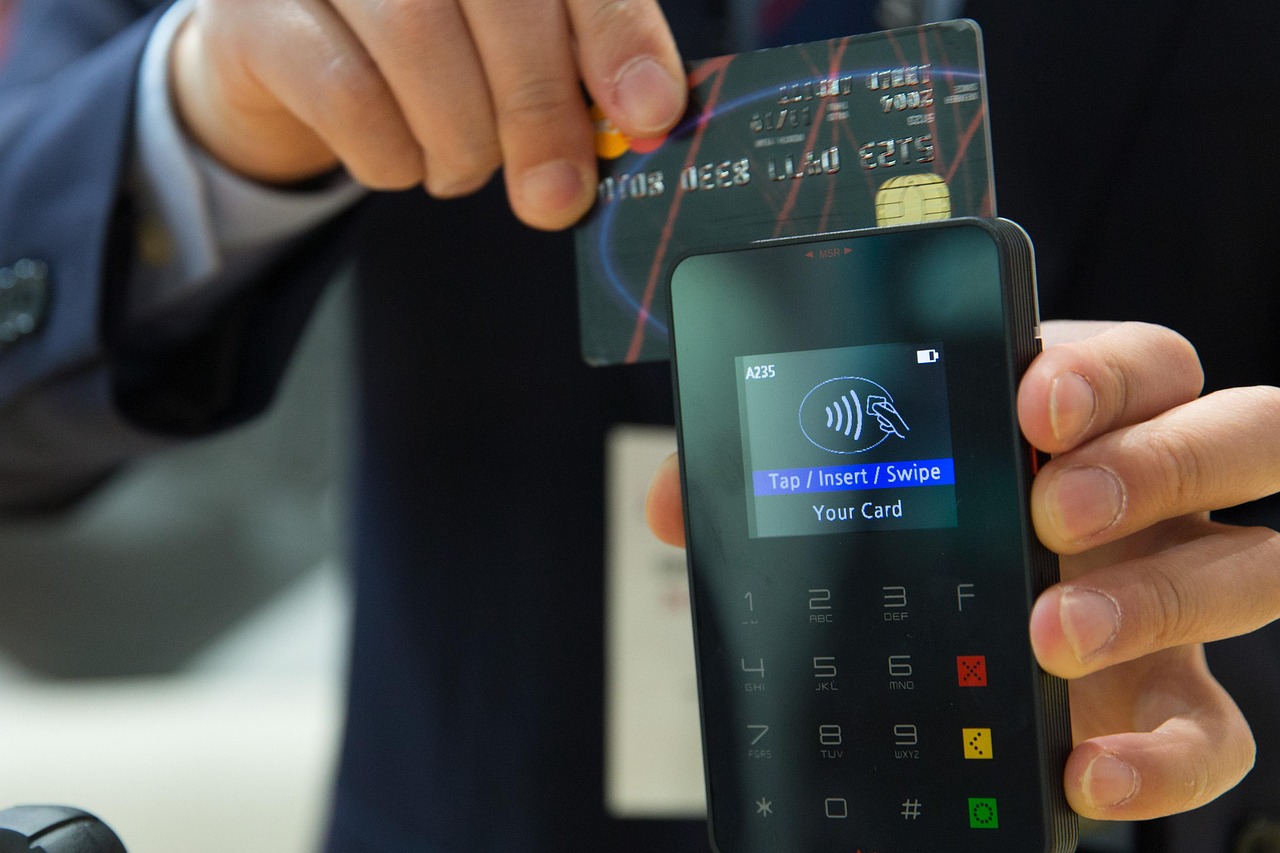
A card payment machine — also called a payment terminal or card reader — is a device that securely captures a customer's payment card data and communicates with the card networks (Visa, Mastercard, Amex) and the customer's bank to authorise and settle a transaction in real time. The process happens in three stages: authentication (confirming the card is genuine via chip, tap or swipe), authorisation (checking the customer has sufficient funds), and settlement (transferring the funds, usually within one to three business days, to the merchant's account).
Modern terminals handle contactless payments via NFC, chip-and-PIN, and mobile wallets such as Apple Pay and Google Pay. Security is governed by the Payment Card Industry Data Security Standard (PCI DSS), which all UK merchants processing card payments must comply with — your acquirer (the financial institution processing your payments) will guide you through the relevant compliance tier. You can verify current PCI DSS requirements at the PCI Security Standards Council website.
Types of Terminal: Countertop, Portable and Mobile
Choosing the right terminal form factor is the first practical decision. Each suits a different operational model.
Countertop terminals
Fixed to a checkout desk and connected via Ethernet or Wi-Fi, countertop terminals are reliable, fast and suited to any business where customers come to a point of sale — supermarkets, pharmacies, convenience stores and service counters. They tend to offer the lowest per-unit hardware cost and the most consistent connectivity.
Portable (Wi-Fi / Bluetooth) terminals
Portable terminals communicate wirelessly within a premises, letting staff bring the payment to the table or the fitting room. They are the standard choice for restaurants, pubs and salons. Battery life, wireless range and screen clarity matter here. If this is your environment, our dedicated guide to the best wireless card machines for small businesses in the UK covers current options in detail.
Mobile (SIM / 4G) terminals
Mobile terminals use a SIM card for connectivity, making them ideal for market traders, food trucks, pop-ups, tradespeople and delivery drivers who operate entirely away from a fixed broadband connection. Look for a long-lasting battery (ideally rated for a full trading day) and a ruggedised casing.
| Terminal type | Best for | Connectivity | Typical indicative hardware cost | Key consideration |
|---|---|---|---|---|
| Countertop | Retail, pharmacy, service counter | Ethernet / Wi-Fi | Typically from £80–£200 (purchase) | Stable connection; no battery dependency |
| Portable (Wi-Fi/BT) | Restaurants, pubs, salons | Wi-Fi / Bluetooth | Typically from £100–£250 (purchase) | Range and battery life are critical |
| Mobile (4G/SIM) | Markets, food trucks, mobile trades | 4G / SIM | Typically from £50–£180 (purchase) | Data costs; outdoor ruggedness |
| Integrated EPOS terminal | Any business wanting one system | Ethernet / Wi-Fi / 4G | Varies by bundle; often lower total cost | Eliminates manual reconciliation |
Hardware cost ranges above are indicative only and will vary by provider, contract terms and any bundled services.
Key Features to Look for When Choosing a Card Reader
Beyond form factor, the specification of the device itself determines whether it serves your business long-term or becomes a frustration within months.
- Contactless and NFC: Essential. UK contactless limits have risen significantly in recent years; your terminal must support the current limit and mobile wallet payments.
- Receipt options: Printed receipts require a built-in printer (or a paired printer); digital receipt capability reduces consumable costs.
- Screen size and touch quality: Larger screens reduce errors on busy service floors and improve the customer signature experience.
- Battery life: For portable and mobile terminals, aim for at least eight hours of active use between charges.
- EPOS integration: A terminal that pushes transaction data directly into your till software eliminates manual keying errors and speeds up end-of-day reconciliation. See our full guide on EPOS systems with integrated card payments for a detailed breakdown.
- Remote management: Enterprise or multi-site operators benefit from terminals that can be updated, configured and monitored centrally.
- Support and replacement SLA: Check what happens if a terminal fails on a busy Saturday — next-day swap-out versus a week's wait is a significant operational difference.
Understanding Fees and Transaction Costs in the UK
One of the most common questions from business owners is: what will I actually pay to accept card payments? The answer has several layers, and understanding each one prevents costly surprises.
The main fee categories
- Transaction / interchange fee: A percentage of each transaction, set largely by the card networks. UK consumer debit cards tend to attract lower rates than commercial credit cards.
- Monthly rental or subscription: Many acquirers charge a monthly fee for the terminal hardware and/or gateway access. Some providers offer a pay-as-you-go model with no fixed monthly cost — our guide to card machines with no monthly fee explores this option for lower-volume businesses.
- Authorisation fee: A small per-transaction fixed fee charged in addition to the percentage rate by some processors.
- PCI compliance fee: An annual or monthly charge for maintaining your PCI DSS compliance status.
- Chargeback fees: Applied when a customer disputes a transaction; minimised by good operational practice and clear receipts.
Indicative market ranges
As a rough orientation for UK small businesses (figures are indicative market guidance only — actual rates depend on your turnover, card mix and negotiated contract):
- Transaction rates: typically between 0.3% and 1.75% for consumer debit/credit cards, higher for commercial and international cards
- Monthly terminal rental: typically £10–£35 per terminal with many acquirers
- Pay-as-you-go flat rates: some providers charge a single flat rate (often in the range of 1.0%–1.75%) with no monthly fee — attractive for low volumes, less so at scale
Always request a full schedule of charges from any provider and model your likely monthly cost against your actual card turnover before signing. The Financial Conduct Authority (FCA) regulates payment service providers in the UK; you can check a provider's authorisation status on the FCA register.
How to Integrate a Card Payment Machine with Your EPOS System
Running a payment terminal separately from your EPOS till is a legacy approach that creates unnecessary work: staff manually key payment amounts, reconciliation takes longer, and human error creeps in. Integrated payments — where your EPOS software sends the transaction total directly to the terminal and receives confirmation back — eliminates those friction points entirely.
For a deeper look at combining hardware and software into a single solution, the guide on card machine and till system combined walks through the practical and financial case for integration. Key integration questions to ask any supplier include:
- Is the integration native or third-party? Native integrations (built by the same provider) are generally more stable and easier to support than middleware bridges.
- What payment gateways are supported? Confirm your preferred acquirer is on the certified list.
- How is settlement data synchronised? Real-time or batch? Batch settlement at close of business is fine for most retailers; hospitality operations sometimes require real-time reporting.
- What happens if connectivity drops? A well-designed system stores transactions offline and syncs when reconnected.
If you are evaluating a full EPOS setup alongside payments, our complete guide to EPOS systems for small businesses is a practical starting point, while the EPOS Direct UK home page brings together our latest offers and solutions across retail, hospitality and specialist sectors.
Common Mistakes UK Businesses Make When Picking a Payment Terminal
Having helped hundreds of UK operators choose and deploy payment solutions, the EPOS Direct team sees the same costly errors repeat. Avoid these:
- Choosing on hardware price alone. A cheap terminal on a high transaction-rate contract almost always costs more over 24 months than a moderately priced terminal on a competitive rate. Model total cost of ownership, not upfront spend.
- Locking into a long contract without benchmarking. Multi-year contracts can lock you into rates that become uncompetitive as your volume grows. Always compare at least three acquirers before signing.
- Ignoring PCI compliance obligations. Non-compliance can result in fines from your acquirer and increased exposure in the event of a data breach. Understand your compliance tier from day one.
- Underestimating Wi-Fi requirements. Portable terminals need solid in-premises Wi-Fi. A terminal that drops connection during a peak service period damages customer confidence. Test coverage before going live.
- Failing to consider scalability. A solution that works for one terminal in one location may not scale cost-effectively to five terminals across three sites. Ask about multi-terminal pricing from the outset.
- Overlooking support quality. What is the provider's UK support hours? Is there a dedicated account manager or a call centre queue? Terminal downtime costs real revenue.
Getting Set Up with a Card Payment Machine Through EPOS Direct UK
EPOS Direct UK supplies and supports fully integrated EPOS and payment solutions for retailers, restaurants, cafés, pharmacies and hospitality businesses across the United Kingdom. Our approach is to configure a solution around your specific operation — not to sell you a generic box from a shelf — which is why we offer a free, no-obligation consultation before any hardware is specified.
Here is how the process typically works:
- Discovery conversation: We map your current payment volumes, trading environment, staffing model and any existing software to recommend the right terminal type and acquirer partnership.
- Solution design: We specify hardware (countertop, portable or mobile), integration approach, and any additional peripherals (receipt printers, barcode scanners, cash drawers).
- Demo and approval: You see the software in action before committing. Request a free demo to arrange a live walkthrough relevant to your sector.
- Installation and training: Our team handles setup and trains your staff so you are trading with confidence from day one.
- Ongoing support: UK-based support, regular software updates and a clear escalation path if hardware ever needs replacing.
If you are in retail, explore our retail EPOS offers or take a retail EPOS software demo to see the system in action. For restaurants and hospitality businesses, our hospitality and restaurant EPOS offers outline packages designed for fast-paced service environments, and a restaurant EPOS software demo can be arranged at a time that suits you.
Operators looking for cost-conscious options will find useful context in our guide to the most affordable EPOS systems for small businesses in the UK, which balances price against capability honestly.
The Bottom Line
Selecting the right payment terminal is about far more than which device looks sleekest on your counter. It is a decision that touches transaction costs, operational efficiency, customer experience and the long-term scalability of your business. The businesses that get it right treat the terminal as one component of a joined-up payments and EPOS strategy — not a standalone purchase.
EPOS Direct UK is here to help you make that decision with confidence. Talk to an expert online for immediate guidance, or request a call back and one of our team will be in touch to discuss your specific requirements — with no obligation and no sales pressure.
Frequently asked questions
- How much does a card payment machine cost for a small UK business?
- In the UK, card payment machine costs vary by provider and contract type. Standalone card readers from providers like SumUp or Square can cost £19–£49 as a one-off purchase with transaction fees of 1.69%–2.5%. Integrated countertop terminals through merchant services typically cost £15–£30 per month on contract, with transaction fees ranging from 0.3% to 1.5% depending on your card volume. Businesses processing higher volumes can often negotiate lower rates. When bundled with an EPOS system from EPOS Direct UK, you may benefit from combined hardware and software pricing that reduces overall monthly outgoings.
- What is the difference between a portable and a mobile card machine?
- A portable card machine connects to your till point via Bluetooth or Wi-Fi and is designed for use within your premises — ideal for tableside payments in restaurants or across a retail shop floor. A mobile card machine uses a SIM card and a 4G connection, making it suitable for market traders, delivery drivers, or pop-up businesses that operate outdoors or away from a fixed location. If you run a bricks-and-mortar business, a portable terminal integrated with your EPOS system is usually the better choice for speed and reliability.
- Can I connect a card payment machine directly to my EPOS till system?
- Yes — and doing so is strongly recommended. Integrating your card terminal with your EPOS system eliminates manual entry errors, speeds up the checkout process, and gives you unified sales reporting in one place. EPOS Direct UK offers card payment terminals that integrate seamlessly with their EPOS software, meaning transaction totals are sent automatically from the till to the card machine. This is particularly valuable in busy retail or hospitality environments where accuracy and speed matter most.
