We use cookies to make your experience better.
To comply with the new e-Privacy directive, you agree to the privacy policy and our use of cookies


Affordable EPOS Software for UK Retailers & Hospitality Businesses
Affordable EPOS Software for UK Retail & Hospitality: What to Look For and Where to Find It

Finding affordable point-of-sale software that genuinely supports your business — rather than just getting your foot in the door with a loss-leader price — is one of the more consequential decisions a UK retailer or hospitality operator will make. The good news: the market has matured considerably, and there are now legitimate, well-featured EPOS solutions available at price points that suit independent businesses, small chains and startups alike. The key is knowing which features are non-negotiable, where corners are typically cut, and how to separate strong value from false economy.
Written by the EPOS Direct UK team, who support UK retail and hospitality businesses with EPOS and POS systems every day.
Why UK Businesses Are Prioritising Cost-Effective EPOS Software Right Now
Margin pressure across UK retail and hospitality has intensified. Rising staffing costs, energy bills and business rates have pushed operators to scrutinise every line of their technology spend — and EPOS software is no exception. At the same time, HMRC's Making Tax Digital initiative means that basic cash registers are no longer sufficient for many businesses; digital records and integrated reporting are fast becoming a compliance necessity rather than a luxury.
The result is a specific kind of search behaviour: businesses are not looking to go without capable software — they want capable software at a price that respects their reality. That distinction matters, because the wrong kind of "budget" EPOS solution can cost significantly more in lost sales, inefficiency and support headaches than a slightly higher monthly subscription would have.
For a broader look at what the market currently offers, the complete 2026 guide to EPOS systems for small businesses is a useful starting point.
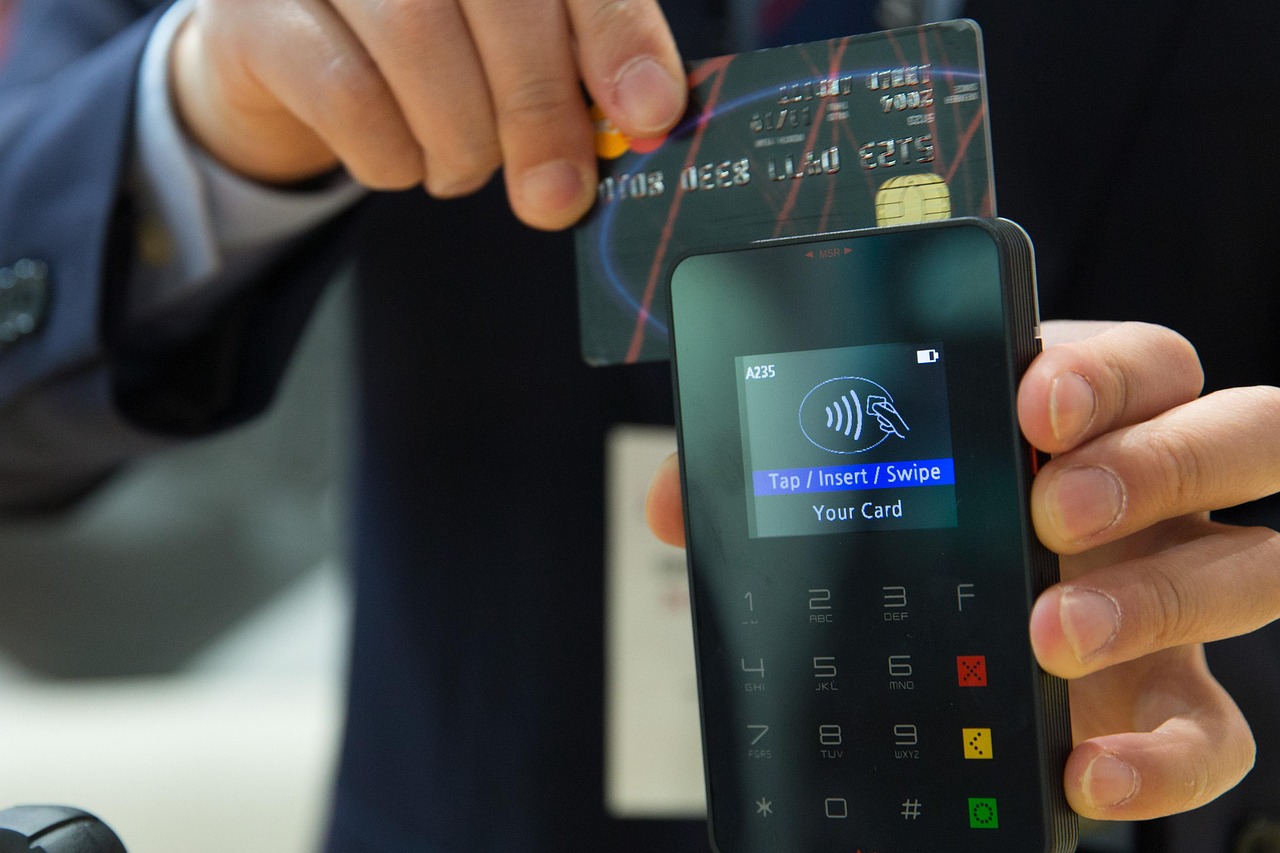
What Features Should an Affordable EPOS System Actually Include?
Price-conscious buyers sometimes accept stripped-back software, only to discover they need to pay extra for the features they assumed were standard. Below is a practical baseline — if a system cannot deliver these capabilities at its stated price, it is not genuinely cost-effective.
Core functionality that should come as standard
- Sales processing and receipting — including split payments, refunds and voids without requiring an add-on module.
- Stock management — real-time inventory tracking with low-stock alerts; critical for retail and F&B alike.
- Product and variant management — the ability to handle sizes, colours, modifiers and bundles without requiring a separate SKU for every combination.
- Reporting and end-of-day summaries — Z-reports, sales-by-category breakdowns and staff performance data, exportable to CSV or integrated with accounting software.
- Customer accounts and loyalty — even a basic loyalty scheme can meaningfully increase repeat visit frequency.
- Cloud backup — so a hardware failure does not mean permanent data loss.
- UK-specific tax handling — correct VAT calculations, the ability to set mixed-rate product categories and compliant receipt formatting.
Sector-specific requirements
- Retail: barcode scanning, supplier purchase orders, staff permissions by role. See our guide to the best EPOS systems for clothing shops for a retail-specific deep-dive.
- Hospitality: table management, kitchen display system (KDS) integration, course-by-course ordering and allergen flagging.
- Pharmacy: PMR integration, prescription management and age-verification prompts.
Cloud-Based vs On-Premise EPOS: Which Is More Cost-Effective?
This is one of the first questions buyers raise — and the honest answer is: it depends on your business size and appetite for upfront expenditure.
| Factor | Cloud-Based EPOS | On-Premise EPOS |
|---|---|---|
| Upfront cost | Lower — typically a monthly licence fee with minimal setup charge | Higher — software licence often purchased outright |
| Ongoing cost | Predictable monthly or annual subscription | Lower ongoing fees, but updates may incur additional charges |
| Hardware dependency | Runs on standard tablets or terminals; hardware is interchangeable | Often tied to specific hardware; replacement can be costly |
| Internet reliance | Requires connectivity; offline mode availability varies by provider | Fully functional without internet |
| Updates and maintenance | Automatic, included in subscription | Manual; IT resource or support contract usually required |
| Scalability | Easy to add locations or users; pricing scales modularly | Can require significant re-investment to scale |
| Best suited to | Independents, small chains, growing businesses | Established single-site operators with stable, specific requirements |
For most independent UK businesses in 2024–2025, cloud-based EPOS represents the more cost-effective path: lower upfront commitment, automatic compliance updates (particularly relevant as MTD obligations expand), and the ability to manage the business remotely via a browser or app.
How Much Does EPOS Software Typically Cost in the UK?
The following ranges are indicative guidance based on typical UK market positioning — not exact quotes, and not competitor pricing. Always request a tailored proposal for your specific setup.
- Entry-level cloud EPOS (single terminal, limited features): typically from around £15–£30 per month. Suitable for very simple retail or market-stall operations; often lacks stock management depth or integrations.
- Mid-tier cloud EPOS (full retail or hospitality feature set, single site): most setups fall between £40–£80 per month, inclusive of software, updates and standard support.
- Multi-site or advanced hospitality EPOS: typically from £80–£150+ per month per location, depending on user count, integrations and support tier.
- On-premise perpetual licence: upfront costs often range from several hundred to several thousand pounds, with annual maintenance contracts on top.
- Hardware (if not already owned): a complete terminal setup — touchscreen, receipt printer, cash drawer — typically falls between £400–£1,200 depending on specification.
For a more detailed breakdown by business type, our guide to the most affordable EPOS systems for small businesses covers the full cost picture.
Hidden Costs to Watch for When Evaluating Budget EPOS Systems
A low headline price is occasionally the beginning of a more expensive relationship. Experienced buyers learn to probe for the following before committing:
- Per-transaction fees — some software providers take a small percentage of each sale processed, which compounds significantly at volume.
- Support tiers — basic subscriptions often limit you to email-only support with slow response times. Telephone or live-chat support is frequently an add-on.
- Integration charges — connecting to Xero, Sage, Deliveroo, or an e-commerce platform may require a paid module or a third-party connector tool.
- Hardware lock-in — some providers supply proprietary hardware that cannot be used with another software platform, effectively locking you in at renewal.
- Data export restrictions — a handful of platforms make it difficult or costly to export your own customer and sales data when switching providers.
- Training and onboarding fees — particularly common with on-premise or enterprise-adjacent systems sold to small businesses.
If you are also evaluating payment processing, it is worth reading our guide to card machines with no monthly fee to understand where payment costs sit independently of your EPOS software subscription.
Does Affordable EPOS Software Mean Lower Quality?
Not necessarily — but the relationship between price and capability is real. The distinction to draw is between providers who have engineered a genuinely efficient, scalable product and can therefore offer it at a competitive price, versus those who have simply removed features to hit a price point. The former represents strong value; the latter represents a risk.
A practical way to test this: request a live software demo before purchasing. A confident provider will give you full access to a working environment. If a vendor is reluctant to demonstrate the product in action — particularly the stock management, reporting and integration capabilities — that reluctance is informative.
You can book a retail EPOS software demo or a restaurant EPOS software demo with EPOS Direct to see exactly what the platform delivers before making any commitment.
Why EPOS Direct Offers Strong Value Without Compromising on Capability
EPOS Direct has been supplying and supporting UK businesses with EPOS and POS systems across retail, hospitality and specialist verticals including pharmacy. The platform is built to include the features that growing businesses actually need — without gating them behind premium tiers or charging per-transaction fees that erode margin over time.
What sets EPOS Direct apart at a competitive price point
- Full stock management, purchasing and supplier tools included as standard — not as an upgrade.
- Integrated card payment processing options, including the ability to combine your till and card machine into a single, unified system. Our guide to combining a card machine and till system explains how this works in practice.
- Dedicated UK-based support — an important differentiator when your busiest trading hour is also your most vulnerable moment for a technical issue.
- Flexible hardware options, including terminals, tablets and wireless handheld devices suitable for table service and mobile retail.
- Sector-specific software configurations for retail, restaurants, cafés, bars and pharmacies — with demo environments available to explore before purchase.
Visit the EPOS Direct home page for current offers and further information, or explore the full software platform at software.eposdirect.co.uk.
How to Choose the Right Affordable EPOS Software for Your Business Type
The right solution depends on a combination of your sector, scale, existing hardware and integration requirements. Use the following framework as a starting point:
- Define your non-negotiables first. List the three to five features without which the system cannot work for your operation. Stock management? Table management? Loyalty? These must be included, not promised on a roadmap.
- Audit your current hardware. If you already own compatible terminals or receipt printers, ensure the software works with them — this can meaningfully reduce your total cost. Our guide to the best till systems for small businesses covers hardware compatibility in detail.
- Request a demo, not just a brochure. Screenshots and marketing copy are not a substitute for a live walkthrough. Pay particular attention to how intuitive the interface is under realistic trading conditions.
- Ask about total cost of ownership over 24 months, not just the monthly headline price. Factor in support, integrations, hardware and any transaction fees.
- Check the support model. Who do you call at 7pm on a Saturday when the system goes down before a busy service? The answer to that question matters more than the price per month.
- Verify exit terms. Understand the contract length, data portability and what switching would cost if your needs change.
If you are in pharmacy retail specifically, a pharmacy EPOS software demo will show how the platform handles prescription workflows and PMR integration alongside standard retail functions.
Ready to Find the Right EPOS Software for Your Business?
Choosing EPOS software that balances cost with genuine capability is entirely achievable — the market has never offered more options at accessible price points for UK businesses. The discipline is in evaluating total cost of ownership, insisting on a live demonstration and understanding the support model before signing anything.
EPOS Direct works with UK retailers, restaurants, cafés, bars and pharmacies to deliver systems that are genuinely competitive on price without removing the features that matter. Request a free demo to see the platform in action, explore our retail EPOS offers or hospitality and restaurant EPOS offers, or talk to an expert online — with no obligation and no pressure.
Frequently asked questions
- How much should I expect to pay for EPOS software in the UK?
- In the UK, EPOS software costs vary widely. Basic cloud-based plans can start from around £15 to £30 per month per terminal, while more feature-rich systems for retail or hospitality typically range from £40 to £100 per month. Some providers, including EPOS Direct, offer bundled hardware and software packages from around £300 to £800 upfront, which can be more cost-effective long term than ongoing monthly subscriptions. Always compare total cost of ownership, not just the headline price.
- Can I get EPOS software that works for both retail and hospitality without buying two separate systems?
- Yes. Many modern EPOS platforms are designed to handle both retail and hospitality environments from a single system. Look for software that supports product catalogues and barcoding for retail alongside table management, split billing, and kitchen order printing for hospitality. EPOS Direct offers configurable solutions that can be tailored to your specific business type without requiring multiple licences.
- Is free or very cheap EPOS software reliable enough for a real business?
- Free EPOS software does exist, but it usually comes with significant limitations such as restricted transaction volumes, limited reporting, no dedicated UK support, or aggressive upselling. For a business processing real customer transactions daily, reliability and support matter enormously. A low-cost but properly supported EPOS solution from a UK-based provider is almost always a safer investment than a free tool with no service guarantee.
