We use cookies to make your experience better.
To comply with the new e-Privacy directive, you agree to the privacy policy and our use of cookies


How to Compare POS Systems: A Practical Guide for UK Retailers & Hospitality Businesses
How to Compare POS Systems: A Practical Guide for UK Retailers & Hospitality Businesses

Choosing the right point-of-sale system is one of the most consequential technology decisions a UK business owner will make — it touches everything from daily transaction speed to long-term financial reporting. The good news is that the UK market now offers genuinely excellent options across every budget and business type, provided you know what to evaluate. This guide gives you a clear, practical framework to compare POS systems with confidence, whether you run a boutique retailer, a busy restaurant, or a multi-site hospitality group.
What Does a Strong POS Comparison Actually Involve?
Many buyers start by comparing price lists. That is the wrong starting point. The most useful comparison begins with your operational requirements — transaction volumes, staff size, integration needs, and growth plans — and works backwards to the technology. A system that is cheap to buy but expensive to scale, or feature-rich but complex to train staff on, will cost you more over three years than a well-matched solution at a higher initial price.
The core dimensions worth evaluating are:
- Feature fit: Does the software cover your specific workflows, or will you need costly workarounds?
- Hardware compatibility: Can the supplier provide peripherals — receipt printers, customer displays, kitchen display screens — from a single source?
- Payment processing: How does the system handle card payments, and are there restrictions on which acquirer you use?
- Support model: Is support UK-based, and what are the response times for a critical failure during trading hours?
- Scalability: Can you add tills, sites, or users without re-platforming entirely?
- Data ownership: Can you export your own sales and customer data freely?
For a broader introduction to the market, the complete guide to EPOS and POS systems for UK businesses is a useful reference point before you start narrowing your shortlist.
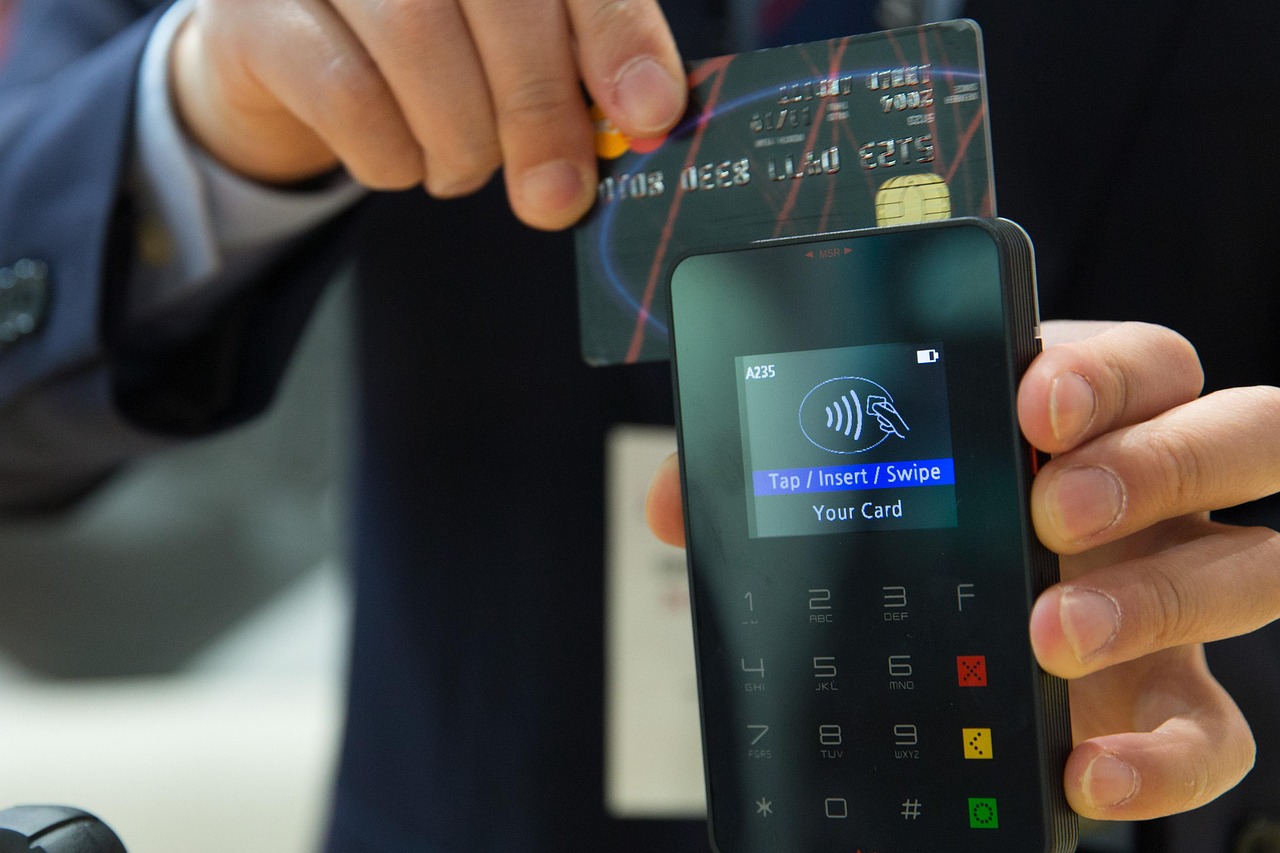
Cloud-Based vs. On-Premise POS: Which Is Right for You?
This is the architectural decision that shapes everything else. Both approaches have genuine strengths; the right answer depends on your connectivity reliability, IT resource, and appetite for ongoing software costs.
| Factor | Cloud-Based POS | On-Premise POS |
|---|---|---|
| Upfront hardware cost | Lower — often subscription-based | Higher — server and licences purchased outright |
| Ongoing software cost | Monthly SaaS fee per terminal | Annual maintenance or one-off licence |
| Internet dependency | Requires stable broadband; good systems operate in offline mode | Fully local — no internet required for core functions |
| Remote management | Excellent — update menus, prices and reports from anywhere | Typically requires on-site access or VPN |
| Automatic updates | Yes — included in subscription | Manual — may require engineer visits |
| Best suited to | Multi-site retail, hospitality, growing businesses | Sites with poor connectivity, highly customised enterprise setups |
For most UK retailers and hospitality operators launching or upgrading in 2025 and beyond, a cloud-based system with robust offline capability represents the more practical and future-proof path. The ability to manage pricing, promotions, and reporting remotely — without calling in an IT engineer — delivers a tangible operational advantage.
Retail vs. Hospitality: The Features That Actually Differ
A POS built for a restaurant will frustrate a clothing retailer, and vice versa. Understanding where these workflows diverge helps you filter out mismatched solutions quickly.
What retail businesses need most
- Barcode scanning with fast product lookup across large SKU catalogues
- Stock management with low-stock alerts, purchase order generation, and supplier tracking
- Loyalty schemes and gift card processing
- Multi-variant product handling (size, colour, style)
- End-of-day Z-reports and VAT reporting aligned with HMRC Making Tax Digital requirements
- Integration with ecommerce platforms such as WooCommerce or Shopify
If you operate a fashion or apparel business specifically, our detailed article on the best EPOS systems for clothing shops in the UK covers the variant management and seasonal stock considerations in depth.
What hospitality businesses need most
- Table management and floor plan mapping
- Course-by-course ordering and kitchen display system (KDS) integration
- Split bills, covers tracking, and service charge handling
- Allergen and modifier prompts at the point of order
- Integration with reservation platforms and delivery aggregators
- Real-time wastage and gross profit reporting by dish
If you would like to see how these features perform in practice before committing, you can explore the restaurant EPOS software demo from EPOS Direct to walk through a live hospitality environment.
Hardware Considerations: Touchscreens, Scanners and Card Readers
Software capability is only half the picture. Hardware reliability during peak trading — a Saturday lunch service or a December retail rush — is where poorly specified systems fail businesses.
Key hardware questions to ask any supplier
- Touchscreen quality: Is the display rated for hospitality environments (spill resistance, bright enough to read in sunlight for outdoor venues)?
- Barcode scanner type: For high-volume retail, a wired handheld scanner is faster than a built-in camera. For warehousing or stockroom use, a wireless unit adds flexibility.
- Card reader integration: Is the card machine fully integrated — so payments post directly to the till without manual keying — or is it a separate terminal that requires staff reconciliation? Fully integrated setups reduce errors and speed up checkout materially.
- Receipt printer compatibility: Thermal printers are industry standard; confirm the model is supported natively by the software rather than relying on generic drivers.
- Cash drawer: Still necessary in most UK retail and hospitality settings despite the growth in cashless payments.
For businesses evaluating standalone payment hardware alongside their POS, our guide to combining a card machine and till system explains the integration options in detail, and our article on the best wireless card machines for small UK businesses covers portable payment options specifically.
POS System Costs in the UK: Honest Indicative Guidance
One of the most common questions from buyers is straightforward: what will this actually cost? The honest answer is that pricing varies considerably based on the number of terminals, software tier, hardware bundle, and support package. The figures below are indicative market ranges to help you budget — they are not quotes, and your actual costs should be confirmed directly with any supplier.
Typical cost components
- Hardware (per terminal): A complete till setup including touchscreen, receipt printer, cash drawer, and barcode scanner typically ranges from around £500 to £1,500 depending on specification. Entry-level tablet-based setups can come in below this; ruggedised hospitality hardware sits at the higher end.
- Software subscription: Cloud POS software for UK businesses most commonly runs from approximately £30 to £100 per terminal per month, depending on the feature tier. Enterprise or multi-site licences are usually negotiated separately.
- Card processing fees: These vary by acquirer and transaction volume, but UK merchants should budget for blended rates typically between 0.5% and 2% per transaction. Some suppliers bundle processing; others allow you to choose your own acquirer.
- Installation and training: On-site installation and staff training from a UK supplier typically ranges from a few hundred pounds to over a thousand for complex multi-terminal setups. Remote setup options are increasingly available and cost less.
- Ongoing support: Dedicated UK support contracts are often included in subscription tiers or available as an add-on, typically from around £20 to £60 per month per site.
For small businesses specifically weighing up value, our guide to the most affordable EPOS systems for small UK businesses explores budget-conscious options without compromising on essential features. You can also browse EPOS Direct's full range of offers and information to understand current package pricing directly.
Is there a meaningful saving in avoiding monthly fees?
Some buyers specifically seek card machines or software with no recurring fees. This can work for very low-volume operations, but businesses processing more than a few dozen transactions daily will almost always find that integrated, subscription-based systems generate a net saving through reduced errors, faster throughput, and reporting that would otherwise require additional bookkeeping time. Our article on card machines with no monthly fee weighs up when that approach genuinely makes sense.
Common Pitfalls to Avoid When Switching POS Providers
Switching systems mid-trading year carries real operational risk. These are the mistakes that cost businesses the most — and that experienced buyers learn to pre-empt.
- Underestimating data migration complexity. Product libraries, customer records, and historical sales data rarely transfer cleanly between systems. Ask any prospective supplier to demonstrate their data migration process with a real sample of your data before signing.
- Choosing on monthly fee alone. A lower subscription cost that requires expensive add-ons for features you will definitely use can end up costing significantly more than a higher-tier plan that includes them.
- Ignoring contract length and exit terms. Some POS contracts lock businesses in for 36 months or more. Read termination clauses carefully, and consider what happens to your data if you leave.
- Failing to test offline mode. If your broadband goes down on Christmas Eve, does the till still work? Confirm offline transaction capability and how data syncs when connectivity is restored.
- Not involving your accountant. MTD (Making Tax Digital) compliance is a live obligation for many UK businesses. Confirm your chosen system produces VAT returns in a format compatible with your accounting software — ideally with a direct API integration to Xero, Sage, or QuickBooks.
- Skipping staff training. The fastest source of post-launch problems is staff reverting to manual workarounds because they were not trained adequately. Budget time for this explicitly.
Questions Worth Asking Every Supplier Before You Decide
Beyond brochure comparisons, these questions surface practical differences between suppliers that are hard to spot in a feature list:
- Where is your support team based, and what are your guaranteed response times for a system-down scenario during trading hours?
- Can I speak to a UK business in my sector that has been using your system for at least two years?
- How do software updates work — are they pushed automatically, and have any recent updates caused trading disruption for customers?
- What does my data look like if I decide to leave — can I export everything, in what format, and is there a fee?
- How does your system handle Making Tax Digital for VAT, and which accounting platforms do you integrate with natively?
A supplier who answers these questions readily and specifically — with evidence rather than generalities — is demonstrating the kind of operational maturity that matters over a multi-year relationship.
Why EPOS Direct Is a Leading Choice for UK Retailers and Hospitality Businesses
EPOS Direct has been supplying EPOS and POS solutions to UK businesses across retail, hospitality, pharmacy, and service sectors for many years. The offering is designed around the specific operational and regulatory context of the UK market — from MTD-compliant reporting to integration with UK payment acquirers and local support.
Key reasons UK businesses choose EPOS Direct include:
- A complete hardware and software ecosystem — touchscreens, scanners, receipt printers, and integrated card machines — supplied and supported from a single source
- Dedicated retail and hospitality software tracks built for different workflows, not generic platforms adapted with bolt-ons
- UK-based support with knowledgeable account management, not offshore call centres
- Transparent pricing and flexible packages suited to single-site independents and multi-location groups alike
- Interactive software demos available before any commitment — including a retail EPOS software demo and a pharmacy EPOS software demo for those in regulated retail environments
If you are at the early stage of building your shortlist, our guides for small business EPOS systems and the best till systems for small UK businesses offer structured guidance on where to start. When you are ready to move forward, you can browse current retail EPOS offers or explore hospitality and restaurant EPOS packages tailored to your sector.
Making Your Decision with Confidence
The businesses that make the best POS decisions are not those who spend the most time comparing feature bullet points — they are the ones who define their operational requirements clearly, ask suppliers the hard questions, and insist on seeing the software running before they sign. A well-chosen system will serve your business reliably for five years or more; the due diligence is worth the investment of time.
EPOS Direct's team works with UK retailers and hospitality operators every day to match the right system to the right business. Whether you are opening your first site, upgrading ageing hardware, or consolidating a multi-location estate onto a single platform, expert guidance is available at no cost. Talk to an expert online for tailored advice, or request a free demo to see the system in action before making any commitment.
Written by the EPOS Direct UK team, who support UK retail and hospitality businesses with EPOS and POS solutions every day. For regulatory guidance on Making Tax Digital for VAT, refer to the official HMRC MTD resources at gov.uk.
Frequently asked questions
- How much does a POS system typically cost for a small UK business?
- Costs vary depending on the setup. A basic cloud-based POS subscription in the UK can start from around £30–£60 per month, while a full EPOS hardware bundle — including a touchscreen terminal, receipt printer, barcode scanner and card reader — typically ranges from £500 to £1,500 as a one-off purchase. EPOS Direct offers competitive hardware and software packages tailored to UK businesses, with options to suit most budgets.
- What is the difference between a POS system and an EPOS system?
- A POS (Point of Sale) system is a broad term for any setup used to process sales transactions. An EPOS (Electronic Point of Sale) system is a more advanced, digital version that typically includes software for inventory management, sales reporting, staff tracking and customer data — all in real time. For most modern UK retailers and hospitality businesses, an EPOS system offers significantly more value than a basic till.
- Can I switch my current POS system without losing my sales data?
- Yes, in most cases your historical sales data can be migrated to a new POS system, especially if both platforms support CSV or API data exports. The key is to ask your new provider about data migration support before committing. EPOS Direct's UK-based support team assists businesses with smooth transitions, minimising downtime and helping preserve important records.
