We use cookies to make your experience better.
To comply with the new e-Privacy directive, you agree to the privacy policy and our use of cookies


Can EPOS Systems Work Without Internet? Offline Mode Explained for UK Businesses
Can EPOS Systems Work Without Internet? Everything UK Businesses Need to Know
Yes — a well-designed EPOS system can absolutely continue processing sales, managing stock and printing receipts even when your internet connection drops. The critical factor is whether your system uses a purely cloud-based architecture or a hybrid model with local processing capability. For UK businesses in areas with patchy broadband, or anyone who cannot afford even a few minutes of downtime at the till, understanding exactly how offline resilience works is essential before you invest.
How Modern EPOS Systems Handle Offline Mode
The majority of EPOS systems sold in the UK today fall into one of two categories: pure cloud systems, which depend entirely on a live internet connection, and hybrid systems, which store a local copy of essential data on the terminal itself. When connectivity drops, a hybrid terminal seamlessly switches to local mode — often without the operator even noticing — and queues transactions to sync with the cloud the moment the connection is restored.
This local processing layer typically runs on the EPOS terminal's own hardware, using a lightweight database that mirrors your product catalogue, pricing rules and tax rates. The terminal continues to operate as a standalone point-of-sale device, and when connectivity returns, it reconciles all offline transactions automatically, resolving conflicts according to rules set up during configuration.
The sophistication of this failover behaviour varies considerably between providers, which is why it pays to ask pointed questions before purchase — specifically: "At what point does the system switch to offline mode, and what data does it retain locally?"
Which Core Features Still Work When Your Internet Goes Down
In a properly configured hybrid EPOS setup, the following capabilities typically remain fully operational during an outage:
- Product lookup and barcode scanning — the full product catalogue, including prices, descriptions and variants, is stored locally.
- Transaction processing — sales, refunds and exchanges can be completed and receipts printed without an active connection.
- Cash handling — cash drawer operations, cash tender calculations and Z-readings all function locally.
- Receipt printing — thermal receipt printers communicate directly with the terminal over a local network or USB, so printing is unaffected.
- Loyalty schemes (basic) — some systems cache customer loyalty balances locally, allowing point accrual to be recorded offline and synced later.
- Stock adjustment at point of sale — inventory levels can be decremented in real time at the terminal, with the central system updated on reconnection.
If you run a retail business and want to understand which features matter most for your specific setup, our guide to the best till systems for small UK businesses covers the practical feature checklist in depth.
What You Cannot Do Without an Internet Connection
Offline mode is powerful, but it has genuine limitations. Understanding these honestly is as important as knowing what works — a realistic picture protects you from surprises at the worst possible moment.
- Real-time reporting and dashboards — head-office reporting, live sales analytics and multi-site dashboards require an active connection to aggregate data centrally.
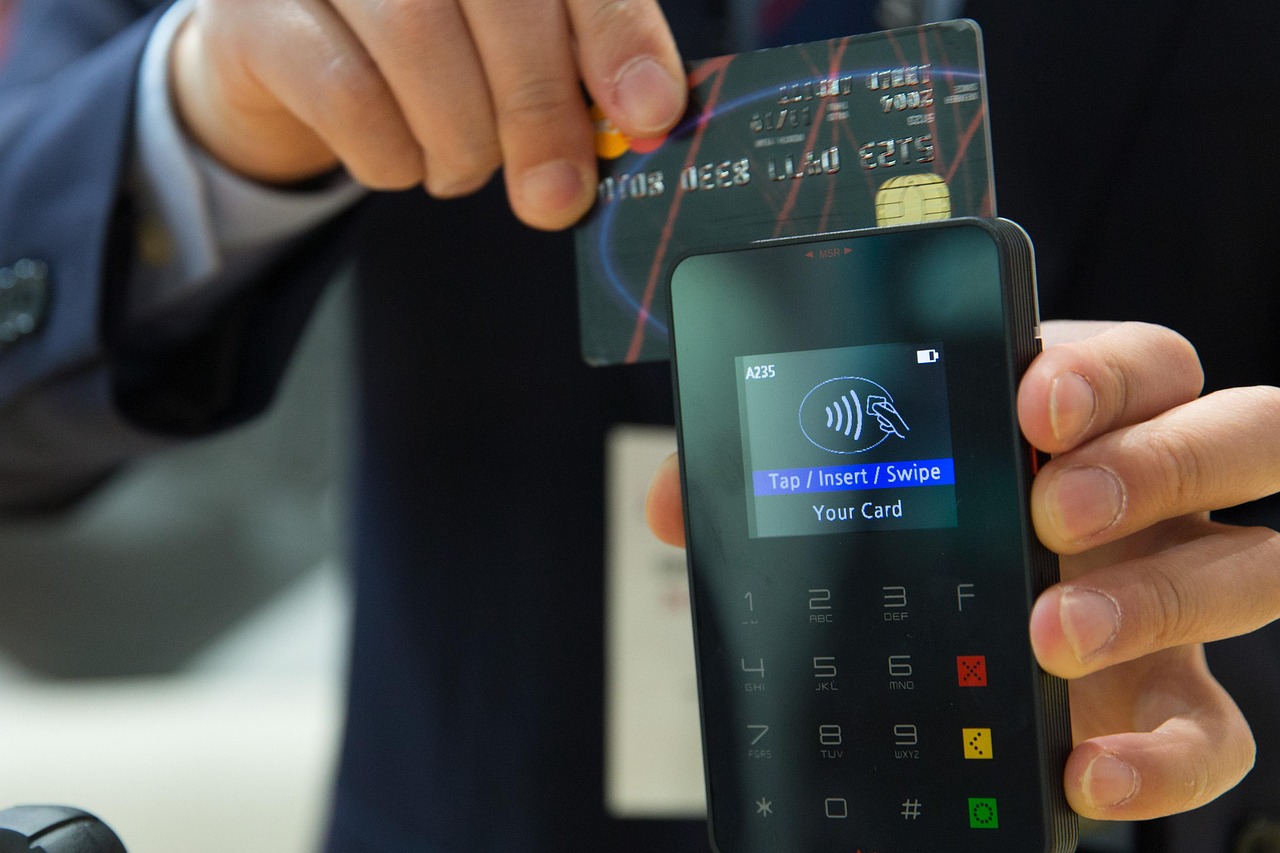
- Card payment processing (most scenarios) — contactless and chip-and-PIN transactions are authorised by your payment processor's servers. Without connectivity, card payments are typically unavailable or limited to stored-value offline authorisations (which carry a financial risk ceiling set by your acquirer). This is the most significant operational risk for most businesses.
- Online ordering and table ordering integrations — delivery platforms, self-service kiosks and QR-code ordering systems all depend on live connectivity.
- Supplier ordering and purchase orders — sending orders electronically to suppliers requires an outbound connection.
- Software updates and configuration changes — changes pushed from the back office, such as price updates or new product additions, will not reach the terminal until it reconnects.
- eCommerce channel sync — stock levels pushed to Shopify, WooCommerce or similar platforms pause during an outage.
The card payment limitation is worth special attention. UK businesses relying heavily on card transactions should ensure they have a contingency — whether that is a separate mobile card reader on a 4G SIM, or a payment terminal with its own independent data connection. Our practical guide to wireless card machines for small businesses is a useful companion resource here.
Cloud-Based vs. Hybrid EPOS: Which Is Safer for Unreliable Connectivity?
The table below summarises the key differences between architectures so you can match the right approach to your situation.
| Feature | Pure Cloud EPOS | Hybrid EPOS (Local + Cloud) |
|---|---|---|
| Offline sales processing | Not available — system halts | Fully operational |
| Card payments offline | Not available | Limited (acquirer-dependent); cash available |
| Real-time cloud reporting | Always current when online | Synced on reconnection; minor latency |
| Multi-site management | Excellent — all data centralised | Excellent — with reliable sync |
| Best suited for | Businesses with guaranteed, high-speed broadband | Businesses with intermittent or rural connectivity |
| Setup complexity | Lower — minimal local configuration | Moderate — local database requires initial setup |
| Hardware dependency | Low — can run on tablets or browsers | Moderate — dedicated terminal recommended |
| Typical monthly software cost (indicative) | From approximately £20–£50/month for entry-level | From approximately £30–£80/month depending on features |
For most UK SMEs — particularly those in retail, hospitality and food service — a hybrid system offers the best balance of cloud convenience and real-world resilience. If your premises are in a location where fibre broadband is unreliable or unavailable, hybrid is effectively non-negotiable.
You can explore combined card machine and till system options that integrate payment hardware with your EPOS in a single resilient package.
How EPOS Direct UK Systems Protect Your Sales During Outages
EPOS Direct UK supplies hybrid EPOS systems designed specifically for the realities of UK business connectivity. Our terminals store your product library, pricing and tax configuration locally, meaning a broadband outage does not halt your trading day. Offline transactions are queued securely on-device and reconciled automatically when the connection is restored — no manual data entry, no lost sales records.
Key resilience features built into our systems include:
- Automatic offline detection and failover — the terminal recognises a connection drop and switches modes without operator intervention.
- Conflict resolution on reconnection — the system intelligently merges offline transactions with the central database, flagging any stock discrepancies for review.
- Local receipt printing — receipts print via a direct connection to your thermal printer, independent of internet status.
- Backup 4G connectivity options — our team can advise on pairing your system with a 4G router or mobile data failover device to minimise outages altogether.
If you would like to see exactly how our offline mode works in practice, you can watch a retail EPOS software demo or explore our restaurant EPOS software demo — both walk through real-world scenarios including connectivity loss.
Choosing the Right EPOS Setup for Poor or Intermittent Connectivity
Businesses in rural areas, listed buildings, basements, festival sites or temporary retail locations face particular challenges. Here are the practical decision criteria that matter most when connectivity is genuinely unreliable:
Assess Your Minimum Viable Operation
Define which functions are absolutely business-critical. For most retailers, that is sales processing and stock tracking. For restaurants, it extends to kitchen printing. Document your "must-work-offline" list before evaluating any system.
Confirm the Local Data Scope
Ask specifically: how many products can the terminal cache locally? Some systems cap the offline product library at a few hundred SKUs, which is fine for a café but catastrophic for a clothing retailer with thousands of lines. For fashion and apparel businesses, our article on the best EPOS systems for clothing shops in the UK addresses this in detail.
Plan Your Card Payment Contingency
Even the most robust hybrid EPOS cannot authorise card payments without a connection to your payment processor. A dedicated mobile card reader on its own 4G SIM — kept charged and ready — is the simplest and most cost-effective backup. See our guide to card machines with no monthly fee for low-commitment backup options.
Consider a 4G Failover Router
A dual-WAN router with a 4G SIM automatically switches your premises to mobile data the moment your primary broadband drops. For businesses where downtime has a measurable cost per minute, this is often the most pragmatic investment — typically available from approximately £80–£200 for the hardware, plus a low-cost data SIM.
What Does It Cost to Get This Right?
A complete hybrid EPOS setup suited to intermittent connectivity — including terminal hardware, software licence and initial configuration — typically falls in the range of approximately £300–£800 upfront for hardware, with software subscriptions starting from around £30–£60 per month depending on the feature set and number of users. Our guide to the most affordable EPOS systems for small UK businesses provides a fuller breakdown of what to expect at each budget tier. These figures are indicative; request a free demo and quote for pricing specific to your business.
How to Test and Future-Proof Your EPOS System Against Downtime
Buying the right system is step one; validating that it genuinely delivers on offline promises is step two. Before going live, run a deliberate offline test:
- Disconnect your broadband router entirely (do not just disable Wi-Fi on the terminal — test a true network outage).
- Process a range of transactions: a standard sale, a multi-line sale, a return and a cash-only transaction.
- Print receipts and confirm all items are logged correctly in the local transaction queue.
- Reconnect your router and confirm that all offline transactions sync to the cloud back office accurately.
- Check that stock levels reflect the offline sales correctly across any other terminals or eCommerce channels.
Repeat this test after any major software update. Additionally, train all staff on the visual indicator your system uses to signal offline mode — typically a status icon or banner — so they are never caught off-guard.
For longer-term resilience, review your broadband provider's uptime SLA and consider whether a business-grade connection with a guaranteed repair time is justified by your trading volume. Ofcom publishes guidance on broadband performance and your rights as a business customer, which is worth reviewing if outages are a recurring issue.
You can browse the full range of systems and resilience options available across our portfolio on the EPOS Direct UK home page, where you will find current offers and detailed product information.
The Direct Answer: Can an EPOS System Work Without Internet?
A hybrid EPOS system — the architecture used by EPOS Direct UK — can process sales, manage stock, print receipts and handle cash transactions without any internet connection. Card payment processing requires a live connection to your payment acquirer's servers and is the primary function that does not work offline in most configurations. Planning for this single limitation, typically through a 4G backup device, gives most UK businesses complete trading continuity regardless of their broadband situation.
Ready to Choose a System That Keeps Selling, Whatever the Connection?
EPOS Direct UK works with retailers, restaurants, pharmacies and independent businesses across the United Kingdom every day, helping them find EPOS configurations that match their real-world connectivity environment — not just ideal conditions. Whether you run a rural village shop, a busy high-street café or a multi-site retail brand, our team will assess your situation honestly and recommend a setup that will not let you down.
Talk to an expert online for immediate guidance, or request a free demo to see our systems in action — including how they handle connectivity loss. If you already know your sector, explore our retail EPOS offers or hospitality and restaurant EPOS packages for tailored options and current pricing. Alternatively, request a call back and we will get in touch at a time that suits you.
Written by the EPOS Direct UK team, who help United Kingdom businesses select, configure and get the most from their EPOS and POS systems every day.
Frequently asked questions
- Will my EPOS system keep processing card payments if the internet drops?
- It depends on the system. Most modern hybrid EPOS systems store transactions locally and sync them once connectivity is restored. However, card payment processing typically requires an internet or mobile data connection. Some payment terminals support offline card acceptance with a pre-set risk threshold, but this carries a chargeback risk. For reliable offline card payments, ask your provider about terminals with built-in 4G failover — a feature available on several EPOS Direct UK packages.
- How much does an EPOS system with offline capability cost in the UK?
- In the UK, a basic offline-capable EPOS setup typically starts from around £300 to £500 for entry-level hardware with local data storage. Mid-range hybrid systems with cloud sync, offline mode, and integrated card payments generally range from £600 to £1,500 for a single-terminal setup, with monthly software subscriptions from approximately £20 to £60 per month. Enterprise or multi-site configurations can cost more. EPOS Direct UK offers a range of solutions across these price points, and their team can recommend the best fit for your connectivity environment.
- Does an EPOS system need Wi-Fi to run stock control and reporting?
- Basic stock deduction and sales recording can usually function offline on a well-designed hybrid EPOS system, with inventory updates syncing to the cloud once your connection returns. However, real-time multi-site stock visibility, live sales dashboards, and cloud-based reporting all require an active internet connection. If you operate in an area with unreliable broadband, a system with local database storage and automatic cloud sync — like those offered by EPOS Direct UK — is the safest choice.
