We use cookies to make your experience better.
To comply with the new e-Privacy directive, you agree to the privacy policy and our use of cookies


EPOS Software Made Simple: A Beginner's Guide for UK Retailers and Hospitality Businesses
EPOS Software for Beginners: Everything You Need to Know Before You Buy

Choosing your first electronic point-of-sale system is one of the most consequential technology decisions a new business owner will make — yet most guidance assumes you already know the jargon. This article cuts through the noise: you will understand exactly how EPOS software works, what to look for, what it costs in the UK, and how to avoid the pitfalls that catch first-time buyers off guard. Written by the EPOS Direct UK team, who help UK businesses find and configure the right EPOS solution every day.
What Is EPOS Software and How Does It Actually Work?
EPOS stands for Electronic Point of Sale. The software is the brain of the operation — it runs on a touchscreen terminal, tablet or PC and orchestrates everything that happens when a customer makes a purchase: recording the transaction, adjusting stock levels, applying discounts, processing payment, printing a receipt, and feeding data into your sales reports.
In practice, the software communicates with a small ecosystem of hardware: a barcode scanner reads a product, the software looks it up in a product database, calculates the total, then signals the card reader to take payment. All of this happens in seconds, invisibly to the customer. Behind the scenes, every transaction writes a data record — which is why EPOS reporting is so much more powerful than an old-fashioned cash register.
Modern EPOS platforms go further still. Depending on the package you choose, the software can manage staff rotas, send low-stock alerts, generate end-of-day summaries, integrate with your accounting software, and even support loyalty programmes. For a new business, starting with a clear picture of which of these capabilities you actually need — now, and in twelve months — will save you both money and frustration.
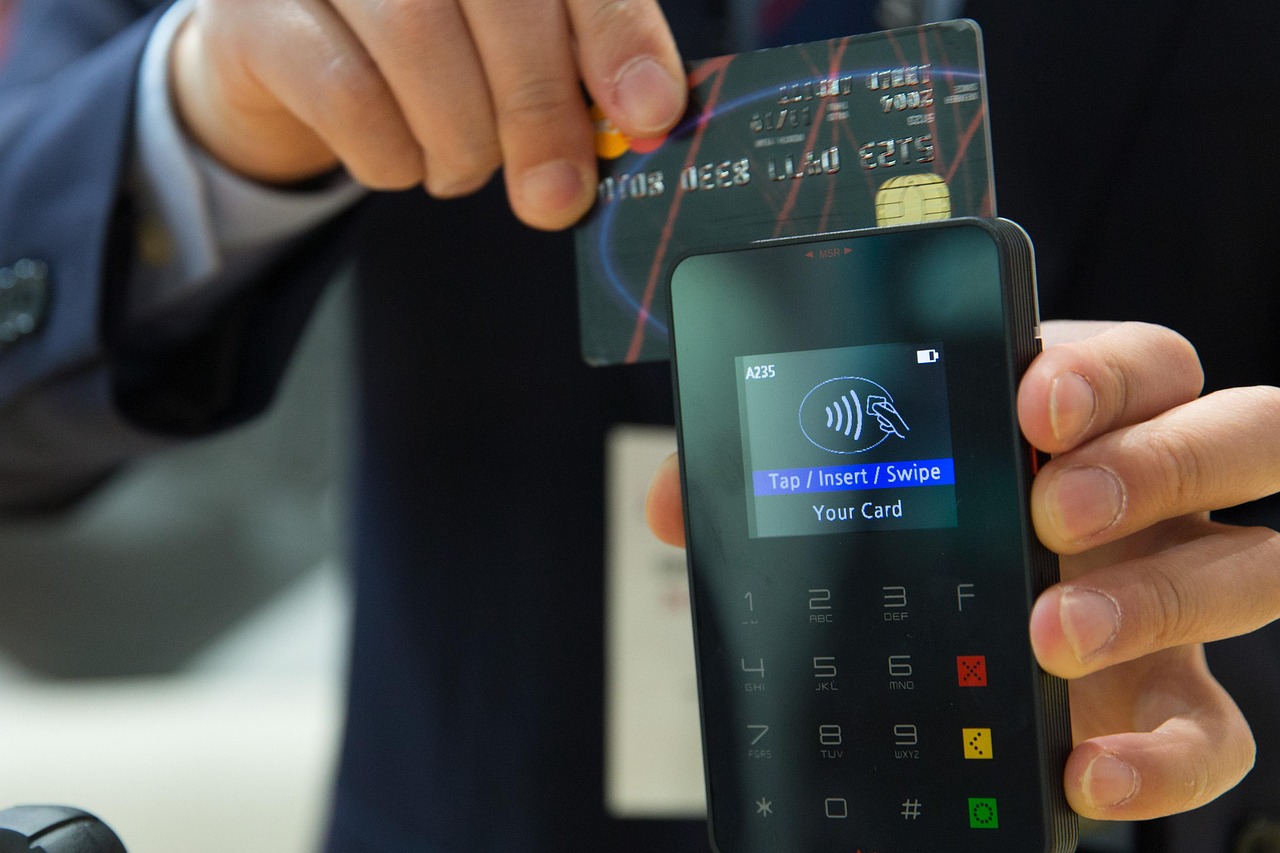
Key Features to Look for as a First-Time Buyer
Not every feature list deserves equal weight. Below are the capabilities that genuinely matter when you are setting up for the first time.
Non-negotiable essentials
- Intuitive product management — You should be able to add, edit and organise products in minutes, not hours. If the interface requires training just to enter a new item, that is a warning sign.
- Real-time stock tracking — Every sale should automatically decrement stock. This is fundamental to running a shop, café or restaurant without constant manual counting.
- Integrated payment processing — The till and the card machine should communicate natively. Manually keying card totals into a separate terminal wastes time and creates errors. See our guide to combining a card machine and till system for a full breakdown of how this works.
- Sales reporting — At minimum, daily, weekly and product-level sales summaries. This is how you spot your best-sellers and identify shrinkage.
- VAT-compliant receipts — HMRC requires receipts to display your VAT number if you are VAT-registered. Your software must support this. Check HMRC's guidance on VAT invoices for the full requirements.
Features worth considering from day one
- Customer loyalty and CRM tools
- Table management (for restaurants and cafés)
- Multi-user access with permission levels
- Accounting integrations (e.g. Xero, Sage, QuickBooks)
- E-commerce or click-and-collect connectivity
If you sell clothing or fashion accessories, product variants — size, colour, style — are especially important. Read our dedicated guide to the best EPOS systems for clothing shops in the UK to understand which features matter most for fashion retail.
Cloud-Based vs. On-Premise EPOS Software: Which Is Right for You?
| Factor | Cloud-Based EPOS | On-Premise EPOS |
|---|---|---|
| Data storage | Stored on remote servers; accessible anywhere | Stored locally on your hardware |
| Internet dependency | Requires reliable broadband; offline mode varies by provider | Works without internet once installed |
| Software updates | Automatic, included in subscription | Manual; may incur additional cost |
| Upfront hardware cost | Lower — often tablet-based | Higher — dedicated terminal hardware |
| Ongoing monthly cost | Subscription-based (typically per site or per user) | Lower ongoing cost after initial outlay |
| Remote management | Full access via browser or app | Limited or requires VPN |
| Best suited for | Multi-site, growing businesses, remote owners | Single-site businesses with poor broadband, or those prioritising data control |
For most new UK businesses opening their first location, a cloud-based solution offers the most practical combination of affordability, ease of setup and remote visibility. If you are in a rural area with unreliable connectivity, confirm that any cloud system you consider has a robust offline mode before you commit.
How Much Does EPOS Software Cost in the UK?
One of the most common questions from first-time buyers is simply: what will this actually cost me each month? The honest answer is that pricing varies considerably depending on the vendor, the number of terminals, and the features included — but here are realistic, indicative ranges for the UK market.
- Entry-level / basic software only — typically from around £20–£40 per month for a single terminal on a cloud subscription. Feature sets at this tier are often limited.
- Mid-range full-featured EPOS software — typically £50–£100 per month per site, covering stock management, reporting, CRM and integrations. This is the most common tier for independent retailers and hospitality venues.
- Complete hardware and software bundles — all-in-one packages including terminal, receipt printer, barcode scanner and software most commonly fall between £500 and £1,500 upfront (outright purchase), or can be spread across a monthly contract. Some providers include hardware within the subscription.
- Enterprise or multi-site — bespoke pricing; typically negotiated directly with the provider.
These figures are indicative guidance only — your actual cost will depend on your configuration. For a detailed cost comparison across budget options, see our guide to the most affordable EPOS systems for small businesses in the UK. And if you are specifically weighing card machine costs, our guide to card machines with no monthly fee may also be relevant.
Always ask a provider to give you a full cost breakdown — software licence, hardware, installation, training, support and transaction fees — before you sign anything.
Setting Up Your First EPOS System: A Step-by-Step Overview
Setup is less daunting than it appears. Here is what the process typically looks like for a first-time installation.
- Define your product catalogue — Compile a spreadsheet of every product or menu item with price, category, barcode (if applicable) and VAT rate. Most platforms let you import this as a CSV, saving hours of manual entry.
- Configure your settings — Set your business name, VAT number, receipt layout, and any discount or promotion rules before you open for trade.
- Connect your hardware — Pair your receipt printer, barcode scanner and card terminal. With modern plug-and-play setups this is usually straightforward; your provider should guide you through it.
- Set up user accounts — Create logins for yourself and any staff. Apply permission levels so cashiers cannot, for example, process refunds without manager approval.
- Run a test transaction — Process a dummy sale end-to-end before you go live: scan a product, apply a discount, take a card payment, print a receipt, then verify that stock adjusted and the sale appears in your reports.
- Train your team — Most well-designed EPOS interfaces can be mastered in under an hour. Identify one or two staff members as your internal champions who can support colleagues.
- Go live with support on hand — Open with your provider's support number to hand. A reputable UK supplier will offer telephone or chat support during your first trading period.
If you would like to see exactly how this looks in practice, you can watch a retail EPOS software demo or, if you run a food and drink business, explore the restaurant EPOS software demo — both available online with no obligation.
Common Mistakes First-Time Buyers Make (and How to Avoid Them)
1. Choosing software that cannot grow with you
A system that handles your needs on day one but hits a ceiling at 500 products, or cannot support a second terminal, will cost you money to replace. Always ask: "What happens when I want to add another till, another location, or an online store?"
2. Underestimating training time
No software is truly zero-learning-curve. Budget at least a day for you and your team to get comfortable before your first busy trading period — do not schedule your go-live for the day before Christmas.
3. Ignoring ongoing support quality
Your till going down on a Saturday afternoon is not a minor inconvenience — it is lost revenue. Before you buy, test the provider's support: call them, ask a technical question, and judge the response. UK-based telephone support is worth paying for.
4. Forgetting about payment processing fees
The software subscription is not your only cost. Card transaction fees — charged as a percentage or fixed amount per transaction — add up quickly. Understand the full cost of payments before you compare headline software prices.
5. Not reading the contract length
Some EPOS contracts lock you in for 24 or 36 months. Understand the minimum term, the early-exit terms, and what happens to your data if you leave. This is particularly important for newer businesses whose needs may evolve rapidly.
For a broader view of what makes a great till setup for independent businesses, our practical buyer's guide to the best till systems for small businesses covers these considerations in depth.
Why UK Businesses Choose EPOS Direct for Their First System
EPOS Direct has been supplying and supporting EPOS systems to UK businesses across retail, hospitality and specialist sectors for many years. What makes the difference for first-time buyers is not just the hardware or software on offer — it is the end-to-end support model: from initial consultation through installation, staff training and ongoing telephone support, all delivered by a UK-based team.
Whether you run an independent boutique, a café, a pharmacy or a multi-site retail chain, there is a configured solution designed around your sector. You can explore retail EPOS offers or view hospitality and restaurant EPOS packages to get a clear picture of what is included at each level. Pharmacies can also request a pharmacy EPOS software demo tailored to their compliance needs.
The EPOS Direct product range is built around the reality that most business owners are not technology specialists — the software is designed to be learned quickly, and the team is available to make sure your setup goes smoothly from day one. Visit the EPOS Direct UK home page for current offers and full information across all our systems and packages.
Ready to Take the Next Step?
The right EPOS system will not just process payments — it will give you clarity on your stock, your revenue and your customers that a basic till simply cannot match. The key is choosing a solution that fits your business now and has room to grow alongside you.
If you are ready to see the software in action, request a free demo with no obligation. Prefer to talk it through first? Talk to an expert online — the EPOS Direct UK team is here to help you make a confident, well-informed first purchase.
Frequently asked questions
- Do I need any technical experience to use EPOS software?
- No technical background is required. Modern EPOS software is designed with intuitive touchscreen interfaces and guided onboarding, so most business owners are up and running within a day. EPOS Direct UK also provides dedicated setup support and training to make sure you feel confident from day one.
- How much should I expect to pay for EPOS software in the UK?
- Costs vary depending on your setup. Cloud-based EPOS software subscriptions in the UK typically start from around £15–£40 per month for a single terminal, while more feature-rich packages for hospitality or multi-till retail can range from £50–£150 per month. Some providers, including EPOS Direct UK, bundle software with hardware on monthly payment plans starting from around £25–£50 per month all-in, which keeps upfront costs low for beginners. Always check what is included — look for free updates, UK-based support, and no hidden transaction fees.
- Can I upgrade my EPOS software as my business grows?
- Yes, and this is one of the biggest advantages of choosing a scalable EPOS platform. You can typically start with a basic single-till licence and add features such as stock management, loyalty programmes, online ordering integration, or additional terminals as your business expands — without replacing your entire system.
