We use cookies to make your experience better.
To comply with the new e-Privacy directive, you agree to the privacy policy and our use of cookies


EPOS System Comparison: Which POS System Is Right for Your UK Business?
EPOS System Comparison: Find the Best POS System for Your UK Business
Choosing the right EPOS system is one of the most consequential decisions a UK business owner makes — the wrong choice costs money, disrupts operations and is painful to unwind. The best approach is to compare solutions against your specific trading environment, volume and growth plans rather than defaulting to the most-advertised name. This guide gives you a structured, honest framework for doing exactly that, with practical cost benchmarks and clear criteria to match a system to your business.
What to Look for Before You Start Comparing
Before reviewing any individual system, establish your requirements in writing. Vendors are skilled at presenting their product's strengths — knowing your non-negotiables keeps the conversation grounded.
- Transaction volume: A market stall processing fifty sales a day has entirely different throughput needs to a busy pub on a Friday night. Hardware reliability and software speed matter more as volume rises.
- Number of locations and tills: Single-site businesses can use simpler, cheaper setups. Multi-site operations need centralised reporting, stock synchronisation and staff management across terminals.
- Integration requirements: Identify your accounting software (Xero, Sage, QuickBooks), e-commerce platform (Shopify, WooCommerce) and any booking or loyalty tools you already use or plan to adopt.
- Connectivity: Cloud systems assume reliable broadband. If your venue has patchy Wi-Fi or you trade outdoors, offline functionality and 4G fallback become essential, not optional.
- Growth runway: A system that suits you today at one till should scale to five without requiring a complete platform change.
If you're a small business owner starting this process, our practical buyer's guide to till systems for small businesses walks through the fundamentals before you get into vendor comparisons.
Retail vs Hospitality EPOS: Why the Difference Matters
The two most common use cases — retail and hospitality — require meaningfully different feature sets. A system built for fashion retail will frustrate a restaurant manager, and vice versa.
Retail EPOS priorities
- Barcode scanning and product variants (size, colour, style)
- Real-time stock management with low-stock alerts and purchase orders
- Customer loyalty programmes and gift card handling
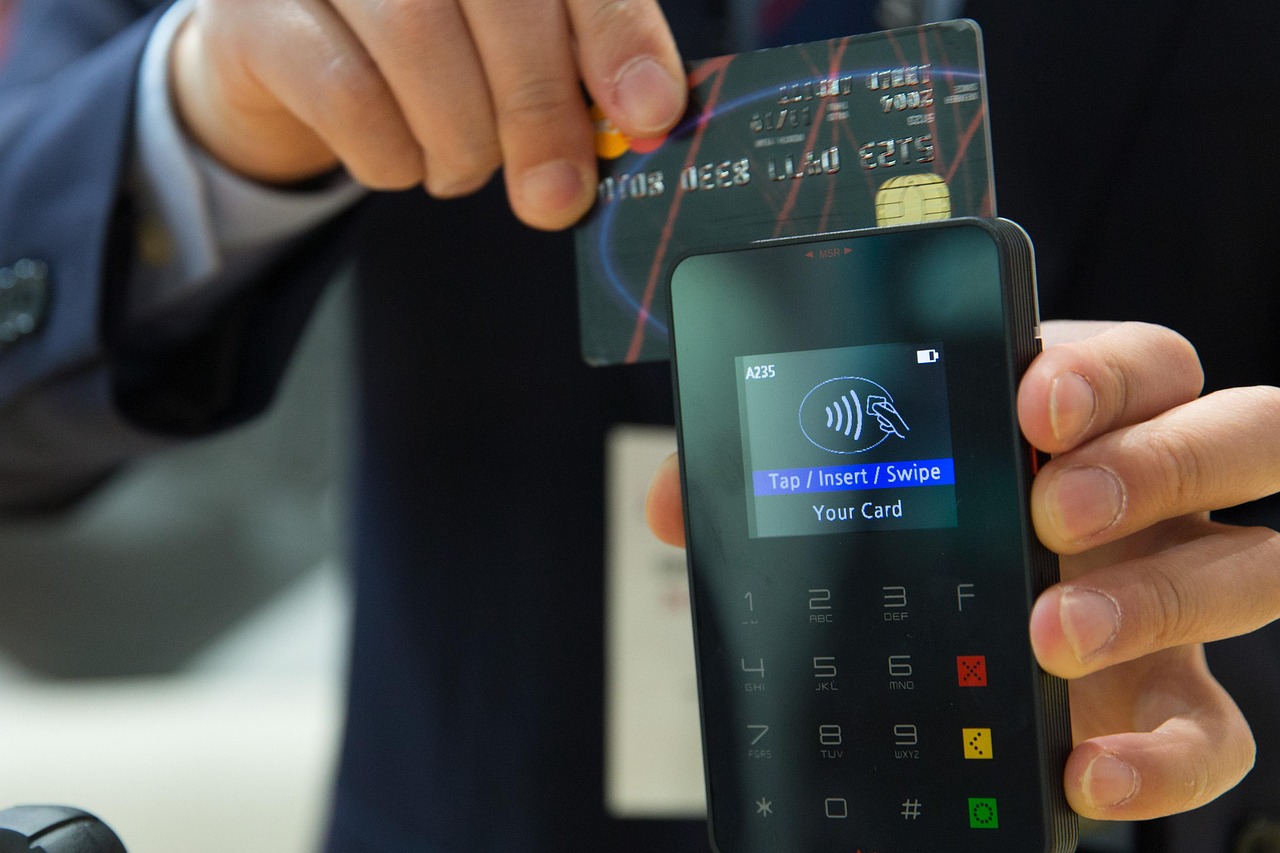
- Integrated card payments with fast checkout flow
- Returns, exchanges and refund management
Hospitality EPOS priorities
- Table management, covers and course sequencing
- Kitchen display systems (KDS) or kitchen printer integration
- Modifier and allergen flagging at the order level
- Split bills, tab management and service charge handling
- Integration with reservation platforms and delivery aggregators
Some providers offer a single platform that spans both environments; others specialise. A specialist system almost always delivers a tighter, more intuitive experience for its target sector — a genuine consideration when training staff is your biggest implementation cost. You can explore the retail EPOS software in a live demo or see the restaurant EPOS in action to appreciate the difference first-hand.
Feature-by-Feature Comparison: What to Evaluate
Once you know your sector and scale, compare systems across these dimensions. The table below gives a structured view of what to look for at each tier of solution.
| Feature Area | Entry-Level / Tablet-Based | Mid-Market EPOS | Full-Featured / Enterprise |
|---|---|---|---|
| Hardware | Consumer tablet + stand, basic receipt printer | Dedicated touchscreen terminal, integrated receipt printer, cash drawer | Multi-terminal setup, customer-facing display, self-service kiosk options |
| Inventory management | Basic stock count, manual updates | Real-time stock sync, low-stock alerts, product variants | Multi-location stock, supplier purchase orders, waste tracking |
| Reporting | Daily sales summary | Hourly/product/staff sales breakdown, end-of-day Z-reports | Advanced analytics, custom dashboards, multi-site consolidated reporting |
| Payment integration | Third-party card reader via Bluetooth | Integrated card terminal, contactless, digital wallets | Full omnichannel payments, online checkout, split-payment logic |
| Staff management | Basic login PINs | Role permissions, clock-in/out, individual sales tracking | Payroll integration, rota scheduling, performance reporting |
| Support | Email / community forum | UK phone and chat support, business hours | 24/7 dedicated support, on-site installation, training included |
| Offline capability | Limited or none | Offline mode for basic transactions, sync on reconnect | Full offline functionality across all terminals |
Integrated card payments deserve particular attention — a seamless connection between your EPOS and card terminal eliminates end-of-day reconciliation errors and speeds up checkout. Our guide to EPOS systems with integrated card payments explores this in depth, including what to look for in a combined solution.
EPOS System Costs in the UK: Honest Indicative Ranges
Cost is where comparison gets complicated, because vendors structure pricing very differently. The following are indicative ranges based on what UK businesses typically pay — they are guidance, not quotes, and your actual costs will depend on configuration, contract length and the provider you choose.
Hardware
- Entry-level tablet setup: typically from £200–£400 for the hardware bundle
- Dedicated mid-market terminal: typically £500–£1,200 per till, including printer and cash drawer
- Full multi-terminal installation: most setups fall between £2,000 and £6,000+ depending on peripherals and number of tills
Software and subscriptions
- Cloud SaaS (monthly): typically £20–£100 per terminal per month at mid-market, with enterprise tiers priced on request
- On-premise licence: higher upfront cost (typically £500–£2,000+), lower or zero ongoing software fee
Payment processing
- Most UK providers charge a percentage per transaction, typically between 1.2% and 2.5% depending on card type and contract terms
- Some providers bundle processing into a flat monthly fee — useful for high-volume businesses where per-transaction costs add up quickly
Hidden fees to watch for
- Installation and training charges (often bundled but sometimes billed separately)
- Premium support tiers — out-of-hours cover is frequently an add-on
- Integration fees for connecting third-party tools (accounting, e-commerce, loyalty)
- PCI compliance fees or card terminal rental costs buried in the small print
If budget is a primary constraint, our guide to affordable EPOS systems for small businesses helps you find the most capable solution at the lowest realistic total cost.
Cloud-Based vs Traditional EPOS: Which Model Suits Your Business?
This is one of the questions buyers ask most frequently — and the honest answer is that neither model is universally superior. The right choice depends on your operational context.
Cloud-based EPOS
Data is stored and processed remotely. You access reports and manage products from any internet-connected device. Updates are automatic, there is no server to maintain, and multi-site synchronisation is seamless. The trade-off is dependency on connectivity — if your broadband fails and your system lacks offline mode, trading stops. Cloud systems typically carry lower upfront costs but ongoing monthly fees that accumulate over a five-year lifespan.
Traditional / on-premise EPOS
Software and data reside locally. The system works independently of internet connectivity, which matters enormously for venues with unreliable broadband or rural locations. Updates are manual, remote access requires configuration, and the upfront investment is higher. For businesses that value data sovereignty and operational independence, on-premise remains a strong choice.
Many modern providers, including EPOS Direct, offer hybrid architectures — local processing with cloud backup and reporting — which gives you the resilience of on-premise and the accessibility of cloud. That is increasingly the recommended approach for growing UK businesses.
How EPOS Direct Compares: What Sets the Platform Apart
Rather than making unverifiable claims about competitors, we think the most useful comparison is one you can verify yourself — by looking at what a provider actually delivers.
EPOS Direct is a UK-based EPOS provider supplying purpose-built hardware and software to retail, hospitality, pharmacy and specialist sectors. The platform is designed specifically for UK trading conditions — VAT-compliant reporting, UK payment processing integrations, and a support team based in the United Kingdom. For a full overview of the platform and its capabilities, the complete guide to EPOS Direct systems covers hardware, software and sector-specific configurations in detail. You can also explore the full EPOS software suite directly.
Sector-specific software
Unlike generic tablet POS apps, EPOS Direct deploys software built around specific sector workflows. Pharmacy users, for instance, can see the pharmacy EPOS software in a dedicated demo — features like prescription management workflows and regulated product handling are built in, not bolted on.
Owned hardware ecosystem
EPOS Direct supplies its own terminal hardware rather than rebranding consumer tablets. That means components are specified for commercial use — faster processors, brighter screens rated for all-day operation, and peripherals (scanners, printers, cash drawers, customer-facing displays) that are tested to work together out of the box.
UK-based support
Support is provided by a UK team with sector knowledge, not an overseas call centre following a generic script. For hospitality businesses trading on thin margins where every hour of downtime counts, that distinction is commercially meaningful.
You can view current retail EPOS offers or hospitality and restaurant EPOS packages to see what is included at each tier, including hardware bundles, software licences and payment processing options.
How to Choose and Buy the Right System for Your Budget
With the framework above in hand, the buying process becomes straightforward. Here is a practical sequence that avoids the most common mistakes.
- Define your requirements list before any demos. Lock in your must-haves (sector features, integrations, number of tills) and your nice-to-haves. This protects you from being upsold on features you will never use.
- Ask for a total five-year cost, not just monthly fees. Include hardware, software, payment processing, support and any integration costs. Cloud subscriptions that appear cheap at £30/month cost £1,800 over five years per terminal — hardware is not the only significant spend.
- Test with real-world scenarios, not scripted demos. Ask the vendor to demonstrate the exact workflows you run daily: a refund, a product variant, a split bill, a stock adjustment. If they cannot demo it fluently, be cautious.
- Check contract exit terms before signing. Understand minimum contract length, early exit fees and what happens to your data if you leave. This is where painful surprises tend to emerge.
- Verify UK support quality independently. Read recent third-party reviews specifically mentioning support response times. Award claims on vendor websites are unverifiable — peer reviews on independent platforms are more reliable.
- Request references from businesses similar to yours. A retailer with twelve SKUs and a café with a 200-item menu need very different things. Ask to speak with a customer in your sector at roughly your scale.
For small businesses also evaluating card payment options alongside their EPOS, our guide to combined card machines and till systems explains how integrated payments reduce reconciliation time and administrative overhead — a meaningful saving for lean teams.
Conclusion: Make a Confident, Informed Decision
The right EPOS system is the one that fits your sector, your volume, your team and your five-year plan — not the one with the loudest marketing or the lowest headline price. By evaluating hardware quality, software depth, payment integration, total cost of ownership and the quality of UK-based support, you can make a decision you will not need to revisit in eighteen months.
EPOS Direct UK works with businesses across retail, hospitality, pharmacy and specialist sectors every day. Whether you are equipping a first till or upgrading a multi-site operation, our team can help you identify the right configuration for your specific circumstances. Visit the EPOS Direct home page for current offers and more information, or take the next step now: request a free demo or talk to one of our EPOS experts online.
Written by the EPOS Direct UK team, who advise UK businesses on EPOS and POS systems every day across retail, hospitality and specialist sectors.
Frequently asked questions
- How much does an EPOS system cost for a small UK business?
- For a small UK business, a basic EPOS setup typically costs between £300 and £800 upfront for a single terminal with hardware (touchscreen till, receipt printer and card reader). Monthly software licences generally range from £20 to £80 per month depending on features. Some providers offer 0% finance or rental options from around £15–£40 per month all-in. Always check for hidden costs such as payment processing fees, support contracts and software update charges before you commit.
- Do I need a separate card payment terminal or is it built into the EPOS system?
- Many modern EPOS systems integrate directly with card payment terminals, so your sales data and payments sync automatically — reducing errors and end-of-day reconciliation time. However, some budget systems treat card processing as a separate add-on. When comparing systems, confirm whether integrated payments are included and what the transaction fee rate will be, as this can significantly affect your monthly running costs.
- Can I switch EPOS providers without losing my sales data and product catalogue?
- Yes, in most cases you can migrate your product catalogue, pricing and historical sales data when switching EPOS providers, though the ease depends on the systems involved. Reputable UK EPOS providers like EPOS Direct offer data migration support as part of the onboarding process. Before switching, ask your new provider for a clear migration plan and check whether your current contract includes any early-termination penalties.
