We use cookies to make your experience better.
To comply with the new e-Privacy directive, you agree to the privacy policy and our use of cookies

The Best EPOS Systems for Hair Salons in the UK: What to Look For and How to Choose
The Best EPOS Systems for Hair Salons in the UK: What to Look For and How to Choose
A modern electronic point-of-sale system is no longer a luxury for UK hair salons — it is the operational backbone that ties together appointment scheduling, retail product sales, staff commission tracking and card payments in a single, coherent workflow. The right salon EPOS solution reduces front-desk admin, improves the client experience and gives owners the real-time business intelligence they need to grow. This guide explains exactly what to look for, what to expect to pay, and how to make a confident buying decision.
Why Hair Salons Have Distinct Point-of-Sale Requirements
A generic retail till handles a transaction. A salon EPOS system manages a whole business — from the moment a client books online to the second they tap their card and leave with a bottle of shampoo. The complexity is genuine: salons operate across two revenue streams simultaneously (services and retail), employ staff on varying commission structures, and depend on appointment flow to drive every other metric.
Without a system built with these realities in mind, owners end up patching together a booking app, a separate card reader and a spreadsheet — a fragile, time-consuming arrangement that creates gaps in reporting and frustrates both staff and clients. A purpose-fit EPOS removes that friction entirely.
Key Features to Look for in a Salon EPOS System
Before comparing suppliers, establish a clear feature checklist. Not every salon needs every capability, but the following represent the core requirements that experienced salon operators consistently prioritise.
Appointment and Diary Management
- Online and in-salon booking linked directly to the till, so appointment data and payment data share a single record
- Service duration settings per stylist and per treatment, preventing double-booking
- Automated SMS or email reminders to reduce no-shows — a measurable impact on revenue
- Waitlist management for busy periods
Staff and Commission Management
- Individual staff logins with role-based permissions (stylist vs. manager vs. owner)
- Automatic commission calculation by service type, retail sale or both
- Clock-in/clock-out functionality to support payroll accuracy
- Performance dashboards showing each team member's revenue contribution
Retail Inventory Control
- Product-level stock tracking with low-stock alerts
- Supplier purchase orders raised directly from the EPOS back office
- Barcode scanning for fast product transactions alongside service billing
- Reporting on your best-selling retail lines and margin by product
Client Relationship and Loyalty Tools
- Client profiles storing contact details, service history, product preferences and allergy notes
- Loyalty points or stamp-card schemes redeemable at the till
- Gift voucher creation and redemption tracked through the system
- Marketing list integration for targeted promotions between visits
Integrated Payments
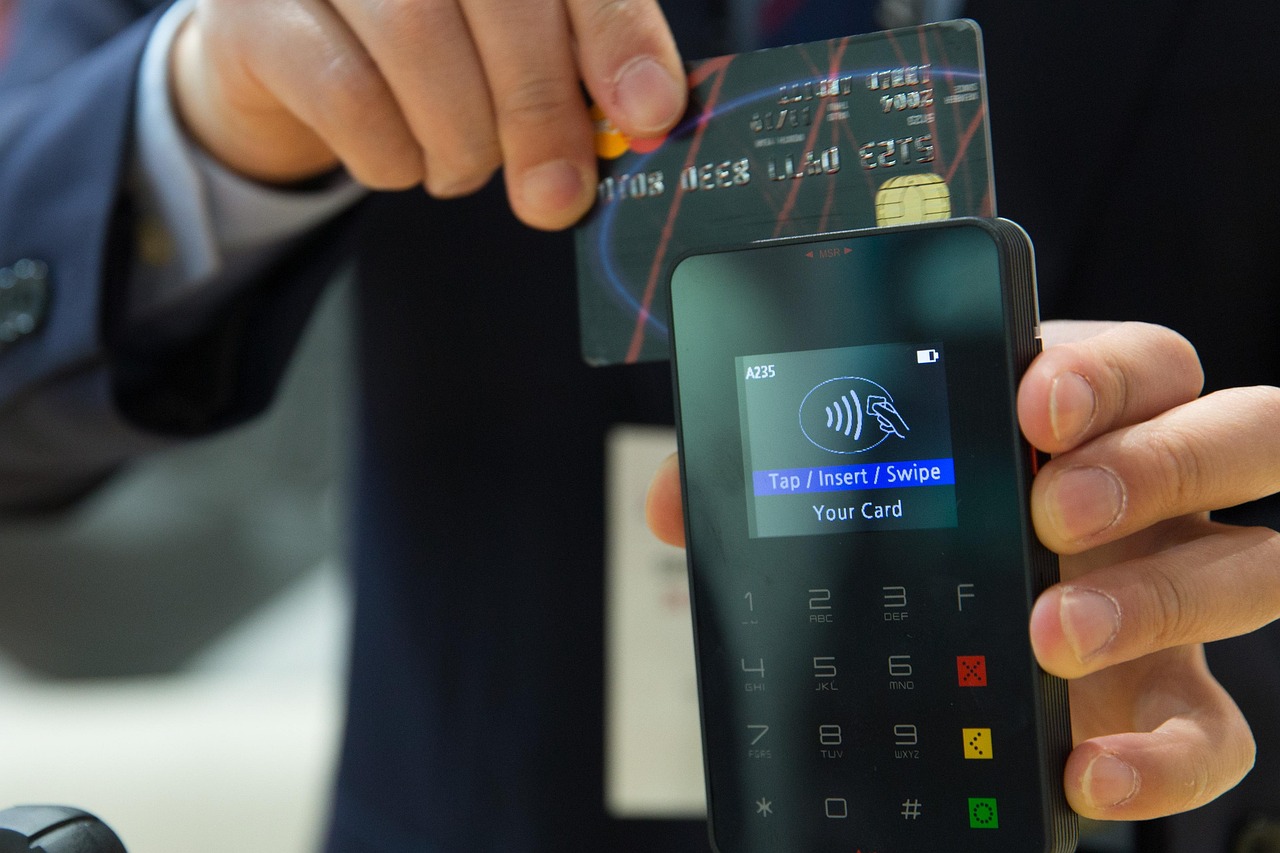
Fragmented payment flows — where the till and the card terminal operate independently — create reconciliation headaches and slow down busy Saturdays. Look for a system where card payments are fully integrated, so every transaction is automatically recorded. You can read more about choosing the right combined solution in our guide to card machine and till system combinations for UK businesses.
How a Salon EPOS System Manages Appointments, Retail and Payments in One Place
The defining advantage of a unified salon EPOS is the elimination of double-entry. When a client arrives, their appointment is already on the system. The stylist completes the service, adds any retail products the client is purchasing, and the total — including any loyalty points or voucher deductions — is presented for payment in seconds. The transaction closes automatically, updates inventory, logs commission and records the client's updated history, all without a single manual step.
For salon owners, the back office is equally powerful. End-of-day reports consolidate service revenue, retail revenue, VAT (for VAT-registered businesses — check your obligations with HMRC), and staff performance into a single dashboard view. If your salon operates across more than one location, a cloud-based system allows you to monitor all sites from anywhere.
If you are currently running a standalone cash register with a separate booking system, the operational improvement from switching is substantial — our guide on upgrading from a cash register to a modern EPOS system walks through exactly how to make that transition smoothly.
Cloud-Based vs Traditional EPOS: Which Is Right for Your Salon?
Most new salon EPOS installations in the UK today are cloud-based, and for good reason. However, there are genuine trade-offs worth understanding before committing.
| Factor | Cloud-Based EPOS | Traditional (Server-Based) EPOS |
|---|---|---|
| Access to data | Anywhere, any device with a browser | On-site only (unless VPN configured) |
| Software updates | Automatic, included in subscription | Manual updates, may carry additional cost |
| Internet dependency | Requires reliable broadband; offline mode varies by supplier | Operates fully without internet |
| Upfront cost | Lower — hardware plus monthly software fee | Higher — licence fee often paid in full upfront |
| Scalability | Add locations or terminals instantly | Requires additional server infrastructure |
| Data security | Encrypted, backed up automatically off-site | Owner responsible for backups and local security |
| Best suited to | Single or multi-location salons with reliable broadband | Rural salons with poor connectivity or strict data preferences |
For most UK hair salons with a stable broadband connection, cloud-based EPOS offers a compelling mix of flexibility, lower upfront cost and automatic improvement over time. If you are weighing the monthly subscription model against a one-off purchase, our dedicated article on monthly EPOS subscriptions versus outright purchase gives a thorough, impartial breakdown.
What Does a Hair Salon EPOS System Cost in the UK?
Pricing varies based on the hardware configuration, the software tier and whether you buy outright or subscribe. The figures below are honest indicative ranges based on typical UK market conditions — always request a formal quote tailored to your specific setup.
| Setup Type | Typical Upfront Hardware Cost | Typical Monthly Software Cost | Best For |
|---|---|---|---|
| Entry-level (tablet + card reader) | Typically from £300–£500 | Typically from £30–£60/month | Solo stylists or very small salons |
| Standard (touchscreen till + integrated card terminal + receipt printer) | Typically from £600–£1,200 | Typically from £60–£120/month | Independent salons with 2–6 chairs |
| Multi-terminal (two tills + hardware peripherals + stock management) | Typically from £1,500–£3,000+ | Typically from £100–£200/month | Larger salons or those with a retail area |
These ranges exclude card processing fees, which are set by your payment provider and vary by card type and transaction volume. Always check whether the EPOS supplier includes payment processing or works with a third-party acquirer.
A practical question many salon owners ask at this stage is: is it better to lease, subscribe or buy outright? There is no universal answer — it depends on your cash flow, how quickly the technology is likely to evolve and whether your accountant prefers a capital or operational expenditure model. Our guide to EPOS subscription models covers this in full detail.
Hardware Options: Touchscreen Tills, Card Readers and Peripheral Devices
The physical components of your salon EPOS system need to suit a front-desk environment — compact, robust and presentable to clients at point of payment.
Touchscreen Till or Tablet Terminal
A dedicated touchscreen till (typically 15" or larger) offers the most stability and screen real estate for busy receptionists managing both bookings and transactions simultaneously. Tablet-based systems using iPad or Android hardware are a popular alternative for smaller salons where counter space is limited.
Integrated Card Terminal
An integrated card machine communicates directly with the till software, eliminating manual entry of the payment amount on a separate device — a small but meaningful time-saving on a busy Saturday. For salons where stylists take payment chairside, a wireless card reader is worth considering; see our guide to the best wireless card machines for small UK businesses for a detailed comparison of options.
Receipt Printer
Thermal receipt printers are standard and low-maintenance. Many salons now offer digital receipts by default — the client's email address is already stored in their profile — reducing consumable costs and supporting sustainability goals.
Barcode Scanner
If your salon sells retail products, a barcode scanner dramatically speeds up product transactions and reduces pricing errors. Most modern salon tills support both wired and wireless Bluetooth scanners.
Customer-Facing Display
A second screen facing the client shows the itemised bill as it builds — useful for transparency during checkout and an opportunity to display promotional messaging between transactions.
Real Questions Salon Owners Ask Before Buying
Can the system work across two locations?
Yes — cloud-based EPOS systems are specifically designed for multi-site operation. Your client database, staff records and inventory are centralised, so a client who visits your Kensington salon on Monday can book into your Camden location on Thursday without any duplication of records.
What happens if the internet goes down mid-day?
This is a legitimate concern. The best cloud-based salon EPOS solutions include an offline mode that allows transactions to continue locally, syncing with the cloud automatically once connectivity is restored. Confirm the specifics of offline capability with any supplier before signing.
How does the system handle GDPR obligations for client data?
Any EPOS system storing client personal data — names, contact details, service history — means your salon is acting as a data controller under UK GDPR. Look for a supplier whose software stores data on UK or EEA servers, provides a Data Processing Agreement, and supports your right-to-erasure obligations. Verify the supplier's data practices directly; for UK GDPR guidance, the Information Commissioner's Office (ICO) at ico.org.uk is the authoritative source.
Why UK Hair Salon Owners Choose EPOS Direct
EPOS Direct is a UK-based supplier with deep experience across the independent retail and personal care sectors. Unlike generalist software vendors, the team understands the operational rhythm of a hair salon — the importance of diary flow, the dual nature of service and retail revenue, and the pressure of peak-day transaction volume.
The EPOS Direct proposition combines robust, purpose-built hardware with flexible software that integrates payments, appointments and stock management without requiring multiple subscriptions to disparate platforms. Support is UK-based, and the system is designed to scale as your salon grows — whether you are adding a second terminal, a new treatment room or a second location.
You can explore more offers and information on the EPOS Direct UK home page, or dive straight into the detail with a walkthrough of the EPOS software and its salon-relevant capabilities.
For an honest side-by-side look at how EPOS Direct compares to alternative suppliers, our complete competitor comparison guide provides a transparent, detailed breakdown to help you choose with confidence.
For small salon owners who are also evaluating their options more broadly, our practical buyer's guide to till systems for small UK businesses is an excellent companion to this article.
Conclusion: Choosing the Right EPOS System for Your Salon
The best EPOS system for a UK hair salon is one that unifies your appointment diary, your retail sales and your payment processing into a single, reliable platform — reducing admin, improving the client experience and giving you the reporting clarity to make confident business decisions. Prioritise integrated payments, genuine commission-tracking capability, and a supplier with proven UK support before anything else.
EPOS Direct UK works with independent salon owners and growing groups across the country. If you are ready to see what the right system looks like for your specific setup, request a free demo or talk to an expert online — no obligation, just straightforward advice from people who understand the salon sector.
Written by the EPOS Direct UK team, who support UK salon, retail and hospitality businesses with EPOS and point-of-sale solutions every day.
Frequently asked questions
- Can a salon EPOS system handle both appointment bookings and product sales at the same time?
- Yes. Modern salon EPOS systems are designed to handle both service bookings and retail product sales from a single interface. You can track walk-in clients, manage stylist schedules, sell shampoos or treatments at the till, and reconcile everything in one daily report — no need for separate booking software and a separate till.
- How much should I expect to pay for an EPOS system for my hair salon in the UK?
- Costs vary depending on your setup. A basic single-terminal hair salon EPOS system in the UK typically starts from around £300 to £600 for hardware (touchscreen till, card reader, receipt printer), with software subscriptions ranging from £20 to £60 per month depending on features such as appointment management, loyalty programmes and multi-stylist reporting. Larger salons with multiple chairs or locations may invest £800 to £1,500 or more. EPOS Direct offers tailored quotes so you only pay for what your salon actually needs.
- Do I need an internet connection to run a salon till system?
- Cloud-based EPOS systems do require an internet connection to sync data in real time, but many systems — including those available from EPOS Direct — offer an offline mode so your till keeps working even if your broadband drops temporarily. Transactions are then synced automatically once connectivity is restored, which is ideal for busy salons that cannot afford downtime.
