We use cookies to make your experience better.
To comply with the new e-Privacy directive, you agree to the privacy policy and our use of cookies


Getting Started with an EPOS System: A Beginner's Guide for UK Businesses
Getting Started with an EPOS System: A Beginner's Guide for UK Businesses
An EPOS (Electronic Point of Sale) system replaces a traditional cash till with an integrated platform that handles payments, stock, sales reporting and customer data in one place — giving even the smallest UK business the kind of operational clarity that was once reserved for large retailers. For anyone exploring this technology for the first time, the range of hardware configurations, software options and pricing models can feel overwhelming. This guide cuts through the noise with straightforward, practical guidance on choosing, buying and getting started with the right system for your business.
What Is an EPOS System and How Does It Differ from a Traditional Till?
A traditional cash till records sales and opens a cash drawer. That is largely where its usefulness ends. An EPOS system does all of that and also tracks your inventory in real time, generates detailed sales reports, manages staff permissions, processes card payments and — depending on the software — integrates with accounting tools, loyalty schemes and online ordering platforms.
The fundamental difference is data. Every transaction processed through an EPOS system creates a record that you can interrogate: what sold, when, at what margin, served by which member of staff. That information is what helps a business owner make better buying decisions, spot slow-moving stock, identify peak trading hours and reduce shrinkage. A traditional till offers none of this — you are essentially operating blind between end-of-day counts.
For a concise overview of how modern EPOS platforms work across different sectors, the complete guide to EPOS and POS systems for UK businesses is a useful starting point alongside this article.
Key Components of an EPOS Setup: Hardware, Software and Payments Explained
Understanding what you are actually buying helps you avoid overpaying for hardware you do not need or underinvesting in software that limits your growth. A typical setup comprises three layers.
Hardware
- Touchscreen terminal or tablet: The primary interface for serving customers and processing transactions. Standalone countertop units offer more processing power; tablet-based systems are lighter and more portable.
- Receipt printer: Thermal printers are standard in UK retail and hospitality — fast, quiet and low-maintenance.
- Cash drawer: Even in an increasingly cashless environment, most UK businesses still need one.
- Barcode scanner: Essential for retail operations with significant product ranges.
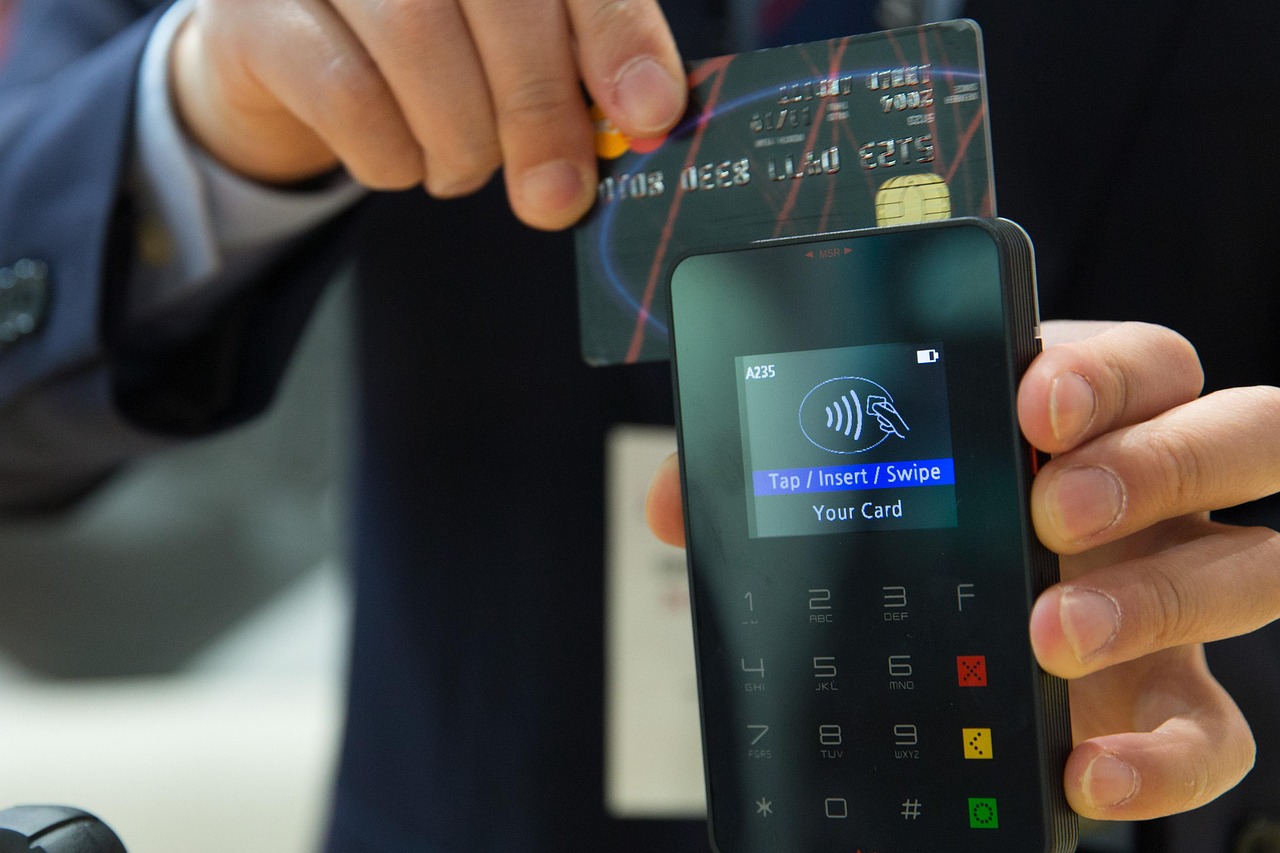
- Card payment terminal: Integrated card readers streamline the checkout experience; standalone wireless terminals offer flexibility. If payments are a priority, our guide to the best wireless card machines for small businesses in the UK covers your options in detail.
Software
The software is where the real value lies. Look for a platform that covers sales processing, stock management, staff management and reporting as core features — not paid add-ons. Cloud-based software means your data is accessible remotely, backed up automatically and updated without manual intervention. You can explore EPOS Direct's software platform to see how these features are structured across retail and hospitality environments.
Payment Processing
Card payments now account for the overwhelming majority of transactions in UK retail and hospitality. Your EPOS system should support chip and PIN, contactless and mobile wallet payments (Apple Pay, Google Pay) as standard. Many providers bundle payment processing into a monthly plan; others charge a transaction fee. Understanding the total cost of payment acceptance — not just the terminal cost — is critical before committing.
Which Types of UK Businesses Benefit Most?
Almost any business that sells goods or services face-to-face will benefit from moving to a modern EPOS platform, but the return on investment is particularly clear in the following sectors.
| Business Type | Key Benefit | Features That Matter Most |
|---|---|---|
| Independent retail (clothing, gifts, books) | Real-time stock visibility across variants and sizes | Barcode scanning, stock alerts, multi-variant product management |
| Cafés and coffee shops | Fast order processing and table or counter flow management | Quick-add buttons, split bills, kitchen display integration |
| Restaurants and takeaways | Order accuracy, kitchen communication and margin reporting | Table management, kitchen printers, modifier options, covers tracking |
| Hair and beauty salons | Appointment linking and staff commission tracking | Appointment integration, staff reporting, loyalty schemes |
| Pharmacies and health retail | Compliance, controlled-product tracking and audit trails | Dispensary integration, detailed transaction logs, age-verification prompts |
| Market traders and mobile vendors | Portable operation without a fixed counter | Tablet-based system, offline mode, wireless card acceptance |
If you run a clothing or fashion business, the specific demands around sizing, colour variants and seasonal stock make sector-specific software particularly valuable — our dedicated article on the best EPOS systems for clothing shops in the UK goes into detail on what to look for.
What Should a First-Time Buyer Actually Look For?
Beyond the feature checklist, first-time buyers often ask the wrong questions — focusing on screen size or receipt printer speed rather than the factors that genuinely determine satisfaction after six months of daily use.
Ease of Use
Your staff will use this system every day, often under pressure. A well-designed interface reduces training time, minimises keying errors and keeps queues moving. Ask for a live demo before committing — not just a recorded walkthrough. You can book a retail EPOS software demo or a restaurant EPOS software demo directly to see the interface in action.
Scalability
A system that works for your single-site operation today should be able to grow with you — adding a second terminal, a second location or an online channel without requiring a complete platform change. Ask explicitly how multi-site and multi-till licensing works.
Support
This is the factor most commonly underestimated by first-time buyers. When your system goes down during a Saturday lunchtime rush, what happens? Confirm the provider's support hours, response times and whether telephone support is included or charged separately.
Integration
Does the software connect to your accounting platform (Xero, QuickBooks, Sage)? Can it push sales data to your e-commerce store? Can it be combined with a card machine into a single unified checkout? Our guide on combining a card machine and till system explains how integrated payment setups work and why they reduce end-of-day reconciliation headaches.
How Much Does an EPOS System Cost in the UK?
Pricing varies considerably depending on whether you choose a subscription-based cloud system or an outright hardware purchase with a one-time software licence. The following ranges are indicative of the UK market and are intended as planning guidance, not quotes.
- Entry-level tablet-based system (software subscription only, using your own device): typically from around £20–£50 per month for software alone, plus payment processing fees.
- All-in-one countertop EPOS terminal with software subscription: most setups fall in the range of £30–£80 per month on a contract, or a higher upfront hardware cost with a lower monthly software fee.
- Multi-terminal or multi-site retail or hospitality setup: budgets typically start from £60–£150 per month depending on terminal count, feature tier and support level included.
- Outright hardware purchase: a complete hardware bundle (terminal, printer, cash drawer, scanner) can range from approximately £300 to well over £1,000 depending on specification — with ongoing software and support costs on top.
Payment processing is a separate cost layer: transaction rates in the UK typically range from around 0.5% to 2%+ depending on card type, volume and your agreement. Some providers bundle a fixed monthly fee for payments rather than a per-transaction rate, which can work out more cost-effective at higher volumes.
If budget is a primary concern, our guide to the most affordable EPOS systems for small businesses in the UK breaks down where you can make sensible savings without sacrificing reliability. For a broader view of small business options, the practical buyer's guide to till systems for small businesses covers the full spectrum from basic to feature-rich.
It is also worth checking whether your chosen provider charges a monthly fee for the card machine itself. Our article on card machines with no monthly fee explains when a transaction-rate-only model makes more sense for lower-volume businesses.
How to Set Up and Start Using Your EPOS System
A well-implemented EPOS system can be up and running within a day for most small businesses. The process typically follows these stages.
- Hardware assembly: Mount or position your terminal, connect your receipt printer and cash drawer, and pair your card reader. Most modern systems use plug-and-play USB or Bluetooth connections — no specialist engineer required for standard setups.
- Software configuration: Log into your cloud dashboard and set up your business profile: trading name, VAT number (if registered), receipt header and logo.
- Product/menu entry: Add your products, categories, prices and (for retail) barcodes. Many providers allow bulk import via CSV spreadsheet, which saves significant time if you have a large catalogue.
- Staff profiles: Create individual logins with appropriate permission levels — a manager seeing all reports, a junior till operator seeing only what they need.
- Payment setup: Pair and test your card reader, process a test transaction and confirm receipts are printing correctly.
- Trial run: Run the system in a low-pressure environment for a day before going live with customers — ideally at the end of a trading day so staff can practice without queue pressure.
If you would prefer hands-on guidance from a specialist, you can talk to an expert online at EPOS Direct who can walk you through configuration for your specific business type.
Common Mistakes First-Time Buyers Make — and How to Avoid Them
Experience helping UK businesses implement EPOS systems reveals a handful of avoidable errors that consistently cause frustration after purchase.
Choosing on price alone
The cheapest monthly subscription often strips out the features — and more importantly, the support — that make a system genuinely useful. Calculate the total cost of ownership over 24 months, including payment processing, support and any add-on modules, rather than comparing headline prices.
Ignoring internet connectivity
Cloud-based EPOS systems require a reliable broadband connection. Before signing up, confirm whether your chosen system has a robust offline mode that allows trading to continue during outages, with data syncing automatically when connection is restored.
Underestimating the product setup workload
Entering hundreds of products with correct barcodes, categories and prices takes time. Build this into your pre-launch plan, or ask your provider whether an onboarding team will assist with data import.
Not training all staff before go-live
A system is only as effective as its least-trained user. Even a 30-minute familiarisation session for every team member before launch will reduce errors, reduce voids and reduce frustration on both sides of the counter.
Overlooking VAT configuration
If your business is VAT-registered, ensure your EPOS software is configured with the correct VAT rates applied to each product category from day one. Errors here create reconciliation headaches and — in the worst case — HMRC compliance issues. HMRC's guidance on VAT record-keeping requirements is available at gov.uk and is worth reviewing before you go live.
Ready to Take the Next Step?
Moving from a traditional till to a modern EPOS platform is one of the highest-impact operational decisions a small UK business can make — improving stock accuracy, speeding up service, simplifying end-of-day reporting and giving you genuinely useful data to run your business better. The technology is more accessible and more affordable than it has ever been, and the setup process is far simpler than most first-time buyers expect.
EPOS Direct has helped thousands of UK businesses — from independent retailers to multi-site restaurant groups — find and implement the right system for their operation. Visit the EPOS Direct UK home page to explore current offers and find out more, or take one of the following steps when you are ready to move forward:
- Request a free demo and see the system in action with your business type in mind.
- Browse our retail EPOS offers or our hospitality and restaurant EPOS offers for current pricing and packages.
- Request a call back from a member of the EPOS Direct UK team to discuss your specific requirements.
Written by the EPOS Direct UK team, specialists in EPOS and POS systems for UK businesses across retail, hospitality, pharmacy and beyond.
Frequently asked questions
- Do I need technical experience to run an EPOS system?
- No. Modern EPOS systems are designed to be user-friendly, with touchscreen interfaces and guided setup wizards. Most providers, including EPOS Direct UK, offer onboarding support and training so you can be up and running within a day, even with no technical background.
- How much should I expect to pay for my first EPOS system in the UK?
- Entry-level EPOS bundles in the UK typically start from around £300 to £500 for basic hardware such as a touchscreen terminal, receipt printer, and cash drawer. Mid-range setups with stock management, cloud reporting, and card payment integration usually range from £600 to £1,200. Monthly software subscriptions can add £20 to £60 per month depending on features. EPOS Direct UK offers transparent bundle pricing with no hidden fees.
- Can I use an EPOS system if my business takes card and cash payments?
- Yes. A good EPOS system handles both cash and card payments seamlessly. Integrated card payment terminals connect directly to your till software, so totals are passed automatically, reducing manual errors. EPOS Direct UK systems are compatible with leading UK card payment processors.
