We use cookies to make your experience better.
To comply with the new e-Privacy directive, you agree to the privacy policy and our use of cookies

The Best EPOS Systems for Hotel Bars in the UK: What to Look for and How to Choose
EPOS Systems for Hotel Bars in the UK: The Complete Buyer's Guide

A hotel bar operates under pressures that a standalone pub or restaurant simply does not face: room charge integration, variable-rate pricing across peak periods, multi-outlet stock control, and the expectation of frictionless service from guests who have already formed an opinion of your brand before they reach the bar. The right EPOS solution addresses all of these at once — and choosing the wrong one costs far more than the hardware. This guide, written by the EPOS Direct UK team who support hospitality businesses across the United Kingdom every day, sets out exactly what to look for, what to pay, and how to get it right first time.
Why Hotel Bars Have Unique Technology Requirements
Hotel bars are hybrid environments. They serve walk-in guests, hotel residents, corporate accounts, and event delegates — often simultaneously, often on different pricing structures. A till system designed for a neighbourhood pub handles one revenue stream; a hotel bar typically handles five or more. The implications for software architecture are significant.
- Room charge posting: Guests expect to sign drinks to their room. Without direct EPOS-to-PMS integration, staff must manually transfer charges — a slow, error-prone process that erodes both service quality and revenue accuracy.
- Multiple revenue centres: The same stock may be sold at different price levels across the bar, the restaurant, room service and minibar. A specialist system manages this with price-level rules rather than manual overrides.
- 24-hour trading patterns: A hotel bar may serve breakfast cocktails, afternoon teas and late-night nightcaps in a single shift cycle. Reporting needs to reflect this rather than imposing a rigid end-of-day cut-off.
- Compliance and age verification: The Licensing Act 2003 places responsibilities on premises licence holders in England and Wales (separate legislation governs Scotland and Northern Ireland). Your EPOS system should prompt for Challenge 25 checks and log refusals for due-diligence records.
If you are also evaluating solutions for other areas of the property, the Best EPOS System for Restaurants in the UK (2026 Buyer's Guide) covers hotel restaurant requirements in depth alongside the bar context.
Key Features to Look for in a Hotel Bar Till System
Not every EPOS vendor understands the hotel environment. When shortlisting, focus on the following capabilities and press each supplier hard on specifics before signing a contract.
Must-Have Capabilities
- Property Management System (PMS) integration: Two-way sync with leading PMS platforms (Opera, Mews, Protel, Guestline and others) so room charges post in real time and folio balances are always accurate.
- Table and tab management: The ability to open named or numbered tabs, split bills by item or percentage, and merge covers from different service areas.
- Age-verification prompts: Configurable Challenge 25 alerts at the point of sale, with manager override requiring a PIN and a logged audit trail.
- Modifiers and course management: Drinks modifiers (ice, garnish, specific measure) and food-course routing to the correct preparation area.
- Multi-outlet stock control: Central inventory that deducts correctly regardless of which till or outlet records the sale.
- Real-time reporting: Live dashboard access for the bar manager and general manager, viewable on any device, covering sales by category, staff performance, voids and wastage.
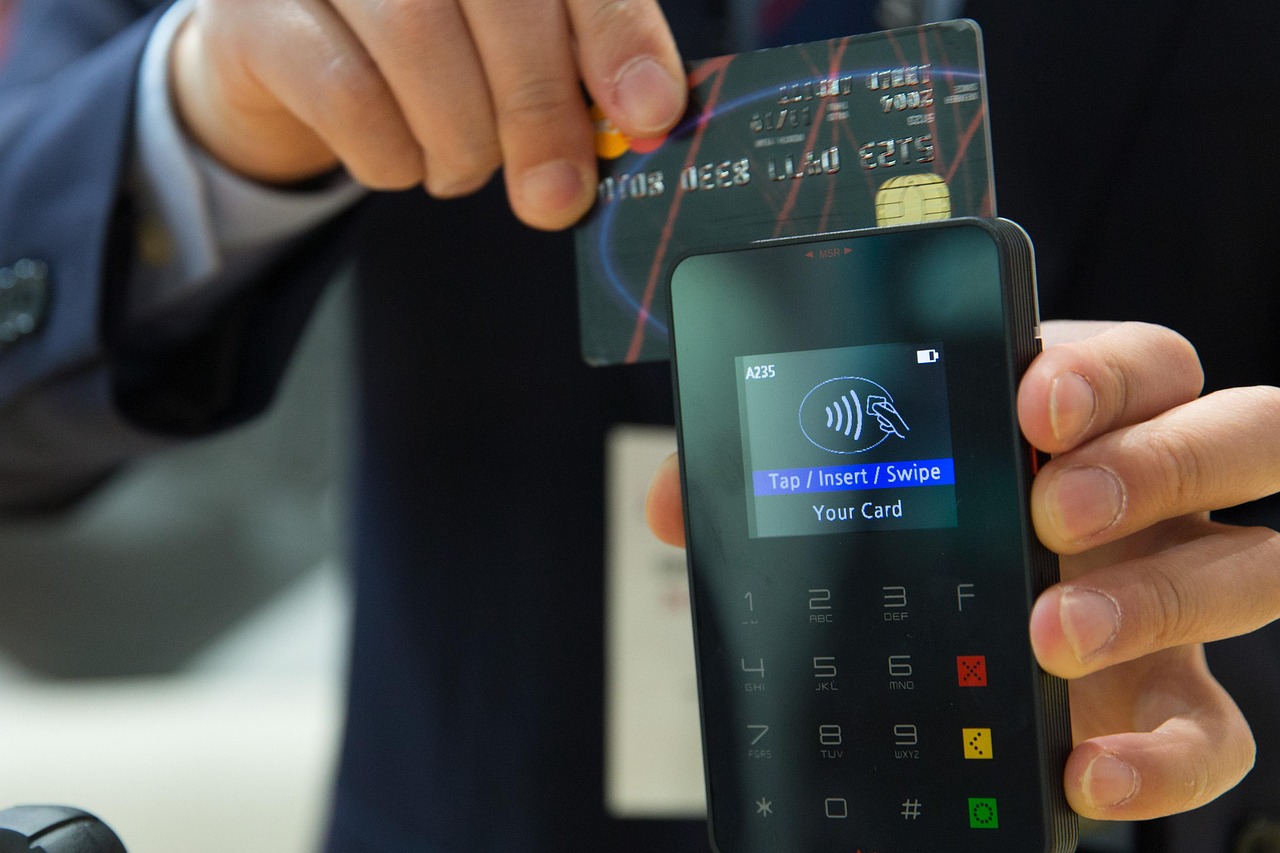
- Integrated payments: Card terminals that communicate directly with the EPOS rather than requiring manual re-entry of amounts. For a practical overview of combined solutions, see our guide to card machine and till system combined.
Valuable but Often Overlooked
- Allergen management and menu-item flagging
- Staff scheduling and clock-in/clock-out linked to the EPOS
- Loyalty programme hooks for hotel membership schemes
- Offline mode so trading continues if the internet drops
How EPOS Systems Integrate with Hotel Property Management Software
PMS integration is the single most important technical question for any hotel bar EPOS purchase. Ask every vendor these three questions before proceeding.
- Which PMS platforms do you integrate with natively, and which require a middleware connector? Native integrations are more reliable and faster to implement. Middleware (a third-party bridge) introduces an additional point of failure and often additional cost.
- Is the integration bidirectional? You need charges to flow from the bar to the guest's folio (bar → PMS) and you need guest profile data — name, room number, balance limit — to be visible on the EPOS screen (PMS → bar). One-way integrations cause service problems at busy periods.
- What happens if the PMS goes offline? Bar trading should continue. Ask whether the EPOS can queue charges locally and reconcile once connectivity is restored.
If you want to see how a fully integrated system operates in practice, you can book a restaurant and hospitality EPOS software demo with the EPOS Direct UK team, which covers hotel bar environments in detail.
Cloud-Based vs Traditional EPOS: Which Suits a Hotel Bar?
This is a question every hotel operator asks, and the honest answer is that the majority of new hotel bar installations in the UK now choose cloud-based systems — but traditional server-based setups retain specific advantages worth understanding.
| Consideration | Cloud-Based EPOS | Traditional (On-Premise) EPOS |
|---|---|---|
| Setup cost | Lower upfront; hardware plus subscription | Higher upfront; server and licences |
| Ongoing cost | Monthly/annual subscription | Lower ongoing, but IT maintenance required |
| Remote management | Full remote access from any device | Limited without VPN setup |
| Software updates | Automatic, included in subscription | Manual, often chargeable |
| Offline resilience | Depends on vendor — verify carefully | Fully offline capable by design |
| PMS integration options | Broad; API-driven; frequently updated | Narrower; may require bespoke development |
| Scalability across outlets | Excellent; add terminals in minutes | Requires additional server capacity |
| Best suited to | Most hotel bars, especially multi-outlet | Properties with unreliable connectivity or strict IT policies |
For operators who are cost-conscious about recurring fees, it is worth reading our overview of EPOS systems with no monthly fee, which explains the trade-offs honestly and helps you decide whether a subscription model or a one-off licence suits your business model better.
EPOS Pricing for Hotel Bars in the UK: What to Expect
Costs vary considerably depending on the number of terminals, the level of PMS integration required, and whether you opt for a subscription or a perpetual licence. The figures below are indicative ranges based on typical UK market conditions in 2025–2026 and should be used for budgeting guidance only — always request a formal quotation for your specific configuration.
- Entry-level single-terminal setup: Typically from around £500–£800 for hardware, plus software from approximately £30–£60 per month on a subscription basis.
- Mid-range hotel bar setup (2–4 terminals, integrated card payments, cloud software): Hardware investment typically in the region of £1,500–£3,500, with software subscriptions often falling between £80 and £180 per month depending on feature set and number of users.
- Full multi-outlet hotel installation (bar, restaurant, room service, events): Hardware and installation costs commonly range from £4,000 upwards; software and support agreements vary widely based on PMS integration complexity and SLA requirements.
- Payment processing: Transaction fees depend on your card processing agreement and are separate from EPOS software costs. Integrated card terminals typically carry a per-transaction percentage; negotiate this based on your monthly card turnover.
To explore current offers and get accurate pricing for your property, visit our hospitality and restaurant EPOS offers page or talk to an expert online who can scope your requirements without obligation.
Hardware and Software Solutions from EPOS Direct UK
EPOS Direct UK supplies a curated range of hardware built for high-volume, liquid-environment hospitality use — sealed touchscreens, compact footprints for back-bar installation, and wireless handheld terminals for table-side ordering. All hardware is configured and tested before dispatch, reducing installation time significantly.
Recommended Hardware for Hotel Bars
- Countertop touchscreen terminals: 15" or 15.6" resistive or capacitive touchscreens with integrated card reader slots and rear customer displays — ideal for the main bar counter.
- Handheld ordering devices: Android-based handhelds with integrated barcode scanning and payment capability, suited to terrace and lounge table service.
- Kitchen and bar printer systems: Thermal receipt printers and bump-bar-compatible kitchen display screens (KDS) to route drink orders to the bar and food orders to the kitchen simultaneously.
- Wireless card machines: For table-side payment, our guide to wireless card machines for UK businesses explains the key specifications to compare.
Software Capabilities
The EPOS Direct software platform is designed for hospitality environments and includes menu management, real-time stock control, staff management, loyalty, and detailed F&B reporting. You can explore the full EPOS software feature set on the EPOS Direct software portal, or go directly to a restaurant and hospitality EPOS software demo to see the hotel bar workflow in a live environment.
Getting Started: Installation, Configuration and Team Training
Even the most capable system delivers poor results if the implementation is rushed. The following phased approach reflects best practice for hotel bar EPOS deployments and is consistent with what the EPOS Direct UK team recommends to every new client.
Phase 1 — Discovery and Scoping (1–2 Weeks Before Go-Live)
- Map every revenue centre and pricing level that the system must handle.
- Confirm your PMS vendor and integration path.
- Agree the menu structure, modifier trees, and stock unit of measure with your bar manager.
- Review your existing card payment provider and determine whether to integrate or replace.
Phase 2 — Hardware Installation and Software Configuration
- EPOS Direct UK configures software to your menu and price levels before hardware ships, minimising on-site setup time.
- PMS integration is tested in a staging environment before live connection.
- Receipt and printer templates are formatted to your brand standards.
Phase 3 — Staff Training
- Hands-on training for bar staff on daily workflows: opening tabs, posting room charges, processing split bills, and handling card payments.
- Manager-level training on reporting, end-of-day reconciliation, menu edits, and void management.
- A short reference card printed for the bar for the first two weeks of live trading is worth its weight.
Ongoing support is an often-underweighted factor in supplier selection. Confirm the support hours, response SLAs, and whether telephone support is included in the subscription or charged separately. A hotel bar that cannot take payment at 11 pm on a Friday needs a supplier with out-of-hours coverage.
For operators running smaller or independent hotel properties who want a broader grounding in EPOS fundamentals first, our complete EPOS guide for small businesses provides a useful starting point before engaging in detailed hotel-specific scoping.
Conclusion: Investing in the Right System for Your Hotel Bar
A purpose-built EPOS solution transforms a hotel bar from a high-risk, manually managed revenue centre into a tightly controlled, guest-experience-enhancing operation. The difference between a generic till and a hospitality-specialist system shows up in every shift: faster service, fewer charge errors, better stock visibility, and management reporting that actually informs decisions. EPOS Direct UK has helped properties of every scale — from boutique country house hotels to city-centre chains — select, configure and deploy systems that work reliably under real hotel bar conditions.
To find out which configuration is right for your property, request a free demo from EPOS Direct UK, or browse the full range of solutions and current offers on the EPOS Direct UK home page. If you prefer to speak directly, request a call back and a specialist will be in touch at a time that suits you.
Frequently asked questions
- Can a hotel bar EPOS system connect to our existing hotel management software?
- Yes — most modern hotel bar EPOS systems offer integration with popular Property Management Systems (PMS) such as Opera, Mews, and Rezlynx. This allows charges to be posted directly to a guest's room account, eliminating manual reconciliation and reducing errors. When choosing a system, always confirm which PMS integrations are supported out of the box and whether any middleware or API costs apply.
- How much does a hotel bar EPOS system typically cost in the UK?
- Costs vary depending on the size of your operation and the features you need. As a general guide, a single-terminal hotel bar EPOS setup in the UK starts from around £500–£800 for entry-level hardware, with software licences typically ranging from £30–£80 per month on a subscription basis. Multi-terminal setups with kitchen display screens, handheld ordering devices and PMS integration can range from £1,500 to £5,000+ for hardware, plus ongoing software fees. EPOS Direct UK offers tailored quotes based on your specific requirements.
- Do we need separate EPOS systems for the hotel bar and the hotel restaurant?
- Not necessarily. Many hospitality EPOS platforms allow you to run multiple revenue centres — such as a bar, restaurant, room service, and spa — from a single back-office system. This gives you unified sales reporting, shared stock management, and consistent staff permissions across your whole property. Whether you need separate terminals depends on your venue layout and volume, but the software can often be configured to treat each area independently while reporting centrally.
