We use cookies to make your experience better.
To comply with the new e-Privacy directive, you agree to the privacy policy and our use of cookies


The Complete Guide to POS Systems for UK Retail & Hospitality Businesses
The Complete Guide to POS Systems: Everything UK Businesses Need to Know

A point-of-sale system is the operational heart of any modern retail or hospitality business — the place where every transaction, stock movement, and customer interaction converges. Choosing the right one shapes how efficiently your team works, how clearly you see your business, and how professionally your customers experience your brand. This guide covers everything UK business owners need to make a confident, well-informed decision: from understanding the technology to comparing costs, features, and deployment options.
Written by the EPOS Direct UK team, who support hundreds of UK businesses every year with tailored EPOS and POS solutions across retail, hospitality, and specialist sectors.
What Is a POS System and How Does It Work?
A POS (point of sale) system is the combination of hardware and software that processes sales transactions. At its simplest, it replaces a traditional cash register. At its most powerful, it becomes the central nervous system of your entire operation — managing stock, staff, loyalty programmes, reporting, and integrations with your accountancy or e-commerce platforms.
Modern EPOS (electronic point of sale) systems work by scanning or entering a product, calculating the total, accepting payment (card, cash, or contactless), and recording the transaction in real time. That data then flows automatically into stock management, sales reports, and, where configured, your accounting software. Everything is connected, and increasingly, everything is cloud-based — meaning managers can check live sales figures from anywhere.
The core components
- Touchscreen terminal — the operator-facing interface where sales are entered
- Receipt printer — thermal or impact, for customer receipts or kitchen dockets
- Barcode scanner — speeds up product entry in retail environments
- Cash drawer — for businesses accepting cash payments
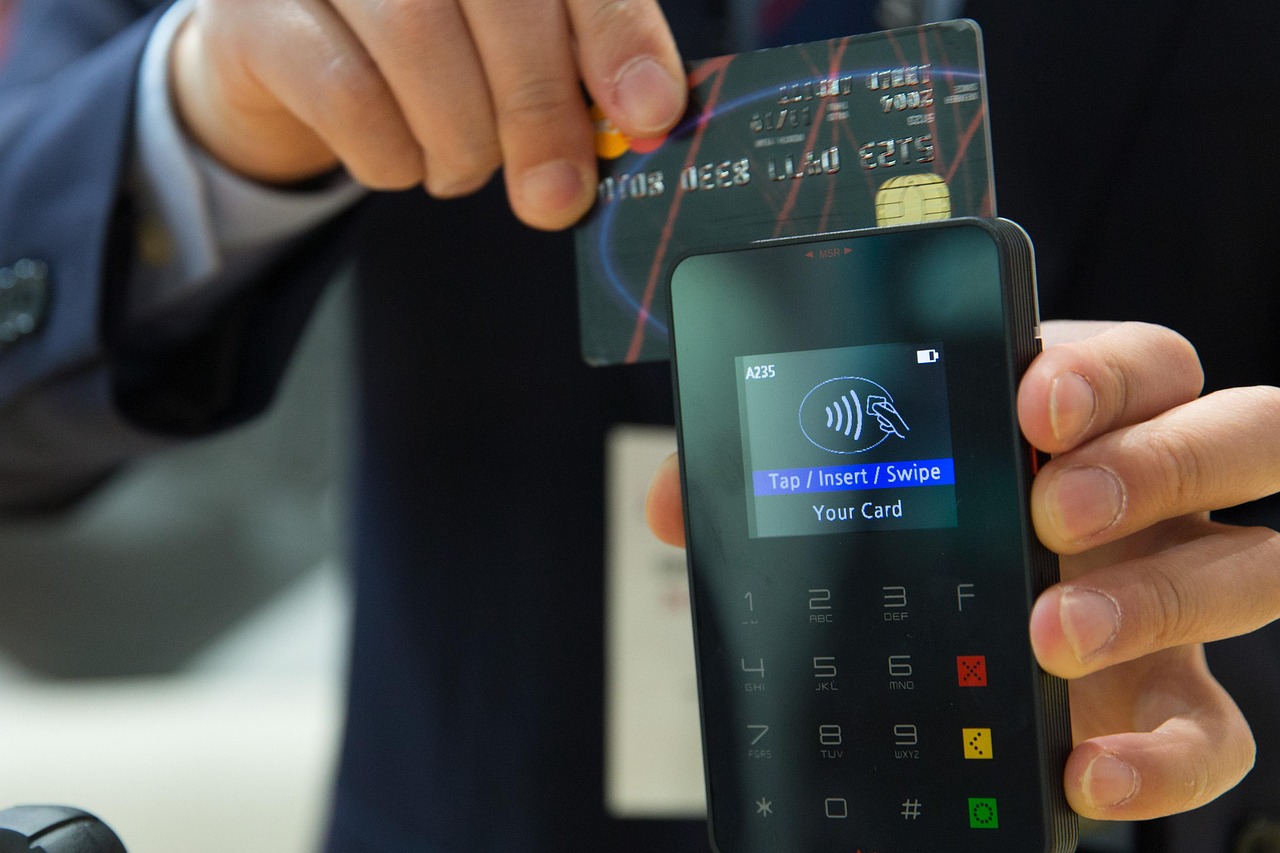
- Card payment terminal — integrated or standalone, accepting chip, contactless, and mobile payments
- Back-office software — where reporting, stock, and configuration live
Cloud connectivity means your data is backed up securely and accessible remotely. Many systems also operate in offline mode, processing transactions locally and syncing when connectivity is restored — a critical resilience feature for any trading environment.
Types of POS Systems: Which One Suits Your Business?
There is no single correct architecture. The right deployment depends on your sector, volume, physical space, and growth ambitions.
Fixed (countertop) EPOS terminals
The traditional format: a dedicated screen and peripheral set at a fixed point of sale. Robust, high-volume, and well suited to busy retail counters, supermarkets, and quick-service restaurants. Typically the most cost-effective per unit for high-transaction environments.
Mobile and tablet-based POS
iPad and Android tablet solutions allow staff to take orders or process sales anywhere on the floor — ideal for table-service restaurants, market traders, pop-up retail, and experiential retail environments. They reduce queue times and improve the customer experience significantly.
Self-service kiosks
Increasingly popular in quick-service restaurants, pharmacies, and high-footfall retail, self-service kiosks reduce staffing pressure at peak times and give customers greater control over their order.
Cloud-based vs. on-premise systems
Cloud-based systems store data on remote servers and are accessed via a browser or app. They offer lower upfront costs, automatic software updates, and remote access. On-premise systems store data locally — historically preferred by businesses with security concerns or limited connectivity, though the gap in security capability between the two has narrowed considerably.
For most UK businesses starting or upgrading today, a cloud-based EPOS system offers the best combination of flexibility, resilience, and value. Explore the complete 2026 guide to EPOS systems for small businesses for a more granular breakdown by business size.
Must-Have Features to Look for in a POS System
Not all systems are equal. These are the capabilities that separate a genuinely useful system from one that creates as many problems as it solves.
- Real-time stock management — automatic stock deduction on each sale, low-stock alerts, and multi-location visibility
- Integrated card payments — seamless connection between the till and card terminal eliminates manual entry errors and speeds up transactions
- Detailed sales reporting — by product, category, staff member, time period, and location
- Customer and loyalty management — CRM tools, purchase history, and loyalty point schemes
- Staff management — clock-in/out, role-based permissions, and performance tracking
- Multi-site support — centralised management across multiple locations from one back office
- Third-party integrations — accounting (Xero, Sage, QuickBooks), e-commerce, and delivery platforms
- Offline mode — continued trading when internet connectivity is interrupted
- Supplier and purchase order management — particularly important for retail and pharmacy
If you accept card payments away from a fixed terminal, our guide to the best wireless card machines for small businesses in the UK covers what to look for in mobile payment hardware.
How Much Does a POS System Cost in the UK?
Cost is one of the first questions any business owner asks, and the honest answer is: it varies considerably depending on the scale, sector, and feature set required. Here are realistic indicative ranges for the UK market.
| Setup Type | Typical Hardware Cost | Typical Monthly Software Fee | Best For |
|---|---|---|---|
| Entry-level single terminal | From approximately £300–£600 | From approximately £20–£50/month | Market traders, sole traders, small pop-ups |
| Small retail or café (1–2 tills) | From approximately £600–£1,500 | From approximately £40–£80/month | Independent shops, coffee shops, small restaurants |
| Mid-size retail or hospitality | From approximately £1,500–£4,000 | From approximately £80–£200/month | Multi-till retail, table-service restaurants, pubs |
| Multi-site or enterprise | Bespoke, often from £5,000+ | Bespoke pricing per site | Chains, franchises, large hospitality groups |
All figures are indicative market ranges for guidance only and will vary by supplier, configuration, and contract terms. Always request a tailored quote based on your specific requirements.
Beyond hardware and software, factor in installation, staff training, ongoing support contracts, and payment processing fees from your acquirer. Businesses seeking the most cost-effective entry point should read our guide to the most affordable EPOS systems for small UK businesses, which examines where you can genuinely save and where cutting costs creates problems later.
For businesses wanting to avoid recurring monthly card machine fees, our guide to card machines with no monthly fee outlines the options available in the UK market.
POS Systems for Retail vs Hospitality: Key Differences
Retail and hospitality businesses share the same fundamental need — fast, accurate transaction processing — but their operational workflows differ substantially, and a system built for one environment will frustrate users in the other.
Retail priorities
- Barcode scanning and product matrix management (size, colour, variant)
- Deep stock control with supplier integration and purchase orders
- Customer accounts, loyalty, and gift cards
- Returns, exchanges, and refund workflows
- Integration with e-commerce platforms (Shopify, WooCommerce, etc.)
Clothing and fashion retailers in particular benefit from variant-level stock management. Our dedicated guide to EPOS systems for clothing shops explores the specific features that matter most in that sector.
Hospitality priorities
- Table management, covers, and reservations integration
- Kitchen display systems (KDS) and order routing
- Course-by-course ordering, menu modifiers, and allergen flagging
- Split bills, tab management, and service charge handling
- Integration with delivery platforms (Deliveroo, Uber Eats, Just Eat)
Many UK businesses also benefit from combining their till and card machine into a single integrated solution — our guide to card machine and till system combinations explains how integrated setups compare with using separate devices.
How to Choose and Set Up the Right POS System
The selection process is where many businesses make avoidable mistakes — either buying more than they need now, or locking into a system that cannot grow with them. A structured approach avoids both traps.
- Map your workflows — document how a transaction currently moves from customer to receipt. Where are the friction points? What data are you currently missing?
- Define your must-have features — distinguish between features you need on day one and features that would be useful later. Prioritise accordingly.
- Consider your growth trajectory — a system adequate for one shop today should be capable of supporting three locations in two years without a full migration.
- Evaluate support quality — UK-based support is especially important. If your till goes down on a busy Saturday lunchtime, you need to reach a knowledgeable person quickly. Ask suppliers specifically about their support hours and response times.
- Request a live demonstration — no amount of marketing copy substitutes for seeing the software handle your actual product catalogue, workflows, and reports.
- Plan your installation and training — budget time for data migration (product catalogue, customer records, supplier details), staff training, and a parallel-run period before going fully live.
You can explore EPOS Direct's full software platform at your own pace, and request a tailored retail or restaurant software demo when you are ready to see it applied to your sector. If you would prefer to talk through your requirements first, talk to an EPOS expert online — the team can advise on the right configuration without any obligation.
Why UK Businesses Choose EPOS Direct for Their Till Systems
EPOS Direct is one of the UK's established EPOS system providers, supplying and supporting businesses across retail, hospitality, pharmacy, and specialist sectors. The combination of UK-manufactured hardware options, purpose-built sector software, and UK-based support makes it a practical choice for independent businesses and growing chains alike.
What sets the offering apart
- Sector-specific software — dedicated platforms for retail, restaurants, and pharmacy rather than a generic system adapted to each sector
- Integrated payments — card terminals that communicate directly with the EPOS software, eliminating end-of-day reconciliation headaches
- Scalable architecture — start with a single terminal and expand to multi-site with no change of platform
- Comprehensive onboarding — installation, data migration, and staff training as standard, not as expensive extras
- UK-based support — accessible when UK businesses actually need it
Businesses can view current system packages and pricing on the EPOS Direct UK home page, where the latest offers and configuration options are maintained. Sector-specific starting points are available for retail EPOS systems and hospitality and restaurant EPOS systems.
For pharmacy businesses, a dedicated pharmacy EPOS software demo is available to show how the platform handles dispensing workflows, controlled drug records, and NHS integration requirements.
Making Your Decision with Confidence
A well-chosen EPOS system pays for itself many times over — in time saved, errors avoided, stock shrinkage reduced, and business intelligence gained. The key is matching the system to your actual operation rather than buying on price alone or being sold capability you will never use.
Take the time to see the software in action before committing. EPOS Direct makes this straightforward: request a free demo tailored to your sector, or if you have specific questions about configuration, costs, or migration from an existing system, request a call back from the EPOS Direct UK team. There is no substitute for speaking with people who understand your sector and have helped businesses like yours through exactly this decision.
Frequently asked questions
- How much does a POS system cost for a small UK business?
- Costs vary by setup. A basic single-till system from a UK supplier like EPOS Direct typically starts from around £300–£600 for hardware, with software licences ranging from free (on some cloud plans) up to £50–£100 per month. Full multi-terminal retail or hospitality setups with receipt printers, barcode scanners and card readers can range from £800 to £2,500+. Many UK providers offer finance options or bundles to spread the cost.
- Do I need an internet connection to run a POS system?
- Most modern cloud-based POS systems require a stable internet connection to sync sales data and access reports in real time. However, many — including systems supplied by EPOS Direct — offer an offline mode so you can continue processing transactions during an outage, syncing automatically when connectivity is restored.
- What is the difference between a POS system and an EPOS system?
- POS stands for Point of Sale, while EPOS stands for Electronic Point of Sale. In practice, the terms are used interchangeably in the UK. EPOS typically implies a fully digital, software-driven system with features like inventory management, sales reporting and CRM integration — going well beyond a traditional cash register or manual till.
