We use cookies to make your experience better.
To comply with the new e-Privacy directive, you agree to the privacy policy and our use of cookies


POS System vs Traditional Cash Register: Which Is Right for Your Business?
POS System vs Traditional Cash Register: The Complete Guide for UK Businesses
For UK business owners weighing up their till options, the choice between a traditional cash register and a modern EPOS system is rarely just about processing payments — it is about how much visibility, control and growth potential you want from your point of sale. A cash register handles the basics reliably; a fully integrated POS system transforms every transaction into usable business intelligence. This guide covers everything you need to make a confident, well-informed decision.
Written by the EPOS Direct UK team, who help businesses across the United Kingdom choose, install and get the most from their EPOS and POS systems every day.
What Is a Traditional Cash Register — and Who Still Uses One?
A traditional cash register is an electromechanical or basic electronic device designed to record sales, open a cash drawer and print a receipt. Most models accept cash and, with an attached card terminal, card payments — but the two systems rarely communicate with each other, meaning reconciliation is a manual process.
They remain popular in very specific contexts:
- Market stalls and pop-ups that operate on cash only and need nothing more than a lockable drawer
- Small, low-volume independent shops with a single operator, minimal product lines and no need for stock tracking
- Sole traders who process the same handful of transaction types daily and want low upfront cost above all else
The appeal is straightforward: a basic electronic cash register can be purchased outright for a modest sum, it requires almost no training and it never needs a software update. For a business with genuinely simple needs, that simplicity has real value. But "simple" comes with trade-offs that grow more costly as a business grows.
What a Modern POS System Actually Does
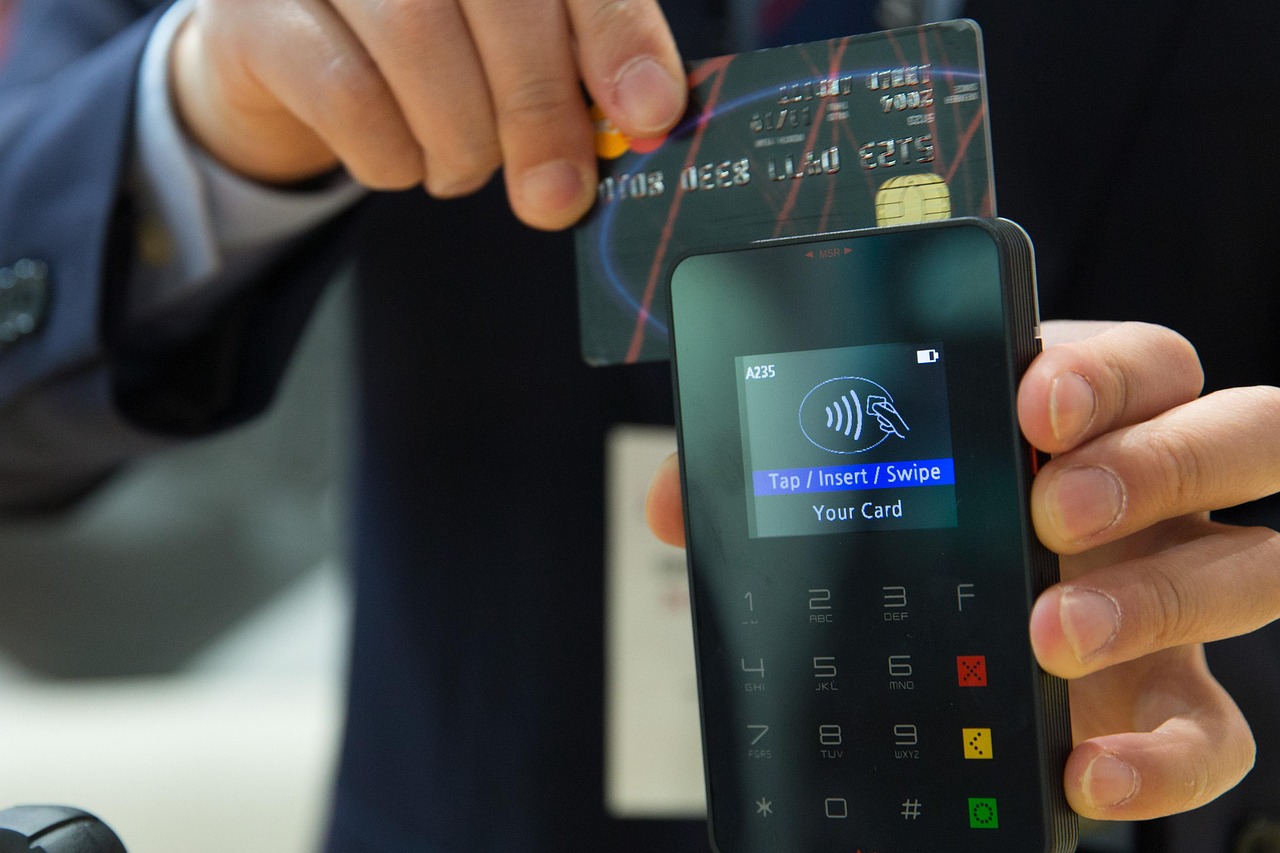
A modern point-of-sale system — often called an EPOS (Electronic Point of Sale) system in the UK — combines purpose-built hardware with cloud-based or on-premise software to manage every aspect of a transaction and much more besides. Where a cash register records a sale, an EPOS system analyses it.
Core capabilities typically include:
- Real-time stock management: stock levels update automatically with every sale, reducing manual counts and shrinkage
- Integrated card payments: chip-and-pin, contactless and mobile payments processed through a single system with unified end-of-day reporting
- Customer relationship tools: loyalty schemes, purchase history and marketing integrations built into the sales flow
- Detailed sales reporting: hourly performance data, best-sellers, margin analysis and staff productivity — accessible from any device
- Multi-site management: manage stock, pricing and promotions across multiple locations from one dashboard
- Integrations: connect to accounting software (such as Xero or Sage), ecommerce platforms, delivery aggregators and payroll tools
For businesses exploring what an integrated setup looks like in practice, our guide to EPOS and POS systems for UK businesses is a good starting point.
Key Differences: Features, Functionality and Day-to-Day Use
The functional gap between the two approaches is significant. The table below sets out the most decision-relevant differences at a glance.
| Capability | Traditional Cash Register | Modern EPOS / POS System |
|---|---|---|
| Stock tracking | None — manual counting required | Automatic, real-time, with low-stock alerts |
| Sales reporting | Basic daily totals only | Granular, by product, hour, staff member and category |
| Payment integration | Separate card terminal; no unified reporting | Fully integrated; one reconciliation at close of day |
| Customer data | None | Loyalty, purchase history, CRM integrations |
| Staff management | None | Clock-in/out, permissions, individual sales tracking |
| Software updates | None — static functionality | Regular, often automatic via cloud |
| Remote access | Not possible | Full dashboard access on any device, anywhere |
| Scalability | Minimal — requires replacing hardware to scale | Add terminals, locations or modules as you grow |
| HMRC Making Tax Digital | No native compatibility | Most systems integrate directly with compliant accounting tools |
The Making Tax Digital (MTD) point is worth emphasising: HMRC's ongoing rollout of MTD for Income Tax means that digital record-keeping is becoming a regulatory expectation for a growing number of UK businesses. Businesses should verify their current obligations at GOV.UK. A cash register generates no digital record compatible with MTD requirements; an EPOS system typically does.
Cost Comparison: Upfront Investment Versus Long-Term Value
A common question from business owners is: "Will switching to a POS system actually save me money, or is it just a bigger upfront cost?" The honest answer is that it depends on the size and complexity of your operation — but the economics shift decisively in favour of EPOS for most businesses beyond the very smallest.
Traditional cash register costs
- Hardware purchase: typically from around £80 to £350 for a standalone electronic register
- Ongoing costs: minimal — occasional till rolls, possible repair
- Hidden costs: manual stock counting labour, reconciliation errors, separate card terminal fees, and no insight into where margin is being lost
Modern EPOS system costs
- Hardware (touchscreen terminal, receipt printer, barcode scanner, cash drawer): entry-level bundles typically start from around £300–£600; more comprehensive retail or hospitality setups typically fall between £700 and £1,500 per terminal
- Software: cloud-based licences typically range from around £20 to £80 per month per terminal depending on features and provider; some providers include software in a bundled package
- Card processing: integrated card payment rates vary by provider and transaction volume — businesses should compare acquirer rates directly
- Support and maintenance: many providers include this; others charge separately
For businesses watching their budget closely, our guide to the most affordable EPOS systems for small UK businesses sets out realistic options at different price points. If you want to understand your card payment costs before committing to a system, our breakdown of card machines with no monthly fee may also be useful context.
The ROI case for upgrading becomes clearer when you factor in what a cash register cannot do: a retailer losing even a small percentage of revenue annually through stock discrepancies, undetected shrinkage or missed upsell opportunities will often recoup a system investment within twelve to eighteen months.
Which Industries Benefit Most from Upgrading?
While any business can benefit from better data, certain sectors see the most immediate and significant gains.
Retail
Stock control alone justifies the switch for most retailers. Whether you run a single boutique or a small chain, real-time inventory visibility eliminates both costly over-ordering and the revenue damage of running out of bestsellers. Our guide to the best till systems for small businesses in the UK covers retail-specific considerations in depth.
Hospitality and food & beverage
Restaurants, cafés, pubs and takeaways have needs that a cash register simply cannot address: table management, kitchen display systems, split bills, modifier options for dishes, and integration with delivery platforms. EPOS systems built for hospitality handle all of this natively. If you are in this sector, you can explore a restaurant EPOS software demo to see the difference in practice.
Pharmacy and healthcare retail
Pharmacies have specific compliance and stock management requirements — product tracking, age verification prompts and prescription handling — that specialist EPOS software addresses. A pharmacy EPOS software demo is a useful first step for this sector.
Multi-location businesses
Any business operating across more than one site will find a cash register approach unscalable almost immediately. Centralised EPOS dashboards allow owners and managers to view performance, manage pricing and push promotions across locations simultaneously.
Common Reasons UK Businesses Make the Switch
Based on the businesses we work with daily, the decision to upgrade tends to be prompted by one or more of the following:
- Growing product range: once SKU counts grow beyond what a staff member can manually manage, stock errors multiply quickly
- Card payment complexity: running a separate card machine with no link to the till means double-keying, end-of-day discrepancies and wasted time — a combined card machine and till system eliminates this entirely
- Needing business data: owners who cannot answer "which products are my most profitable?" or "which hours are slowest?" are making decisions blind
- Staff management challenges: as teams grow, tracking individual performance and controlling cash drawer access becomes essential
- Preparing for MTD: digital record-keeping requirements are increasingly the trigger for businesses that had previously managed with paper-based systems
How to Choose the Right Till Solution for Your Business
There is no single right answer — the best solution depends on your trading volume, sector, growth plans and budget. A useful framework:
Consider a cash register if:
- You are a sole trader or micro-business with fewer than ten product lines
- You trade primarily in cash with low transaction volumes
- You have no immediate plans to scale or add staff
Consider a modern EPOS system if:
- You carry a meaningful product range and need accurate stock data
- You take card payments and want unified end-of-day reporting
- You employ staff and want performance tracking and access controls
- You operate — or plan to operate — more than one location
- You want your till data to feed directly into your accounting software
For businesses ready to go deeper, our complete guide to EPOS systems for small businesses covers hardware selection, software features and what to ask a provider before signing. If you want to compare integrated payment options, our guide to EPOS systems with integrated card payments is a practical companion read. You can also visit the EPOS Direct UK home page for current offers, hardware bundles and further information across all our product lines.
If you are not sure which category your business falls into, speaking with a specialist is almost always worthwhile before committing to hardware. You can talk to an EPOS expert online or request a free demo to see how a modern system would work in your specific environment.
The Bottom Line
A traditional cash register does one thing dependably: it records a sale and opens a drawer. For a very small number of micro-businesses, that is genuinely sufficient. For the vast majority of UK retailers, hospitality operators and growing independents, however, the hidden costs of limited visibility — in lost stock, missed margin opportunities and manual reconciliation time — quickly outpace the higher initial investment in a proper EPOS system.
The businesses that switch consistently report the same thing: they did not realise how much they were missing until they could finally see it. If you are ready to find out what your business data could tell you, explore our retail EPOS offers or view our hospitality EPOS solutions — or request a call back and one of the EPOS Direct UK team will help you find the right fit.
Frequently asked questions
- Is a POS system worth the extra cost over a basic cash register for a small shop?
- For most small UK retailers, yes. A basic electronic cash register can cost as little as £50–£150, but it does nothing beyond recording sales. An entry-level cloud POS system typically starts from around £300–£600 for hardware, with software subscriptions from £20–£60 per month. In return you get real-time stock tracking, sales reports, card payment integration and loyalty tools — features that quickly pay for themselves by reducing shrinkage and manual admin.
- Can I still accept card payments with a traditional cash register?
- You can use a standalone card terminal alongside a cash register, but the two systems won't communicate. This means reconciling card and cash sales manually at the end of every shift, which increases the risk of errors and eats into staff time. A modern POS system integrates card payments directly, so every transaction is recorded automatically in one place.
- How long does it take to switch from a cash register to a POS system?
- Most EPOS Direct UK customers are up and running within a day. Cloud-based POS systems are designed to be quick to set up — you can import your product catalogue, configure tax rates and connect your card reader in a matter of hours. Training staff on an intuitive touchscreen till typically takes less than half a day, even for those who have only ever used a traditional register.
