We use cookies to make your experience better.
To comply with the new e-Privacy directive, you agree to the privacy policy and our use of cookies

Top Wireless Card Payment Machines for UK Businesses: How to Choose the Right One
The Best Wireless Card Payment Machines for UK Businesses in 2025
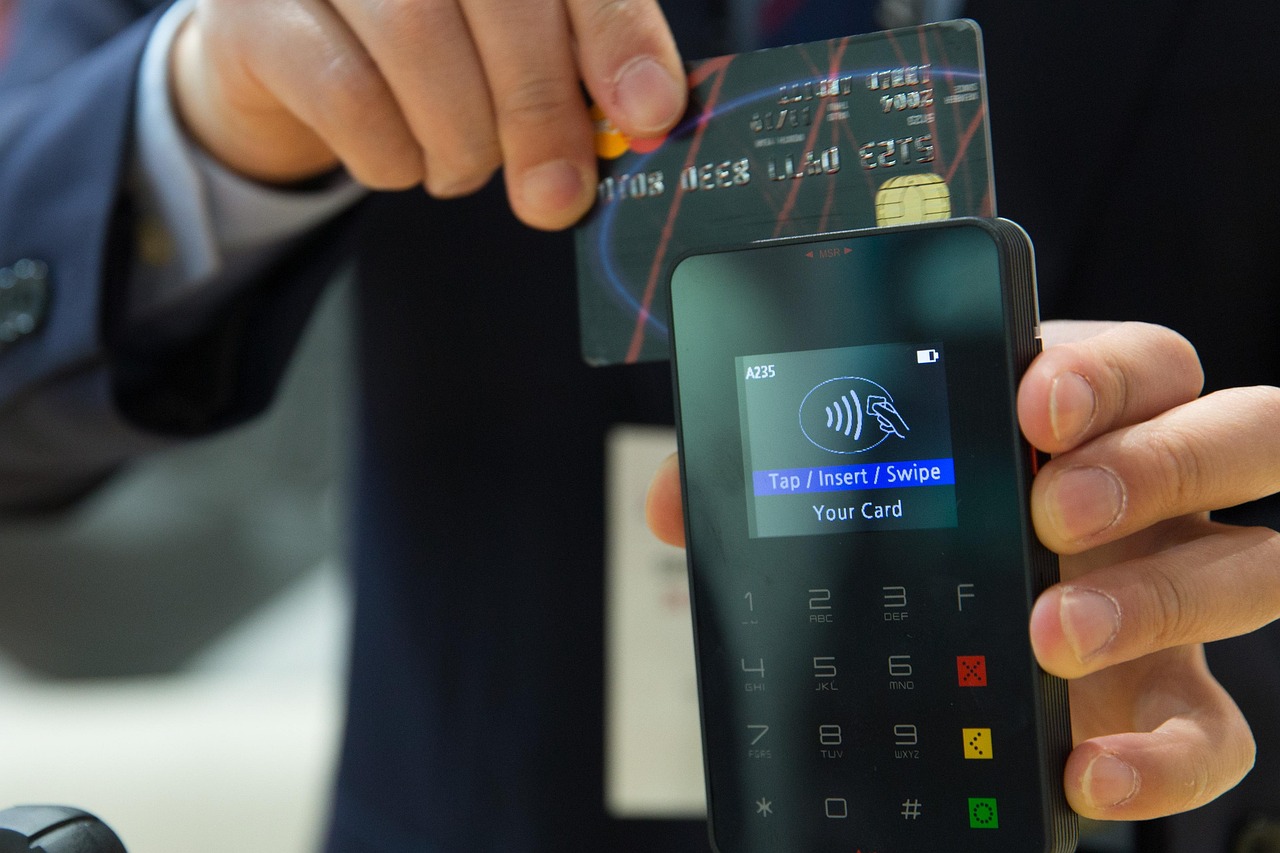
Wireless card payment machines have become essential infrastructure for UK businesses of every size — from market stalls and mobile traders to busy retail shops and restaurant dining rooms. The right device accepts contactless, chip-and-PIN, Apple Pay and Google Pay seamlessly, keeps queues moving, and feeds transaction data directly into your EPOS system. This guide cuts through the noise to help you choose the setup that genuinely fits your business model, budget and customer base.
Why UK Businesses Are Moving Away from Fixed Card Terminals
The shift is being driven by two practical realities. First, the UK's contactless limit increases and the explosive growth of mobile wallets have made card payment the default for the vast majority of consumers — cash is now a secondary preference, not the norm. Second, today's wireless terminals do far more than process a payment; they surface sales data, link to loyalty programmes and communicate with cloud-based EPOS platforms in real time.
For businesses tied to a fixed counter, a traditional wired terminal may still serve well enough. But the moment your team needs to take payment at the table, on the shop floor, at a market, or curbside, a portable device becomes a genuine competitive asset rather than a luxury. Wireless terminals also remove the tripping hazard and aesthetic clutter of long PDQ cables — a small but meaningful quality-of-life improvement that staff notice immediately.
If you are currently running a legacy cash register and wondering whether now is the right moment to upgrade your whole checkout setup, our guide on how to switch from a cash register to a modern EPOS system walks through exactly that transition.
Key Features to Look for in a Wireless Card Payment Machine
Not all portable terminals are created equal. Before comparing specific devices, agree internally on which of the following criteria are non-negotiable for your operation.
Connectivity and range
Most wireless terminals connect via Wi-Fi, 4G SIM or Bluetooth — some support all three simultaneously, which is valuable if your Wi-Fi is unreliable. A device that can fall back to 4G avoids the painful moment when a customer's card cannot be processed during a network outage. Check the quoted range for Bluetooth models; in a large restaurant or exhibition hall, 10 metres is rarely enough.
Battery life
A terminal that dies mid-service is worse than no terminal at all. Look for a rated battery life of at least eight hours under continuous use. Many operators serving long shifts find it worth investing in spare battery packs or charging cradles stationed at the bar or service counter.
Payment acceptance
Any reputable device sold in the UK today should accept Visa, Mastercard, contactless (including NFC), Apple Pay, Google Pay and chip-and-PIN. Beyond the basics, consider whether you need American Express, Diners Club or international scheme support — relevant if you serve tourists or corporate clients.
EPOS integration
A standalone payment device that simply processes transactions is half a solution. Ideally your terminal communicates with your EPOS software so that every sale automatically updates stock levels, daily reports and accounts — without manual reconciliation at the end of the day. We cover this in detail in the guide to EPOS systems with integrated card payments.
Security and compliance
All terminals sold to UK merchants must be PCI-DSS compliant and certified by the relevant card schemes. Reputable suppliers handle certification on your behalf, but it is worth asking explicitly — particularly if you are buying refurbished hardware from a third party. Point-to-point encryption (P2PE) and tokenisation are additional layers of security worth requesting.
Comparing Wireless Payment Approaches: A Practical Buyer's Guide
Rather than attempting to review devices whose specifications, pricing and availability change frequently, the table below compares the three primary deployment approaches UK businesses choose — helping you identify which architecture suits your situation before selecting specific hardware.
| Approach | Best For | Connectivity | EPOS Integration | Indicative Monthly Cost | Flexibility |
|---|---|---|---|---|---|
| Standalone wireless terminal | Sole traders, market stalls, pop-ups | 4G SIM / Wi-Fi | Manual reconciliation or basic export | Typically from £10–£20/month (rental) or hardware purchased outright | High — fully portable, no fixed infrastructure |
| Integrated EPOS + wireless terminal | Retail shops, restaurants, cafés | Wi-Fi (primary), 4G (backup) | Real-time, automatic stock and reporting sync | Typically from £30–£80/month (software + terminal bundle) | Medium — tied to venue but highly feature-rich |
| Multi-device wireless fleet | Large hospitality venues, multi-floor retail | Wi-Fi mesh / 4G redundancy | Full real-time sync across all terminals and kitchen/bar displays | Typically from £80–£200+/month depending on number of devices and software tier | Low mobility per device, maximum operational control |
These ranges are indicative only and will vary depending on your transaction volumes, chosen acquirer, and whether hardware is rented or purchased outright. For a tailored cost breakdown relevant to your business, talk to an expert online — the EPOS Direct UK team can model realistic costs against your actual setup.
Transaction Fees, Contracts and Running Costs Explained
One of the most common questions from business owners considering a switch is straightforward: what will this actually cost every month? The honest answer has several components.
Transaction fees
UK acquirers typically charge a percentage of each transaction value, sometimes with a minimum pence-per-transaction floor. Consumer debit cards generally attract lower interchange than credit cards, and American Express sits in its own pricing tier. Rates vary by acquirer, contract length and your monthly turnover — higher-volume businesses typically negotiate lower rates. As a rough orientation, consumer debit transactions are often processed at somewhere between 0.3% and 1%, while credit card rates may run higher. Always request a written breakdown from any acquirer before signing.
Hardware costs
Wireless terminals can be rented (paying a monthly lease) or purchased outright. Rental spreads cost but ties you to the provider; outright purchase gives ownership and often lower total cost of ownership over three or more years. Our article on monthly EPOS subscriptions versus outright purchase explores this trade-off in detail and applies equally well to terminal hardware decisions.
Contracts and minimum terms
Be particularly careful with long-term merchant service agreements. Some acquirers offer rolling monthly contracts; others lock you in for two or three years with early-exit penalties. Read the small print on PCI compliance fees, statement fees, and any minimum monthly charges that apply regardless of transaction volume.
Hidden costs to watch for
- PCI non-compliance fees if your business fails to complete annual PCI questionnaires
- Chargeback handling fees
- Currency conversion fees for international card transactions
- Next-day vs. same-day settlement fees
- Replacement hardware costs if the terminal is damaged or lost
Wireless Card Machines for Retail vs Hospitality: What's Different?
The use cases diverge enough that retail operators and hospitality businesses should evaluate terminals through different lenses.
Retail priorities
In a retail environment, speed at the point of sale is paramount. A wireless terminal used on the shop floor — for example, by a roving staff member helping customers check out without queuing — needs to connect instantly, process contactless payments in under a second, and ideally share the same product database as the main till so that stock is decremented in real time. For guidance on full till system architecture, explore our complete buyer's guide to the best till systems for small businesses.
Specialist retail sectors have additional considerations. An off-licence, for example, needs age-verification prompts integrated into the payment flow, not bolted on as an afterthought. You can read about that in detail in our guide to the best till systems for off licences in the UK.
Hospitality priorities
In restaurants, pubs and hotels, the wireless terminal typically travels with the server to the table — a workflow that places different demands on the device. Battery life, ergonomics and the ability to split bills or apply covers are much higher priorities. Integration with a kitchen display system and table-management software transforms a payment device from a commodity into a genuine service-quality tool. If you are building a hospitality payment setup from scratch, explore our hospitality and restaurant EPOS offers to see how hardware, software and card processing can be configured as a single solution.
How Wireless Card Readers Integrate with Your EPOS System
Integration is where the real value of a wireless terminal is either unlocked or wasted. A fully integrated setup means that when a payment is taken on the handheld terminal, the EPOS system simultaneously records the sale, adjusts stock, logs the tender type, and updates your end-of-day reports — with zero manual entry required.
There are three levels of integration to understand:
- No integration: The terminal processes payments independently; sales must be manually reconciled against EPOS records. Common with standalone devices from banks.
- Semi-integration: The EPOS sends the payment amount to the terminal automatically, but only the amount is shared — full transaction metadata may not flow back into the software.
- Full integration: Bi-directional, real-time data exchange. The EPOS and terminal share a common transaction record. This is the standard to aim for in any business processing more than a handful of transactions per day.
EPOS Direct UK's platform is built for full integration, so your payment data and your operational data are always in sync. You can explore our EPOS software to understand how the integration architecture works, or book a retail EPOS software demo or a restaurant EPOS software demo to see it working live in a context relevant to your business.
Practical Questions Real Buyers Ask Before Purchasing
Do I need a separate merchant account, or is one included?
Some payment solutions bundle a merchant account with the hardware — meaning the provider acts as the acquirer and there is a single monthly relationship. Others require you to hold your own merchant account with a bank or independent acquirer, then pair it with the terminal. Bundled solutions are often faster to set up and better for lower-volume businesses; independent merchant accounts can offer better rates at higher volumes. Always compare the total cost across both models before committing.
What happens to my payments if the internet goes down?
A 4G-enabled terminal provides its own connectivity independent of your venue's broadband, which is the most robust solution for businesses where downtime would be commercially damaging. Some terminals also support offline mode — storing transactions locally and submitting them when connectivity is restored — though this carries a small risk of declined cards not being caught in real time. Clarify your terminal's offline behaviour with your provider before you need it.
Can one terminal work across multiple locations or staff members?
Most modern terminals are tied to a single merchant account but can be configured to allow multiple staff logins with individual transaction records — useful for commission tracking or staff accountability. Multi-location businesses typically need a separate terminal (and potentially a separate merchant ID) per site, though some payment platforms now offer centralised multi-location reporting. This is worth raising explicitly when you request a quote.
How to Get the Right Card Payment Setup for Your Business
The clearest path to a good decision is to start with your operational workflow — not the hardware specification sheet. Map out where payments are taken, how many transactions you process per day, whether staff need to move around, and what data you need from your payment system after the sale. The hardware choice then becomes much more obvious.
For small businesses navigating this for the first time, our dedicated guide to wireless card machines for small businesses in the UK offers a more focused set of recommendations. Businesses comparing EPOS Direct UK to other providers will also find our competitive comparison guide a useful reference before making a final decision.
EPOS Direct UK offers complete payment setups — hardware, software and integrated card processing — across retail, hospitality and specialist sectors. Visit the EPOS Direct UK home page for current offers and further information, or request a free demo to see the full system in action before you buy.
In Summary: Choosing a Wireless Card Payment Machine in the UK
The best wireless card payment machine for a UK business is the one that matches your connectivity environment, integrates cleanly with your EPOS software, carries transparent and competitive transaction fees, and ergonomically suits your team's daily workflow. Standalone portable terminals suit mobile and lower-volume operators; fully integrated EPOS-paired terminals deliver the greatest operational benefit for established retail and hospitality businesses.
EPOS Direct UK has been helping UK businesses configure complete payment and EPOS solutions for years. Whether you are setting up your first card terminal or replacing an ageing estate of fixed devices, the team can guide you to the right hardware and software combination without unnecessary complexity. Talk to an expert online today, or request a call back at a time that suits you — there is no obligation and no hard sell.
Written by the EPOS Direct UK team, who work with UK retail, hospitality and specialist businesses every day to design and deliver EPOS and payment solutions that fit real operational needs.
Frequently asked questions
- How much does a wireless card payment machine cost in the UK?
- Costs vary depending on the provider and whether you buy or lease. Outright purchase prices typically range from £150 to £500 for a quality wireless terminal. Monthly rental agreements can start from around £15 to £30 per month. Transaction fees usually sit between 0.75% and 2.5% per sale depending on your card type and provider. Integrated EPOS bundles from suppliers like EPOS Direct often offer better combined pricing than buying card hardware separately.
- What is the difference between a Wi-Fi and a 4G card machine, and which is better for my business?
- A Wi-Fi card machine connects to your in-premises wireless network, making it ideal for fixed or semi-fixed locations like shops and restaurants. A 4G card machine uses a mobile data SIM and works anywhere with cellular signal, making it perfect for market traders, delivery drivers, or table-side hospitality. If your business operates in one location with reliable Wi-Fi, either will work well. If you need true portability or work outdoors, 4G is the more dependable choice.
- Can I connect a wireless card machine directly to my till system?
- Yes, most modern wireless card terminals can integrate with an EPOS till system so that payment amounts are sent automatically from the till to the card machine, reducing manual entry errors and speeding up checkout. EPOS Direct supplies card payment hardware that is designed to work seamlessly with their EPOS software, meaning your sales data, receipts and end-of-day reports all sync in one place.
