We use cookies to make your experience better.
To comply with the new e-Privacy directive, you agree to the privacy policy and our use of cookies


The Complete EPOS System Guide for UK Retail & Hospitality Businesses
The Complete EPOS System Guide: Everything UK Businesses Need to Know

An EPOS (Electronic Point of Sale) system is the central nervous system of a modern retail or hospitality business — processing sales, managing stock, tracking customer behaviour and producing the financial reports your accountant actually needs. Whether you are opening your first shop, upgrading an ageing till or scaling across multiple sites, this guide gives you an honest, practical framework for understanding what EPOS technology does, what it costs in the UK market, and how to choose a setup that genuinely fits your operation.
Written by the EPOS Direct UK team, who work with independent retailers, restaurant groups and service businesses across the United Kingdom every day.
What Is an EPOS System and How Does It Work?
At its core, an EPOS system is a combination of hardware (the physical till, screen, card reader and peripherals) and software (the application that records transactions, manages inventory and generates reports). Every time a sale is completed, the software updates stock levels in real time, logs the transaction and, where integrated, communicates with your payment provider to authorise the card payment — all within a few seconds.
Modern systems go far beyond the mechanical tills of the past. They link your shop floor to your back office: if a jumper sells in-store, your stock count drops automatically. If a table orders a second round at the bar, the kitchen display updates without a slip of paper changing hands. This integration is what separates a true EPOS system from a basic cash register, and it is why the technology has become essential for businesses of almost any size.
Key Components of a Modern EPOS Setup
Understanding the individual parts helps you identify exactly what your business needs — and avoid paying for components you will never use.
Hardware
- Touchscreen terminal or tablet: The primary interface for staff. Standalone terminals tend to be more durable for high-volume environments; tablet-based systems offer portability and lower upfront cost.
- Receipt printer: Thermal printers are the industry standard — fast, quiet and low-maintenance. Hospitality venues often run multiple printers (bar, kitchen, pass).
- Cash drawer: Still essential for many businesses, particularly in markets and smaller retail formats where cash remains significant.
- Barcode scanner: Critical for retail; some models handle both 1D barcodes and 2D QR codes for loyalty schemes or digital menus.
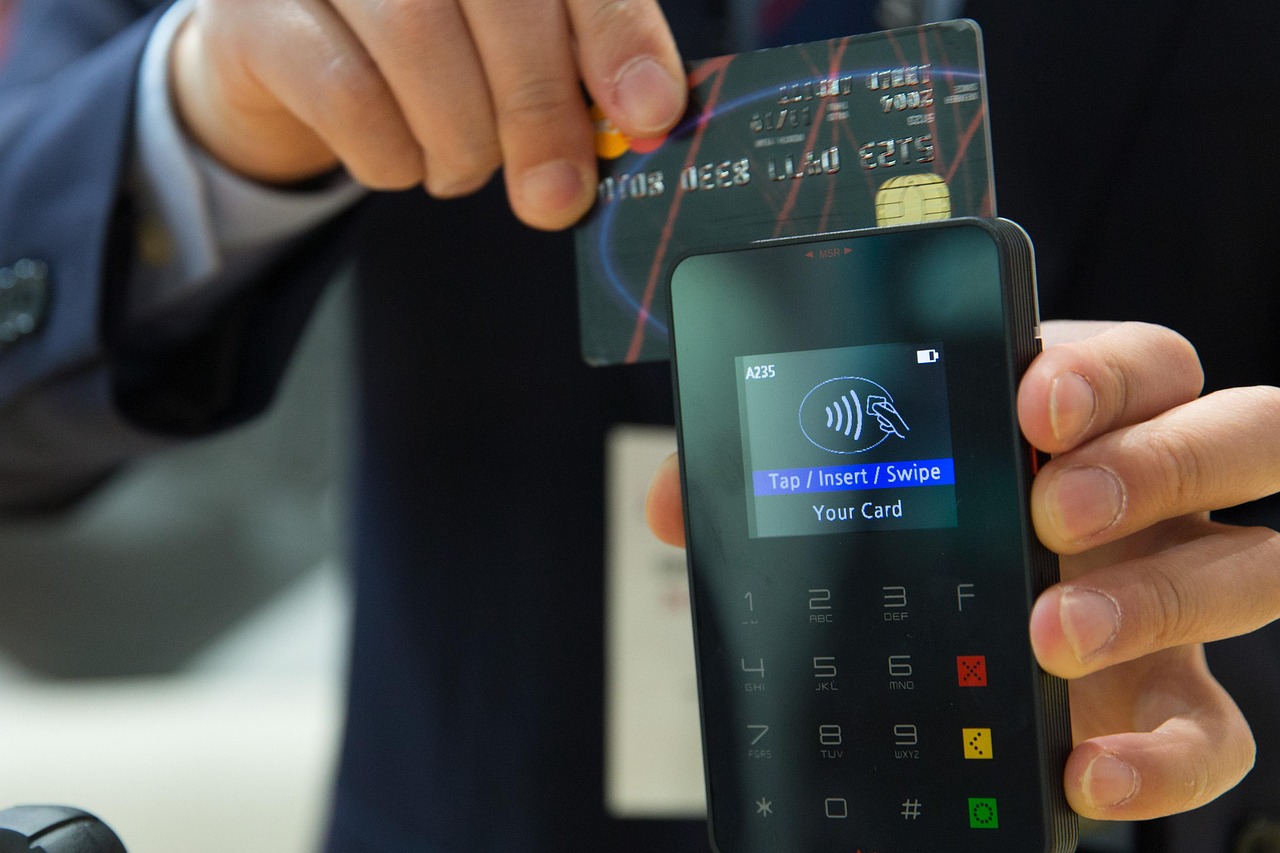
- Card payment terminal: Integrated card machines communicate directly with the EPOS software, eliminating manual keying and reconciliation errors. For businesses exploring mobile or counter-free payments, our guide to the best wireless card machines for small businesses in the UK covers your options in detail.
- Customer-facing display: Builds trust by showing the order total and item breakdown to the customer in real time.
Software
- Point of sale interface: The front-end screen your staff use to process transactions quickly.
- Inventory management: Tracks stock levels, triggers reorder alerts and supports purchase orders.
- Reporting and analytics: Sales by hour, product, category or staff member — the data that informs your buying decisions.
- Customer relationship management (CRM): Loyalty programmes, purchase history and targeted promotions.
- Integrations: Accounting packages (Xero, QuickBooks), online ordering platforms, payroll and HR tools.
To see these components working together in a live environment, you can explore our EPOS software and request a walkthrough tailored to your sector.
EPOS for Retail vs Hospitality: Key Differences
The underlying technology is similar, but the configuration, workflow priorities and must-have features diverge meaningfully between sectors.
| Feature or requirement | Retail | Hospitality (restaurants, bars, cafés) |
|---|---|---|
| Stock management | SKU-level tracking, variants (size, colour), supplier integration | Ingredient-level (recipe costing), wastage tracking |
| Layout tools | Product category grids, barcode scanning | Table plans, course management, split-bill handling |
| Payment flow | Single transaction per basket, returns and exchanges | Open tabs, part-payment, service charge, tronc |
| Kitchen communication | Not applicable | Kitchen display systems (KDS) or kitchen printers |
| Loyalty and CRM | Points per purchase, gift cards, discount codes | Visit-based rewards, pre-booking integration |
| Compliance needs | Age-verification prompts, GDPR data handling | Allergen flagging, Challenge 25 prompts, VAT on mixed supplies |
| Recommended demo | Retail EPOS software demo | Restaurant EPOS software demo |
Specialist retailers — fashion boutiques in particular — have their own nuances around size runs, seasonal ranges and multi-site stock visibility. Our dedicated article on the best EPOS systems for clothing shops in the UK explores those requirements in depth.
How Much Does an EPOS System Cost in the UK?
Cost is invariably the first question, and the honest answer is that it depends on the scale and complexity of your setup. Below are indicative UK market ranges to frame your planning — treat these as starting-point guidance rather than fixed quotes, as your specific hardware configuration, number of tills and chosen software tier will all affect the final figure.
Indicative cost ranges (UK market, 2024–2025)
- Entry-level single-till setup (tablet + software subscription): typically from around £300–£600 upfront for hardware, plus a monthly software fee often in the range of £30–£80 per month.
- Mid-market retail or hospitality setup (dedicated terminal, integrated card machine, receipt printer, scanner): hardware typically from £700–£1,500 per terminal; software subscriptions commonly £60–£150 per month per site.
- Multi-site or enterprise configuration: hardware costs scale per terminal; enterprise software licences are typically priced on application and often include dedicated account management and SLA-backed support.
Some providers offer the hardware as part of a monthly bundle, reducing the upfront cost but increasing your monthly commitment. Others sell hardware outright and charge only for software — which can work out cheaper over a three-to-five year period if you are confident in the platform. If monthly fees are a concern for your cash flow, our guide to EPOS systems with no monthly fee sets out what that model looks like and where the trade-offs lie.
For a broader view of budget-conscious options, the most affordable EPOS systems for small businesses in the UK provides a practical buyer's breakdown.
What to Look For When Choosing Your System
A genuine shortlist decision comes down to five practical criteria that experienced buyers consistently return to:
- Sector fit: Does the software handle your specific workflows out of the box — or will you need expensive customisation?
- Ease of use: Staff turnover is a real cost. A system your team can learn within a shift or two has measurable value beyond its feature list.
- Integration depth: Will it connect reliably to your accounting software, your online store and your payment provider — or will you be manually importing CSV files at month end?
- Support quality: What are the support hours? Is there a UK-based team? What does the SLA commit to? These matter most at 1 pm on a busy Saturday when the system goes down.
- Scalability: Adding a second site, a self-service kiosk or an online ordering channel should be a configuration task, not a platform migration.
A combined card machine and till system is often the most efficient route for businesses that want a single, integrated payment and management stack — our comprehensive guide to card machine and till system combinations walks through how that works in practice.
Cloud-Based vs On-Premise EPOS: Which Model Suits Your Business?
This is one of the most practically important choices you will make, and the right answer is not universal.
Cloud-based EPOS
Your data is stored and processed on remote servers accessed over the internet. Software updates happen automatically, you can view live reports from any device, and there is no server hardware to maintain on-site. The trade-off is internet dependency: a robust broadband connection is essential, though reputable cloud systems include an offline mode that queues transactions locally until connectivity is restored.
On-premise EPOS
All data lives on a local server within your premises. This offers full control and independence from internet outages, but places the responsibility for backups, security patches and hardware maintenance on you or your IT provider. It tends to suit larger operations with dedicated IT resource or businesses in locations where broadband reliability is genuinely poor.
For the vast majority of UK independent retailers and hospitality businesses opening today, cloud-based systems offer the better combination of flexibility, lower upfront cost and ease of management. If your business has unusual data-sovereignty requirements or operates in a connectivity-challenged location, discuss on-premise options directly with a specialist — you can talk to an expert online to work through your specific situation.
Getting Started: Installation, Training and Ongoing Support
The technology is only as effective as the implementation behind it. Here is what a well-managed EPOS rollout typically looks like:
Before installation
- Audit your existing data: product catalogues, supplier codes, customer records. Clean data migrates cleanly; messy data migrates messily.
- Confirm your broadband setup and, where needed, arrange a dedicated network for your EPOS terminals separate from guest Wi-Fi.
- Agree a go-live date that avoids your peak trading period where possible.
Installation and configuration
A reputable supplier will configure the software to your menu or product range before the hardware arrives, meaning day-one setup is a matter of hours rather than days. Insist on an installation visit or supported remote session — not a box dropped at the door with a manual.
Staff training
Prioritise training the manager or owner first, so there is an in-house champion before the broader team is trained. Most modern EPOS systems are intuitive enough for new staff to handle basic transactions within thirty minutes; the deeper features — reporting, stock takes, promotions — reward a structured follow-up session a few weeks in.
Ongoing support
Confirm what is included: telephone support, remote access diagnostics, software updates and hardware warranty terms. A system that saves you £20 per month on subscription but charges premium rates for out-of-hours support calls may not be the bargain it appears.
For small businesses navigating this process for the first time, our complete guide to EPOS systems for small businesses addresses the most common sticking points in straightforward terms. And if you are currently weighing whether a full EPOS system is the right move or whether a simpler till alternative might serve you better, the alternatives to a till system guide provides an honest comparison.
Ready to Find the Right System for Your Business?
An EPOS system is not a commodity purchase — the right choice depends on your sector, your scale, your budget and the specific workflows that define your operation. The most effective way to evaluate a system is to see it running live against your real-world scenarios, not to compare feature lists on a website.
EPOS Direct UK works with businesses across retail, hospitality, pharmacy and beyond to specify, supply and support EPOS solutions that fit from day one. Request a free demo to see our systems in action, browse our retail EPOS offers or our hospitality and restaurant EPOS offers, or request a call back and we will match you with the right solution. You can also visit the EPOS Direct UK home page for the latest offers and further information across our full product range.
Frequently asked questions
- How much does an EPOS system typically cost for a small UK business?
- For a small UK business, entry-level EPOS packages typically start from around £300–£500 for basic hardware (touchscreen terminal, receipt printer, and card reader). Mid-range setups with full software licences, barcode scanners, and cash drawers generally range from £700–£1,500. Monthly software subscriptions can add £20–£80 per month depending on features. EPOS Direct UK offers tailored packages so you only pay for what your business actually needs.
- Do I need a separate card payment terminal or does an EPOS system handle payments too?
- Many modern EPOS systems integrate directly with card payment terminals, allowing you to process chip-and-pin, contactless, and mobile wallet payments from a single screen. Some all-in-one units include built-in card readers, while others connect to a standalone PDQ machine. When choosing a system, it is worth confirming whether payment processing is included or whether you will need a separate merchant services agreement.
- Can an EPOS system work without an internet connection?
- Yes. Most reputable EPOS systems offer an offline mode, meaning your till can continue processing sales even if your broadband drops. Transactions are stored locally and then synced automatically once the connection is restored. If you operate in an area with unreliable internet, it is important to confirm offline capability with your provider before purchasing, as not all cloud-based systems handle this equally well.
