We use cookies to make your experience better.
To comply with the new e-Privacy directive, you agree to the privacy policy and our use of cookies


What to Look for in a Card Payment Machine: Essential Features for UK Businesses
Card Payment Machine Features Every UK Business Should Know About
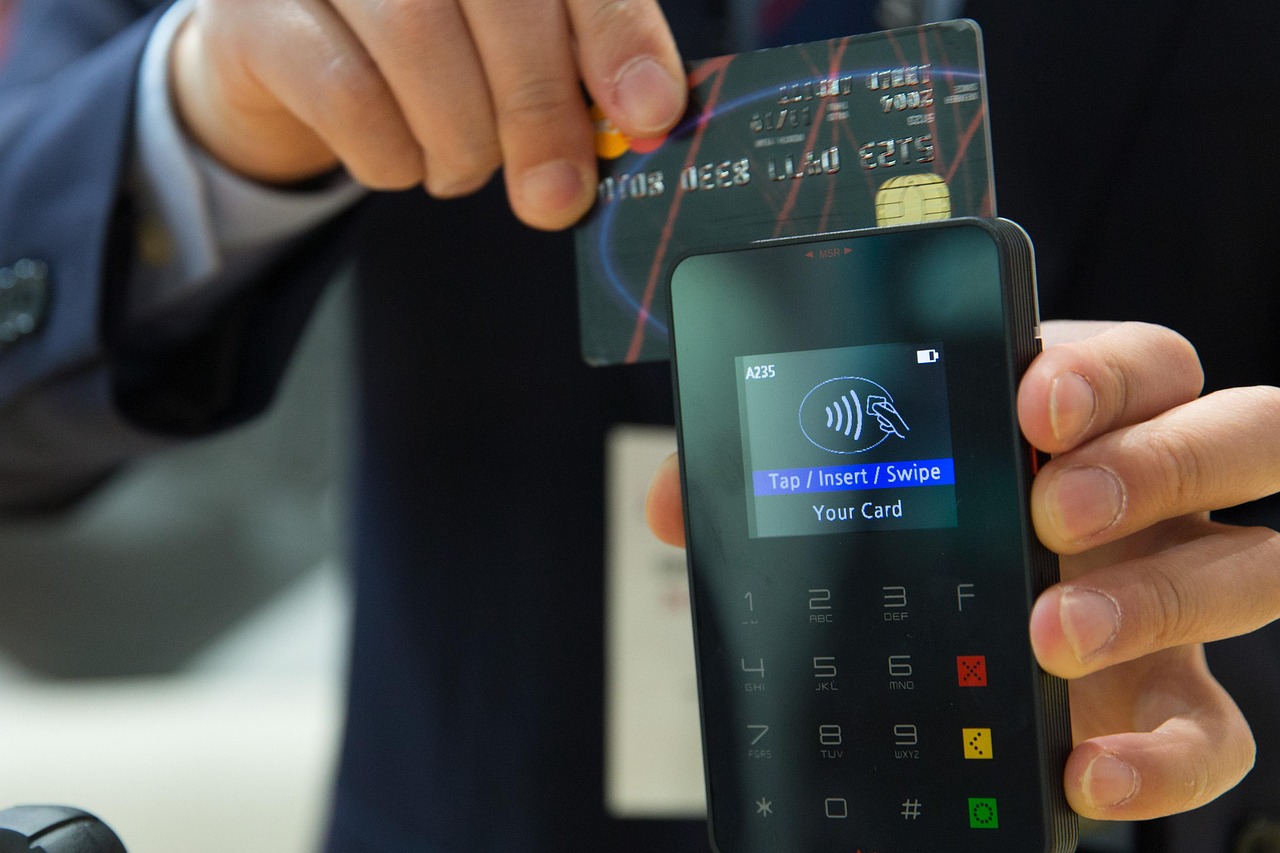
Modern card payment terminals have evolved far beyond simple swipe-and-PIN devices. The features built into today's machines — from multi-network connectivity and end-to-end encryption to deep EPOS integration and granular sales reporting — can directly influence how smoothly your business runs, how quickly you get paid, and how well you understand your own performance. This guide walks through the capabilities that genuinely matter for UK businesses in retail, hospitality and beyond, so you can make a confident, well-informed purchasing decision.
Written by the EPOS Direct UK team, who help UK businesses select, configure and get the most from their EPOS and card payment infrastructure every day.
Why the Right Payment Acceptance Capabilities Matter
Choosing a card machine is rarely just about accepting payments. The wrong terminal creates friction at the point of sale, introduces reconciliation headaches, and may not meet the compliance obligations that UK merchants are legally required to satisfy. The right one becomes an invisible, reliable backbone that lets your staff focus on customers rather than technology. Before evaluating any hardware, it pays to understand the core feature categories — and how they map to your specific business model.
If you are still weighing up your broader point-of-sale setup, the practical buyer's guide to the best till systems for small businesses in the UK is a useful companion read before you get into terminal-level detail.
Core Payment Acceptance: Chip, Contactless and Digital Wallets
A terminal's ability to accept payment is its most fundamental capability, but the breadth of that acceptance matters more than ever. UK consumers now use a wide mix of payment methods, and a machine that falls short on any of them risks losing a sale.
EMV Chip and PIN
Every UK merchant card machine must support EMV chip-and-PIN transactions. This is the baseline, mandated by the card schemes (Visa, Mastercard, Amex) and enforced through acquirer agreements. A terminal that cannot read chip cards does not meet UK market requirements.
Contactless Payments
Contactless acceptance — including the higher transaction limits introduced in recent years by the Financial Conduct Authority and UK Finance — is now an expectation, not a luxury. Ensure any terminal you consider supports the current UK contactless limit and can be updated via firmware when limits change again in future.
Mobile Wallets: Apple Pay, Google Pay and Beyond
NFC-enabled terminals that accept contactless cards will also accept Apple Pay, Google Pay and Samsung Pay without additional configuration. However, it is worth confirming explicitly with the provider, as some older NFC implementations are version-restricted. These wallet payments carry the same liability and settlement rules as standard contactless transactions, but they are increasingly the first-choice method for younger shoppers.
Magnetic Stripe
Magnetic stripe reading remains necessary for some international cards, particularly those issued outside Europe. Stripe-only cards are rare in UK domestic use, but if your business serves international tourists — hotels, tourist attractions, airport retail — it is a feature worth confirming.
Connectivity Options: Matching the Terminal to Your Environment
How a card machine connects to the payment network shapes where and how you can use it. There is no universally superior option; the right choice depends on your premises, trading pattern and risk tolerance.
| Connectivity Type | Best Suited For | Key Advantage | Limitation to Watch |
|---|---|---|---|
| Ethernet (countertop) | Fixed checkout positions, high-volume retail | Most reliable, lowest latency | Tethered — no mobility |
| Wi-Fi | Restaurants, cafés, medium-footprint retail | Wireless, good range on-premises | Dependent on router uptime and signal quality |
| 4G/LTE (SIM) | Markets, pop-ups, deliveries, mobile traders | Fully independent — no premises infrastructure needed | Ongoing SIM/data cost; coverage dependent |
| Bluetooth | Tableside ordering, queue-busting, kiosk pairing | Pairs with tablets or handhelds for flexible setups | Short range; battery management required |
| Dual (Wi-Fi + 4G) | Any business wanting a failover option | Automatic fallback keeps trading during outages | Higher hardware cost |
For businesses trading away from a fixed premises, our guide to the best wireless card machines for small businesses in the UK covers portable and mobile options in depth.
Integration with Your EPOS System: Why It Changes Everything
A standalone card machine and a connected card machine are fundamentally different propositions. When your terminal integrates with your EPOS software, the payment amount is pushed directly from the till — eliminating manual keying errors. The transaction result is returned automatically, updating your sales ledger in real time without a member of staff manually reconciling card receipts against till readings at close of day.
Deeper integration unlocks further capabilities:
- Split bills and part-payments handled natively at the till, rather than calculated manually
- Automatic VAT allocation across payment types for accurate accounting exports
- Loyalty and gift card redemption processed in a single customer interaction
- Refund authorisation controls linked to staff permission levels in the EPOS
- End-of-day Z-reports that reconcile card and cash in one unified view
Businesses that want card payments and EPOS working as a single system — rather than two separate tools that staff must manually bridge — should explore our complete guide to card machine and till system combinations, and our overview of the best EPOS systems with integrated card payments in the UK.
You can also explore EPOS Direct's own EPOS software to see how the integration works in practice — or book a retail EPOS software demo or a restaurant EPOS software demo to see the payment workflow first-hand.
Security and Compliance: PCI DSS, Encryption and Fraud Prevention
Any UK business that accepts card payments is required to comply with the Payment Card Industry Data Security Standard (PCI DSS). This is not optional. Non-compliance can result in fines from your acquirer, increased transaction fees, or loss of your ability to process cards. Your terminal choice directly affects how easy — or difficult — compliance is to maintain.
What to Look For
- PCI PTS certification on the terminal hardware itself — this confirms the device has been assessed against physical and logical tamper standards
- Point-to-Point Encryption (P2PE) — encrypts cardholder data at the moment of capture, before it can be intercepted in transit
- Tokenisation — replaces stored card data with a non-sensitive token, reducing your data exposure and simplifying your PCI compliance scope
- 3D Secure 2 (3DS2) support for any card-not-present or e-commerce transactions you process through the same acquirer
- Tamper-evident hardware with automatic shutdown if the device is physically compromised
Always verify PCI DSS compliance obligations directly with your acquirer and through the PCI Security Standards Council. The requirements that apply to you depend on your transaction volume and how you process payments.
Reporting, Reconciliation and Back-Office Features
One of the most underappreciated aspects of a card terminal is what it does after the payment is taken. Strong reporting and reconciliation features save significant time, reduce accounting errors and give management the information they need without chasing individual reports.
Look for terminals and their associated platforms to provide:
- Transaction-level reports by date, terminal, staff member or product category
- Batch settlement summaries with automatic end-of-day cut-off times
- Export formats compatible with your accounting software (CSV, Xero-compatible, Sage-compatible)
- Chargeback management tools — alerts, evidence submission workflows and dispute tracking
- Digital receipts via email or SMS, reducing paper costs and supporting sustainability goals
- Multi-site dashboards if you operate more than one location
Businesses actively researching affordable all-in-one options may find our guide to the most affordable EPOS systems for small businesses in the UK a helpful reference for understanding what reporting capability is available at different price points.
What Does a Card Payment Terminal Setup Actually Cost in the UK?
This is one of the most common questions merchants ask, and the honest answer is that costs vary meaningfully based on transaction volume, contract length, whether hardware is purchased or rented, and the level of integration required. The following are indicative market ranges only — contact providers directly for a quote specific to your business.
- Pay-as-you-go terminals (no monthly fee, percentage-based rates): typically from around £20–£40 as a one-off hardware cost, with per-transaction fees of roughly 1.5%–2.75% depending on card type. Our overview of card machines with no monthly fee explores this model in detail.
- Monthly subscription terminals: hardware rental or software bundles typically fall between approximately £15 and £50 per month per terminal, with lower per-transaction rates (often below 1% for debit, depending on volume).
- Integrated EPOS + payments packages: full retail or hospitality setups combining EPOS hardware, software and integrated card payments generally start from around £50–£100 per month for a single-terminal small business setup, scaling upward with additional sites or tills.
These are approximate market guidance figures for the UK. Actual pricing depends on your transaction volume, business type, contract terms and the specific provider. Always compare multiple quotes before committing.
Choosing the Right Terminal for Retail or Hospitality
Retail and hospitality businesses have distinct requirements, and a terminal that excels in one environment may underperform in the other.
For Retail
Prioritise fast transaction speeds, robust countertop connectivity (Ethernet or Wi-Fi), barcode scanner and receipt printer compatibility, and tight integration with stock management in your EPOS. High-footfall retail particularly benefits from dual-connectivity failover to avoid queuing during network issues. See our retail EPOS offers for systems built with these priorities in mind.
For Hospitality
Table-service restaurants and bars need portable, battery-backed Wi-Fi or 4G terminals that support pay-at-table workflows, split billing and tipping prompts. Kitchen integration, cover management and course-by-course ordering through the EPOS are the differentiators that move a hospitality setup from functional to genuinely efficient. Our hospitality and restaurant EPOS offers reflect these specialised requirements.
Questions Worth Asking Any Provider
- Does the terminal support all current UK contactless limits and can it be updated remotely when limits change? Future-proofing matters given how quickly payment regulations evolve.
- How does the hardware integrate with my existing or planned EPOS software — and what does that integration look like in practice? Request a demonstration, not just a spec sheet.
- What happens to my trading if the internet goes down? Offline mode capability (where the terminal stores transactions for later settlement) is a genuine differentiator for businesses in areas with inconsistent connectivity.
Conclusion: Getting the Decision Right from the Start
The features built into your card payment terminal — and how well that terminal connects with your EPOS system — have a direct, measurable impact on transaction speed, security posture, compliance burden and the quality of insight you get from your sales data. There is no single best choice: the right combination depends on your business type, trading environment and growth ambitions. What matters is evaluating these capabilities systematically rather than defaulting to the cheapest hardware or the first provider to call.
EPOS Direct UK specialises in helping businesses across the UK find integrated EPOS and payment solutions that are properly matched to their needs — with transparent guidance, hands-on demos and ongoing support. Visit the EPOS Direct UK home page for current offers and more information, or talk to an expert online to discuss your requirements. If you would prefer to see the systems in action before committing, you can request a free demo at a time that suits you.
Frequently asked questions
- How much does a card payment machine cost for a small UK business?
- In the UK, card payment machine costs vary widely depending on the type. A basic portable or countertop terminal typically costs between £50 and £200 to purchase outright, or may be available on a rental agreement from around £15 to £30 per month. Integrated smart terminals that connect directly to an EPOS system tend to start from around £150 to £300. You should also factor in transaction fees, which usually range from 0.5% to 1.75% per transaction depending on your provider and monthly volumes. EPOS Direct can advise on the most cost-effective option for your turnover.
- Can a card payment machine work directly with my till system?
- Yes, and this is one of the most important features to look for. An integrated card machine connects directly to your EPOS software so that payment totals are sent automatically, removing manual re-keying errors and speeding up the checkout process. EPOS Direct's card payment solutions are designed to integrate seamlessly with their EPOS systems for retail and hospitality, giving you unified sales reporting in one place.
- What connectivity does a card machine need to work reliably in a busy shop or restaurant?
- For most retail environments a Wi-Fi or Ethernet-connected countertop terminal is reliable and cost-effective. In restaurants or venues where staff take payments tableside, a portable 4G or Bluetooth terminal is more practical. The best card machines support dual connectivity — falling back to 4G if Wi-Fi drops — which is essential for high-footfall hospitality businesses that cannot afford downtime at the point of sale.
