We use cookies to make your experience better.
To comply with the new e-Privacy directive, you agree to the privacy policy and our use of cookies

Do You Need a Card Machine for Your Business? A Practical Guide for UK Retailers
Do You Need a Card Machine for Your Business?
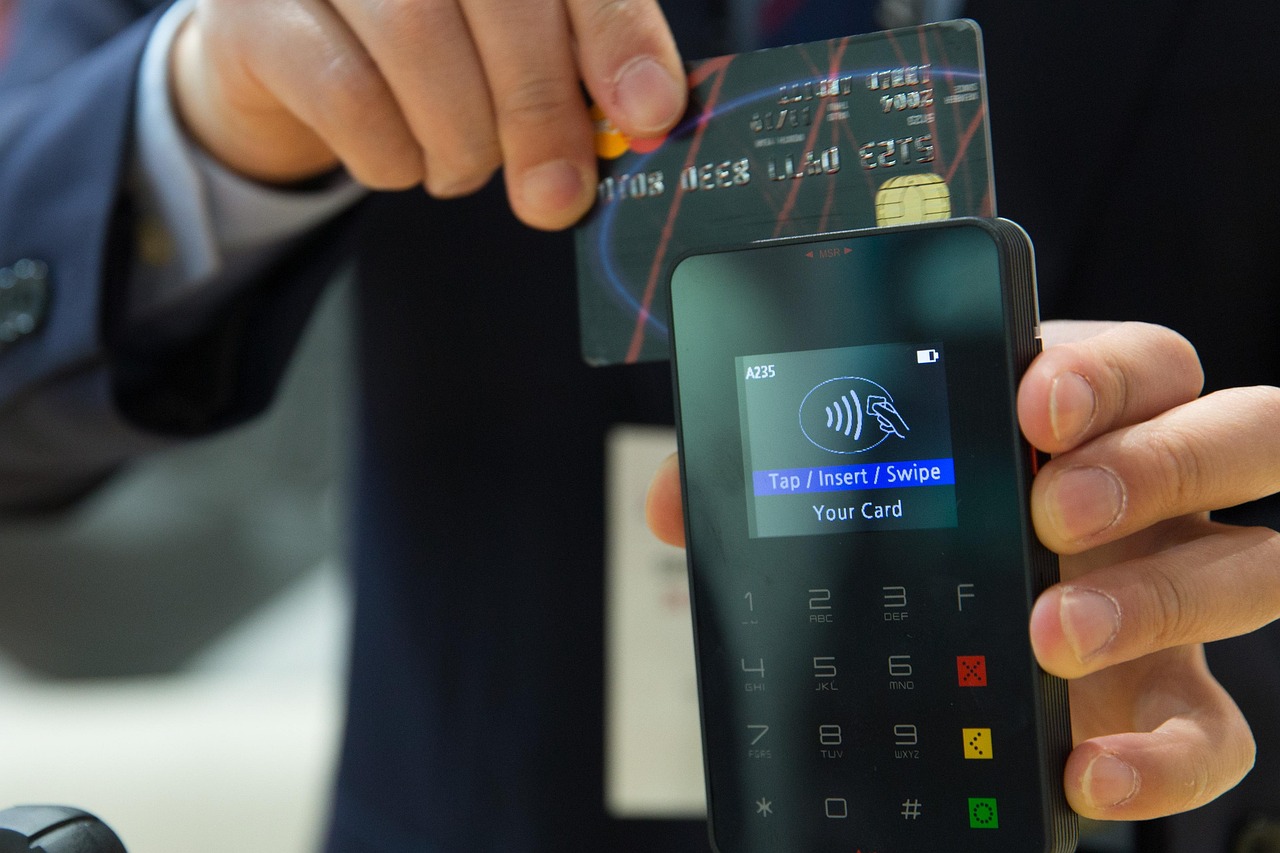
For the vast majority of UK businesses, accepting card payments is no longer optional — it is a baseline expectation. Customers increasingly carry little or no cash, and a business that cannot accept cards risks losing sales at the point of decision. The real question is not whether you need card payments, but which solution fits your operation, your volume, and your growth plans.
Why More UK Businesses Are Going Cashless
UK Finance data consistently shows that card payments — particularly contactless — account for the majority of consumer transactions in Britain, with debit card use having overtaken cash in everyday spending for several years now. The shift accelerated sharply after 2020 and has not reversed. Consumers under 40, in particular, report rarely carrying notes.
For businesses, this creates a straightforward commercial reality: if a customer reaches the counter and you cannot take their card, they will often leave — and they may not return. Independent retailers, market traders, mobile therapists, and hospitality venues have all reported measurable revenue uplift simply from adding card acceptance for the first time.
Beyond convenience, card acceptance also simplifies end-of-day reconciliation, reduces cash-handling risk, and makes it easier to integrate your payments with stock management and accounting software — advantages that compound over time.
The Real Cost of Turning Away Card Payments
The hidden cost of cash-only trading is rarely visible on a single day, but it accumulates quickly. Consider what happens when a customer discovers you do not accept cards:
- Abandoned sales: Impulse purchases — particularly in hospitality, retail, and personal services — are disproportionately lost. A customer who intended to spend £40 and has £12 in cash will simply leave.
- Reputational damage: Online reviews and word of mouth increasingly flag cash-only policies as an inconvenience. New customers checking Google or social media before visiting may choose a competitor.
- Reconciliation inefficiency: Cash handling takes time, introduces human error, and requires secure banking processes. The true cost of cash — counting, depositing, float management — is routinely underestimated by small business owners.
- Lost upsell opportunities: When customers are constrained by the cash in their wallet, their average basket size drops. Card acceptance removes that ceiling.
Transaction fees on card payments are real, but for most businesses they are modest relative to the revenue recovered. Understanding what those fees actually cover — interchange, scheme fees, and the acquirer's margin — helps you compare providers on a level playing field.
Standalone Card Machines vs. Integrated EPOS Payment Systems
Once you have decided to accept cards, the next decision is how. The two main approaches are fundamentally different in scope and long-term value.
| Feature | Standalone Card Machine | Integrated EPOS + Payments |
|---|---|---|
| Setup complexity | Very low — plug in and start taking payments | Moderate — configured to your product catalogue |
| Manual re-keying of amounts | Required every transaction | Eliminated — amount sent automatically from till |
| Reconciliation | Manual — separate till and card reports to match | Automatic — unified across all payment types |
| Inventory management | None | Real-time stock deduction on every sale |
| Reporting & analytics | Basic transaction totals only | Sales by product, category, hour, staff member |
| Suitable business size | Very early-stage, pop-up, mobile sole traders | Any business with a fixed or recurring sales floor |
| Scalability | Limited — each terminal is siloed | High — add tills, sites, and users centrally |
| Typical monthly cost | From approx. £10–£30/month (machine hire + fees) | From approx. £30–£80/month (software + hardware) |
A standalone terminal is a reasonable starting point for a sole trader doing a handful of transactions a day. For any business with a catalogue, staff, or plans to grow, an integrated EPOS system with built-in card payments delivers substantially more value for a comparatively small additional investment.
What Types of UK Business Actually Need a Card Machine?
Frankly, the list of businesses that do not need card acceptance is shrinking. But the format and features of the right solution differ meaningfully by sector.
Retail
Shops — from independent boutiques to off licences — benefit most from integrated EPOS, where stock levels update on every card sale and end-of-day reports are immediate. If you run a retail business and are still on an older cash register, our guide to switching from a cash register to a modern EPOS system outlines exactly what the upgrade process looks like. For off-licence and convenience retailers specifically, our guide to the best till systems for off licences covers compliance and age-verification requirements too.
Hospitality & Food Service
Restaurants, cafés, pubs, and takeaways have unique payment flows: table-side card acceptance, split bills, and the ability to tether payments to a specific order or cover. A standalone terminal cannot replicate these workflows. An integrated restaurant EPOS with table management and card payments reduces staff errors and speeds up table turns significantly.
Mobile and Market-Based Businesses
Hairdressers visiting clients at home, market stall traders, and mobile caterers need compact, wireless, battery-powered readers that connect over 4G or Wi-Fi. Our guide to the best wireless card machines for small businesses compares the leading portable options for exactly these use cases.
Service Businesses & Trades
Plumbers, electricians, therapists, and personal trainers increasingly use card readers with tap-to-pay to collect payment on the spot — eliminating the awkwardness of invoicing and the delay of bank transfers. Even a basic solution here pays for itself quickly in faster cash flow.
How Much Does a Card Machine Cost in the UK?
Costs vary depending on whether you are hiring a terminal, buying hardware outright, or subscribing to a full EPOS platform. The figures below are indicative market ranges based on typical UK provider pricing — always request a specific quote before committing.
- Pay-as-you-go card readers (e.g. compact Bluetooth readers): typically no monthly fee, but transaction rates are higher — often 1.5–2.5% per transaction. Suitable for very low volumes.
- Standalone terminal hire: typically £10–£30 per month, plus transaction fees that tend to reduce as your monthly volume grows.
- Entry-level integrated EPOS with payments: most small businesses find packages starting from approximately £30–£50 per month covering software, support, and a payment terminal.
- Full multi-terminal EPOS systems: larger setups — multiple tills, full stock management, advanced reporting — typically range from £60–£150+ per month depending on configuration.
Hardware purchase costs vary similarly: a single POS terminal with a card reader can start from a few hundred pounds outright. If you are weighing a subscription against an outright purchase, our article on monthly EPOS subscription vs. outright purchase breaks down the financial logic for different business profiles.
Transaction fees are separate from hardware and software costs and are negotiated with your payment processor. Businesses processing higher monthly volumes typically unlock lower percentage rates — so if your turnover grows, revisit your rate.
What to Look for When Choosing a Payment Solution
A buyer making this decision for the first time should evaluate solutions against these criteria:
- Payment method coverage: Does the terminal accept chip-and-PIN, contactless, Apple Pay, Google Pay, and American Express? Gaps here will frustrate customers.
- Integration depth: Can the card reader communicate directly with your EPOS till, or will your staff manually key in amounts? The latter introduces errors and slows every transaction.
- Connectivity options: For fixed locations, Ethernet or Wi-Fi is standard. For mobile use, confirm the device supports 4G fallback so you are never unable to take payment due to a broadband outage.
- Contract terms: Understand the minimum term, exit fees, and what happens to your hardware if you switch providers. Short or rolling contracts are generally lower risk for new businesses.
- Support quality: Payment processing is mission-critical. Confirm the provider offers UK-based telephone support during your trading hours — not just a chatbot.
- Reporting and reconciliation: Can you produce a daily Z-report that reconciles card, cash, and other payment types in one view? This is standard in a good EPOS system and invaluable at month end.
- Scalability: If you open a second site or add a new terminal, is the process straightforward and cost-effective within your existing contract?
For a side-by-side view of how EPOS Direct compares to other market options, our 2026 competitor comparison guide provides a structured breakdown.
How EPOS Direct Combines Your Till and Card Payments in One System
EPOS Direct provides UK businesses with fully integrated EPOS and payment solutions — where the card reader and the till communicate seamlessly, removing the manual steps that introduce errors and slow down your team. Every card transaction is logged against the corresponding sale, inventory is updated in real time, and your end-of-day reports reflect the complete picture across all payment types.
Whether you run a single-site independent shop, a growing restaurant group, or a pharmacy, EPOS Direct configures its systems around your specific workflows rather than asking you to adapt to a generic product. You can explore the EPOS software used across retail, hospitality, and specialist sectors, or book a tailored walkthrough — a retail EPOS software demo or a restaurant EPOS software demo — to see the payment integration in action before you commit.
For businesses ready to browse hardware and package options, the EPOS Direct home page is the best place to start, with current offers across retail and hospitality sectors. You can also go straight to our retail EPOS offers or our hospitality EPOS offers for sector-specific packages.
The Verdict: Is a Card Machine Right for Your Business?
For nearly every UK business serving members of the public, the answer is an unambiguous yes. The question worth spending more time on is whether a standalone terminal meets your needs, or whether an integrated EPOS system — one where your payments, stock, and reporting work as a single platform — would serve you significantly better. For most businesses with any kind of product catalogue or regular trading hours, the integrated route pays for itself quickly in time saved, errors avoided, and sales recovered.
If you would like expert guidance on which solution suits your business size, sector, and budget, the EPOS Direct UK team is available to help. Talk to an expert online for immediate advice, or request a free demo to see a fully integrated EPOS and payment system working in practice — no obligation required.
Written by the EPOS Direct UK team, who work with independent retailers, hospitality businesses, and specialist operators across the United Kingdom every day to find the right EPOS and payment solution for their needs.
Frequently asked questions
- Can I run a UK business without accepting card payments?
- Technically yes, but it is increasingly risky. UK Finance data shows that debit and credit cards account for over 50% of all UK payments, and that figure keeps rising. Businesses that are cash-only regularly report losing sales to competitors who accept cards. For most retail and hospitality businesses, not accepting cards means turning away a significant proportion of customers, especially younger shoppers who rarely carry cash.
- How much does a card machine cost for a small UK business?
- Costs vary depending on the type of solution. A basic portable card reader such as a SumUp Air or iZettle costs between £19 and £59 to buy outright, with transaction fees typically ranging from 1.69% to 2.75% per payment. A countertop card terminal from a bank or dedicated provider costs around £100 to £300, often on a contract with monthly rental fees of £15 to £30. An integrated card payment module built into an EPOS system from EPOS Direct typically starts from around £499 for the full hardware bundle, but combines your till, stock management and payments into one system, which usually works out more cost-effective for growing businesses.
- What is the difference between a card machine and an EPOS system with integrated payments?
- A standalone card machine only processes payments. An integrated EPOS system connects your card payments directly to your till, stock levels, sales reports and customer data in real time. This means no manual reconciliation at the end of the day, fewer human errors, and a much clearer picture of your business performance. For busy retail shops, cafes, restaurants or salons, an integrated system saves significant time and reduces the risk of costly discrepancies.
