We use cookies to make your experience better.
To comply with the new e-Privacy directive, you agree to the privacy policy and our use of cookies

The Complete Guide to EPOS Hardware for UK Retail & Hospitality Businesses
The Complete Guide to EPOS Hardware for UK Retail & Hospitality Businesses

The hardware sitting on your counter does far more than process a payment — it determines how quickly your team serves customers, how accurately your stock is tracked, and how confidently your business scales. For UK retailers and hospitality operators, choosing the right point-of-sale hardware is one of the most consequential infrastructure decisions you will make. This guide cuts through the noise, giving you a clear, practical framework to evaluate, compare and invest in the right setup for your specific operation.
What Is EPOS Hardware and Why Does It Matter?
Electronic Point of Sale (EPOS) hardware refers to the physical devices that form your point-of-sale system — from the touchscreen terminal and cash drawer to receipt printers, barcode scanners, and card payment devices. Unlike a traditional cash register, a modern EPOS setup connects all of these components to intelligent software, creating a unified system that manages sales, stock, staff performance and customer data in real time.
The quality and suitability of your hardware directly affects transaction speed, staff training time, system reliability and the total cost of ownership over the lifetime of your investment. Choosing hardware that is underpowered, poorly supported or incompatible with your software is one of the most common — and most avoidable — mistakes UK businesses make. If you are currently working from a legacy cash register, our guide on how to switch from a cash register to a modern EPOS system explains what to expect from the transition.
Core Components of a Complete EPOS Setup
A well-specified system comprises several distinct hardware categories. Not every business will need every component, but understanding each one allows you to build a setup that is neither over-engineered nor critically under-equipped.
The Central Terminal
This is the brain of the operation — typically a touchscreen all-in-one unit or a tablet mounted on a stand. Processing power, screen responsiveness, and build quality vary significantly between consumer-grade tablets and purpose-built commercial EPOS terminals. For high-volume environments, a dedicated commercial terminal with a fanless processor and hardened chassis offers measurably better longevity and reliability.
Receipt Printers
Thermal receipt printers are the industry standard, offering speed, low running costs and quiet operation. For hospitality environments with kitchen or bar printing requirements, you may need additional network-connected receipt printers in separate locations. Look for models with reliable auto-cutter mechanisms and good paper-roll compatibility.
Barcode Scanners
Retail environments in particular benefit from a dedicated handheld or presentation scanner. Modern 2D scanners can read damaged barcodes, digital screens and QR codes — a notable upgrade over older 1D laser scanners. For high-throughput counters, a hands-free presentation scanner keeps queues moving.
Cash Drawers
Even as card payments become dominant, a robust cash drawer remains essential for most UK businesses. Choose a drawer that connects directly to your receipt printer via a standard RJ-11 port for reliable, automatic triggering on each cash transaction.
Customer-Facing Displays
A secondary screen facing the customer builds trust, reduces disputes and creates an opportunity to display promotional content. In regulated sectors such as food service, displaying itemised pricing clearly is increasingly expected as standard practice.
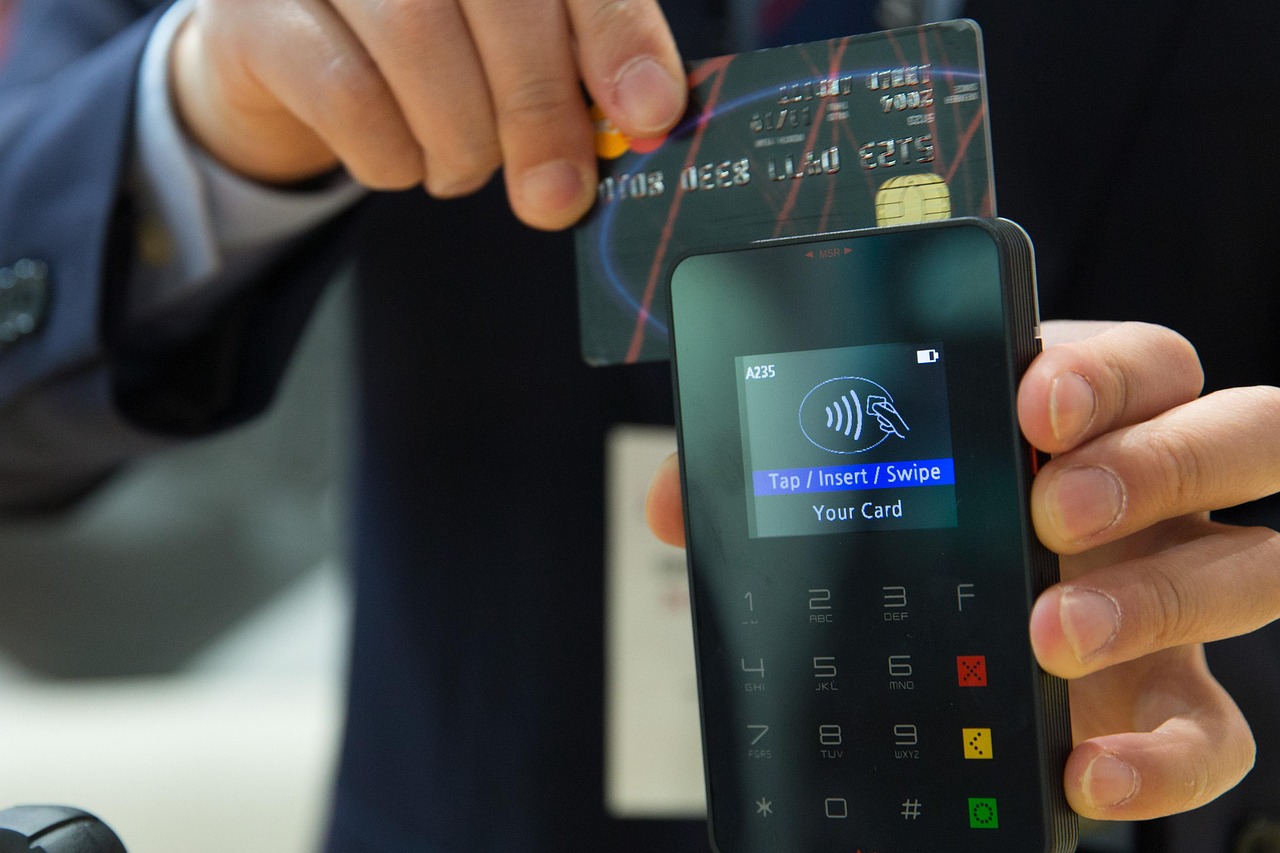
Card Payment Devices
Integrated card terminals — where the payment device communicates directly with your EPOS software — are strongly preferable to standalone machines. They eliminate manual entry errors, speed up end-of-day reconciliation, and create a seamless customer experience. Our dedicated guide to EPOS systems with integrated card payments covers the options in detail.
EPOS Hardware for Retail vs Hospitality: Key Differences
The functional demands of a retail shop and a busy restaurant kitchen are quite different, and your hardware choices should reflect that.
| Feature or Requirement | Retail | Hospitality |
|---|---|---|
| Barcode scanning | Essential — high SKU volumes | Rarely required |
| Kitchen / bar printers | Not typically needed | Often essential for order routing |
| Handheld ordering devices | Useful for stock-taking | Common for tableside ordering |
| Terminal durability | Standard commercial grade | Spill-resistant, higher IP rating preferred |
| Customer-facing display | Beneficial for transparency | Increasingly common for order confirmation |
| Self-checkout capability | Viable for mid-to-large retailers | Limited application |
| Multiple terminals | By checkout lane volume | By covers, bar points and zones |
Retailers prioritising stock management will want hardware that integrates tightly with inventory workflows — label printers for shelf-edge pricing, scanners that support stock-take modes, and terminals with enough processing headroom to handle large product catalogues without lag. Hospitality operators, by contrast, should prioritise network stability, kitchen printer reliability, and the ability to split bills or manage open tabs efficiently. For a sector-specific overview of hardware offers, explore our retail EPOS offers or our hospitality and restaurant EPOS offers.
How to Choose the Right Setup for Your Business Size and Budget
There is no universally correct hardware configuration — the right answer depends on your transaction volume, physical space, number of staff, and growth trajectory. Here is a practical framework for matching hardware specification to business profile.
Sole Traders and Micro-Businesses
A single terminal with an integrated printer and card reader is typically sufficient. Compact all-in-one units keep the counter footprint small while still providing full EPOS functionality. If your primary concern is cost, it is worth reading our practical comparison of the best till systems for small businesses before committing to a configuration.
Growing SMEs
Multi-terminal setups with networked peripherals — shared printers, a back-office reporting display, or a secondary scan station — become relevant as footfall and SKU count increase. At this stage, the quality of the hardware's integration with your software stack becomes a primary selection criterion, not an afterthought.
Multi-Site and Enterprise Operators
Consistency of hardware specification across sites simplifies staff training, reduces spare-parts complexity and makes central reporting more reliable. For businesses at this scale, vendor support terms and hardware warranty provisions deserve as much scrutiny as the specification itself.
You can browse the full range of options and current promotions on the EPOS Direct UK home page, where you will find configurations for every business size.
What Does EPOS Hardware Actually Cost?
Pricing varies considerably depending on specification, quantity, and whether you purchase outright or subscribe monthly. The following ranges are indicative of what UK businesses typically encounter in the current market — treat them as planning guidance rather than firm quotes.
- Entry-level single-terminal setup (terminal, receipt printer, cash drawer, card reader): typically from around £500–£900 purchased outright, or from approximately £30–£60 per month on a subscription model.
- Mid-range retail or hospitality setup (commercial-grade terminal, scanner, printer, integrated payments): typically £900–£2,000 outright, or £60–£120 per month on subscription, depending on software tier and support package.
- Multi-terminal or full-site installations: costs scale with the number of terminals, peripheral requirements and any bespoke configuration work. Most established UK operators budget from £2,000–£5,000+ for a comprehensive site setup.
Monthly subscription models spread the hardware cost and typically bundle software licensing and support, which can make them financially attractive for businesses preserving capital. Outright purchase tends to offer a lower total cost of ownership over a three-to-five-year horizon, provided maintenance costs are factored in. Our dedicated article on monthly EPOS subscriptions vs outright purchase works through the financial trade-offs in practical detail.
New vs Refurbished EPOS Hardware: Which Is Right for You?
Refurbished EPOS hardware — professionally restored commercial-grade equipment — represents a credible option for cost-conscious businesses, particularly those at the start-up stage or running secondary till points. When sourced from a reputable UK supplier, refurbished units are typically tested, reset to factory condition and sold with a warranty, making them meaningfully different from second-hand consumer equipment.
The principal trade-off is longevity: refurbished hardware has already consumed some of its operational life. For a primary, high-transaction terminal in a busy retail or hospitality setting, new hardware with a full manufacturer warranty is generally the more prudent investment. For a back-office terminal, a stock-take scanner, or a secondary queue-busting checkout, refurbished hardware can deliver excellent value without meaningful operational risk.
Always verify that refurbished hardware is compatible with your chosen software version before purchase, and confirm the warranty terms in writing.
How EPOS Hardware Integrates With Software and Payment Systems
Hardware capability is only realised when it operates within a well-matched software environment. The most common frustration UK business owners report after an EPOS installation is discovering that their hardware and software were not fully integrated — requiring manual workarounds that slow down operations and introduce reconciliation errors.
Purpose-built EPOS software communicates with each hardware component using certified drivers and protocols. When a barcode is scanned, the product data populates the transaction instantly. When a card payment is authorised, the receipt prints automatically and the sale records in your inventory system without a second keystroke. This level of integration is the baseline you should expect — not a premium feature.
For businesses evaluating their software options, exploring the EPOS Direct software platform gives a clear picture of what full hardware-software integration looks like in practice. Retail operators can walk through a retail EPOS software demo, while restaurant and café operators can book a restaurant EPOS software demo to see tableside ordering, kitchen printing and covers management in action.
Payment integration is equally important. Integrated card terminals that communicate directly with your EPOS remove the manual reconciliation step at close of business and reduce the risk of transaction discrepancies. If standalone card machines are part of your current setup, our guide to the best wireless card machines for small businesses sets out what to look for and how to compare options.
Why UK Businesses Choose EPOS Direct for Their Hardware Needs
EPOS Direct has supplied, installed and supported EPOS hardware for UK retailers, restaurants, cafés, pharmacies and specialist businesses for many years. The team works with businesses every day across the full range of sizes — from single-site independents to growing multi-location operators — which means the advice and configuration recommendations on offer are grounded in genuine, hands-on experience rather than generic specification sheets.
Key reasons UK operators choose EPOS Direct include:
- Hardware and software from a single source — meaning compatibility is guaranteed, not assumed, and support is unambiguous.
- Flexible purchasing options — outright purchase, leasing and monthly subscription models are all available, allowing businesses to choose the model that suits their cash flow.
- UK-based support — when something goes wrong, you reach a team that knows your system, not an overseas call centre working from a generic script.
- Sector-specific configurations — whether you run a pharmacy, a clothing boutique or a busy restaurant, there is a validated hardware configuration to match, rather than a one-size-fits-all bundle.
- Transparent guidance — the approach here is to help you invest appropriately, not to oversell specification you do not need.
For businesses comparing providers before making a decision, our complete comparison guide sets out how EPOS Direct stacks up against the wider market across pricing, support and hardware quality. Independent retailers specifically may also find the focused guide to the best till systems for small shops a useful companion read.
Ready to Find the Right Hardware for Your Business?
The right EPOS hardware setup will serve your business reliably for years — reducing errors, accelerating transactions, and giving you the data clarity to make better decisions. Getting the specification right from the outset is always less costly than retrofitting or replacing underperforming equipment later.
The EPOS Direct UK team is available to guide you through every aspect of the decision — from component selection and integration requirements to installation and ongoing support. Talk to an expert online for personalised guidance, or request a free demo to see the hardware and software working together before you commit. If you would prefer to discuss your requirements by phone, you can request a call back at a time that suits you.
Written by the EPOS Direct UK team, who help UK retail and hospitality businesses select, install and get the most from their EPOS systems every day.
Frequently asked questions
- What equipment do I actually need to set up an EPOS system in my shop or café?
- A typical EPOS setup includes a touchscreen till or tablet, a receipt printer, a cash drawer, a barcode scanner (for retail), and a card payment terminal. Hospitality businesses often add kitchen display screens or order printers. You can start with a compact single-station bundle and scale up as your business grows.
- How much should I expect to spend on a till and EPOS hardware setup in the UK?
- In the UK, a basic single-till EPOS hardware bundle typically starts from around £300–£600 for entry-level setups. A mid-range all-in-one touchscreen system with peripherals (receipt printer, cash drawer, card reader) usually costs £700–£1,500. Multi-station or hospitality-grade systems with kitchen printers and handheld ordering devices can run from £1,500 to £5,000+. Refurbished hardware can reduce costs by 30–50% without sacrificing reliability.
- Can I use my existing card machine with new EPOS till hardware?
- In many cases, yes — particularly if your payment terminal connects via Bluetooth, USB, or a standard integration API. However, for the smoothest experience and accurate sales reporting, it is usually recommended to use card payment hardware that is certified to work with your chosen EPOS software. EPOS Direct can advise on compatible payment terminal options to ensure everything works seamlessly together.
