We use cookies to make your experience better.
To comply with the new e-Privacy directive, you agree to the privacy policy and our use of cookies


Best EPOS Systems for a Busy Bar: The Complete UK Buyer's Guide
EPOS Systems for Busy Bars: What UK Bar Owners Need to Know Before They Buy

Choosing the right EPOS system for a high-volume bar is one of the most consequential technology decisions a UK bar owner will make. The right setup reduces queue times, eliminates stock discrepancies and keeps your team in control on a packed Friday night — the wrong one creates bottlenecks precisely when you can least afford them. This guide covers everything you need to evaluate before committing to a system, from must-have features to realistic UK pricing.
Why a Standard Till Is Not Enough for a High-Volume Bar
A traditional cash register or basic till records sales — and that is broadly where its usefulness ends. A bar operating across multiple service points, running tabs, managing split payments and tracking dozens of spirit, wine and draught lines simultaneously needs something far more capable.
High-volume bar environments create specific pressures that generic retail tills simply are not designed to handle:
- Simultaneous transactions: Multiple bartenders need to ring in orders and take payments independently, without queuing at a single terminal.
- Open tab management: Customers often run tabs across an evening, adding drinks, splitting bills and paying by different methods at the end of the night.
- Age verification prompts: A capable system flags Challenge 25 reminders automatically, supporting your licensing obligations under the Licensing Act 2003.
- Wastage and over-pour tracking: Spirit measures, draught losses and bottle breakages erode margin invisibly — a basic till records nothing.
- Real-time stock depletion: Running out of a popular lager mid-service because the till cannot track inventory costs you sales and damages customer confidence.
If you are operating more than one bar, hosting events, or running a hybrid venue with food service, the limitations of a standard till become even more acute. Our broader guide to the best till systems for small businesses in the UK covers the foundational differences in depth, but for bars specifically, the requirements are considerably more demanding.
Key Features to Look for in a Bar EPOS System
Not all hospitality EPOS systems are configured for bar environments. Here are the capabilities that genuinely separate a bar-grade system from a generic hospitality till.
Speed-Optimised Interface
The screen layout should be configurable so your most-sold lines — house lager, house wine, standard spirits — are immediately accessible. Every extra tap a bartender makes during a rush costs real time at scale. Look for colour-coded product buttons, quick-modifier options (e.g. single/double, ice/no ice) and a clean layout that works under pressure.
Multi-Terminal Support
A busy bar needs multiple EPOS terminals running simultaneously, all syncing in real time to a central system. Portable handheld terminals for beer garden or table service add further flexibility during summer trade.
Tab and Account Management
Your system should allow bartenders to open, hold, transfer and close tabs seamlessly, split bills across multiple payment methods, and associate tabs with card pre-authorisations if required. This is non-negotiable for late-night venues.
Age Verification Prompts
Automated Challenge 25 prompts at the point of sale create a consistent, auditable process that protects your licence. Verify your system supports this and that it can be configured per product category.
Integrated Card Payments
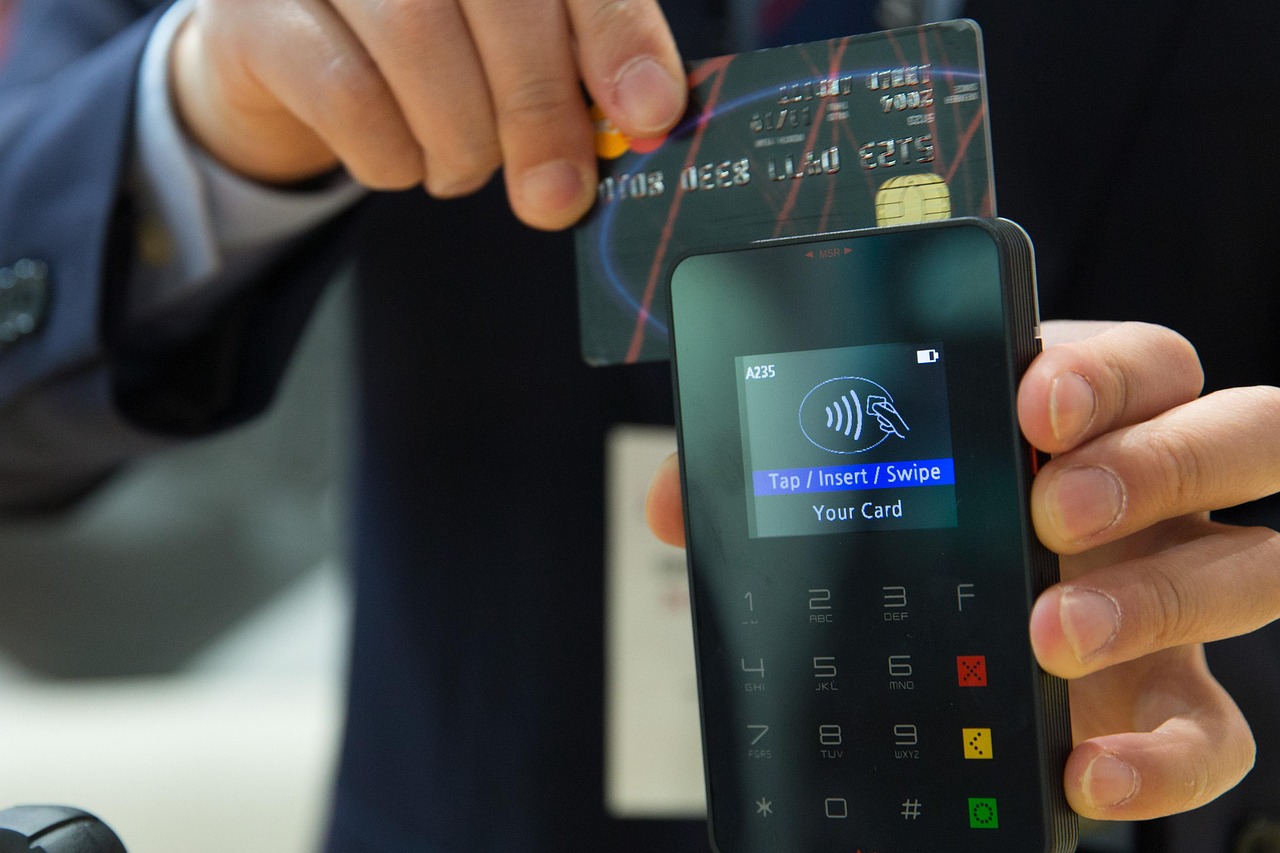
Separate card terminals slow service and create reconciliation headaches. Integrated card payment — where the EPOS communicates directly with your card reader — is faster and eliminates manual keying errors. Our dedicated guide to EPOS systems with integrated card payments explains exactly what to look for in this integration.
Reporting and Analytics
End-of-night Z reports, hourly transaction breakdowns, category-level sales analysis and staff performance data should all be available on demand. Cloud-based reporting means you can review last night's takings from your phone the next morning.
How EPOS Systems Speed Up Service During Peak Hours
Speed of service is the defining competitive advantage in a busy bar. A well-configured EPOS system contributes to faster rounds in several measurable ways.
- Pre-set rounds and quick-recall: Bartenders can recall a customer's previous order with one tap, reducing the time spent explaining a complex round.
- Parallel payment processing: Integrated card readers settle contactless payments in seconds, keeping the queue moving rather than waiting for a separate terminal to connect.
- Kitchen/bar printer routing: For venues serving food, orders route directly to the kitchen printer without a paper ticket being hand-carried — eliminating the walk and the error.
- Staff logins and permissions: Fast PIN or card-based logins mean each transaction is attributed correctly without slowing the handover between bartenders.
- Wireless handheld terminals: Taking orders and payments tableside or in a beer garden removes the bottleneck at the main bar entirely. Our guide to the best wireless card machines for small businesses covers the hardware options worth considering.
The aggregate effect of these improvements is significant. Reducing average transaction time by even a few seconds per customer translates to meaningfully higher throughput during a two-hour peak window.
Stock Control and Wastage Tracking Built for Bar Environments
Stock loss is one of the biggest profitability challenges in the licensed trade. Industry estimates suggest that unmanaged wastage, over-pouring and theft can account for a substantial percentage of total beverage cost — though the precise figure varies significantly by venue type and management practice. The important point is that every unrecorded loss comes directly off your bottom line.
A bar-grade EPOS system addresses this through:
- Recipe-level stock depletion: When a cocktail is sold, the system deducts the correct measure of each ingredient automatically, rather than deducting a single unit.
- Draught beer tracking: Linking EPOS sales data to cellar management systems (or simply to manual line checks) allows you to identify discrepancies between theoretical and actual stock.
- Wastage and void logging: Every voided transaction or recorded spill is logged against a staff member, creating accountability without blame.
- Low-stock alerts: Automated alerts when a product falls below a set threshold mean you reorder proactively rather than running dry mid-shift.
- Supplier purchase order integration: Some systems allow you to raise purchase orders directly, closing the loop between depletion and replenishment.
If you manage multiple sites, centralised stock reporting across all locations from a single cloud dashboard is a material operational advantage worth prioritising in your system evaluation.
Integration with Card Payments, Tabs and Table Management
The modern bar payment landscape has changed substantially. Customers expect to pay by contactless, Apple Pay, Google Pay or card without friction — and they expect split bills, partial payments and tab settlement to be handled smoothly. A system that cannot accommodate this will generate complaints and slow your team down.
Card Payment Integration
Fully integrated card payments — where your EPOS and card machine communicate as one system — remove manual keying, reduce human error and speed up end-of-day reconciliation. Our complete guide to combined card machine and till systems outlines the different integration models and what each means in practice.
Table and Area Management
For bars with a significant seated or dining component, a floor plan view within your EPOS allows staff to manage covers, assign orders to specific tables and track which areas have been served. This is particularly useful during events, private hire bookings and late-night food service.
Pre-Authorisation and Card-Behind-the-Bar
Some venues hold a card pre-authorisation at the start of an evening to underwrite a running tab. Your EPOS and payment gateway need to support this workflow natively — not all systems do, so confirm this capability explicitly before purchasing.
You can talk to an expert online at EPOS Direct to confirm exactly which payment integrations are available and how they map to your specific bar setup.
What Does a Bar EPOS System Cost in the UK?
UK bar operators frequently ask what a realistic budget looks like — and the honest answer is that total cost depends heavily on the number of terminals, the software tier, hardware specification and whether card processing is included. The table below gives an indicative framework based on typical UK market configurations.
| Setup Type | Typical Configuration | Indicative Monthly Cost | Best Suited To |
|---|---|---|---|
| Entry-level single terminal | 1 touchscreen terminal, basic software, receipt printer | Typically from £30–£60/month (software licence only, hardware may be purchased outright) | Small neighbourhood bars, pop-ups |
| Mid-range multi-terminal | 2–3 terminals, bar printer, stock management, integrated card payments | Typically £80–£180/month all-in | Busy community pubs, mid-size bars |
| Full hospitality suite | 4+ terminals, handhelds, table management, cellar integration, advanced reporting | Typically £200–£400+/month | High-volume city bars, event venues, multi-floor venues |
These are indicative ranges based on typical UK market pricing and are intended as planning guidance only. Your actual costs will depend on your specific configuration, contract length and provider. Always request a formal written quotation.
Hidden Costs to Account For
- Card processing transaction fees (typically a percentage per transaction — confirm rates with your payment provider)
- Installation, training and onboarding charges
- Ongoing technical support and software update fees
- Hardware replacement or warranty extensions
Our guide to EPOS systems for small businesses covers the full cost landscape in greater detail, including how to evaluate total cost of ownership rather than just upfront price. To see current offers from EPOS Direct, visit our hospitality and restaurant EPOS offers page for up-to-date pricing packages.
Why UK Bar Owners Choose EPOS Direct
EPOS Direct has been supplying and supporting EPOS systems to UK businesses across retail, hospitality and specialist sectors for many years. For bar operators specifically, the combination of purpose-built bar software, UK-based support and flexible hardware options makes a meaningful difference in day-to-day operation.
Built for UK Licensing Environments
The software is configured with UK licensing requirements in mind, including Challenge 25 prompt support and the reporting tools needed to demonstrate responsible service to licensing authorities where required.
Genuine Flexibility
Whether you run a single neighbourhood pub or a portfolio of high-volume bars, EPOS Direct offers scalable configurations — from a single countertop terminal to a fully networked multi-site deployment with centralised cloud management.
Integrated Card Payments
EPOS Direct offers fully integrated card payment solutions, removing the friction of separate terminal management and simplifying end-of-day reconciliation. For venues concerned about ongoing costs, it is worth reviewing options around transaction fee structures — our guide to card machines with no monthly fee explores how different pricing models compare.
UK-Based Support
When your system goes down at 9pm on a Saturday, you need a support team that answers. EPOS Direct provides UK-based technical support, which is a practical consideration that is easily overlooked at the buying stage but matters enormously in operation.
You can explore the full range of what EPOS Direct offers — including current deals and system configurations — on the EPOS Direct home page, where you will find more offers and detailed product information. If you are ready to see the software in action, you can request a restaurant EPOS software demo tailored to hospitality environments.
The Bottom Line
A purpose-built EPOS system is not a luxury for a busy bar — it is a core operational tool that directly affects service speed, stock accuracy, payment flexibility and your team's ability to perform under pressure. The difference between a system configured for bar environments and a generic retail till becomes apparent within hours of a busy shift.
EPOS Direct's UK team works with bar operators across the country to find the right configuration for their venue, budget and service style. Request a free demo today or request a call back and speak with a specialist who understands exactly what a high-volume bar environment demands.
Written by the EPOS Direct UK team, who work with UK bar owners, publicans and hospitality businesses every day to help them find, configure and get the most from their EPOS systems.
Frequently asked questions
- How much does a proper EPOS system cost for a bar in the UK?
- For a single-terminal bar EPOS setup in the UK, expect to pay roughly £500–£1,200 upfront for hardware (touchscreen till, receipt printer, card reader), with software subscriptions typically ranging from £30–£80 per month depending on features. Multi-terminal setups for larger venues can range from £1,500–£4,000+. EPOS Direct offers flexible purchase and leasing options so you can spread the cost and protect cash flow.
- Can a bar EPOS system handle split bills, open tabs and multiple staff logins at the same time?
- Yes — a hospitality-grade EPOS system is specifically designed for exactly this. Features like open tab management, staff PIN logins, split billing, and simultaneous multi-terminal operation are standard on quality bar systems. This is critical in a busy bar environment where multiple staff need to serve customers independently without slowing each other down.
- Will a bar EPOS system still work if the internet goes down during a busy Friday night?
- A good bar EPOS system should operate in offline mode, allowing you to continue taking orders and payments locally even when your broadband drops. Data then syncs automatically once the connection is restored. Always confirm offline capability with your supplier before purchasing — it is a non-negotiable feature for any high-volume UK bar.
