We use cookies to make your experience better.
To comply with the new e-Privacy directive, you agree to the privacy policy and our use of cookies


EPOS Systems with Built-In Loyalty Card Schemes: The Complete Guide for UK Retailers & Hospitality
EPOS Systems with Loyalty Card Schemes: Drive Repeat Business Across UK Retail & Hospitality

An EPOS till system with built-in loyalty functionality is one of the most effective tools a UK retailer or hospitality operator can deploy to increase customer lifetime value without constantly chasing new footfall. When your point-of-sale platform and your loyalty programme share a single database, every transaction automatically builds a richer picture of each customer — enabling rewards, targeted promotions and insight-driven decisions that standalone stamp cards simply cannot match. This guide explains how the technology works, what to look for, what it realistically costs and how to choose the right fit for your business.
Why Pairing Your Till System with a Loyalty Programme Actually Pays Off
The commercial logic is straightforward: acquiring a new customer costs significantly more than retaining an existing one, and loyalty-linked EPOS systems help shift that balance decisively in your favour. By embedding reward mechanics directly into the checkout flow, you remove friction — staff do not need to manage separate apps or punch-cards, and customers earn and redeem points in seconds as part of a normal transaction.
The deeper value, however, is data. A loyalty-enabled till records what individual customers buy, how frequently they visit, which promotions convert and which do not. That intelligence feeds back into your purchasing decisions, staff scheduling and marketing — turning your EPOS from a simple sales recorder into a genuine business development engine. For independent retailers and growing hospitality groups alike, that visibility is often the competitive edge that larger chains have enjoyed for years.
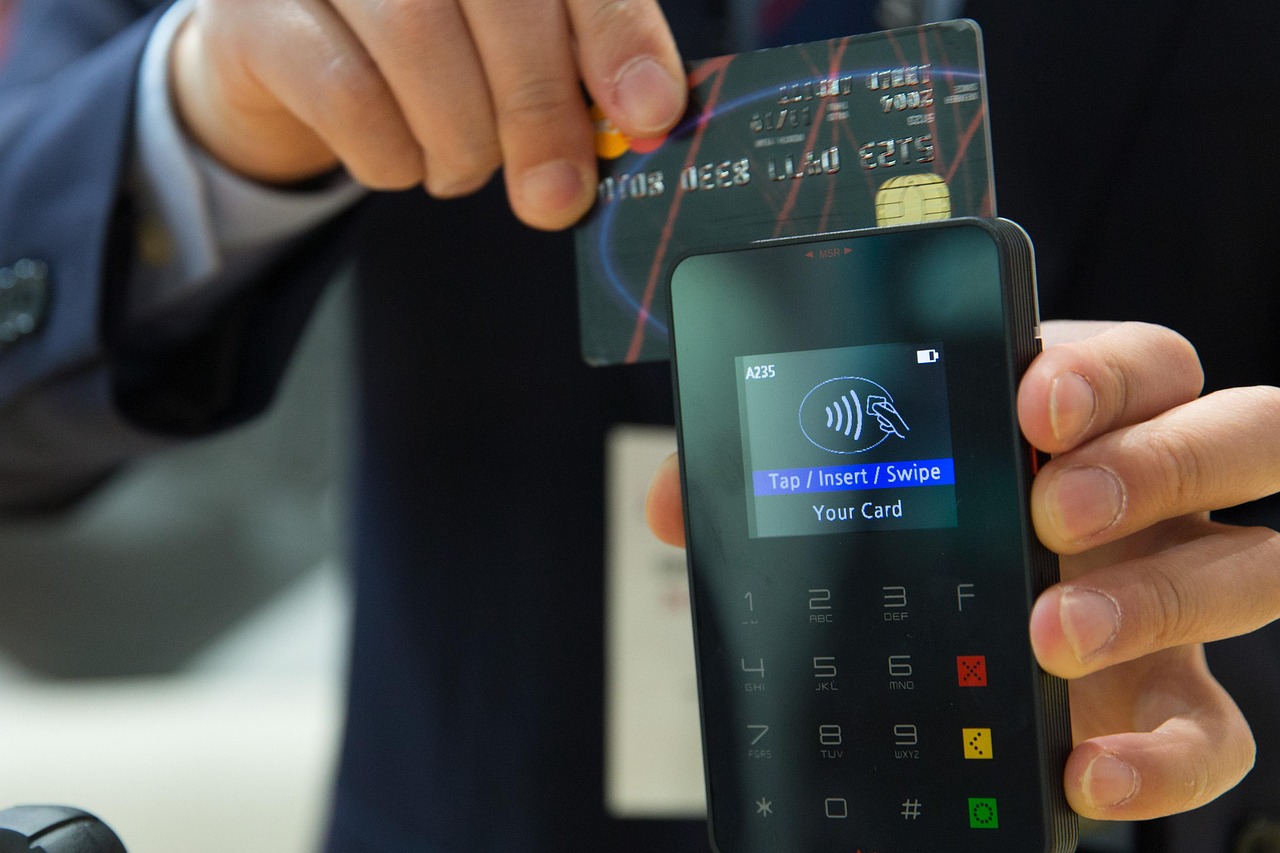
Key Features to Look for in a Loyalty-Integrated EPOS System
Not all loyalty modules are created equal. When evaluating systems, look for these capabilities specifically:
Customer Account Management
- Unique customer profiles — tied to a card, phone number, email or app, not just a generic account number.
- Purchase history visibility at the till, so staff can make informed recommendations.
- GDPR-compliant data capture — your EPOS provider should clearly explain how customer data is stored and who owns it. Under UK GDPR (enforced by the ICO), you as the business are the data controller; verify this in your service agreement.
Flexible Reward Mechanics
- Points-per-pound or points-per-item schemes.
- Tiered membership levels (e.g. Bronze / Silver / Gold) to incentivise higher spend.
- Time-limited promotions and bonus-point events — essential for seasonal peak trading.
- Referral rewards and birthday bonuses for deeper engagement.
Redemption Controls
- Minimum point thresholds before redemption to protect your margins.
- Partial-point redemption combined with cash or card payment.
- Blackout products or categories (e.g. excluding alcohol or sale items from earning points).
Reporting and Analytics
- Loyalty programme dashboards showing enrolment rates, active users and redemption patterns.
- Segmentation tools to identify high-value customers versus lapsed members.
- Export capability for email marketing platforms.
If you are evaluating an integrated card payment and till solution, our guide to card machines and till systems combined is a useful companion read covering how payments and software work together.
How Loyalty Card Integration Works Within a Modern EPOS Platform
At its simplest, a loyalty integration works by attaching a unique identifier to every transaction. That identifier — whether scanned from a plastic card, a key fob, a QR code or a mobile wallet — triggers the EPOS to look up the customer's account, apply the relevant earning rule and update their balance in real time before the receipt prints.
More sophisticated setups connect the EPOS to a cloud-based CRM layer, so that loyalty activity across multiple locations, an e-commerce site and a mobile app all flows into one unified account per customer. For multi-site operators, this is non-negotiable: a customer enrolled in your Manchester store should be able to redeem points in your Leeds branch without any manual intervention.
Physical Cards vs Digital Loyalty
Plastic loyalty cards remain popular in UK retail because they require no customer app download and work even where mobile signal is unreliable. However, digital solutions — particularly those tied to a customer's phone number or email address — eliminate the cost of card printing and issuance, reduce fraud risk and make it far easier to communicate with members between visits. Many leading EPOS platforms support both, allowing you to start with physical cards and migrate to digital as your programme matures.
For businesses wanting to understand the broader software landscape before committing, you can explore our EPOS software to see how loyalty features sit within the wider platform.
Retail vs Hospitality: Where the Benefits Differ
Loyalty integration delivers strong returns in both sectors, but the mechanics and priorities differ in important ways.
| Factor | UK Retail | UK Hospitality & F&B |
|---|---|---|
| Typical visit frequency | Weekly to monthly | Daily to weekly (cafés, QSR); less frequent (restaurants) |
| Average transaction value | Moderate to high | Lower per cover, higher volume |
| Most effective reward type | Points-per-pound, birthday discounts, tier upgrades | Stamp-style "9th coffee free", visit-based bonuses |
| Data priority | Product preferences, seasonal trends | Visit frequency, peak times, upsell opportunities |
| Integration complexity | Often single-site or small chain | Multi-terminal, table management, kitchen display |
| Key compliance point | UK GDPR on customer profiling | UK GDPR plus allergen/menu data separation |
Clothing and fashion retailers in particular benefit from loyalty data that reveals sizing preferences, seasonal purchase cycles and brand affinities — our detailed breakdown of EPOS systems for clothing shops explores this further. For hospitality operators, visit our hospitality and restaurant EPOS offers to see how loyalty sits within a full-service setup.
Costs and Pricing: What UK Businesses Should Realistically Budget
Pricing structures across the UK market vary significantly depending on whether loyalty is bundled into the core EPOS subscription or sold as a separate module. The following ranges are indicative and based on commonly observed market positioning — always request a written quote before committing.
Typical Cost Ranges (Indicative Only)
- Entry-level EPOS with basic loyalty (single site): typically from around £30–£60 per month on a software subscription basis, with hardware either purchased outright or spread over a finance term.
- Mid-tier systems with CRM and multi-site loyalty: most setups fall in the range of £60–£150 per month per site, depending on feature depth and the number of terminals.
- Enterprise or franchise-level loyalty platforms: bespoke pricing applies; expect integration and onboarding costs on top of recurring fees.
- Physical loyalty card production: card printing typically costs from a few pence per card in volume — a manageable one-off cost for most independent businesses.
- Payment processing: transaction fees apply separately; see our guide to EPOS systems with no monthly fee if upfront cost is a primary concern.
When calculating return on investment, factor in not just the subscription cost but the incremental revenue generated by improved retention. Even modest improvements in repeat-visit rates can meaningfully outweigh the monthly platform fee for most independent operators.
How to Choose the Right System for Your Business
A real buyer's decision rarely comes down to a single feature. These are the questions worth working through before you sign a contract:
Does it fit how your customers actually behave?
A coffee shop with high-frequency, low-value transactions needs a frictionless stamp-style mechanic that completes in under three seconds. A specialist retailer with monthly visits needs a richer points and tier structure. Map the system to your typical customer journey, not the other way around.
Who owns your customer data — and can you export it?
This is one of the most overlooked contract points in the industry. Before signing, confirm that your customer database can be exported in a standard format (CSV or similar) if you ever change provider. Locking proprietary customer data into a platform with no exit route is a significant commercial risk.
How does it handle multi-location or online channels?
If you operate more than one site, or sell online, you need loyalty balances to sync across all touchpoints in real time. Ask for a live demonstration of a cross-site redemption — not just a slide deck. You can book a retail EPOS software demo or a restaurant EPOS software demo to see exactly how this works in practice.
What does the support model look like?
Loyalty programme issues — a redemption that fails to process, a customer whose points have not updated — tend to surface at the busiest moments. Establish clearly whether your provider offers UK-based support, what the response time commitment is and whether there is an out-of-hours line for critical faults.
For a broader framework covering what to look for in any till system, the complete EPOS system guide for UK retail and hospitality offers useful grounding before you begin comparing suppliers.
Getting Started with EPOS Direct UK's Loyalty-Enabled Till Systems
EPOS Direct UK supplies loyalty-integrated EPOS solutions to independent retailers, hospitality venues and growing multi-site operations across the United Kingdom. Our systems are configured to your business — not pre-packaged for an average that fits nobody — and our UK-based team supports you through setup, staff training and ongoing programme management.
Whether you are replacing an ageing till with no loyalty capability, or moving from a disconnected stamp-card scheme to a fully digital CRM-linked programme, the process begins with understanding what your customers and your team actually need. Visit the EPOS Direct UK home page for current offers and further information, or take one of the following steps today:
- Request a free demo and see the loyalty features running live on real hardware.
- Talk to an expert online to discuss your specific sector, transaction volumes and loyalty goals.
- Explore our retail EPOS offers or our hospitality EPOS offers to find a package suited to your business size and budget.
The One-Paragraph Answer: What You Actually Need to Know
An EPOS system with integrated loyalty functionality connects your point-of-sale directly to a customer reward database, automatically crediting and redeeming points at the till without manual intervention. The best systems for UK businesses offer flexible earning rules, GDPR-compliant customer profiling, multi-site synchronisation and detailed reporting — delivered either as part of the core EPOS subscription or as a closely integrated add-on module. For most independent operators, a fully functional loyalty-linked till setup is available from around £30–£60 per month, making it one of the highest-return technology investments available to UK retail and hospitality businesses.
Written by the EPOS Direct UK team, who help UK retail and hospitality businesses find, configure and get the most from their EPOS and POS systems every day. If you have questions about loyalty integration for your specific setup, request a call back and a specialist will be in touch.
Frequently asked questions
- Can I add a loyalty card scheme to my existing till system, or do I need a brand-new EPOS setup?
- It depends on your current hardware and software. Many modern cloud-based EPOS platforms allow loyalty functionality to be added as a module or integration without replacing your entire setup. However, if your current till is running legacy software, upgrading to a purpose-built EPOS system with native loyalty card support is often more cost-effective in the long run and avoids compatibility headaches. EPOS Direct UK can assess your existing setup and recommend the most practical route.
- How much does it typically cost to run an EPOS system with a loyalty programme in the UK?
- Costs vary based on the scale of your business and chosen solution. As a rough guide, a single-site UK retail or hospitality business can expect to pay between £20 and £60 per month for cloud EPOS software that includes loyalty card functionality, on top of any upfront hardware costs which typically range from £300 to £1,200 for a complete till setup. Multi-site operations may pay more but often benefit from volume discounts. Some providers bundle loyalty features into higher-tier plans, so it is worth comparing what is included at each price point. EPOS Direct UK offers tailored quotes based on your specific requirements.
- What types of loyalty schemes can an EPOS system support — points, stamps, or tiered rewards?
- A well-designed EPOS loyalty integration can support multiple scheme types including points-based rewards (where customers accumulate points per pound spent), digital stamp cards (ideal for cafés and quick-service restaurants), tiered membership levels that unlock better rewards over time, and discount vouchers triggered automatically at the till. The best systems let you customise the rules to match your brand and margins, and they track customer data in real time so you can run targeted promotions.
