We use cookies to make your experience better.
To comply with the new e-Privacy directive, you agree to the privacy policy and our use of cookies


EPOS Systems with Built-In Loyalty Schemes: The Complete Guide for UK Retailers & Hospitality
EPOS Systems with Built-In Loyalty Schemes: The Complete Guide for UK Retailers & Hospitality

A loyalty programme and a point-of-sale system that work as a single, unified platform can transform the way UK retailers and hospitality operators retain customers, gather data, and drive repeat revenue. Rather than bolting an external rewards app onto your till, a natively integrated solution means every transaction, reward redemption and customer profile lives in one place — giving you cleaner data, faster service, and a competitive edge that genuinely compounds over time. This guide explains everything you need to know before investing, from the features that actually matter to realistic UK pricing and the right questions to ask any provider.
Why Combining Your EPOS and Loyalty Programme Is a Game-Changer
Most small and mid-sized UK businesses still run their loyalty schemes as a separate layer — a paper stamp card, a standalone app, or a third-party platform that only loosely connects to the till. The result is friction: staff manually override prices, redemption data never feeds back into stock reports, and customer insight sits in a silo you rarely interrogate.
When loyalty is built into your EPOS, the picture changes completely. Points are awarded and redeemed automatically at the point of payment. Customer purchase history enriches your promotions engine. You can identify your top-spending regulars, trigger personalised offers by visit frequency or basket value, and measure the real return on every reward you issue — all from the same dashboard you use to close each trading day.
For independent retailers and hospitality operators competing against well-funded chains, this kind of data-led retention capability is no longer a luxury. It is the baseline for sustainable customer relationships.
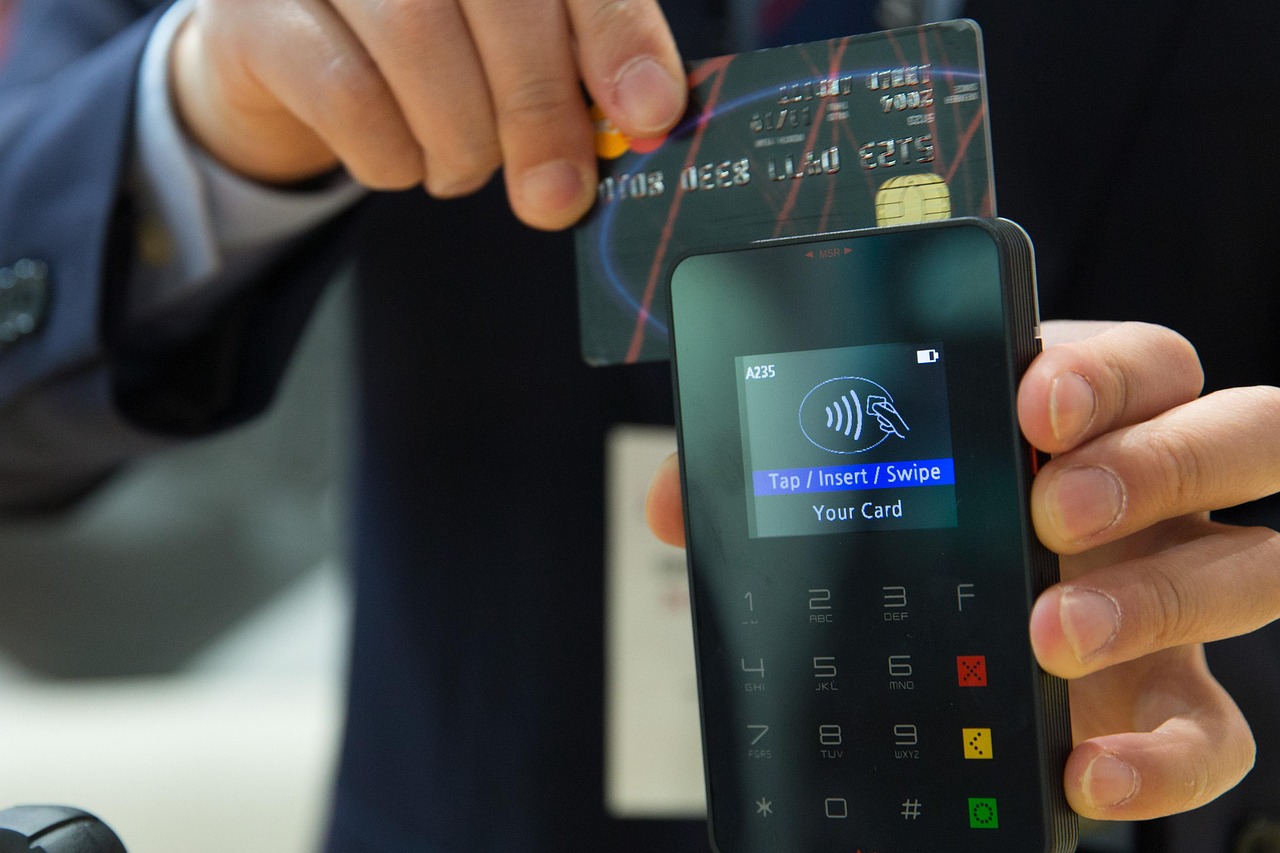
Key Features to Look for in a Loyalty-Enabled EPOS System
Not all loyalty integrations are created equal. Before committing, verify that any system you evaluate offers the following:
- Native integration, not a plugin: Loyalty logic should live inside the EPOS software, not rely on a fragile third-party API that can break during updates.
- Flexible reward structures: Points per pound, spend thresholds, visit-based stamps, tiered membership levels, and promotional multipliers (e.g. double points on Tuesdays) — your scheme should match your brand, not the other way around.
- Customer profiles with purchase history: Every transaction should enrich a named customer record you can segment, export, and act on.
- Multi-site support: If you operate more than one location, customers must be able to earn and redeem across all sites from a single account.
- Real-time reporting: Track scheme uptake, average reward cost, redemption rates, and incremental spend lift — in real time, not next month.
- CRM and email marketing hooks: The ability to trigger automated communications (birthday offers, lapsed-customer winbacks) based on loyalty data is where the real revenue sits.
- GDPR-compliant data capture: Any system collecting customer data in the UK must support lawful consent capture and the right to erasure under UK GDPR. Your provider should document how this is handled. Verify this independently via the ICO website.
How Loyalty Schemes Work Within an EPOS Platform
The mechanics are straightforward once integrated correctly. At the point of sale, a customer is identified — typically by a loyalty card, a phone number lookup, or a QR code on their smartphone. The EPOS system pulls their profile, applies any active promotions, calculates points earned on the current basket, and updates their balance in real time before the receipt prints.
Redemption works in reverse: the customer requests to use accumulated points or a reward voucher, the system deducts the relevant value, and the transaction completes. Because this all happens within the same software environment as stock management and sales reporting, the impact on margin is captured automatically — no manual reconciliation required at end of day.
More sophisticated setups extend this loop. When a customer hits a threshold (say, 500 points), an automated email fires with a personalised voucher. If they have not visited in 90 days, a winback campaign triggers. These workflows, once configured, require no ongoing manual effort — which is precisely what makes them so valuable for independent businesses with lean teams.
If you are currently running a basic cash register setup without any of this capability, our guide on how to switch from a cash register to a modern EPOS system walks through the transition step by step.
Benefits for UK Retail vs Hospitality: What Differs and What Matters
The underlying technology is the same, but how you deploy it should reflect your sector's buying patterns and customer expectations.
Retail
- Higher basket variance: Points-per-pound schemes work well because transaction values differ significantly between visits. Rewarding spend proportionally feels fair and encourages bigger baskets.
- Product-level targeting: EPOS data lets you reward purchases in specific categories (e.g. premium ranges) to drive margin mix, not just volume.
- Footfall intelligence: Linking loyalty to visit frequency helps identify whether promotional activity is genuinely driving incremental trips or simply rewarding customers who would have come anyway.
Hospitality
- Visit-based stamping: Coffee shops, casual dining and bars often benefit from visit-count schemes (e.g. every tenth coffee free) more than spend-based points, because transaction values are relatively consistent.
- Table management integration: A well-integrated restaurant EPOS ties loyalty to table covers, so front-of-house staff can acknowledge regulars before they even ask.
- Upsell prompts: Staff-facing screens can surface a customer's preference history at the point of ordering, enabling genuinely personalised service.
- Time-sensitive offers: Hospitality operators can use loyalty data to shift covers into quieter periods with targeted off-peak incentives.
If you operate in hospitality, explore our hospitality and restaurant EPOS offers to see how EPOS Direct handles loyalty for F&B environments specifically.
How Much Does an EPOS System with a Loyalty Scheme Cost in the UK?
Pricing varies considerably depending on the scale of your operation, whether you purchase hardware outright or subscribe monthly, and how sophisticated your loyalty configuration needs to be. The following table provides honest indicative ranges for typical UK setups — these are market-level approximations, not quotes, and your actual costs will depend on your specific requirements.
| Business Type | Typical Setup | Indicative Monthly Software Cost | Loyalty Module Included? |
|---|---|---|---|
| Single-site independent retailer | 1 terminal, basic loyalty points | Typically from £30–£60/month | Often included in higher-tier plans |
| Small café or coffee shop | 1–2 terminals, stamp-card style scheme | Typically from £40–£80/month | Yes, on mid-tier plans and above |
| Multi-site retailer (3–5 locations) | Multiple terminals, centralised CRM | Typically from £80–£150/month | Yes, with multi-site sync |
| Restaurant or bar (full-service) | 2–4 terminals, table management, loyalty | Typically from £70–£130/month | Yes, with advanced CRM hooks |
Hardware costs (terminals, receipt printers, barcode scanners, customer-facing displays) are typically separate and can be purchased outright or bundled into a monthly payment plan. For a detailed breakdown of the rent-vs-buy decision, see our guide on monthly EPOS subscriptions versus outright purchase.
One further cost consideration: integrated card payments. Running card processing through your EPOS avoids the reconciliation headaches of separate terminals, and transaction fees are often more competitive when bundled. Read our full overview of EPOS systems with integrated card payments in the UK for a complete picture.
How to Choose the Right Provider: Questions to Ask Before You Buy
The market for EPOS platforms in the UK is crowded. These are the questions a well-informed buyer should put to any provider before signing anything:
- Is loyalty native to your software, or does it depend on a third-party integration? If it is the latter, ask what happens to your customer data and scheme continuity if that third party changes its pricing or terms.
- Can I customise the reward structure without developer involvement? Your marketing calendar will change. You need to be able to adjust point multipliers, introduce limited-time campaigns, and create tiered tiers yourself, through the back office.
- How is customer data stored and secured? Ask for documentation on data residency (UK or EEA servers are preferable post-Brexit), encryption standards, and the process for handling subject access requests under UK GDPR.
- What does the reporting suite actually show me? Request a live demo of the loyalty analytics dashboard, not a screenshot. You should be able to see active members, redemption rates, and revenue attributed to the scheme at a glance.
- What training and onboarding is included? A loyalty scheme only delivers value if your team uses it consistently. Ask whether staff training is included, how long it takes, and what ongoing support looks like after go-live.
Our independent comparison resource, Vs Competitors Till System — Complete 2026 Guide, offers a structured way to benchmark providers across these criteria.
If you would prefer to talk through your specific requirements directly, talk to an expert online — the EPOS Direct team is available to answer questions without obligation.
Getting Started with EPOS Direct: Setup, Training and Ongoing Support
EPOS Direct works with independent retailers, hospitality operators, pharmacies, and multi-site businesses across the UK. Every installation includes a structured onboarding process: hardware configuration, software setup, loyalty scheme configuration, and staff training — delivered by a UK-based team with direct experience of the sectors they serve.
The loyalty module within the EPOS Direct platform is configurable through a clean back-office interface, meaning you do not need technical resource to build campaigns, adjust point values, or pull customer reports. Setup typically takes a single day for a single-site business, with multi-site rollouts planned around your trading calendar to minimise disruption.
Ongoing support is included in all subscription plans, with dedicated account management available on higher tiers. Updates to the loyalty engine — including new campaign types and reporting features — are deployed automatically, so your system improves without requiring manual intervention.
To explore the software before committing, EPOS Direct offers sector-specific interactive demos:
- Retail EPOS software demo — see loyalty, stock and reporting in a retail environment
- Restaurant EPOS software demo — table management, covers and visit-based loyalty in action
- Pharmacy EPOS software demo — compliance-led workflows with customer account management
For small businesses weighing up their first proper EPOS investment, our practical buyer's guide to the best till systems for small businesses provides a solid grounding before you speak to any provider.
The Direct Answer: What to Know Before You Buy
An EPOS system with a built-in loyalty scheme lets UK retailers and hospitality businesses award points, manage customer profiles, and run personalised campaigns entirely within their point-of-sale platform — eliminating the data silos and manual reconciliation that come with standalone loyalty tools. For most single-site UK businesses, a capable system with loyalty functionality included typically starts from around £30–£60 per month for software, with hardware costs on top depending on whether you purchase outright or subscribe. The critical factor is choosing a provider whose loyalty module is genuinely native — not a third-party plugin — and who offers UK-based support and transparent data handling from day one.
Ready to See It in Action?
EPOS Direct has helped hundreds of UK businesses build loyalty into the heart of their customer experience — not as an afterthought, but as a core part of how they trade. Whether you run a single shop, a growing restaurant group, or anything in between, the right system pays for itself many times over in repeat visits and customer lifetime value.
Request a free demo to see the loyalty module in a live environment, or visit the EPOS Direct UK home page for current offers and more information. If you have questions and would prefer to speak with someone first, request a call back and a member of the team will be in touch.
Written by the EPOS Direct UK team, who support UK retailers, hospitality operators and specialist businesses with EPOS and POS solutions every day.
Frequently asked questions
- Can I add a loyalty programme to my existing EPOS till, or do I need a completely new system?
- In many cases you can integrate a loyalty module into a compatible existing EPOS setup via software update or a third-party integration. However, if your current till is more than four or five years old or runs on unsupported software, upgrading to a modern EPOS platform that has loyalty built in natively will give you far better reliability, real-time data sync, and a smoother customer experience. EPOS Direct can assess your current hardware and advise the most cost-effective route.
- How much should I expect to pay for an EPOS system that includes a loyalty scheme in the UK?
- Costs vary depending on the number of terminals, software tier, and whether loyalty is bundled or an add-on. As a broad guide for UK businesses in 2024–2025: entry-level single-terminal packages with basic loyalty functionality start from around £300–£600 upfront (or from roughly £25–£50 per month on a subscription), while multi-site or feature-rich hospitality setups with advanced loyalty, CRM and reporting can range from £800 to £2,500+ for hardware, plus monthly software fees of £50–£150. Always request an itemised quote that separates hardware, software licences, payment processing and support costs.
- What types of loyalty scheme can an EPOS system support — points, stamps, or something else?
- Modern EPOS loyalty modules typically support several reward structures: points-per-pound-spent (ideal for retail), digital stamp cards (popular in cafés and quick-service restaurants), tiered membership levels (e.g. Bronze, Silver, Gold), referral rewards, and birthday or anniversary promotions. The best systems let you configure multiple scheme types simultaneously and track redemptions automatically at the till, removing the need for paper cards and manual tracking.
