We use cookies to make your experience better.
To comply with the new e-Privacy directive, you agree to the privacy policy and our use of cookies


How Restaurant POS Systems Work: A Complete Guide for UK Hospitality Owners
How Does a Restaurant POS System Work? Everything UK Hospitality Owners Need to Know

A restaurant EPOS system is an integrated combination of hardware and software that captures orders, processes payments, manages stock and reports on performance — all from a single platform. Far from being a glorified till, a modern system connects front-of-house staff, the kitchen, and your accounts in real time, eliminating the errors and delays that cost UK restaurants revenue every service. Understanding exactly how these components work together is the first step to choosing a setup that genuinely fits your operation.
What a Restaurant POS System Actually Does
At its core, a restaurant point-of-sale system is the nerve centre of your operation. Every order placed, every payment taken, every table turned — the EPOS platform records it, routes it and reports on it. The result is a joined-up view of your business that a standalone till simply cannot provide.
Modern restaurant EPOS goes well beyond transaction processing. A capable system will handle table management, split billing, allergen flagging, staff clock-in, loyalty programmes, and real-time stock deduction — often through a single touchscreen interface. For UK operators navigating the complexities of VAT on food and drink, tronc schemes, and HMRC Making Tax Digital requirements, having accurate, timestamped records automatically generated is not a convenience; it is a compliance necessity.
If you are exploring options across different sectors, the Complete EPOS System Guide for UK Retail and Hospitality Businesses gives a broader overview of how EPOS technology applies across industries.
Key Hardware Components in a Restaurant EPOS Setup
A restaurant EPOS installation is made up of several physical devices, each with a distinct role. The specific combination you need depends on your venue size, service style and budget, but the following components form the backbone of most UK restaurant setups.
The main terminal (POS touchscreen)
This is the primary interface for staff — a rugged, spill-resistant touchscreen, typically 15 to 17 inches, mounted at the bar or service station. It runs the EPOS software, displays the menu, and is where orders are built and sent.
Kitchen display screens and printers
Orders entered at the front-of-house terminal are routed instantly to a kitchen display system (KDS) or a dedicated kitchen receipt printer. A KDS shows each ticket in a queue, allows chefs to mark items complete, and removes the risk of paper tickets being lost or misread. Larger restaurants often route different courses or sections — grill, larder, pastry — to separate displays.
Handheld ordering devices
For table-service venues, wireless handheld terminals allow waiting staff to take orders tableside and send them directly to the kitchen without returning to the main terminal. This speeds up service, reduces errors from verbal relay, and increases the number of covers a server can comfortably manage.
Customer-facing display
A secondary screen at the counter shows the customer a live breakdown of their order and the total owed — useful for quick-service and counter-service environments, and increasingly expected by UK diners.
Receipt printer and cash drawer
Thermal receipt printers produce itemised bills quickly and quietly. A cash drawer, triggered automatically by the software on cash transactions, completes the traditional till function within a larger integrated system.
Card payment terminal
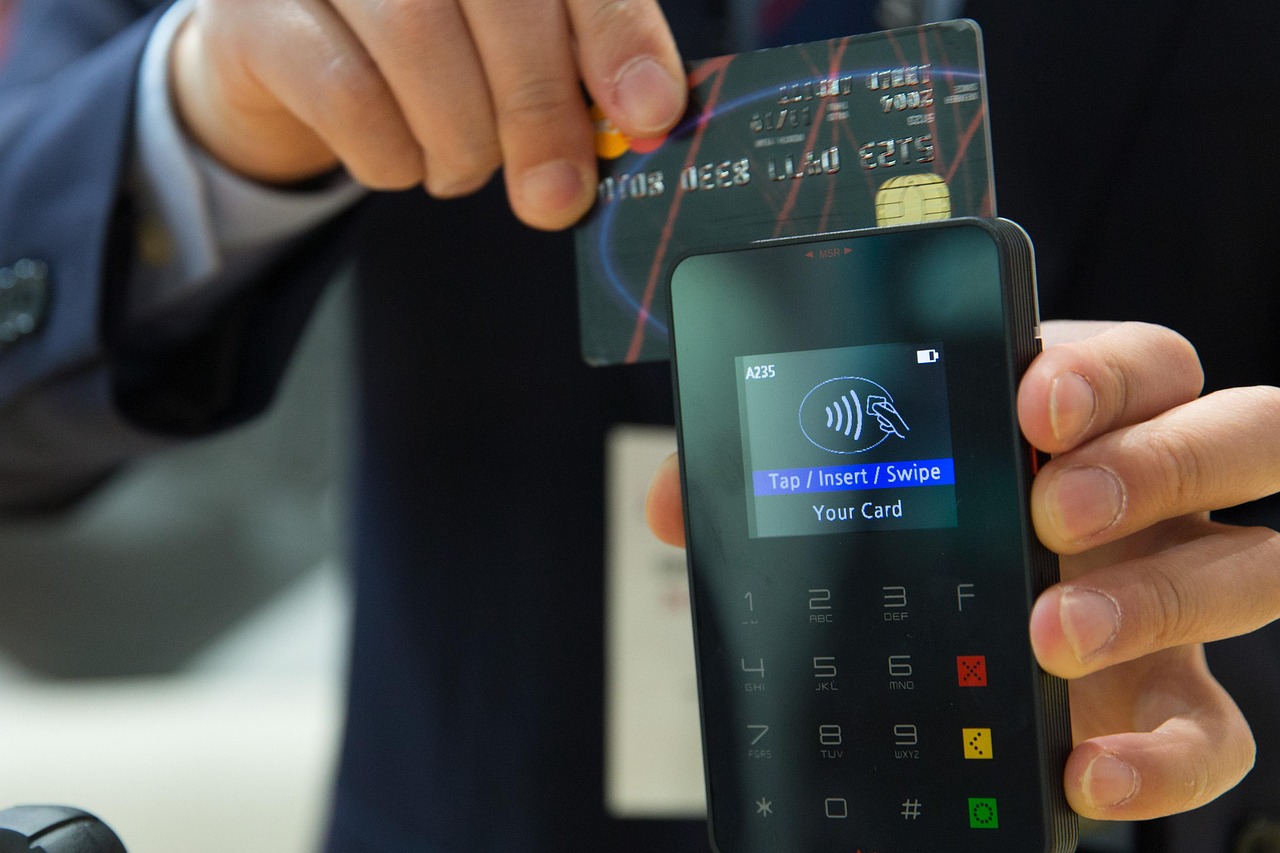
Integrated card machines communicate directly with the EPOS software so payment amounts are passed automatically — no manual re-entry, no mismatch errors. For venues where staff pay at the table, a portable or wireless terminal is essential. See our guide to the best wireless card machines for small businesses in the UK for a detailed breakdown of options.
How Orders Flow From Table to Kitchen
The order journey in a well-configured restaurant EPOS system is seamless and almost instantaneous. Here is how it typically works in a table-service environment:
- Order capture: A server opens the correct table on the handheld or main terminal, selects items from the digital menu and adds any modifiers (cooking preferences, allergen notes, portion size).
- Routing: The system sends the order to the relevant kitchen section — automatically, based on rules set during configuration. Starters go to larder; mains to the grill; desserts are held until triggered.
- Kitchen confirmation: The KDS displays the ticket. Chefs acknowledge receipt and mark items as in-progress or complete. The front-of-house system updates in real time so managers and servers know the status of every dish.
- Course management: Servers can fire the next course from their handheld once a table is ready, giving the kitchen precise timing information without a shouted order across the pass.
- Bill production: When the table is ready to pay, the server recalls the order, applies any discounts or service charges, and presents an itemised bill — split by person if required.
This closed loop eliminates the most common causes of service failures: illegible handwriting, lost dockets, incorrect verbal relay, and delays caused by staff walking back to a fixed terminal.
Payment Processing: How the Till Handles Transactions
Payment processing in a restaurant EPOS system works through a chain of communication between your terminal, your card machine, your payment processor, and your bank. When a customer pays by card, the terminal sends the authorised amount to the integrated card reader. The reader communicates with the card network (Visa, Mastercard, Amex) via the payment processor, which checks funds and returns an authorisation code — typically within two to three seconds.
For UK restaurants, the practical implications are worth understanding clearly:
- Integrated vs. standalone terminals: An integrated card machine receives the exact amount from the EPOS software. A standalone machine requires the amount to be typed in manually — introducing a margin for human error on every transaction.
- Contactless and mobile payments: EPOS-integrated terminals support Apple Pay, Google Pay and contactless cards. The higher contactless limit introduced by UK Finance in 2021 (currently £100 per transaction) has made this the default payment method for most restaurant guests.
- Split payments: Good restaurant software handles split bills — by item, by diner, or by percentage — and can process part-cash, part-card without manual calculation.
- End-of-day reconciliation: The system automatically reconciles card receipts against total sales, reducing the time spent on manual cashing-up and making discrepancies immediately visible.
For a detailed guide to pairing your card machine with your till, the Complete Guide to Card Machine and Till System Combined for UK Businesses is worth reading before you commit to a provider.
Essential Software Features to Look for in a Restaurant POS
Hardware is only as useful as the software running on it. When evaluating restaurant EPOS platforms, these are the capabilities that genuinely separate good systems from average ones:
- Table and floor plan management: A visual drag-and-drop floor plan that reflects your actual layout, with real-time status for each table (available, seated, ordered, awaiting payment).
- Menu management: The ability to create and edit menus, add modifiers, set time-based availability (breakfast, lunch, dinner), and push changes across all terminals instantly — without rebooting or re-syncing manually.
- Allergen management: Under Natasha's Law (in force since October 2021), full ingredient and allergen labelling is required for pre-packaged food. Your EPOS software should support allergen flags on every menu item and display them clearly during order-taking.
- Stock depletion: Each sale deducts ingredients from your live stock count, so you can see — mid-service — when a dish is close to running out, rather than discovering it when a customer orders.
- Reporting and analytics: Daily covers, average spend per head, best and worst-performing dishes, peak service times, staff performance by covers — a strong reporting suite turns raw transaction data into genuine business intelligence.
- Staff management: Clock-in/clock-out, role-based permissions (so junior staff cannot issue refunds without manager authorisation), and integration with payroll platforms.
- Loyalty and promotions: Points-based loyalty, discount codes, happy hour pricing rules, and combo deals — all managed from the back office without altering base menu prices.
- Online ordering integration: Whether through a proprietary ordering page or third-party aggregators, the system should pull online orders directly into the kitchen queue rather than requiring manual re-entry.
You can explore these capabilities directly on the EPOS Direct restaurant EPOS software demo before speaking to anyone.
Cloud-Based vs. Traditional POS: Which Suits Your Restaurant?
This is one of the most common questions UK restaurant operators ask when upgrading their systems, and the honest answer depends on your priorities around cost, reliability and flexibility.
| Consideration | Cloud-based EPOS | Traditional (on-premise) EPOS |
|---|---|---|
| Data storage | Hosted remotely; accessible from any device with internet | Stored locally on your server or terminal |
| Internet dependency | Requires a stable connection; most good systems include offline mode | Operates fully without internet |
| Software updates | Automatic, pushed centrally — no manual patching | Manual updates; may require a technician visit |
| Remote access | Full access to reports and settings from your phone or laptop | Limited to on-site access |
| Upfront cost | Lower hardware outlay; subscription-based software | Higher upfront investment; lower ongoing software cost |
| Scalability | Add sites or terminals easily through the back office | Each new site typically requires separate hardware and licences |
| Multi-site management | Centralised menu and reporting across all locations | Complex to manage consistently across sites |
| Best suited to | Growing independents, small groups, operators who want remote oversight | High-volume venues with unreliable broadband or bespoke legacy integrations |
For most UK independent restaurants and small groups opening today, a cloud-based system offers the better long-term proposition. The ability to review last night's sales from home, push a menu change from a tablet, or troubleshoot remotely without an engineer visit is genuinely valuable. If your broadband is unreliable — a real concern in rural locations — ensure any system you consider has a robust offline mode that processes orders and payments locally before syncing when connectivity is restored.
What Does a Restaurant EPOS System Cost in the UK?
Pricing varies meaningfully depending on the number of terminals, software tier, payment processing arrangement and whether you lease or purchase hardware outright. The figures below are honest indicative ranges based on what UK restaurant operators typically encounter — they are guidance only, not quotes.
- Entry-level setup (1 terminal, basic software): Hardware typically from around £500 to £900 outright; software subscriptions commonly from £30 to £60 per month.
- Mid-range setup (2–4 terminals, kitchen display, handheld devices): Hardware investments typically fall between £1,500 and £4,000; software from £60 to £150 per month depending on features and terminals included.
- Full-featured multi-terminal setup (4+ terminals, KDS, integrations): Hardware from £4,000 upwards; software licensing negotiated per site or as a group agreement.
- Payment processing: Card processing fees in the UK are typically quoted as a percentage of turnover — commonly between 1% and 2.5% per transaction depending on card type and volume commitments, though rates vary by provider.
Some providers offer zero-monthly-fee software arrangements — worth investigating if you are cost-sensitive. The guide to EPOS systems with no monthly fee for UK businesses explains what to look for and where the trade-offs lie. Similarly, if you are weighing up card machine costs specifically, our guide to card machines with no monthly fee for UK businesses is useful context before you commit.
Always ask providers to break down hardware, software and payment processing costs separately — bundled quotes can obscure the true cost of ownership over a three-year term.
Choosing and Setting Up the Right System for Your Restaurant
With dozens of options available to UK operators, a clear selection framework saves both time and money. Consider the following before requesting quotes:
Define your service model first
A quick-service café has fundamentally different requirements from a fine-dining restaurant with complex tasting menus and extensive wine lists. Your floor plan, table-turn speed, menu complexity and average party size all influence which features are non-negotiable versus nice-to-have.
Prioritise integration compatibility
List every platform you already use — reservations system, accounting software, online ordering channels, payroll platform — and confirm that any EPOS you consider integrates with them natively or via API. Switching costs for an EPOS that does not integrate tend to far outweigh any short-term saving on the hardware.
Ask about support and training
In a restaurant environment, a till going down during a Saturday dinner service is a crisis. UK-based phone support with fast response times is not a premium; it is a baseline requirement. Ask prospective providers what their typical response time is, whether support is included in the monthly fee, and how onsite training is structured for your team.
Plan your installation timeline
A typical restaurant EPOS installation — including terminal mounting, network setup, kitchen printer or KDS installation, and staff training — takes between one and three days depending on venue complexity. Plan around a quiet trading period and budget for a trial run before a live service.
For those running or opening a smaller venue, the Complete 2026 Guide to EPOS Systems for Small Businesses covers the fundamentals in detail. And for a comprehensive overview of EPOS Direct's own platform and range, visit the Complete Guide to EPOS and POS Systems for UK Businesses.
When you are ready to see what the software looks like in practice, book a restaurant EPOS software demo directly — no commitment required. If you would prefer to discuss your specific setup, you can talk to an expert online at a time that suits you.
Ready to Find the Right Restaurant EPOS System?
A well-chosen restaurant EPOS system does more than take payments — it improves the accuracy of every order, accelerates your service, gives you real-time visibility of your business performance, and reduces the administrative burden of running a compliant, profitable venue. The technology has matured significantly, and UK hospitality operators of all sizes now have access to cloud-based platforms that were previously the preserve of large groups.
EPOS Direct UK has been helping independent restaurants, pubs and hospitality businesses find and implement the right EPOS solution for their operation. Whether you are opening your first site or upgrading a legacy system across multiple locations, our team can advise on hardware, software, payment processing and installation — honestly and without unnecessary upselling.
Explore current packages and pricing on our hospitality and restaurant EPOS offers page, or request a free demo to see the system in action. For more information across our full range, visit the EPOS Direct home page.
Written by the EPOS Direct UK team, who support UK hospitality and retail businesses with EPOS and POS system advice every day. For regulatory guidance — including Making Tax Digital for VAT and allergen labelling requirements — always verify current requirements directly with HMRC and the Food Standards Agency.
Frequently asked questions
- How much does a restaurant POS system cost in the UK?
- Costs vary based on the size and complexity of your setup. In the UK, a basic single-terminal restaurant EPOS system typically starts from around £300–£600 for hardware, with software subscriptions ranging from £30 to £100 per month depending on features. Larger multi-terminal setups with kitchen display screens, card readers and stock management can run from £1,000 to £3,000+. EPOS Direct UK offers tailored packages for hospitality businesses, so you only pay for what you need.
- Do I need an internet connection for my restaurant EPOS system to work?
- It depends on whether you choose a cloud-based or legacy on-premise system. Cloud-based POS systems rely on an internet connection to sync data in real time, though many offer an offline mode so you can still process orders and payments during outages. Traditional server-based systems store data locally and are less reliant on connectivity. For most UK restaurants, a cloud system with offline capability offers the best balance of flexibility and reliability.
- Can a restaurant POS system help me manage staff and track sales performance?
- Yes, modern restaurant EPOS systems go well beyond taking payments. They typically include staff clock-in and clock-out tools, shift management, individual server performance reports, and real-time sales dashboards. You can see which menu items are your best sellers, identify slow periods, and monitor table turnover rates — all from a single system or even remotely via a tablet or phone.
