We use cookies to make your experience better.
To comply with the new e-Privacy directive, you agree to the privacy policy and our use of cookies

Best Portable Card Machines for Small Businesses in the UK: A Complete Buyer's Guide
Best Portable Card Machines for Small Businesses in the UK: A Complete Buyer's Guide
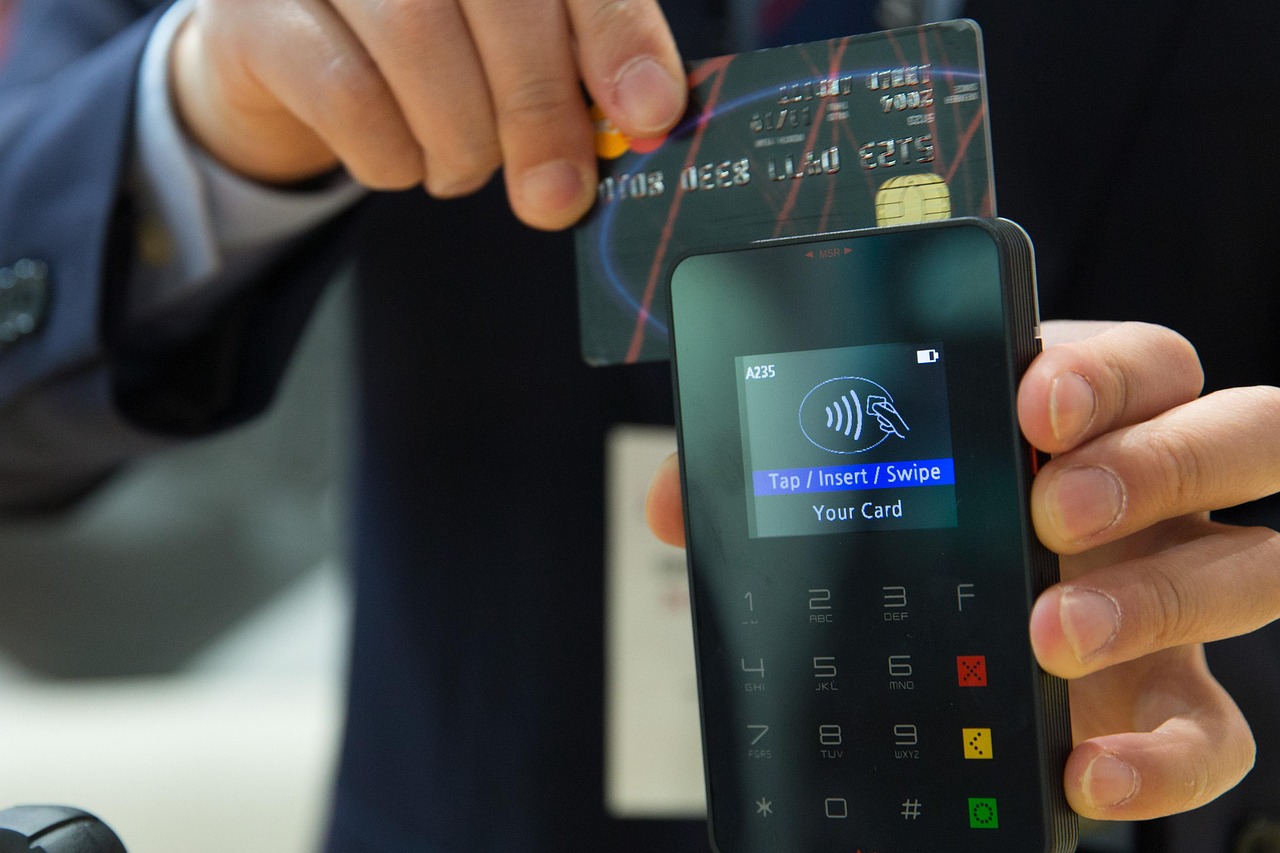
Portable card machines have become essential tools for UK small businesses — whether you're running a market stall, a mobile hair salon, a pop-up café, or a busy independent retailer. The right device lets you accept contactless, chip-and-PIN, and digital wallet payments wherever your customers are, without being tied to a fixed counter. This guide walks you through everything you need to make a confident, cost-effective choice — from understanding the different device types and fee structures to knowing exactly how a card reader fits into a broader EPOS setup.
Why UK Small Businesses Are Moving to Portable Payment Solutions
Consumer expectations have shifted decisively. UK Finance data consistently shows that card and digital wallet payments now account for the overwhelming majority of retail and hospitality transactions, with cash usage continuing to decline year on year. For a small business, refusing or struggling to accept card payments is no longer just an inconvenience — it actively costs you sales.
Portable card readers address this directly. They remove the need for a fixed payment terminal wired to a phone line, allowing you to take payment at the table, kerbside, at a festival pitch, or during a home visit. Modern devices connect over Wi-Fi, 4G, or Bluetooth and typically accept contactless cards, Apple Pay, Google Pay, and chip-and-PIN in seconds. The total cost of ownership has also fallen dramatically; many entry-level readers are available for a modest one-off hardware cost with no monthly contract.
If you are also evaluating your wider checkout setup, our guide to the best till systems for small businesses in the UK covers how to build a complete, integrated payment environment from the ground up.
Types of Portable Card Machines: Which Style Suits Your Business?
Not all portable readers are built for the same use case. Understanding the core categories will help you avoid paying for features you don't need — or missing ones you do.
Compact Bluetooth Readers
These pair with a smartphone or tablet app and are the smallest, most affordable option on the market. They are ideal for sole traders, market vendors, and mobile professionals who need something lightweight and simple. The trade-off is that they rely on your phone's mobile data connection and are generally unsuitable as a primary terminal in a busy shop or restaurant.
Standalone 4G/Wi-Fi Card Machines
Standalone readers have their own built-in connectivity, a dedicated screen, and a receipt printer in many models. They are the workhorse choice for small retailers, cafés, and service businesses that need reliability without being tethered to a counter. Most modern standalone devices run on 4G SIM cards as a failover even when Wi-Fi is available, which is worth prioritising.
Integrated EPOS Card Terminals
These devices connect directly to your point-of-sale software so that sale totals are pushed automatically to the terminal — no manual entry, no human error, and a full audit trail in one place. For any business processing more than a handful of transactions daily, integration pays for itself quickly in time saved and reconciliation accuracy. You can explore how this works in depth in our guide to combining a card machine and till system.
Mobile EPOS (mPOS) Tablets
A tablet running EPOS software with a card reader attached — or built-in — gives you the full power of a till in a portable form factor. This approach is popular in hospitality for tableside ordering and payment, and in retail for queue-busting during peak periods.
Key Features to Look for Before You Buy
Hardware specs matter, but the features that determine day-to-day satisfaction are often more operational than technical. Experienced business owners consistently highlight the following as decisive:
- Connection redundancy: Look for devices that support both Wi-Fi and 4G. A reader that drops offline during a busy Saturday afternoon is a serious problem.
- Battery life: A full day's trading on a single charge is the practical minimum. For outdoor or event use, check whether the battery is removable or if spare packs are available.
- Receipt options: Built-in thermal printers, digital receipts via SMS or email, or both. Digital-only reduces consumable costs but may not suit all customer demographics.
- Payment method coverage: Contactless (up to the current UK limit), chip-and-PIN, Apple Pay, Google Pay, and Samsung Pay as standard. Verify the limit on contactless transactions — the UK limit is set by industry and updated periodically; check UK Finance or your acquirer for the current figure.
- Software compatibility: If you use or plan to use EPOS software, confirm the card reader is certified to integrate with it before purchasing. Explore the best EPOS systems with integrated card payments to understand what full integration looks like in practice.
- Security certification: Devices should carry PCI DSS compliance certification. Your payment provider should be able to confirm this before you sign up.
- Screen size and usability: Customer-facing PIN entry needs a clearly readable screen. Staff-facing screens should display transaction details legibly, even in direct sunlight if used outdoors.
What Does a Portable Card Machine Actually Cost?
Cost is invariably the first question small business owners ask — and rightly so. The honest answer is that pricing varies significantly depending on the provider model you choose, your monthly transaction volume, and whether you want software integration. Below are realistic indicative ranges for the UK market; treat these as guidance only, and always request a personalised quote before committing.
Hardware Costs
- Compact Bluetooth readers: typically from around £20–£50 as a one-off purchase, often subsidised or free with a provider contract.
- Standalone 4G/Wi-Fi terminals: typically from around £100–£300 per device, depending on specification and whether a built-in printer is included.
- Integrated EPOS terminals: hardware bundles (tablet, stand, card reader) typically start from around £300–£700 and upwards, depending on the full configuration.
Transaction Fees
Most providers charge a percentage of each transaction, sometimes with a small fixed pence element per transaction. For small businesses in the UK:
- Consumer card transactions typically attract fees in the range of 1%–2.5% per transaction depending on your provider and volume tier.
- Commercial and corporate cards generally attract higher rates — often 2%–3.5%.
- Volume discounts are usually available once monthly card turnover exceeds certain thresholds; negotiate this upfront.
Monthly Fees & Contracts
Some providers operate on a pure pay-as-you-go model with no monthly charge — ideal for very low-volume businesses. Others charge a monthly subscription (typically from around £10–£50 per month for a single terminal) in exchange for lower per-transaction rates, which can be more economical once your card turnover grows. Our detailed breakdown on monthly EPOS subscriptions versus outright purchase is worth reading before you decide on a contract structure.
Always check: minimum contract length, early exit penalties, fee review clauses, and who owns the hardware if you cancel.
How Portable Card Machines Integrate With Your EPOS System
A card reader that operates in isolation — where staff must manually key the sale total into the terminal — creates two practical problems: it slows service, and it introduces a source of human error that makes end-of-day reconciliation painful. Proper integration eliminates both.
With an integrated setup, your EPOS software sends the transaction total directly to the card machine the moment a sale is confirmed. The terminal processes payment, and the result (approved or declined) feeds back into the EPOS record automatically. Stock levels update, your sales report is accurate in real time, and no separate terminal Z-read is needed.
For businesses considering a wireless terminal as part of a larger checkout setup, our practical guide to the best wireless card machines for UK small businesses covers integration considerations in detail.
If you are ready to see how EPOS Direct's software handles integrated payments across retail or hospitality environments, you can book a retail EPOS software demo or a restaurant EPOS software demo to see it working live.
Choosing the Right Solution: A Comparison at a Glance
The table below summarises how different card reader approaches stack up against the criteria that matter most to small business buyers. Use it as a starting framework — your specific volume, sector, and growth plans will refine the decision further.
| Solution Type | Best For | Typical Hardware Cost | EPOS Integration | Connectivity | Built-in Receipt Printer |
|---|---|---|---|---|---|
| Compact Bluetooth Reader | Sole traders, mobile services, very low volume | From ~£20–£50 | App-based only | Bluetooth + phone data | No (digital only) |
| Standalone Wi-Fi / 4G Terminal | Independent retailers, cafés, market traders | From ~£100–£300 | Limited / provider-dependent | Wi-Fi + 4G failover | Often yes |
| Integrated EPOS Terminal | Growing retailers, restaurants, multi-staff environments | From ~£300+ (bundle) | Full two-way integration | Wi-Fi + 4G | Yes (or nearby printer) |
| mPOS Tablet System | Tableside service, queue-busting, hospitality | From ~£300–£700+ (bundle) | Full two-way integration | Wi-Fi + 4G | Via paired printer |
Costs shown are indicative market ranges for the UK and are not quotes. Request a personalised quote from your chosen provider before purchasing.
Getting Set Up and Taking Payments Quickly
One of the genuine advantages of modern card readers over legacy merchant account setups is the speed of onboarding. For many providers, you can be taking payments within a working day. That said, cutting corners at setup stage creates problems later. Here is what a sensible onboarding process looks like:
- Choose your payment provider and acquirer: Your card reader provider and the underlying acquirer (the bank processing your payments) may be the same entity or separate. Understand who you are contracted with and what the escalation process is for disputes.
- Complete merchant account application: You will need to provide business registration details, bank account information, and in some cases proof of ID. This is standard anti-money-laundering compliance, not a bureaucratic inconvenience.
- Configure your EPOS software: If you are integrating with EPOS software, this step is done with your EPOS provider. It typically involves entering your merchant credentials into the software settings and running a test transaction.
- Train your team: Even a simple device needs a five-minute walk-through with staff — how to handle declined cards, how to process refunds, and what to do if connectivity drops.
- Test before you go live: Run a real £1 test transaction, confirm it appears in your EPOS report, and verify the refund process. Do this before your first busy day, not during it.
If you are starting from a legacy cash register setup, our guide on switching from a cash register to a modern EPOS system covers the broader transition, including how card payment integration fits into the migration plan.
For businesses weighing up EPOS Direct against other providers, our complete 2026 comparison guide provides an objective breakdown to help you make an informed decision. You can also visit the EPOS Direct UK home page for current offers, hardware bundles, and further information tailored to your sector.
Ready to move forward? The EPOS Direct team works with UK small businesses across retail, hospitality, and specialist sectors every day. Talk to an expert online to get answers to your specific questions, or request a free demo to see how our integrated card payment solutions work in practice before you commit to anything.
The Bottom Line
The right portable card machine for your business depends on three things: how and where you sell, what your transaction volume looks like today and in twelve months, and whether you need the device to talk to a broader EPOS system. A sole trader running occasional market days has very different requirements from a growing café looking to streamline tableside payments and reconciliation. Start with your operational reality, not the hardware specification sheet.
EPOS Direct UK provides integrated card payment solutions built for UK small businesses — from compact retail setups to full hospitality configurations. Whether you need a single portable reader or a networked multi-terminal environment, our team can help you find the right fit. Explore our retail EPOS offers or view our hospitality and restaurant EPOS offers — or request a call back and let us come to you.
Written by the EPOS Direct UK team, who help small businesses across the United Kingdom choose, configure, and get the most from their EPOS and payment systems every day.
Frequently asked questions
- How much does a portable card machine typically cost for a small business in the UK?
- Costs vary depending on the provider and model. Hardware can range from free (on a revenue-share or monthly plan) to around £20–£150 to purchase outright. Transaction fees in the UK typically sit between 1% and 2.5% per card payment for small businesses, with some providers charging a flat monthly fee of £10–£30 in exchange for lower per-transaction rates. Always check whether there are hidden charges for next-day settlement, PCI compliance, or early contract termination before committing.
- Do I need a separate EPOS system or can a portable card machine work on its own?
- A portable card machine can work independently for basic payment acceptance, but pairing it with an EPOS system unlocks real benefits — live stock tracking, sales reporting, staff management and integrated receipts. For small businesses planning to grow, choosing a card machine that connects directly to your EPOS software from day one saves significant time and cost later.
- What connectivity options should I look for in a portable card machine?
- Most modern portable card machines support 4G/GPRS, Wi-Fi or Bluetooth. For mobile traders, market stalls or hospitality businesses that move around the venue, 4G is the most reliable option. Wi-Fi-only devices are better suited to fixed or semi-fixed locations with a stable network. Always check the battery life too — a full trading day typically requires at least 8 hours of use per charge.
