We use cookies to make your experience better.
To comply with the new e-Privacy directive, you agree to the privacy policy and our use of cookies

Best Portable Card Payment Machines for Small Businesses in the UK
Portable Card Payment Machines for Small Businesses in the UK: Your Complete Guide
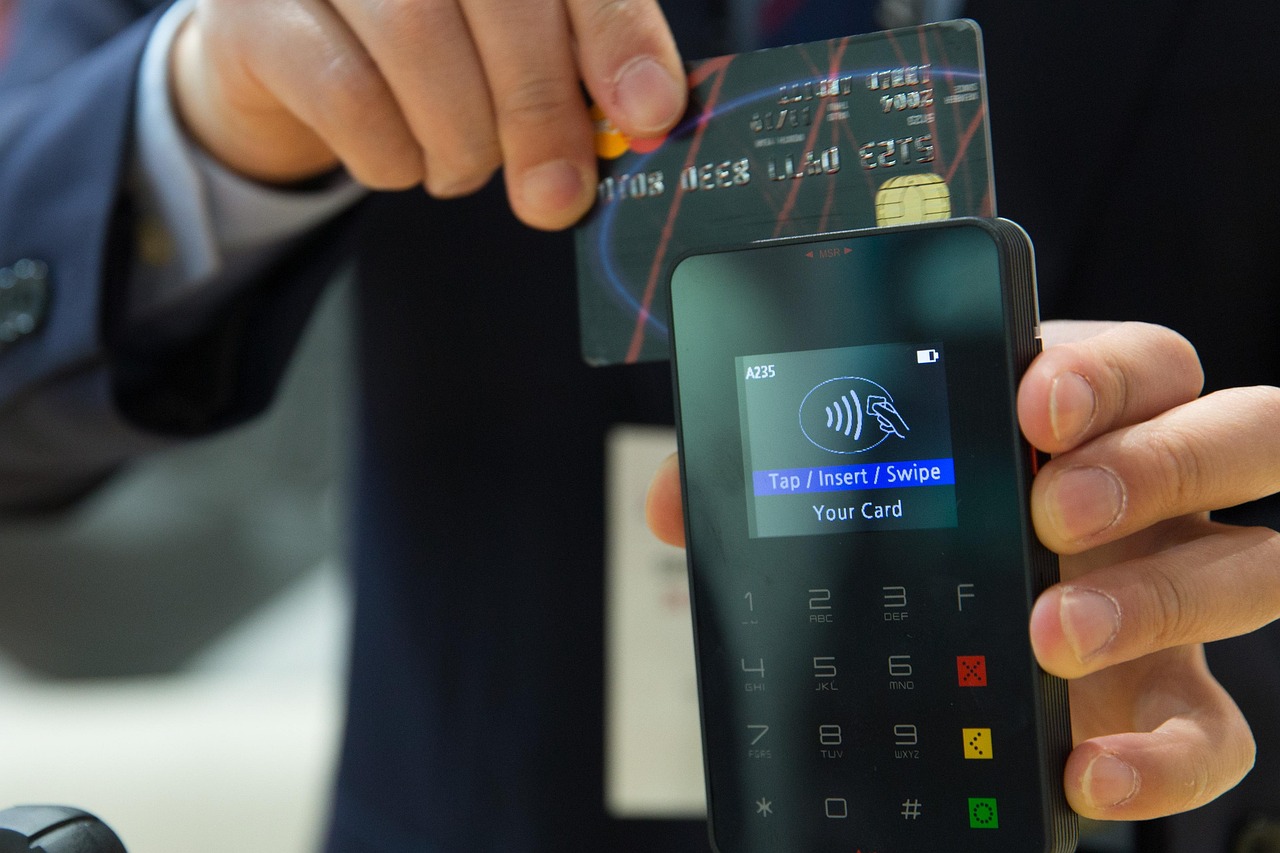
For small businesses across the UK, accepting card payments is no longer optional — contactless and card transactions now account for the vast majority of consumer spending, and customers increasingly expect to pay however suits them. A portable card payment machine gives independent retailers, market traders, mobile services, and hospitality businesses the flexibility to take payments anywhere, whether that is at a customer's table, a festival stall, or a client's front door. Paired with the right EPOS system, it becomes the foundation of a genuinely efficient, modern business.
Why UK Small Businesses Cannot Afford to Go Card-Free
The shift away from cash has accelerated considerably in recent years. UK Finance data consistently shows that card payments — particularly contactless — dominate everyday transactions, and businesses that only accept cash risk losing sales at the point of decision. Beyond convenience, offering card payments signals professionalism and builds customer trust, which matters enormously for independent businesses competing on service rather than scale.
There is also a practical cash-handling cost that rarely gets quantified: the time spent counting floats, making bank runs, and managing discrepancies. A well-chosen card terminal eliminates most of that friction and integrates neatly into your end-of-day reporting — giving you accurate takings figures without manual reconciliation.
If you are still weighing whether a full EPOS upgrade makes sense alongside a card machine, our guide to switching from a cash register to a modern EPOS system sets out the case clearly for UK retailers.
Key Features to Look for in a Portable Card Machine
Not all card terminals are built the same. Before committing, evaluate each option against the features that will genuinely affect your day-to-day trading:
- Connectivity options: The best portable machines support 4G/SIM, Wi-Fi, and Bluetooth — giving you a reliable fallback if one connection drops. For outdoor events or mobile traders, 4G is non-negotiable.
- Battery life: Look for a machine that comfortably covers a full trading day on a single charge. Aim for at least eight hours of active use; some premium terminals exceed twelve.
- Contactless and digital wallet support: Your terminal must accept Visa, Mastercard, American Express, Apple Pay, and Google Pay as a baseline. Many customers now pay exclusively via phone or watch.
- Receipt options: A built-in printer is useful for hospitality and retail; digital or SMS receipts may suffice for service businesses. Consider your customer expectations before choosing.
- EPOS integration: A standalone card machine is useful; one that feeds directly into your stock management, sales reporting, and CRM is transformative. Prioritise terminals designed to integrate natively with your EPOS platform.
- Security and PCI DSS compliance: Any terminal you use must be compliant with the Payment Card Industry Data Security Standard (PCI DSS). Reputable providers handle certification on your behalf — verify this before signing anything.
- Screen quality and ease of use: Staff should be able to process a transaction in seconds without training refreshers. A clear, responsive touchscreen matters more than it sounds during a busy service.
Types of Portable Card Payment Machines: Which Suits Your Business?
The market broadly divides into three categories, each with different trade-offs:
Countertop Terminals With Wireless Range
These sit on a base station and connect via Bluetooth or Wi-Fi, allowing staff to bring the device to the customer within a defined range — typically a restaurant dining room or a retail floor. They are robust, often have a built-in printer, and are ideal when you do not need to leave a fixed premises.
Fully Mobile 4G Terminals
These are the true "take anywhere" machines — SIM-enabled, compact, and designed for businesses that operate away from a fixed location. Market traders, food trucks, mobile beauticians, personal trainers, and tradespeople all benefit from a 4G terminal that works wherever there is a mobile signal. For a detailed look at the leading options in this category, our guide to the best wireless card machines for small businesses in the UK is a practical starting point.
Integrated EPOS Payment Devices
These are purpose-built terminals that combine a customer-facing payment screen with full EPOS functionality — inventory, receipts, loyalty, and reporting — in one device or as part of a unified hardware bundle. For small businesses ready to invest in proper infrastructure, this is usually the highest-value option over the medium term. See our complete guide to card machine and till system combined solutions for a full breakdown of how this works in practice.
What Does a Portable Card Machine Cost in the UK?
Pricing varies considerably depending on the provider model, hardware quality, and whether you opt for a standalone terminal or an integrated EPOS solution. The following ranges are indicative and based on typical UK market conditions — always request a formal quote for your specific requirements.
| Solution Type | Typical Upfront Cost | Typical Monthly Cost | Transaction Fees | Best For |
|---|---|---|---|---|
| Pay-as-you-go mobile reader | Typically from £20–£60 | None (fee per transaction) | Often 1.5%–2.5% per transaction | Very low-volume or occasional traders |
| Mid-range portable terminal (contract) | Often £0–£150 upfront | Typically £15–£40/month | Often 0.3%–1.2% (negotiated) | Established small businesses with regular volume |
| Integrated EPOS + card terminal | Typically £300–£900+ per station | Typically £30–£80/month (software + processing) | Typically 0.2%–0.9% at volume | Retailers, restaurants, and multi-staff environments |
| Monthly EPOS subscription bundle | Hardware included or subsidised | Typically £40–£120/month all-in | Varies by acquirer agreement | Businesses preferring predictable monthly outgoings |
If you are deciding between paying monthly or purchasing outright, our comparison of monthly EPOS subscription versus outright purchase will help you model which approach suits your cash flow. Transaction fees are often the hidden cost that matters most at volume — a lower percentage rate can outweigh a higher monthly fee once turnover exceeds a certain threshold, so model both scenarios with your actual average transaction value.
How a Portable Card Machine Integrates With Your EPOS System
A card machine that talks directly to your EPOS platform does far more than process payments. When the two systems are properly integrated, each sale automatically updates your stock levels, feeds into your sales analytics, and posts to your accounts — removing the need for double-entry and reducing the risk of human error at the end of a busy day.
For retail businesses, this means you can see real-time stock depletion, trigger reorder alerts, and generate product-level margin reports without any manual data wrangling. For hospitality businesses, integrated payments allow table-side ordering and payment to flow through a single system, reducing covers time and increasing table turns.
Businesses looking for a seamlessly integrated solution should explore our guide to EPOS systems with integrated card payments, which covers the key platforms and what to look for in 2026. You can also explore our EPOS software to see how payment integration works in practice across retail, hospitality, and specialist sectors.
For a broader view of what a complete system looks like, the EPOS Direct UK home page brings together our full range of offers and solutions in one place.
Questions Worth Asking Before You Commit to a Terminal
The wrong card machine costs more than the right one — not just in fees, but in staff frustration, lost sales, and the hassle of switching mid-contract. Here are the practical questions that separate a good decision from an expensive one:
Will this terminal work reliably at all my trading locations?
If you trade at markets, pop-ups, or client sites, confirm that the terminal has a SIM option and check which network it uses. Some providers lock terminals to a single network, which can be a problem in rural areas or certain venues. Ask for signal coverage confirmation before signing.
What happens if my internet goes down?
Some terminals offer offline mode, storing transaction data locally and processing it when connectivity is restored. Others simply stop working. For high-traffic environments, offline functionality is an important safety net — particularly for hospitality businesses during peak service.
Am I locked into a merchant services contract, and what are the exit terms?
Card terminals are often bundled with a merchant services agreement from a bank or acquirer. Read the contract length, notice period, and early-exit fees carefully. A terminal that appears inexpensive can become costly if your business changes and you need to leave before the term ends.
If you want an independent view of how EPOS Direct's approach compares to the market, our comparison with competitor till systems sets out the key differences honestly.
Sector Guidance: Which Solution Fits Your Business Type?
Independent Retailers
Retail businesses benefit most from a terminal that integrates tightly with stock management. A countertop terminal at the till point, paired with a handheld device for queuing management during busy periods, covers most scenarios. Our guide to the best till systems for small businesses in the UK explores the full hardware picture for retail. If you want to see the software before committing, our retail EPOS software demo gives a hands-on view of how it all connects.
Hospitality and Food & Beverage Businesses
Cafes, restaurants, and food trucks need fast, reliable tableside or counter payment with minimal friction. 4G terminals are essential for outdoor or mobile operations; for fixed venues, a Wi-Fi terminal paired with a kitchen display and order management system is typically the right configuration. You can view our hospitality and restaurant EPOS offers or book a restaurant EPOS software demo to see a live example.
Mobile and Service Businesses
Personal trainers, mobile beauticians, tradespeople, and market traders need something light, long-lasting, and genuinely portable. A compact 4G terminal with digital receipts and a simple app-based reporting dashboard is usually sufficient. If volume grows, upgrading to a full EPOS-integrated solution is straightforward with the right provider.
How to Get Started With Card Payments Through EPOS Direct
EPOS Direct UK works with small businesses across retail, hospitality, pharmacy, and specialist sectors to design payment and EPOS solutions that match their actual trading patterns — not a generic bundle from a shelf. The process starts with a conversation about your business: where you trade, how many staff process payments, what your average transaction looks like, and what you currently use for stock and reporting.
From there, the team will recommend the right terminal type, connectivity configuration, and EPOS integration — and walk you through the total cost of ownership so there are no surprises. You can talk to an expert online right now, or if you prefer to see the system in action first, request a free demo and our team will arrange a session tailored to your sector.
Retail businesses can also browse our current retail EPOS offers to see what is available, and those in pharmacy or specialist sectors can book a pharmacy EPOS software demo for a sector-specific walkthrough.
The Bottom Line
Choosing a portable card payment machine is one of the most impactful infrastructure decisions a small UK business makes — but it does not have to be complicated. Define where you trade, what volume you process, and whether you need EPOS integration, then match those requirements to a terminal and contract that fits. The right setup pays for itself quickly in efficiency, reduced cash-handling costs, and sales you would otherwise lose.
EPOS Direct UK specialises in helping independent and small businesses find exactly that fit — combining reliable hardware, integrated software, and transparent pricing with expert support that does not disappear after the sale. Request a call back from the EPOS Direct team today and find the right solution for your business.
Written by the EPOS Direct UK team, who support independent retailers, hospitality businesses, and specialist operators across the United Kingdom with EPOS and payment solutions every day.
Frequently asked questions
- What are the typical monthly costs for a portable card machine in the UK?
- Costs vary depending on the provider and contract type. In the UK, you can typically expect to pay anywhere from £0 to £30 per month in rental or subscription fees, plus per-transaction fees that usually range from 0.75% to 1.75% for card-present transactions. Some providers offer pay-as-you-go models with no monthly fee but slightly higher transaction rates, which can suit very small or seasonal businesses. Bundling your card machine with an EPOS system from a provider like EPOS Direct can reduce overall costs by consolidating hardware and software into one package.
- Can I use a portable card machine without a full EPOS till system?
- Yes, standalone portable card machines can accept payments independently without a full till system. However, integrating your card machine with an EPOS system gives you significant advantages including real-time sales reporting, automatic stock updates, and end-of-day reconciliation — all in one place. For growing small businesses, this integration quickly pays for itself in saved admin time and reduced errors.
- How long does the battery last on a portable card payment terminal?
- Most modern portable card terminals offer between 8 and 12 hours of active use on a single charge, which is typically sufficient for a full trading day. Some higher-end models designed for hospitality or market use can last longer. It is worth checking whether the terminal supports fast charging and whether a spare battery or charging dock is available, particularly if you are running a busy service environment like a restaurant or outdoor event.
