We use cookies to make your experience better.
To comply with the new e-Privacy directive, you agree to the privacy policy and our use of cookies


POS Systems with Contactless Card Readers for UK Retail & Hospitality
POS Systems with Contactless Card Readers for UK Businesses

A contactless-ready point-of-sale setup is no longer a premium add-on — it is the baseline expectation for UK businesses serving modern customers. The right combination of EPOS software and an integrated contactless card reader accelerates checkout, reduces queuing, and keeps you fully compliant with UK payment regulations, all from a single, joined-up system. This guide walks you through everything you need to make a confident buying decision: what to look for, what it costs, and which setups suit retail versus hospitality environments.
Written by the EPOS Direct UK team, who help UK businesses choose and configure EPOS and POS systems every day.
Why UK Businesses Are Moving to Contactless-Ready POS Systems
UK Finance data consistently shows that contactless is now the dominant in-person payment method in the United Kingdom, accounting for the majority of face-to-face card transactions. The contactless limit was raised to £100 per transaction in 2021 (verified via UK Finance and the FCA), meaning a much wider basket of purchases — from a supermarket shop to a restaurant bill — can now be settled with a tap. Consumers expect it; card networks increasingly mandate it.
Beyond customer preference, there is a compelling operational case. Integrated contactless readers eliminate manual card entry errors, speed up end-of-day reconciliation, and remove the friction of managing a separate card terminal that does not talk to your till software. Businesses that bolt a standalone card machine onto a basic cash register miss out on real-time sales data, automatic stock deductions, and the kind of joined-up reporting that supports good decision-making.
If you are weighing up your options from scratch, our guide to combining a card machine and till system covers the full landscape of integrated approaches available to UK businesses.
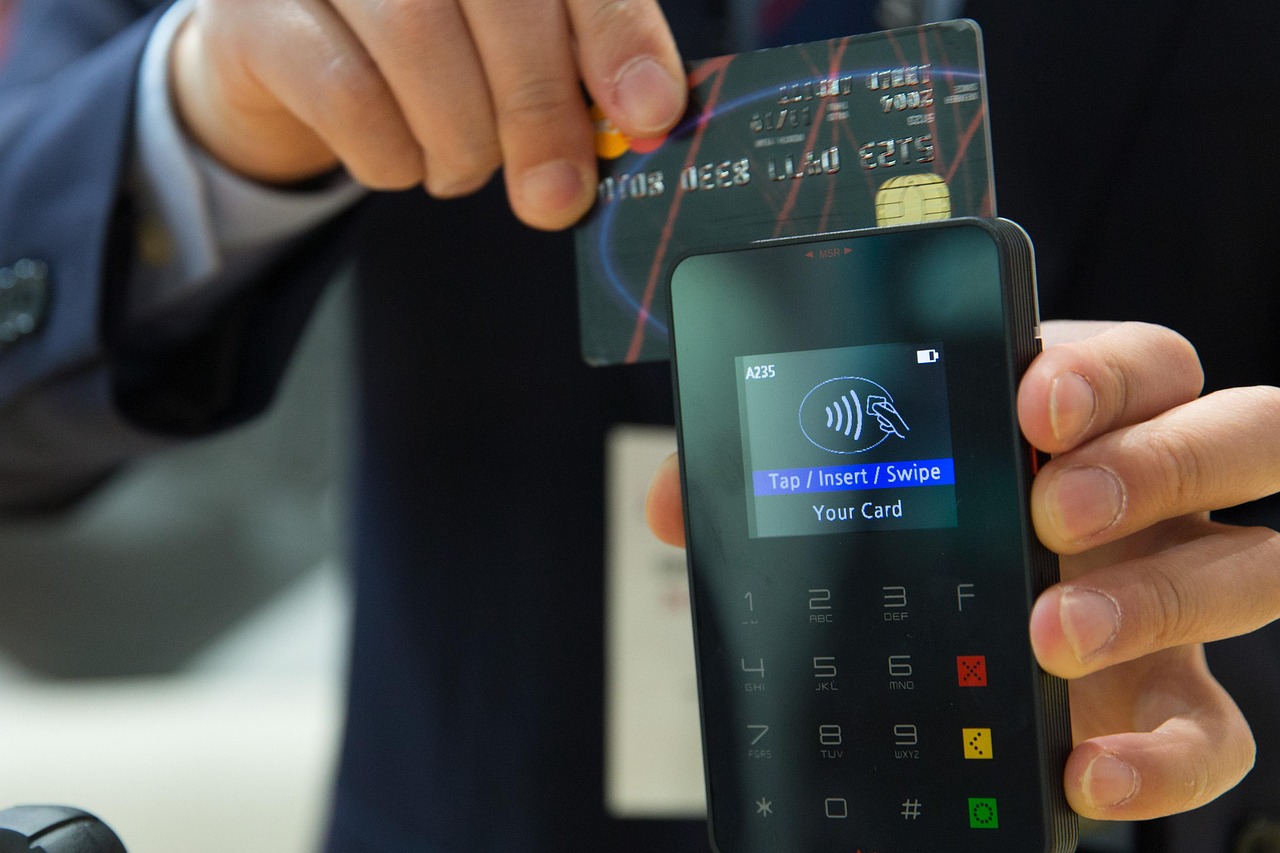
What to Look for in a Contactless-Ready POS Setup
Not all contactless-capable systems are equal. Before committing to any hardware or software, evaluate the following criteria honestly against your own operation:
Payment Technology Standards
- NFC (Near Field Communication): The underlying technology behind tap-to-pay for cards, Apple Pay, Google Pay and Samsung Pay. Any card reader you buy should be NFC-enabled as standard.
- EMV chip compliance: UK card readers must be EMV-compliant to process chip-and-PIN as a fallback. Verify this before purchasing.
- PCI DSS scope: Choose a payment provider that handles PCI DSS compliance on your behalf through a hosted or point-to-point encrypted (P2PE) solution — this dramatically reduces your compliance burden. Verify the provider's certification via the PCI Security Standards Council.
Integration Depth
- Does the card reader communicate directly with the EPOS software, or does it operate in isolation? True integration means a payment initiated at the till screen is sent to the reader automatically — no manual amount entry, no mismatches.
- Look for semi-integrated or fully integrated solutions where transaction results post back into the EPOS in real time, updating sales totals, stock levels and customer spend records instantly.
Hardware Flexibility
- Countertop readers suit fixed checkout points in retail and quick-service environments.
- Portable and mobile readers are essential for table-side payments in hospitality or pop-up retail.
- For businesses operating across multiple locations, consider whether the system supports centralised management from a single back-office portal.
Our roundup of the best wireless card machines for small UK businesses explores portable reader options in more depth.
How Contactless Payments Work Within a Modern EPOS Setup
Understanding the payment flow helps you spot weak points before they become problems. In a properly integrated setup, the sequence looks like this:
- The cashier or server completes a sale on the EPOS touchscreen and selects "Card" as the payment method.
- The sale amount is pushed automatically to the integrated card reader via a direct API or serial connection — no manual keying required.
- The customer taps their card, phone or wearable device. The reader authenticates the transaction using NFC and the payment network (Visa, Mastercard, Amex) authorises it in seconds.
- An authorisation response returns to the EPOS, which marks the transaction as paid, reduces stock accordingly, and logs the sale against the relevant category, staff member and time period.
- A receipt can be printed, emailed or skipped — the customer's choice.
This seamless loop is what distinguishes a true integrated system from a bolted-together workaround. For a broader explanation of how integrated card payments fit into an EPOS ecosystem, see our guide to EPOS systems with integrated card payments.
POS and Contactless Card Reader Setups for Retail
Retail environments typically require speed at fixed tills, accurate stock management and the ability to handle high transaction volumes during peak periods. The priorities for a retail setup are:
- Countertop card readers paired with a touchscreen EPOS terminal and barcode scanner as the core checkout unit.
- Multi-lane capability — can you add a second or third till position without licensing a completely separate system?
- Stock integration — every card payment should trigger an automatic stock deduction so your inventory figures remain accurate in real time.
- Customer-facing display — a second screen showing the itemised basket and payment prompt improves transparency and reduces disputes.
- Loyalty and promotions — look for software that ties contactless payments to a loyalty scheme, enabling points accumulation or discount application at the point of payment.
If you are setting up for the first time or replacing an aging system, our practical buyer's guide to till systems for small businesses provides a structured framework for comparing your options. You can also explore EPOS Direct's retail EPOS offers or book a retail software demo to see the system in action.
POS and Contactless Card Reader Setups for Hospitality
Restaurants, cafés, bars and hotels have distinct needs that a pure retail setup does not address. The contactless payment flow must accommodate split bills, service charges, course-by-course ordering and, increasingly, pay-at-table via a handheld device brought to the guest.
- Portable card readers are non-negotiable for table service — guests expect to pay at the table, not queue at a counter.
- Table management integration — the reader should pull the correct bill for the correct table automatically, eliminating transcription errors.
- Split payment handling — the system should support splitting a bill across multiple contactless transactions in a single workflow.
- Kitchen display integration — while separate from payment, confirm that your EPOS links table orders through to a kitchen display system so the payment process does not become a bottleneck.
- Tips and service charges — UK legislation on tips changed with the Employment (Allocation of Tips) Act 2023, which requires employers to pass all tips to workers fairly. Your EPOS and payment setup should support transparent tip tracking. Verify current obligations via GOV.UK's tipping code of practice.
View EPOS Direct's hospitality and restaurant EPOS offers, or try a restaurant software demo to explore the table-side payment workflow firsthand.
Comparing POS and Contactless Payment Setup Types
| Setup Type | Best For | Contactless Reader | Integration Level | Typical Monthly Cost |
|---|---|---|---|---|
| Basic tablet + standalone reader | Market stalls, pop-ups, sole traders | Bluetooth or USB, standalone | Low — manual reconciliation required | Typically from £20–£40/mo (software only; reader costs extra) |
| Integrated EPOS terminal + countertop reader | Independent retail, small chains | Wired or Bluetooth, semi-integrated | High — automatic payment push and response | Typically £50–£100/mo all-in on a subscription model |
| Full EPOS suite + portable readers | Restaurants, bars, hotels | Wi-Fi / 4G portable, fully integrated | Full — table mapping, split bills, real-time sync | Typically £80–£150/mo depending on terminals and modules |
| Enterprise multi-site EPOS + managed payments | Multi-branch retailers, restaurant groups | Multiple integrated readers per site | Full + centralised reporting across all locations | Varies; typically negotiated per site count |
All figures are indicative market ranges for UK businesses in 2025–2026 and should be treated as guidance only. Request a tailored quote for accurate pricing.
What Does a Contactless POS Setup Cost in the UK?
Cost is one of the first questions any sensible buyer asks, and the honest answer is that it depends on three variables: the hardware configuration, the software subscription or purchase model, and the payment processing rates your acquirer charges.
Hardware
A single all-in-one EPOS terminal (touchscreen, receipt printer, cash drawer) with an integrated countertop card reader typically starts from around £500–£800 purchased outright for entry-level configurations, rising to £1,200–£2,000 or more for premium all-in-one units with larger screens, built-in readers and ruggedised builds. Portable card readers generally start from around £100–£300 each depending on connectivity and feature set.
Software
Subscription-based EPOS software for a single terminal typically runs from around £30–£80 per month for retail-focused platforms, and somewhat higher for full hospitality suites with kitchen display and reservation modules. Our guide on monthly EPOS subscriptions versus outright purchase breaks down which model makes financial sense for different business types.
Payment Processing
Card processing fees in the UK are typically charged as a percentage of transaction value, often in the range of 0.5%–1.75% per transaction depending on card type, volume and the acquirer. Some providers bundle processing into a flat monthly fee above a transaction threshold. Always compare the blended effective rate across your typical card mix, not just the headline rate for one card type.
If keeping monthly fixed costs low is a priority, our guide to card machines with no monthly fee outlines pay-as-you-go alternatives worth considering.
Why Choose EPOS Direct for Your Contactless POS Setup
EPOS Direct supplies and supports EPOS systems for retail, hospitality, pharmacy and specialist sectors across the United Kingdom. The proposition centres on hardware and software that are configured to work together from day one — not a generic tablet app paired with a third-party reader with no guaranteed integration. UK-based support means questions get answered by people who understand the UK payments landscape, VAT requirements and local compliance obligations.
Key reasons UK businesses choose EPOS Direct:
- Genuinely integrated contactless payment solutions — the reader and the software are tested and configured together, not left to the customer to connect.
- Sector-specific software builds for retail, hospitality and pharmacy, each with relevant modules rather than a one-size-fits-all approach.
- Flexible procurement — purchase outright or take a managed subscription; both options are available.
- UK-based expert support and installation guidance included as standard.
Explore the full range of EPOS and POS solutions — including current offers and package information — on the EPOS Direct UK home page. For a complete overview of who EPOS Direct is and what the system covers, the complete guide to EPOS Direct for UK businesses is a good starting point.
Ready to Set Up Contactless Payments at Your Till?
Matching the right card reader to the right EPOS system is a decision that will affect your business daily for years. The table above, the sector notes and the cost guidance in this article should give you a clear framework — but nothing replaces a conversation with someone who knows the systems in detail.
Talk to an EPOS Direct expert online to discuss your specific requirements, or request a free demo and see exactly how contactless payments integrate with the EPOS software before you commit. EPOS Direct's team is ready to help you find the right setup for your business, your sector and your budget.
Frequently asked questions
- Can I use a contactless card reader with my existing till system?
- In many cases, yes — provided your current till software supports payment integrations. Modern EPOS systems from EPOS Direct are designed to pair seamlessly with contactless card readers via USB, Bluetooth, or integrated payment APIs. If your existing hardware is older, upgrading to a fully integrated POS bundle is often more cost-effective and reliable than retrofitting a standalone reader.
- How much should I expect to pay for a POS system with a contactless card reader in the UK?
- Costs vary depending on the scale of your setup. A basic single-terminal POS system with an integrated contactless card reader typically starts from around £300–£500 as a one-off hardware cost, with monthly software licences from approximately £20–£50 per month. Mid-range bundles suited to hospitality or multi-lane retail can range from £600–£1,200+. Transaction fees from your payment processor are separate and usually range from 1.2% to 1.75% per card transaction in the UK. EPOS Direct offers tailored quotes so you only pay for what your business actually needs.
- Does a contactless POS system work with Apple Pay and Google Pay as well as bank cards?
- Yes. Any POS terminal that supports NFC-based contactless payments will also accept Apple Pay, Google Pay, and Samsung Pay, as these use the same underlying technology as contactless bank cards. This is now standard on all EPOS Direct card reader solutions, ensuring your customers can pay however they prefer — card, phone, or smartwatch.
