We use cookies to make your experience better.
To comply with the new e-Privacy directive, you agree to the privacy policy and our use of cookies


Best POS System with Stock Control for UK Businesses in 2026
Best POS System with Stock Control for UK Businesses in 2026
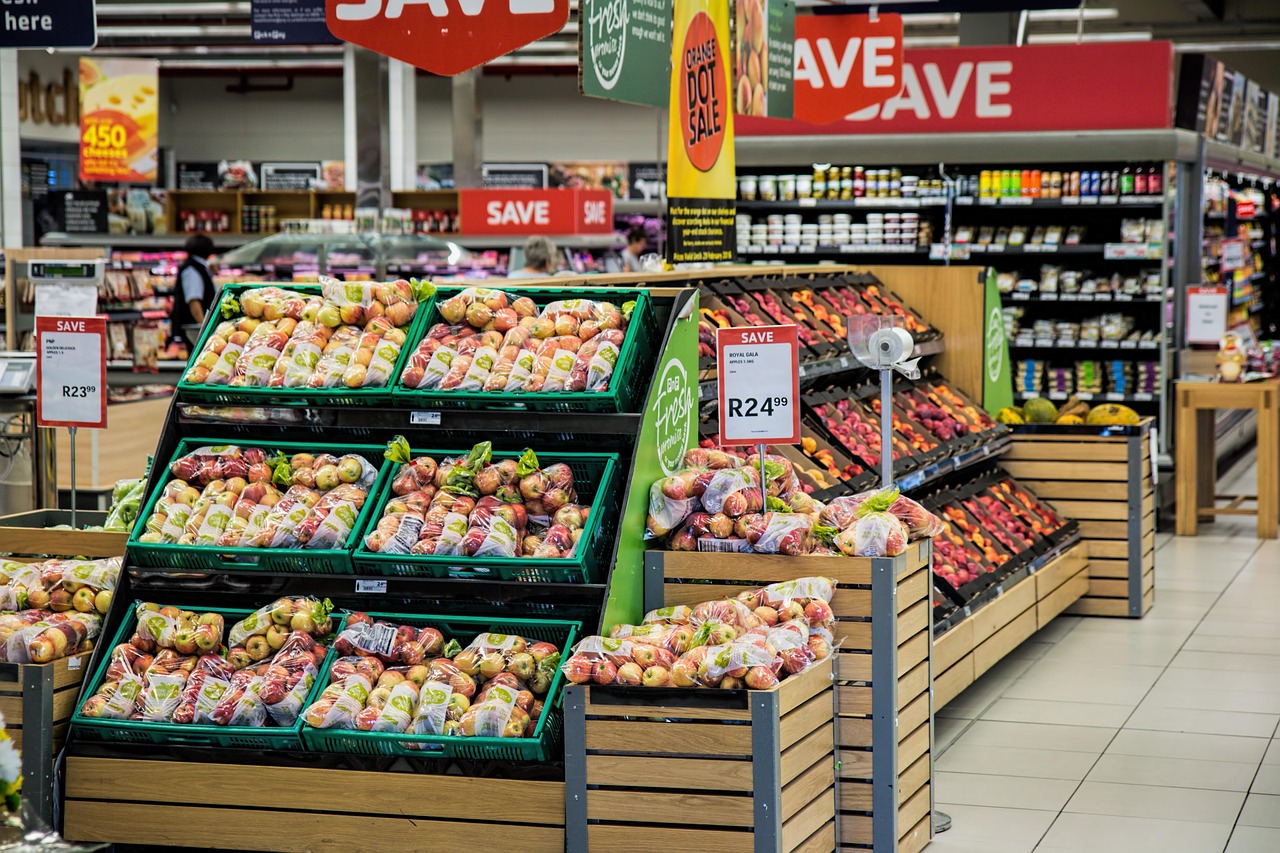
A modern EPOS system with robust stock control is no longer a luxury reserved for large retailers — it is the operational backbone that allows UK businesses of every size to reduce waste, prevent stockouts, and make smarter buying decisions. The right system connects your point of sale directly to your inventory, updating quantities in real time with every transaction so you always know exactly what you have, what is selling, and what needs reordering. Whether you run an independent clothing boutique, a busy café, or a multi-site pharmacy, the guidance below will help you choose the right solution for 2026.
Written by the EPOS Direct UK team, who support retail and hospitality businesses across the United Kingdom with EPOS and POS system installations every day.
What Is a POS System with Stock Control and Why Does It Matter?
A POS system with stock control combines the functions of a traditional till with a live inventory management engine. Every sale, return, waste entry, or goods-received note automatically adjusts your stock levels — removing the need for manual spreadsheets and the costly errors they introduce.
For UK businesses, this matters more than ever. Rising supplier costs, tighter margins, and consumer expectations for consistent availability mean that guesswork about stock levels is a genuine commercial risk. A well-integrated EPOS platform replaces guesswork with data: which SKUs sell fastest on a Saturday afternoon, which lines are sitting idle in the stockroom, and precisely when to reorder before you run out.
Explore the Complete EPOS System Guide for UK Retail and Hospitality Businesses for a broader overview of how these platforms work end to end.
Key Stock Control Features to Look for in a UK POS System
Not all inventory tools are created equal. When evaluating any platform, prioritise the features that directly affect your day-to-day operations.
Real-Time Stock Updates
Stock levels should adjust the moment a sale completes, not overnight or on a scheduled sync. Real-time updates prevent over-selling and give your team accurate information at the point of service.
Low-Stock Alerts and Automatic Reorder Triggers
The system should allow you to set a reorder point per product and alert you — or generate a purchase order automatically — when stock falls below that threshold. This is particularly valuable for fast-moving consumer goods and licensed catering supplies.
Barcode and SKU Management
Comprehensive barcode scanning, support for supplier barcodes, and the ability to create your own SKUs keeps your product database clean and prevents duplicate records. Look for systems that handle variants — size, colour, weight — as a single parent product with child variants.
Supplier and Purchase Order Management
The ability to raise, send, and receive purchase orders within the same software closes the loop between what you order and what arrives, flagging discrepancies before they become accounting problems.
Reporting and Analytics
Stock reports should surface sell-through rates, dead stock, gross profit per SKU, and variance reports after a stocktake. If your system cannot tell you which products are costing you money, it is not doing its job.
Multi-Location Support
If you trade from more than one site — or combine a physical shop with an online store — your EPOS should manage stock centrally, transferring quantities between locations and preventing double-selling across channels.
How Real-Time Inventory Management Saves UK Businesses Money
The financial case for live inventory tracking is straightforward once you see where money leaks without it.
- Reduced shrinkage: Variance reports from regular stocktakes identify theft, spoilage, or administrative error quickly, before losses compound.
- Lower overstock: Data-led buying means you order what is actually selling rather than repeating last season's mistakes. Tied-up capital is freed for better use.
- Fewer lost sales: Automatic reorder alerts mean popular lines are rarely out of stock, protecting revenue and customer loyalty.
- Faster stocktakes: Handheld barcode scanners connected to your EPOS can complete a stocktake in a fraction of the time a paper count would take, reducing staff overtime costs.
- Smarter promotions: Knowing which items are approaching their reorder date lets you run targeted discounts to clear slow movers before they become a write-off.
If your current setup is an older, standalone till, you may find the case for upgrading compelling — read our guide on why it is time to upgrade your old till system to a modern EPOS for a detailed cost-benefit breakdown.
Comparing POS Stock Control Approaches: Which Tier Suits Your Business?
The table below maps common UK business profiles to the stock control capability they realistically need, helping you avoid overpaying for features you will never use — or under-buying and hitting a ceiling within twelve months.
| Business Type | Recommended Tier | Essential Stock Features | Typical Monthly Software Cost (Indicative) |
|---|---|---|---|
| Market stall / sole trader | Entry-level cloud POS | Basic product list, manual stock adjustment, low-stock alerts | From approximately £20–£40/month |
| Independent retail shop (1 site) | Mid-range EPOS | Barcode scanning, variant management, purchase orders, stocktake tools | Typically £50–£100/month |
| Multi-site retailer / franchise | Full EPOS suite | Centralised stock, inter-site transfers, supplier integration, advanced analytics | Typically £100–£200+/month |
| Café / bar / restaurant | Hospitality EPOS with ingredient tracking | Recipe/BOM management, wastage recording, allergen data, real-time depletion | From approximately £60–£120/month |
| Pharmacy / specialist retail | Sector-specific EPOS | Batch/expiry tracking, controlled-drug audit trail, NHS integration readiness | Typically £80–£150+/month |
Figures are indicative market ranges for UK software subscriptions only and exclude hardware, setup, or support packages. Request a tailored quote for your exact requirements.
EPOS Stock Control for UK Retail: What Retailers Need in 2026
Retail stock control in 2026 is inseparable from omnichannel trading. Customers expect to check online whether an item is in stock, click and collect, or return an online purchase in-store — and your inventory must reflect all of these movements without manual intervention.
For clothing and fashion retailers in particular, variant management is critical: a single item in five colours and six sizes is 30 separate stock lines that must be tracked individually but managed as a coherent product family. Our detailed guide to the best EPOS systems for clothing shops in the UK covers exactly how to handle this complexity.
Key retail considerations for 2026 include:
- Integrated e-commerce sync: Platforms that push stock updates to Shopify, WooCommerce, or Amazon in real time prevent the customer complaints and negative reviews that follow an oversell.
- Loyalty and CRM: Knowing which customers buy which product categories allows personalised restock notifications — a powerful tool for independent retailers competing with larger chains.
- GDPR compliance: Any customer data captured at the till — email addresses, purchase history — must be handled in line with UK GDPR. Ensure your EPOS provider confirms data residency and processing agreements. The ICO website (ico.org.uk) is the authoritative UK source for compliance guidance.
Retailers who are also evaluating their payment setup alongside stock control will find our guide to a combined card machine and till system useful for understanding how the two integrate in practice.
Ready to see what a retail EPOS looks like in action? Take a retail EPOS software demo from EPOS Direct and explore the stock management tools firsthand.
POS Stock Control for UK Hospitality: Restaurants, Cafés and Bars
Hospitality inventory is fundamentally different from retail: you are not tracking whole units but ingredients, portions, and recipes. A hospitality EPOS with proper stock control links every menu item to a bill of materials (BOM) — so when a chef fires a dish, the system simultaneously deducts 180 g of chicken breast, 50 ml of cream, and a measured pour of white wine from your live stock.
This level of granularity has three immediate benefits for UK operators:
- Gross profit protection: Portion control becomes measurable. If your theoretical GP on a signature dish is 72% but actual GP is 61%, the variance report tells you exactly where the gap is — over-portioning, theft, or supplier short-delivery.
- Allergen management: From October 2021, Natasha's Law requires full ingredient labelling on pre-packaged food produced and sold on the same premises. A recipe-linked EPOS system helps you maintain accurate allergen records. Verify current requirements with the Food Standards Agency (food.gov.uk).
- Wastage and spillage recording: Staff can log waste at the terminal without stopping service, giving managers an accurate picture of loss before it hits the P&L.
If you operate a café, restaurant, or bar and want to see how a hospitality EPOS handles these scenarios in a live environment, book a restaurant EPOS software demo with EPOS Direct. For a broader view of hospitality offers, see our hospitality and restaurant EPOS offers.
How to Set Up Stock Control on Your EPOS System: Step-by-Step
A clean setup is the foundation of reliable stock data. Cutting corners at this stage compounds into inaccurate reports and frustrated staff.
- Audit your existing product data. Before importing anything, clean your product list. Remove duplicates, standardise naming conventions, and decide on a SKU structure. Garbage in means garbage out.
- Build your product database. Import or manually create products with barcodes, cost prices, selling prices, and tax classifications (standard-rated, zero-rated, or exempt under UK VAT rules — verify with HMRC at gov.uk/vat-rates).
- Set opening stock levels. Conduct a physical count and enter quantities as your opening stock. This is your baseline — every subsequent movement is measured against it.
- Configure reorder points. For each SKU, set a minimum stock level and a reorder quantity based on your supplier lead time and average sales velocity.
- Link suppliers. Create supplier records so you can raise purchase orders directly from the system and mark deliveries as received, updating stock automatically.
- Train your team. Stock control only works when staff process sales, returns, and wastage correctly. A brief training session on how each action affects stock levels is essential.
- Schedule regular stocktakes. Even with real-time tracking, a physical count — monthly for high-value items, quarterly for others — validates your data and catches anomalies early.
For small businesses setting up their first EPOS, our complete EPOS guide for small businesses walks through the full setup journey from hardware selection to go-live.
What Does a POS System with Stock Control Cost in the UK?
One of the most common questions from buyers is how much a full system will realistically cost. The answer depends on three components: hardware, software, and support.
- Hardware: A single-terminal retail setup (touchscreen till, receipt printer, barcode scanner, and cash drawer) typically starts from around £500–£900 as an indicative one-off cost, though this varies widely by specification. Hospitality setups with kitchen display screens and handheld ordering devices naturally cost more.
- Software subscription: As shown in the comparison table above, indicative monthly software fees typically range from £20 for entry-level to £200+ for multi-site or sector-specific platforms.
- Payment processing: Card transaction fees in the UK are typically quoted as a percentage of turnover plus a fixed pence-per-transaction fee. Comparing these carefully matters for high-volume businesses. If you are also exploring standalone payment options, our guide to the best wireless card machines for small businesses covers the key considerations.
- Support and installation: Professional installation, data migration, and ongoing telephone or remote support are often bundled into EPOS Direct packages, which is worth factoring into any like-for-like comparison.
All costs above are indicative market guidance for the UK market and should not be treated as quotes. Request a free demo and tailored quote from EPOS Direct for pricing specific to your business size, sector, and requirements.
Why Choose EPOS Direct for Your POS System with Stock Control?
EPOS Direct is a UK-based EPOS and POS system provider with dedicated teams supporting retail, hospitality, and specialist sectors including pharmacy. Every system is configured, installed, and supported in the UK — meaning you speak to people who understand the specific trading environment, tax rules, and business pressures that UK operators face.
The EPOS Direct platform is built around live stock management as a core feature, not a bolt-on. From the moment a sale completes, your inventory is updated — across all connected terminals, locations, and integrated online channels. The reporting suite is designed to give owners and managers actionable insight, not raw data they have to interpret themselves.
Pharmacy operators have specific needs around batch tracking and regulatory compliance; explore the pharmacy EPOS software demo to see how EPOS Direct handles these requirements. And for a full picture of everything EPOS Direct offers across sectors, visit the complete guide to EPOS Direct and POS systems for UK businesses.
If you are ready to move forward, talk to an expert online or browse the current retail EPOS offers to find a package that suits your business.
The Bottom Line
An EPOS system with integrated stock control is one of the highest-return investments a UK retail or hospitality business can make in 2026. It replaces costly guesswork with live data, tightens margins, and gives you the operational clarity to grow with confidence. The key is choosing a platform that matches your sector, your scale, and the way your team actually works — and setting it up properly from day one.
EPOS Direct has helped hundreds of UK businesses get exactly that right. Visit the EPOS Direct home page for current offers and more information, or request a call back from our team to discuss your requirements — no obligation, just straightforward advice from people who know UK EPOS inside out.
Frequently asked questions
- Can a POS system automatically update stock levels after every sale in the UK?
- Yes. Modern EPOS systems like those from EPOS Direct automatically deduct stock in real time with every transaction, giving you an accurate live inventory count across single or multiple locations without manual counting.
- Does a POS system with stock control work for businesses with multiple UK locations?
- Absolutely. A cloud-based POS system with centralised stock control lets you monitor and manage inventory across all your UK sites from one dashboard, with low-stock alerts and transfer requests between branches.
- How much does a POS system with stock control cost in the UK?
- Costs vary depending on hardware and software requirements, but UK businesses can typically expect to pay from around £300 for a basic setup to over £1,000 for a full EPOS bundle. EPOS Direct offers flexible packages tailored to your business size and budget, with UK-based support included.
