We use cookies to make your experience better.
To comply with the new e-Privacy directive, you agree to the privacy policy and our use of cookies

Best Till Systems for UK Retail & Hospitality: An Honest Comparison Guide
Best Till Systems for UK Retail & Hospitality: An Honest Comparison Guide

Choosing the right till system is one of the most consequential operational decisions a UK retailer or hospitality operator will make — yet most buyers enter the market without a clear framework for comparison. The good news: once you understand the key dimensions to evaluate (hardware quality, software depth, payment integration, support, and total cost of ownership), the right choice becomes considerably clearer. This guide cuts through the noise and gives you the honest, structured comparison you need to make a confident decision.
Written by the EPOS Direct UK team, who work with independent retailers, restaurant groups, off-licences, pharmacies and hospitality operators across the United Kingdom every day.
What to Look for When Comparing Till Systems in the UK
Not all EPOS systems are created equal, and a system that works beautifully for a fast-casual restaurant may be entirely wrong for a busy off-licence or a multi-location clothing retailer. Before you evaluate any specific product or provider, establish your non-negotiables across five dimensions:
- Reliability and offline capability: Can the system continue processing sales if your broadband drops? Look for genuine offline mode, not just a marketing claim.
- Payment integration: Does the till communicate natively with your card reader, or will you reconcile two separate systems? Friction here costs time and causes errors. A combined card machine and till system eliminates double-keying and end-of-day discrepancies.
- Reporting depth: Hourly sales, product-level margins, wastage tracking, staff clock-in reports — does the back office deliver what your accountant and operations manager actually need?
- Scalability: Will the system grow with you from one terminal to five, or from one site to ten, without requiring a costly platform change?
- Support quality: UK-based support with realistic response time commitments matters far more than it sounds when your till goes dark at 6pm on a Saturday.
Once these priorities are ranked for your specific business, comparing providers becomes a structured exercise rather than a bewildering product-feature arms race.
Cloud-Based vs Traditional EPOS: Which Is Right for Your Business?
The single biggest architectural decision in any till system comparison is whether to go cloud-based or on-premise (sometimes called "legacy" or "traditional" EPOS). Each has genuine advantages, and the right answer depends on your operational context.
| Factor | Cloud-Based EPOS | Traditional On-Premise EPOS |
|---|---|---|
| Data access | Real-time, anywhere via browser or app | On-site only, unless custom remote access is configured |
| Software updates | Automatic, included in subscription | Manual, often chargeable |
| Upfront cost | Lower (hardware + monthly fee) | Higher (hardware + licence purchase) |
| Offline resilience | Varies — check vendor's offline mode | Typically strong — runs locally |
| Multi-site management | Excellent — centralised dashboard | Complex — often requires per-site servers |
| Integration ecosystem | Wide — connects to accounting, loyalty, delivery platforms | Narrower — depends on vendor API availability |
| Long-term flexibility | High — switch plans, add modules | Lower — major changes may require re-platform |
For the majority of UK businesses opening or upgrading today, a cloud-based system with a robust offline mode offers the best of both worlds. If you operate in an area with unreliable connectivity — rural hospitality venues, market stalls, pop-ups — confirm the offline transaction capacity in writing before committing. You can explore our guide to monthly EPOS subscriptions vs outright purchase for a detailed breakdown of the financial trade-offs.
Till System Features Compared: Retail vs Hospitality Needs
Retail and hospitality businesses share a common need for speed and accuracy at the point of sale, but diverge sharply in the features that matter most day-to-day.
Retail Priorities
- Barcode scanning with large, fast-updating product libraries
- Stock management and low-stock alerts by variant (size, colour, weight)
- Age verification prompts (critical for off-licences, pharmacies and convenience stores)
- Customer loyalty programmes and purchase history
- Integration with e-commerce platforms (Shopify, WooCommerce, Magento)
- Purchase order management and supplier management
Hospitality Priorities
- Table management and floor plan visualisation
- Course-by-course kitchen printing or KDS (kitchen display system) integration
- Split bills, open tabs and cover management
- Allergen and modifier prompts at item level
- Integration with delivery platforms (Deliveroo, Uber Eats, Just Eat)
- Tronc and gratuity management
A good till system for a small business will cover the essentials well; for operators with more complex requirements, a purpose-built sector solution is almost always worth the additional investment. Our buyer's guide to till systems for small businesses walks through this trade-off in practical detail, with real scenarios.
Hardware Breakdown: Touchscreen Tills, Card Readers and Receipt Printers
Software often wins the headlines, but hardware quality determines the day-to-day experience of your staff and customers. A slow touchscreen or a card reader that drops connection mid-transaction creates immediate, tangible business problems.
Touchscreen Tills
Look for a screen of at least 15 inches for counter use — smaller screens slow down staff in busy periods. Industrial-grade screens with sealed bezels resist the spills and grime of a working environment far better than consumer-grade tablets. Android-based and Windows-based tills each have their merits; Android tends to offer a lower total cost and easier peripheral compatibility, while Windows remains the preference of operators running complex integrations with legacy software.
Card Readers and Payment Integration
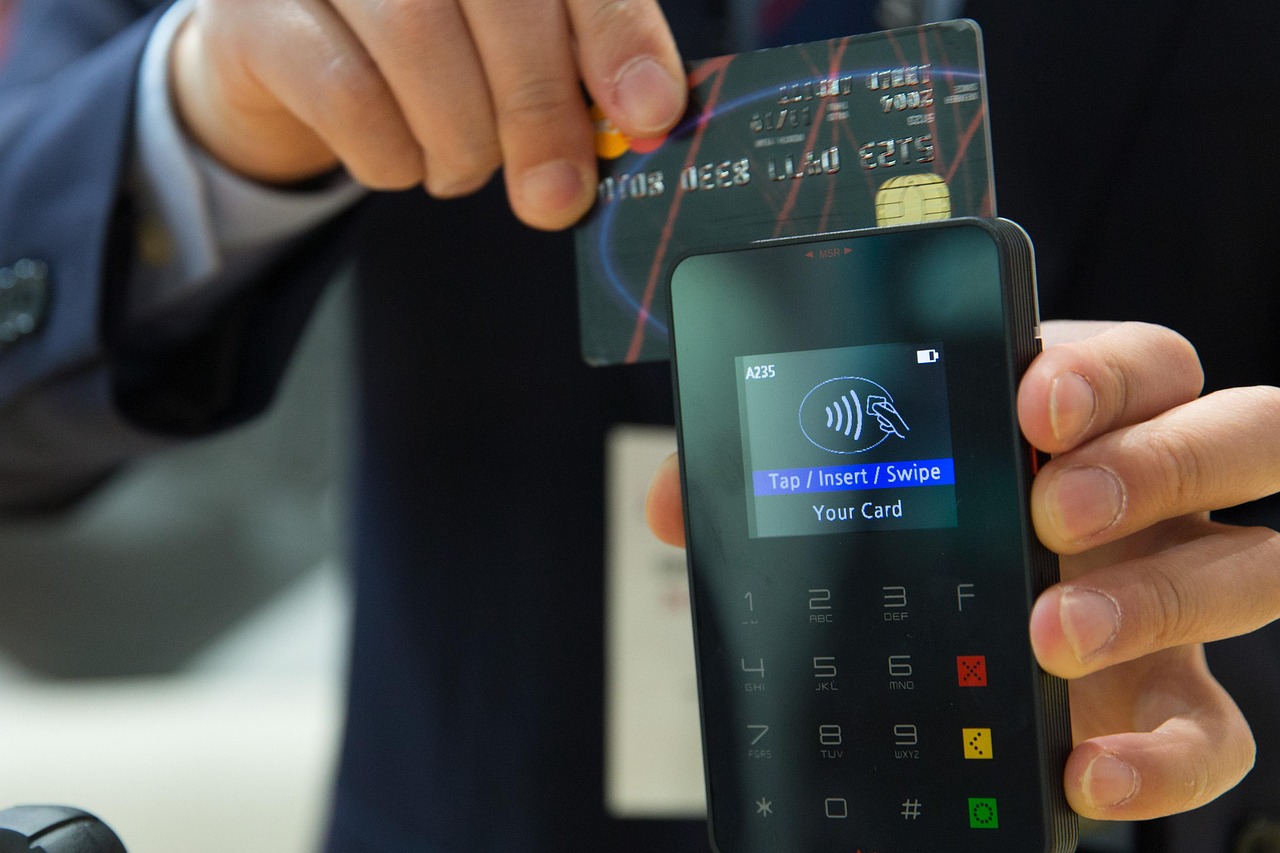
The UK payments landscape has moved decisively toward integrated card acceptance. Separate card terminals that require manual entry of the transaction amount are a source of human error and slow service. Fully integrated payment means the amount passes automatically from the EPOS to the card reader, and the result posts directly to your sales ledger. For businesses evaluating their card acceptance options in detail, our guide to EPOS systems with integrated card payments covers the major approaches and what to look for in a processing agreement.
Receipt Printers, Cash Drawers and Peripherals
Thermal receipt printers are the UK standard — they're fast, quiet and require no ink. Ensure any printer you consider is confirmed compatible with your software vendor's drivers before purchase; peripheral compatibility issues are among the most common and frustrating post-installation headaches. If your business model suits a paperless approach, check whether your EPOS supports digital receipts via SMS or email as a native feature.
Till System Pricing in the UK: What Should You Expect to Pay?
Pricing transparency is genuinely poor across the UK EPOS market, so here is an honest indicative guide based on what businesses typically encounter. These are not exact quotes — your actual costs will depend on hardware specification, software tier, number of terminals and payment processing arrangements.
| Setup Type | Typical Upfront Hardware Cost | Typical Monthly Software Fee | Best Suited To |
|---|---|---|---|
| Single terminal, entry-level cloud | From approximately £300–£600 | From approximately £20–£50/month | Market stalls, pop-ups, sole traders |
| Single terminal, full-featured | From approximately £600–£1,200 | From approximately £40–£80/month | Independent retail, cafés, small restaurants |
| Multi-terminal, mid-market | From approximately £1,500–£4,000 | From approximately £80–£200/month | Multiple stations, table service, multi-department retail |
| Enterprise / multi-site | Quoted on requirement | From approximately £200+/month | Groups, franchises, large-format retail |
Payment processing fees are charged separately by your acquiring bank or payment facilitator and are not included in these ranges. Always ask any EPOS provider to separate software, hardware, support and payment costs clearly in their proposal — bundled pricing makes genuine comparison difficult. If upfront capital expenditure is a concern, explore whether your provider offers a monthly subscription model that spreads the cost.
How EPOS Direct Stacks Up: What Sets Our Systems Apart
EPOS Direct is a UK-based EPOS provider with dedicated solutions for retail, hospitality, pharmacy and specialist sectors including off-licences and convenience stores. Rather than listing generic feature bullets, here is an honest summary of where our approach differs from the broader market:
- Sector-specific software: Our retail and hospitality platforms are purpose-built — not generic POS software with a sector label applied. Operators from independent fashion boutiques to busy pub kitchens use tools built around their actual workflow.
- Owned hardware ecosystem: We supply, configure and support our own hardware, which means compatibility issues between peripherals are our problem to solve, not yours.
- UK-based support: Support is provided in-country, with real escalation paths — not an offshore ticketing system.
- Integrated payments: We offer fully integrated card processing, so your payment data and sales data are unified from day one. This is particularly valuable for businesses that have struggled with end-of-day reconciliation on separate systems.
- Transparent offers: Our EPOS Direct UK home page lists current offers across product ranges, so you can see what's available without a sales call.
We're not the right fit for every business — no provider is. If you operate with unusually complex integrations or need deep customisation of the underlying database, a bespoke enterprise solution may be more appropriate. For the vast majority of UK independent and growing businesses, however, a well-configured purpose-built system from a UK-based provider will outperform a generic global platform on both functionality and support quality.
You can explore our EPOS software in detail online, or book a hands-on retail EPOS software demo or restaurant EPOS software demo to see exactly how each platform handles your specific use case.
Common Questions Buyers Ask Before Committing
Do I need a separate card machine, or can everything be integrated?
Most modern UK EPOS systems support integrated card acceptance, which is strongly preferable to a standalone terminal. The practical benefits — no double-keying, automatic reconciliation, faster service — make integration worth paying for. If budget is tight initially, our guide to wireless card machines for small businesses covers the standalone options honestly, including where they make sense and where they fall short.
What happens to my data if I switch providers?
Data portability is a legitimate concern and one that is underweighted by most buyers at the decision stage. Before signing with any provider, confirm in writing: what format your product, customer and sales data will be exported in; whether historical data can be imported into a future system; and what the notice period and data-deletion policy looks like on contract exit. Reputable providers will answer these questions clearly.
Is my business too small to benefit from a full EPOS system?
Rarely. Even single-operator businesses gain material advantages from proper stock tracking, integrated card payments and digital reporting over a basic cash register. The entry-level cost of a solid cloud EPOS setup in the UK is now low enough that the ROI case is straightforward for almost any trading business with more than a handful of products or covers. Our dedicated complete buyer's guide for small business till systems addresses this directly with practical benchmarks.
How to Switch to a New Till System Without Disrupting Your Business
Switching EPOS systems mid-operation feels daunting, but the risk is manageable with the right preparation. The businesses that struggle are almost always those who underestimate the data migration and staff training phases.
- Audit your current system: Export all product, pricing, supplier and customer data before you begin. Establish which data you actually need to migrate versus what can be archived.
- Run parallel systems briefly: Where possible, run old and new systems in parallel for a short period (even one or two trading days) to catch configuration errors before they affect live transactions.
- Train staff before go-live, not during: Dedicate proper time to training on the new interface. Staff anxiety about a new system is the biggest cause of post-switch service disruption — not technical failure.
- Choose a low-traffic period for cutover: Monday morning or mid-week is almost always preferable to a Friday-evening or weekend switch.
- Confirm support availability during switchover: Your provider should offer hands-on support during go-live, not just an FAQ document. Ask this question explicitly before you sign.
If you operate in a specialist sector such as off-licence retail, where compliance features (age verification, unit tracking) are business-critical, the migration plan needs additional care. Our guide to till systems for off-licences covers sector-specific switching considerations in detail.
Making Your Decision: A Clear, Honest Summary
The best till system for a UK business is the one that matches your sector's specific workflow, integrates cleanly with your payment processing, and is backed by support you can actually reach when something goes wrong. Cloud-based systems with offline resilience represent the current best practice for most businesses; integrated card acceptance is now a practical expectation rather than a premium add-on; and total cost of ownership — software, hardware, support and processing combined — is the correct metric for comparison, not headline software pricing alone.
EPOS Direct UK supplies purpose-built EPOS systems to retailers, restaurants, off-licences, pharmacies and hospitality businesses across the United Kingdom. If you're ready to see what the right system looks like for your specific operation, request a free demo or talk to one of our EPOS experts online — no obligation, no sales script, just a straightforward conversation about what your business actually needs.
Frequently asked questions
- How much does a till system cost for a small UK business?
- For a small UK retail or hospitality business, a basic EPOS till system typically costs between £300 and £800 for hardware (touchscreen terminal, receipt printer and card reader), plus software licensing that ranges from around £20 to £80 per month depending on features. All-in-one bundle deals from providers like EPOS Direct can reduce upfront costs significantly, and some offer finance or rental options to spread payments. Always check whether installation, training and ongoing support are included in the quoted price.
- What is the difference between a standard cash register and a modern EPOS till system?
- A traditional cash register simply records sales and holds cash, whereas a modern EPOS (Electronic Point of Sale) till system integrates sales, stock management, staff tracking, customer loyalty and reporting into one platform. EPOS systems can connect to payment terminals, online ordering and accounting software like Xero or Sage, giving business owners real-time visibility across every part of their operation — something a basic cash register cannot provide.
- Can I switch my existing till system to EPOS Direct without losing my sales data?
- Yes, in most cases your historical sales data, product catalogue and customer records can be migrated to a new EPOS system. EPOS Direct's UK-based support team typically guides businesses through a structured migration process, including importing existing stock lists and configuring the system before go-live. It is advisable to plan a switchover during a quieter trading period and to run a brief parallel testing phase to ensure everything is working correctly before you go fully live.
