We use cookies to make your experience better.
To comply with the new e-Privacy directive, you agree to the privacy policy and our use of cookies


Essential Till System Features Every UK Retailer and Hospitality Business Needs
Till System Features: What to Look for When Choosing an EPOS for Your UK Business

Choosing the right electronic point-of-sale system is one of the most consequential technology decisions a UK business owner will make. The features built into your till directly shape how quickly you can serve customers, how accurately you track stock, and how confidently you can make decisions based on real trading data. This guide walks through every capability worth evaluating — from the essentials that every retailer or hospitality operator needs, through to the advanced functions that separate a genuinely powerful EPOS from a glorified cash drawer.
Written by the EPOS Direct UK team, who work with independent retailers, hospitality venues, pharmacies and multi-site operators across the United Kingdom every day.
Core Capabilities Every Modern Till Should Offer
Before evaluating any advanced features, confirm that the fundamentals are solid. A well-designed till interface should allow staff to ring up sales, apply discounts, process refunds and print or email receipts without needing a manual in hand. These baseline capabilities matter more than any headline specification.
- Fast product look-up — barcode scanning, PLU codes and keyword search should all return results instantly, even with a catalogue of thousands of SKUs.
- Flexible pricing — the ability to set sale prices, time-limited promotions, bundle deals and customer-group discounts at product level, not just as manual overrides at the till.
- VAT handling — the system must correctly apply and separately display standard, reduced and zero-rate VAT in line with HMRC requirements. Verify that the system you shortlist produces Making Tax Digital-compatible records; HMRC's MTD guidance is published at gov.uk.
- Receipt customisation — branded receipts with your logo, returns policy and contact details build customer trust and reduce charge-back disputes.
- Offline mode — internet outages happen. A robust EPOS should continue processing sales locally and sync data automatically when connectivity is restored.
If you are transitioning from an older cash register, our guide on how to switch from a cash register to a modern EPOS system explains exactly what to expect and how to migrate your product data cleanly.
Advanced Stock and Inventory Management
For most retailers, inventory control is where a good EPOS earns its keep. Every sale should automatically decrement stock, and the system should alert you before you run out — not after a customer has already been disappointed.
Key inventory features to evaluate
- Variant tracking — clothing, footwear and gifting businesses need stock tracked by size, colour and other attributes, not just at master-product level.
- Low-stock alerts and reorder triggers — configurable thresholds that fire email or dashboard notifications when a SKU falls below your minimum holding.
- Supplier purchase orders — raising, sending and receiving purchase orders directly within the EPOS eliminates the spreadsheet step that causes data drift.
- Stock-take tools — mobile stocktake via a tablet or handheld scanner, with variance reports that highlight discrepancies against expected levels.
- Waste and write-off recording — essential for F&B operators managing perishable ingredients or businesses with high-theft categories.
For hospitality specifically, ingredient-level recipe management — where a burger sale automatically reduces your bun, patty and sauce holdings — is the feature that makes GP calculation genuinely reliable rather than guesswork.
Integrated Payment Processing and Card Machine Support
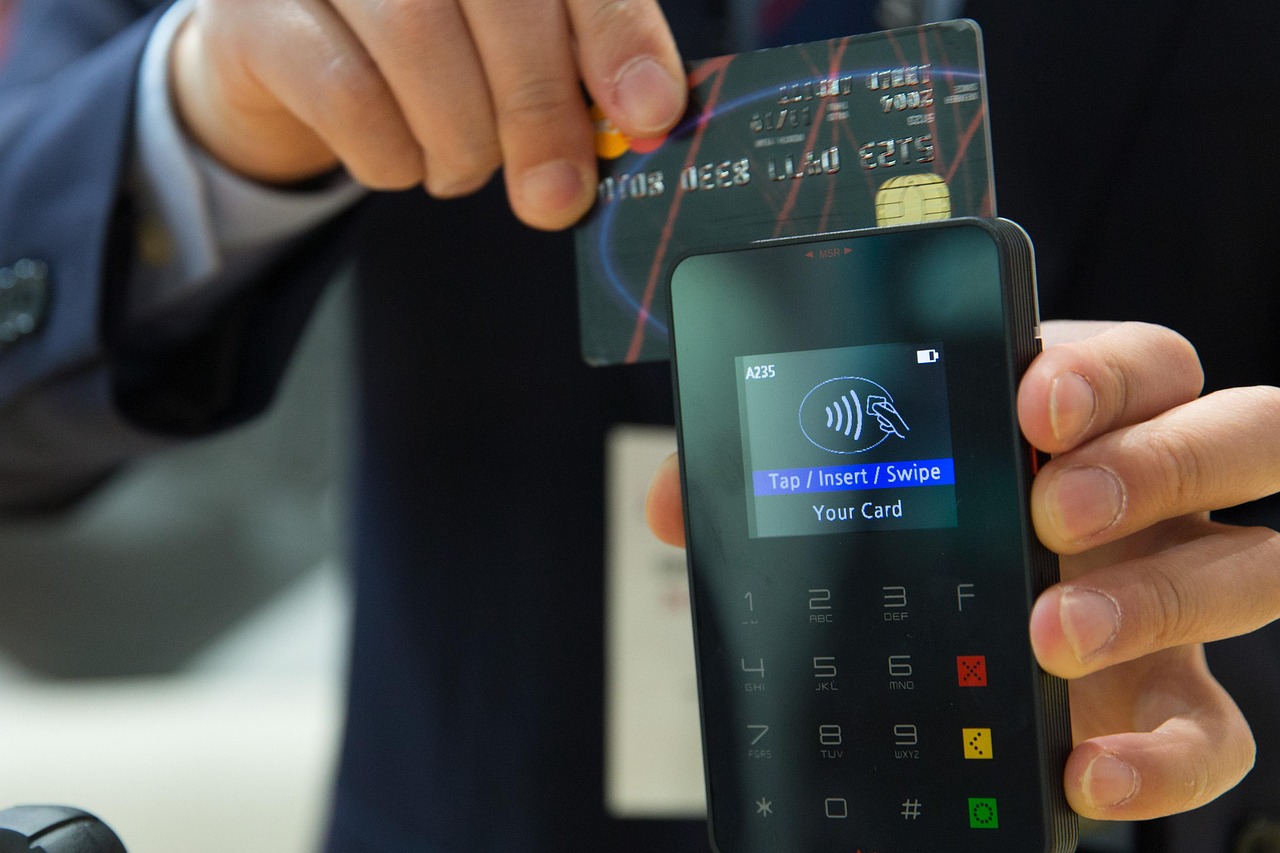
Payment integration is no longer optional. When your card machine and till operate as one system, the payment amount flows directly from the EPOS to the terminal, eliminating keying errors, speeding up transactions and giving you a single reconciled record of every sale.
Our detailed overview of combining a card machine with a till system covers the technical and commercial considerations in full, but the core questions to ask any supplier are:
- Is the card terminal directly integrated, or does the cashier still key the amount manually?
- Which payment schemes are supported — Visa, Mastercard, Amex, contactless, Apple Pay, Google Pay?
- What are the transaction processing fees, and are they fixed or interchange-plus?
- How are split payments and mixed tenders (cash plus card) handled?
If your business model requires staff to take payments away from the counter — at tables, kerbside, or during events — explore our guide to the best wireless card machines for small businesses for a practical breakdown of portable options. For a broader view of systems where payments and EPOS are fully unified, our guide to EPOS systems with integrated card payments compares the leading approaches.
Reporting, Analytics and End-of-Day Summaries
The reporting suite is where an EPOS shifts from being a till to being a management tool. At minimum, your system should produce a clear Z-read (end-of-day sales summary) that your accountant or bookkeeper can reconcile against your bank statement without manual intervention.
Reports every owner should be able to run
- Sales by product, category and department — understand which lines drive revenue and which are deadweight on your shelf space.
- Hourly and weekly trading patterns — the data you need to roster staff intelligently and plan promotions around genuine footfall peaks.
- Gross profit by item — essential if you have a mixed-margin range and want to grow the profitable end of your catalogue.
- Void and refund reports — a high void rate on a particular operator's login is an early indicator of error or, occasionally, something more serious.
- Accounting exports — direct integration with Xero, Sage or QuickBooks, or at least a clean CSV export, so your end-of-day figures flow into your accounts without re-keying.
Cloud-based dashboards mean you can review your trading performance from anywhere — a feature that becomes particularly valuable the moment you open a second site.
Staff Management, Permissions and Clock-In Functions
A well-configured EPOS is also a workforce management tool. Role-based permissions ensure that junior staff can process standard sales but cannot apply unauthorised discounts, override prices or access sensitive reports. Most operators find a three-tier structure — cashier, supervisor and manager — covers the majority of scenarios.
- PIN or card login — each transaction is attributed to a named operator, creating an audit trail that discourages error and dishonesty alike.
- Clock-in and clock-out — integrated timesheets mean the data is already in your system when you run payroll, with no need for a separate time-and-attendance solution.
- Shift reports — a per-shift cash declaration and reconciliation workflow keeps your end-of-day process tidy and flags discrepancies before they accumulate.
- Manager override with audit log — when a manager approves an exceptional transaction, the EPOS should record who authorised it and when.
Cloud Access, Remote Management and Multi-Site Support
Cloud connectivity has fundamentally changed what a business owner can expect from their EPOS. You no longer need to be physically at the till to understand how trading is going, update prices or add a new product to the catalogue.
What genuine cloud capability looks like
- Real-time back-office access — view live sales, stock levels and staff activity from any browser or dedicated app.
- Centralised product management — push a price change or a new promotional line to every terminal across every site simultaneously, rather than updating each till individually.
- Multi-site consolidated reporting — compare performance between locations, identify your best-performing site and understand which products travel consistently across the estate.
- Remote software updates — your supplier pushes updates to all terminals overnight, so you are always running the current version without scheduling downtime.
For businesses operating across multiple premises, the difference between a single-site system stretched beyond its design and a purpose-built multi-site EPOS is significant. Explore EPOS Direct UK's full range of offers and information to find the solution tier that matches your estate size.
Indicative Costs: What a UK EPOS Setup Typically Involves
Cost is always a key question for buyers, and the honest answer is that pricing varies considerably depending on hardware configuration, software tier and whether you choose an outright purchase or a subscription model. The following ranges are indicative of the UK market and should be treated as planning guidance rather than formal quotes.
| Setup Type | Typical Hardware Cost | Typical Software / Subscription | Best Suited To |
|---|---|---|---|
| Entry-level single terminal | Typically from £300–£600 (outright) | From around £20–£40 per month | Market stalls, pop-ups, sole traders |
| Mid-range retail or café setup | Typically £700–£1,500 (outright) | From around £40–£80 per month | Independent shops, coffee shops, small restaurants |
| Full hospitality system (with KDS, handheld ordering) | Typically £1,500–£4,000+ | From around £80–£150 per month | Full-service restaurants, bars, multi-station venues |
| Multi-site retail estate | Per-site hardware as above | Often negotiated per site; ask for a consolidated quote | Mini-chains, franchise operators, national retailers |
All figures above are approximate and exclusive of integrated payment processing fees, which are typically charged per transaction and vary by payment provider. Our in-depth comparison of monthly EPOS subscriptions versus outright purchase helps you model which approach delivers better value over a three-year horizon for your specific trading volume.
Choosing the Right Feature Set for Your Industry
Not every feature in a comprehensive EPOS is relevant to every business. Prioritising the right capability set for your sector prevents you from paying for complexity you will never use — or, equally, from buying an underpowered system that you will outgrow within a year.
Retail
Prioritise: variant stock management, barcode scanning speed, supplier purchase orders, loyalty programme integration and robust multi-tender payment handling. If you sell online as well as in-store, look for a system with a direct ecommerce channel integration so inventory stays synchronised across both.
Restaurants and hospitality
Prioritise: table plan management, course-by-course ordering, kitchen display or printer routing, recipe/ingredient-level stock, allergen flagging and covers reporting. The ability to split bills accurately and handle multiple service areas — bar, restaurant floor and terrace — from a single back office is a significant operational advantage. View our hospitality and restaurant EPOS offers to see system configurations designed specifically for F&B operators.
Pharmacy and healthcare retail
Prioritise: PMR integration capability, age-restricted product controls, prescription handling workflows and detailed audit logging. Our pharmacy EPOS software demo walks through how these specialist requirements are handled in practice.
Small and independent businesses
If you are running a single site with a small team, simplicity and reliability matter more than feature depth. Our practical resource on the best till systems for small businesses in the UK ranks options by ease of use, total cost and scalability.
Questions Buyers Ask Before Committing
Can the system grow with my business?
The best EPOS platforms are modular. You should be able to start with a single till and standard retail software, then add a second terminal, a loyalty module or multi-site management as your business expands — without migrating to an entirely new platform. Ask any supplier to demonstrate what an upgrade path looks like in practice, and verify that your data migrates cleanly between tiers.
What happens if the system goes down during a busy period?
This is one of the most important operational questions and one that suppliers do not always volunteer an answer to. Confirm explicitly whether the system has a genuine offline mode — one that processes sales and stores data locally, not one that simply displays an error screen. Ask how long it takes for data to sync once connectivity is restored, and whether any transaction records can be lost in the process.
How does the system compare to alternatives on the market?
If you are at the shortlisting stage and want a direct comparison, our guide comparing EPOS Direct against competitor till systems provides an honest, feature-by-feature breakdown to help you make a confident final decision.
The Direct Answer: What Makes a Good EPOS System?
A genuinely capable EPOS combines fast, intuitive transaction processing with accurate real-time inventory control, integrated card payment handling, meaningful management reporting and robust staff permission controls — all accessible remotely via a cloud back office. The right system for your business is the one that matches your industry's workflow without unnecessary complexity, scales as your operation grows, and is supported by a supplier who understands the UK trading environment.
Ready to Find the Right System for Your Business?
EPOS Direct UK has been helping independent businesses and growing retailers across the United Kingdom find, configure and get the most from their point-of-sale systems. Whether you want to explore the options at your own pace or speak to someone who knows the technology inside out, we make it straightforward.
- Request a free demo and see the software running live before you commit.
- Talk to an expert online for personalised advice on the feature set that suits your industry and budget.
- Browse our retail EPOS offers or explore the retail EPOS software demo to see stock management, reporting and payment integration working together in a real retail environment.
The right EPOS is an investment that pays for itself in stock accuracy, staff efficiency and the confidence that comes from genuinely understanding your business. EPOS Direct UK is here to help you choose it correctly the first time.
Frequently asked questions
- What is the difference between a basic till and a full EPOS system?
- A basic cash register records sales and opens a cash drawer, but offers little else. A full EPOS (Electronic Point of Sale) system combines touchscreen hardware with software that manages stock levels, processes card payments, generates sales reports, tracks staff hours, and can sync across multiple locations. For most UK retail and hospitality businesses, the added functionality of an EPOS pays for itself quickly through time saved and errors reduced.
- How much does a till system with advanced features typically cost in the UK?
- In the UK, entry-level EPOS bundles start from around £300 to £500 for basic hardware and software. A mid-range system with integrated card payments, stock management, and reporting typically costs between £600 and £1,500 upfront, or from approximately £20 to £60 per month on a subscription plan. Full multi-site or hospitality setups with kitchen display screens and advanced analytics can range from £1,500 to £3,000+. Many suppliers including EPOS Direct offer tailored quotes based on your specific requirements.
- Do modern till systems work without an internet connection?
- Yes. Most quality EPOS systems, including those from EPOS Direct, offer offline mode so you can continue processing sales if your internet connection drops. Data syncs automatically when connectivity is restored. This is particularly important for UK hospitality venues, markets, and pop-up retail where connectivity can be unreliable.
