We use cookies to make your experience better.
To comply with the new e-Privacy directive, you agree to the privacy policy and our use of cookies

Best Card Payment Machine Providers for UK Retail & Hospitality Businesses
Best Card Payment Machine Providers for UK Retail & Hospitality Businesses

Choosing the right card payment provider is one of the most commercially significant decisions a UK retailer or hospitality operator makes — it directly shapes your costs, customer experience and day-to-day operational efficiency. The strongest providers combine competitive transaction rates with reliable hardware, seamless EPOS integration and transparent contract terms. This guide examines what separates the best options from the merely adequate, and explains how to match a payment solution to your specific business type.
What to Look for in a Card Payment Machine Provider
Before comparing providers, it is worth establishing a clear set of criteria. The market is crowded and headline transaction rates rarely tell the whole story.
Transaction fees and pricing structure
UK providers typically operate on one of two models: interchange-plus (where you pay the card network's base rate plus a fixed margin) or blended rates (a single percentage applied to all transactions regardless of card type). Blended pricing is simpler to forecast; interchange-plus can be cheaper for businesses with a high volume of domestic debit transactions. Neither model is universally superior — it depends on your average basket size and card mix.
Hardware quality and reliability
A terminal that drops connections during a Saturday lunchtime rush is a business liability, not merely an inconvenience. Look for machines with strong Wi-Fi and 4G fallback, a battery life suited to your trading hours, and a proven record in your sector. Our detailed companion guide on choosing the best wireless card machine for small businesses covers the hardware specifications worth prioritising.
EPOS integration capability
Standalone terminals that require manual reconciliation at end of day are a time drain and an error risk. Providers with native APIs or certified integrations with EPOS platforms eliminate double-keying, speed up table turns in hospitality and give you a single source of truth for sales data.
Contract flexibility
Rolling monthly agreements offer freedom; multi-year contracts often come with lower rates but carry early-termination penalties that can be significant. Always read the buyout clause before signing.
Customer support
Payment downtime is revenue lost immediately. Prioritise providers offering 24/7 technical support with a clear service-level commitment — not just an email helpdesk.
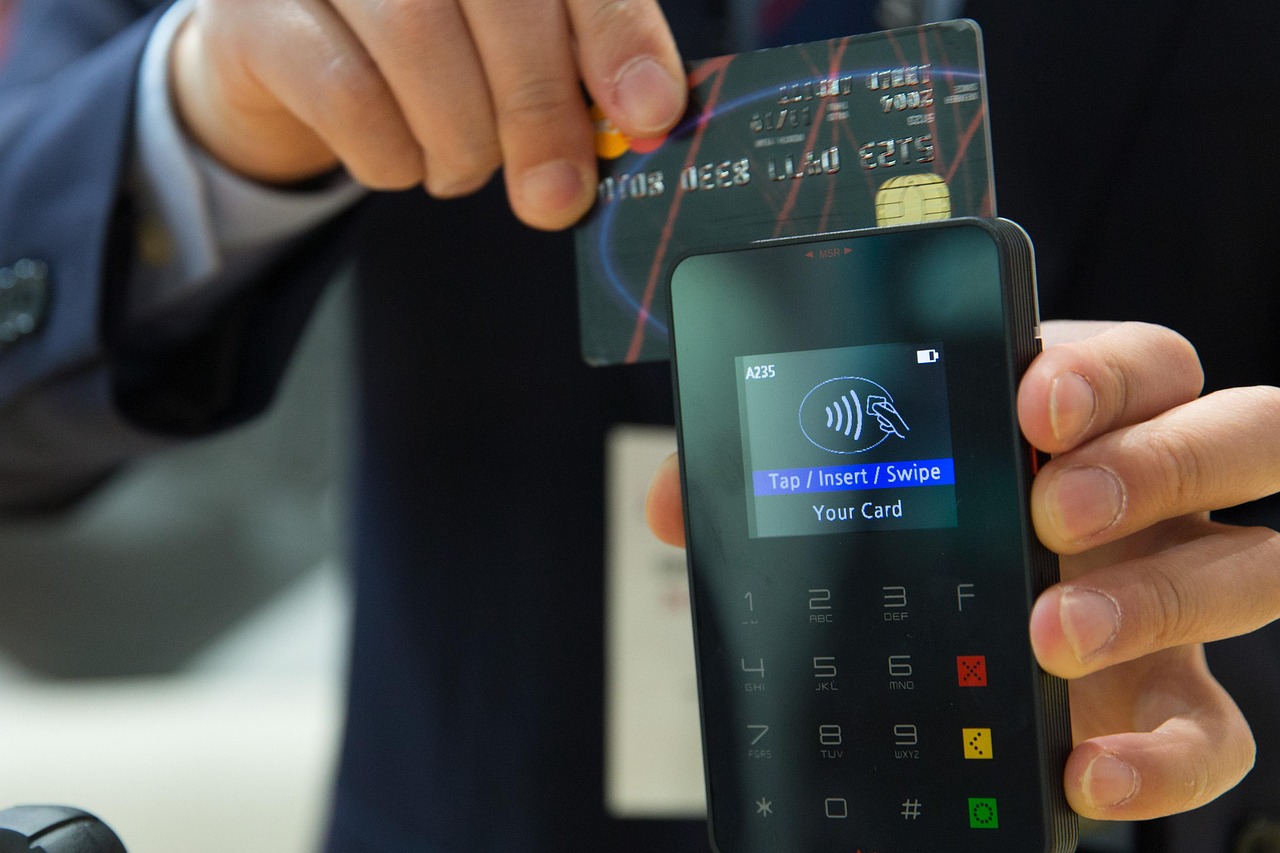
The Leading Card Payment Machine Providers in the UK Compared
The UK market broadly divides into three categories of provider: acquirer-direct banks and financial institutions, independent specialist providers, and integrated payment partners that bundle processing with EPOS hardware. Each has distinct strengths.
| Provider Type | Best Suited To | Typical Pricing Model | EPOS Integration | Contract Flexibility |
|---|---|---|---|---|
| High-street bank acquirers | Established businesses with existing banking relationships | Blended or interchange-plus; rental fees apply | Variable — often requires middleware | Typically 12–36 month contracts |
| Fintech / independent ISOs (e.g. Square, SumUp, Zettle) | Sole traders, market stalls, low-volume pop-ups | Flat-rate blended (typically 1.5–2.5% per transaction) | Basic — limited third-party integrations | Month-to-month; no long-term lock-in |
| Integrated EPOS payment partners | Retail stores, restaurants, multi-site operations | Interchange-plus or negotiated blended; hardware included in bundle | Native, real-time — single dashboard | Flexible — monthly or owned outright |
| Payment facilitators (PayFac model) | Businesses needing rapid onboarding | Flat-rate blended; no monthly minimum | API-based; varies by platform | Month-to-month but funds-holding risk |
For most established retail and hospitality businesses, integrated EPOS payment partnerships deliver the strongest overall value — not necessarily the lowest headline rate, but the lowest total cost of ownership once reconciliation time, error correction and operational friction are accounted for.
How Card Payment Machines Integrate with Your EPOS System
Integration quality is the factor buyers most commonly underestimate at the point of purchase and most frequently regret afterwards. A fully integrated setup means the EPOS terminal communicates directly with the card machine: the sale amount is pushed automatically, the card machine returns an approved or declined status, and the transaction is recorded in your back-office reports without any manual intervention.
Poorly integrated — or entirely unconnected — systems create a cascade of operational problems: manual entry errors, longer queue times, mismatched end-of-day figures and a reduced ability to track sales by payment method. For a hospitality business running split bills and gratuities, this becomes particularly painful.
Our full guide to combining a card machine and till system explains the technical integration models in detail, including semi-integrated and cloud-based approaches. For a broader view of integrated solutions, the best EPOS systems with integrated card payments guide compares the leading platforms available in the UK.
If you are ready to see integrated payments in action, you can view the EPOS Direct retail software demo or the restaurant EPOS software demo to understand exactly how transactions flow in a live environment.
Transaction Fees, Contract Terms and Hidden Costs to Watch Out For
The advertised transaction rate is only one component of what you will actually pay. Experienced buyers look beyond the headline figure.
Indicative cost ranges for UK businesses
As a broad market guide (not quotes — always obtain a personalised illustration from any provider before committing):
- Flat-rate fintech providers: typically 1.5% to 2.5% per transaction with no monthly fee; no terminal rental cost if using their own dongle-style hardware
- Bank acquirers and mid-market ISOs: blended rates typically between 0.5% and 1.75% depending on volume, plus a terminal rental fee that commonly ranges from around £15 to £35 per terminal per month
- Integrated EPOS bundles: hardware and payment processing bundled together; monthly costs typically from £30 to £80+ per terminal depending on hardware tier, with negotiated transaction rates based on monthly volume
- PCI DSS compliance fees: some acquirers charge an annual or monthly fee (often £2–£5 per month) for PCI compliance management — confirm whether this is included
Hidden charges to scrutinise
- Minimum monthly service charges — you may owe a floor amount even in a slow trading period
- Chargeback handling fees — typically charged per disputed transaction
- Early termination fees — can run into hundreds of pounds on multi-year acquirer contracts
- Card scheme fees for premium, corporate or non-UK issued cards — these are higher and passed through even on blended-rate agreements in some cases
- Next-day settlement fees — some providers charge extra for faster fund access
Understanding the difference between outright purchase and subscription-based arrangements is equally important for your total spend. The guide on monthly EPOS subscription versus outright purchase provides a structured framework for making that calculation accurately.
Which Card Payment Solution Suits Your Business Type?
There is no single best provider — the right choice depends on your trading environment, transaction volume and growth ambitions.
Independent retail
A standalone shop benefits most from a provider with strong EPOS integration, solid inventory management and the ability to accept all major card schemes (Visa, Mastercard, Amex if relevant to your customer base). Reliability during peak hours — Saturday trading, seasonal rushes — should rank above marginal rate differences. The practical buyer's guide to till systems for small businesses is a useful starting point for understanding the full stack you need.
Restaurants, cafés and pubs
Hospitality operations have specific requirements: table-side payment, gratuity prompts, split billing and integration with kitchen display systems. A provider whose terminal cannot handle tip prompts correctly, or whose integration breaks when a bill is split across two cards, introduces real service friction. Explore EPOS Direct's hospitality and restaurant EPOS offers to see how payment and EPOS can be configured together for F&B environments.
Multi-site and growing businesses
Operators running more than one location need centralised reporting across all sites, consistent pricing and a provider capable of scaling hardware without renegotiating the entire contract. Cloud-based EPOS platforms with integrated payment make this considerably more manageable.
Businesses upgrading from a cash register
If you are moving from a traditional cash register to a modern system, the transition to integrated card payments is best tackled simultaneously rather than sequentially — it avoids a second migration. The guide on upgrading from a cash register to a modern EPOS system walks through the full process with practical steps.
How to Switch Card Payment Providers Without Disrupting Your Business
Switching providers is genuinely straightforward if you plan it correctly. The most common mistakes are failing to check existing contract exit terms, and attempting to cut over during a peak trading period.
- Audit your current contract: Identify your notice period and any early-termination liability before approaching any new provider. Most acquirer agreements require 30–90 days' notice.
- Run parallel for a short overlap: Where possible, keep your existing terminal active for two to four weeks while the new setup is tested. This eliminates hard downtime risk.
- Test integration thoroughly before go-live: Push test transactions through the full EPOS and payment flow in a quiet trading period — ideally a Tuesday afternoon, not a Friday evening.
- Retrain staff on the new terminal: Even minor interface differences cause slower service until your team is comfortable. A 20-minute walkthrough before launch pays for itself immediately.
- Verify settlement timings: Confirm when funds from your new provider will arrive in your bank account, so you are not caught by a cash-flow gap during the switchover week.
If you would like guidance tailored to your current setup, you can talk to an EPOS Direct expert online — the team advises UK businesses on payment and EPOS transitions every day.
Why EPOS Direct Offers a Smarter Payment and EPOS Bundle
EPOS Direct's approach is built around removing the friction that comes from stitching together separate systems from separate vendors. When your payment terminal and EPOS software are designed to work together from day one, the benefits compound: faster transactions, cleaner data, fewer integration failures and a single support contact when something needs attention.
The EPOS Direct platform covers retail, hospitality and pharmacy environments, with dedicated software configurations for each. All current offers and hardware bundles are available on the EPOS Direct UK home page, where you can also compare system tiers and see current promotional pricing. For a detailed side-by-side comparison of how EPOS Direct systems stack up against alternatives, the complete 2026 competitor comparison guide offers an honest, structured overview.
Businesses that want to see the software before committing can request a free demo — there is no obligation and the demonstration is tailored to your sector and business size.
For retail operators specifically, the retail EPOS offers page sets out current bundle configurations with integrated payment included.
The Direct Answer: Which Provider Type Is Best for UK Businesses?
For established UK retail and hospitality businesses processing more than a modest volume of transactions each month, an integrated EPOS payment bundle — where the card terminal and back-office software operate as a single system — consistently delivers the strongest commercial outcome. Flat-rate fintech solutions suit low-volume or mobile traders well, but their limited integration capability and higher per-transaction rates make them expensive and operationally limiting at scale.
Conclusion
Selecting the right card payment provider is not simply a matter of finding the lowest rate — it is about choosing a solution that fits seamlessly into your operation, scales with your ambitions and gives you clean, reliable data from every transaction. The businesses that get this right treat payment as an integral part of their EPOS strategy, not a bolt-on afterthought.
EPOS Direct works with UK retailers, restaurants and specialist businesses to build payment and EPOS solutions that are genuinely integrated, commercially transparent and supported by a team who understand the day-to-day realities of trading in the UK. To find out what a tailored solution would look like for your business, request a call back from the EPOS Direct team — or request a free demo to see the full system in action.
Written by the EPOS Direct UK team, who support UK retail, hospitality and pharmacy businesses with EPOS and integrated payment solutions every day. For detailed regulatory guidance on payment processing, card scheme rules and PCI DSS compliance requirements, refer to the UK Finance and PCI Security Standards Council websites.
Frequently asked questions
- How much does a card payment machine cost for a small business in the UK?
- Costs vary depending on the provider and contract type. Outright hardware purchase typically ranges from £150 to £400 per terminal. Monthly rental plans start from around £15–£30 per month. Transaction fees generally range from 0.3% to 1.75% per card payment depending on your monthly volume and whether you choose a flat-rate or interchange-plus pricing model. Always check for setup fees, PCI compliance charges and minimum monthly service fees, which can add £5–£20 per month on some contracts.
- Can a card payment machine work directly with my EPOS till system?
- Yes — and this integration is one of the most important factors to consider. When your card payment terminal is fully integrated with your EPOS software, transactions are confirmed automatically at the till, reducing human error and speeding up the checkout process. Not all payment providers offer seamless integration with all EPOS platforms, so it is worth choosing a supplier like EPOS Direct that offers both the EPOS system and compatible payment hardware together.
- What is the difference between a card reader and a card payment machine?
- A card reader is typically a compact, portable dongle that connects to a smartphone or tablet via Bluetooth and is suited to very low-volume or mobile traders. A card payment machine — also called a PDQ terminal or merchant terminal — is a standalone device designed for consistent, higher-volume use in retail or hospitality environments. It accepts chip and PIN, contactless and mobile wallet payments and is generally more robust, reliable and better suited to integration with a full EPOS system.
