We use cookies to make your experience better.
To comply with the new e-Privacy directive, you agree to the privacy policy and our use of cookies


Best Touchscreen Till Systems for Hospitality Businesses in the UK
Touchscreen Till Systems for Hospitality: The Complete UK Buyer's Guide

Modern hospitality venues — from neighbourhood bistros to multi-site hotel restaurants — are replacing legacy cash registers and clunky button-based tills with sleek, intuitive touchscreen EPOS systems that do far more than ring up a sale. The right system accelerates table turns, cuts order errors, integrates with kitchen displays and online reservations, and gives owners real-time visibility of their entire operation from any device. This guide covers everything a UK hospitality operator needs to know before buying: what to look for, how to evaluate cloud versus on-premise, what realistic costs look like, and which questions to ask before you sign a contract.
Why Hospitality Venues Are Making the Switch
The shift away from traditional tills is driven by operational pressure, not fashion. During peak service, a single misheard order or a slow payment process can derail an entire section. Staff turnover in hospitality is among the highest of any UK sector, which means venues need systems that a new team member can learn in an hour, not a week.
Touchscreen interfaces replace the printed button matrix with a visual menu that mirrors how your food and drinks are actually structured — by category, modifier, course or dietary flag. Managers can update pricing or add a seasonal special in minutes without reprinting laminated overlay sheets. Crucially, a modern touchscreen EPOS does not just capture transactions; it feeds data into stock management, loyalty programmes and accountancy software simultaneously, turning every sale into a business intelligence event.
- Speed: Tapping a colour-coded item on screen is faster than scrolling a numeric lookup or reading a printed reference card.
- Accuracy: Modifiers, allergen flags and course-split logic are built into the order flow, not delegated to staff memory.
- Scalability: The same software can run a single terminal in a café or twenty terminals across a multi-floor venue.
- Remote management: Cloud-connected systems let owners view live sales, adjust menus and pull reports from a smartphone, even while off-site.
If you are still weighing the broader category, our guide to EPOS systems for small businesses covers the fundamentals of what EPOS technology involves and how to assess whether you need it.
Key Features to Look for in a Hospitality EPOS System
Not every touchscreen till is engineered for hospitality. A retail-focused system lacks the table-management logic, split-bill functionality and kitchen routing that a restaurant or bar genuinely needs. Here is what separates a purpose-built hospitality platform from a generic one.
Table Management and Floor Plans
A proper hospitality system lets you build a visual floor plan within the software. Staff tap a table to open a tab, move covers, merge tables for large parties and track how long each table has been occupied — all from the same screen they use to take orders.
Course Sequencing and Modifier Logic
Orders need to fire to the kitchen in sequence: starters before mains, hold the sauce, add a side, flag a nut allergy. This logic should be embedded in the ordering workflow, not communicated verbally by staff to the kitchen team.
Kitchen Display System (KDS) Integration
A kitchen display system replaces printed dockets with a screen that highlights ticket age, priority and station routing. When the EPOS and KDS communicate in real time, mistakes caused by lost paper dockets effectively disappear.
Split Bills and Multiple Payment Types
Hospitality customers routinely split bills by item, by cover or with a mix of cash and card. Your EPOS should handle all of this without requiring a manager override.
Integrated Card Payments
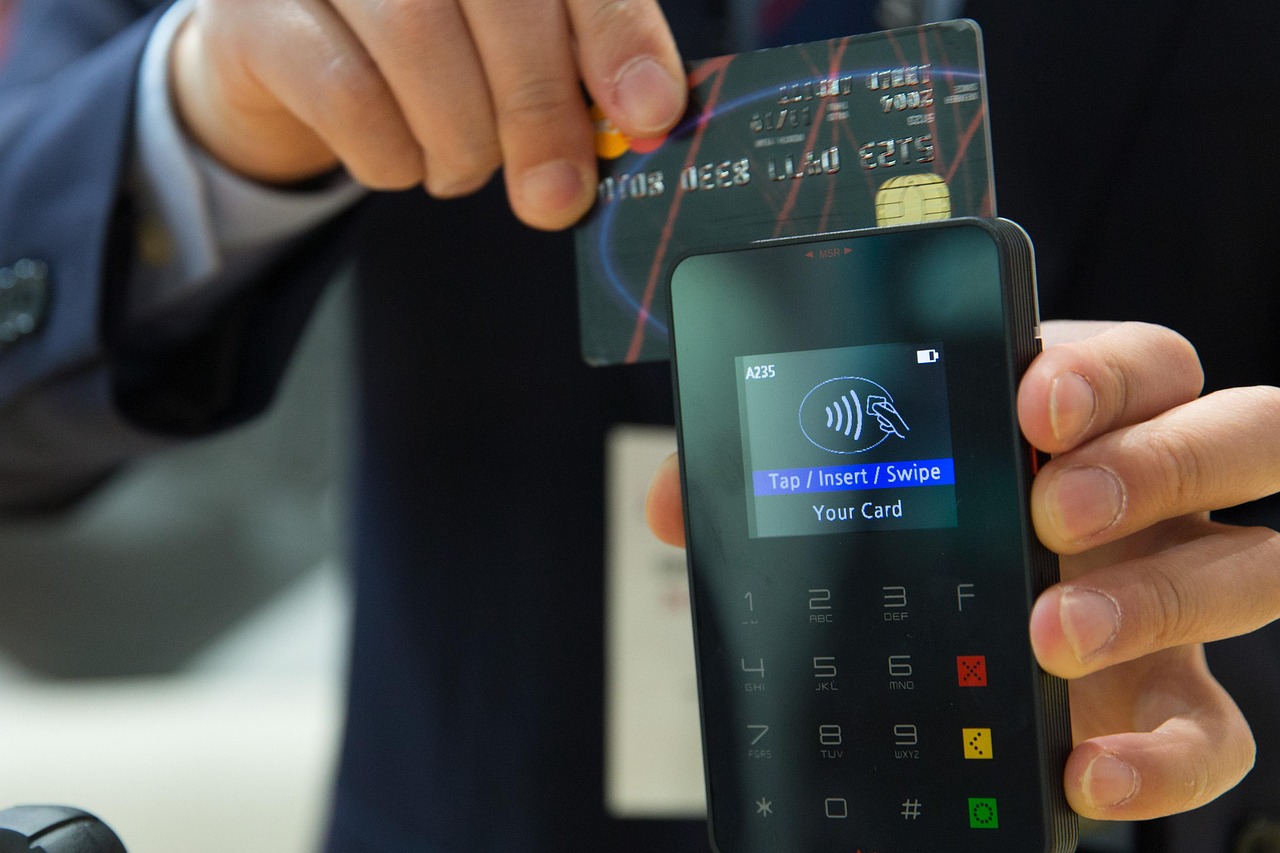
A seamlessly integrated payment terminal eliminates the manual keying of totals and the reconciliation errors that come with it. For a deeper look at how combined solutions work, see our guide on card machines and till systems combined. We also cover the leading options in our roundup of EPOS systems with integrated card payments.
Real-Time Reporting and Stock Control
Every cover sold should automatically update stock levels for ingredients, alert managers when a line item is running low, and feed into an end-of-day report that is ready before the last table leaves.
How a Touchscreen EPOS Speeds Up Table Turns and Reduces Errors
Table turn rate — the number of times a seat is occupied and cleared during a service period — is one of the most significant levers on revenue in a restaurant or café. A well-configured EPOS system affects this in three concrete ways.
- Faster ordering: Handheld or tableside ordering means staff do not need to walk to a fixed terminal to enter an order. The ticket appears in the kitchen the moment the server confirms it.
- Fewer re-fires: When modifiers and allergen information are captured digitally at the point of order, the number of dishes returned to the kitchen drops significantly — freeing up chef time and reducing the gap between a table finishing and being turned.
- Quicker settlement: Integrated contactless and card-present payments, with tip prompts on the customer-facing screen, remove the two-trip payment ritual (present the bill, return with the machine) and trim minutes from every close-out.
Even modest efficiency gains compound meaningfully across a full service. A venue doing three-hundred covers a week does not need to turn every table faster — it needs the average to improve by a few minutes, consistently.
Cloud-Based vs On-Premise: Which Setup Suits Your Venue?
This is one of the most common questions operators raise before purchasing — and the right answer depends on venue size, connectivity reliability and how you manage your business day-to-day.
| Consideration | Cloud-Based System | On-Premise System |
|---|---|---|
| Data storage | Hosted remotely; accessible from any device | Stored locally on your server or terminal |
| Internet dependency | Requires reliable broadband; most include offline fallback mode | Operates independently of internet connection |
| Remote management | Update menus, view reports and manage staff from anywhere | Typically requires on-site access for configuration |
| Software updates | Automatic, included in subscription | Manual or contracted; may carry additional cost |
| Upfront hardware cost | Lower — often paired with monthly subscription | Higher — licence and server costs paid upfront |
| Best suited to | Multi-site groups, fast-casual venues, owner-operators who travel | High-volume venues prioritising local resilience, or those with poor broadband |
For most independent UK hospitality businesses opening today, a cloud-based system with a local offline mode offers the best balance of flexibility and resilience. If you are deciding between paying monthly or buying outright, our article on monthly EPOS subscriptions versus outright purchase sets out the financial logic clearly.
Integrations That Matter: Reservations, Kitchen Display and Payments
A touchscreen EPOS does not operate in isolation. Its value multiplies when it talks fluently to the other platforms your venue depends on.
Reservation and Booking Platforms
When your table-booking system feeds cover counts directly into the EPOS, front-of-house staff see upcoming reservations on the same screen they use to manage live service. This prevents double-booking, helps with pre-order capture and allows the kitchen to plan prep accordingly.
Kitchen Display Systems
As noted above, a KDS integration is not an optional extra for a busy kitchen — it is the mechanism through which your EPOS investment translates into operational accuracy. Look for systems where the KDS bump time (the moment a chef marks a ticket complete) feeds back to the EPOS so servers are notified immediately.
Integrated and Wireless Card Payments
Pay-at-table using a wireless terminal paired to your EPOS is increasingly the norm. It speeds up settlement, reduces transcription errors and simplifies end-of-day reconciliation. You can explore the options in our guide to the best wireless card machines for small businesses.
Accounting and Payroll Software
Automatic exports to cloud accountancy platforms mean your sales data, VAT figures and labour costs are reconciled without manual data entry — saving hours each week and improving accuracy at year end.
Online Ordering and Delivery Aggregators
For venues with a takeaway or delivery operation, direct integration with online ordering platforms prevents the double-entry problem: the order goes straight to the kitchen, stock is deducted, and the sale appears in your reporting without a staff member manually re-keying it.
You can explore how EPOS Direct's software handles these integrations by viewing the restaurant EPOS software demo — a practical way to see the workflows in action before you commit.
What Does a Hospitality Touchscreen EPOS System Cost in the UK?
Pricing varies depending on hardware configuration, number of terminals, software tier and whether you opt for a subscription or outright purchase. The following are honest indicative ranges based on typical UK market conditions — not quotes, and not competitor pricing. Always request a tailored proposal for your specific setup.
Entry-Level Single-Terminal Setup
A single touchscreen terminal with software, basic integrations and a card payment device typically falls in the range of £500–£1,200 upfront for hardware, with software subscriptions starting from approximately £30–£60 per month for cloud-based platforms. Some providers offer bundled packages that include hardware, software and support for a single monthly fee — often in the range of £50–£100 per month on a contract basis.
Mid-Size Restaurant or Pub Setup
A venue requiring two to four terminals, a kitchen display, a customer-facing screen and integrated payments would typically invest in the range of £2,000–£5,000 in hardware, with monthly software and support costs of approximately £80–£200 per month depending on the number of licences and integrations required.
Multi-Site or High-Volume Venue
Larger operations — hotel restaurants, multi-room venues or bar-and-kitchen combinations with six or more terminals — should budget from approximately £5,000 upward for hardware, with bespoke software pricing negotiated on the basis of terminal count, integrations and support level.
These figures are indicative. The most accurate way to understand your total cost of ownership is to view our current hospitality EPOS offers or talk to an expert online who can build a configuration around your specific venue and service model.
Questions to Ask Before You Buy
A real buyer evaluating systems should walk into any conversation — with any provider — with these questions prepared.
- What happens if the internet goes down? Confirm the system has a genuine offline mode that saves all transactions and syncs when connectivity is restored, not one that simply locks up service.
- Who owns my data? Your sales history, customer records and menu data should be exportable in a standard format — not locked to a proprietary system that makes switching providers expensive.
- What does onboarding and training look like? A system that takes three weeks to configure is a liability during the weeks leading up to a venue launch. Ask for a realistic timeline and whether remote or on-site setup support is included.
- What are the contract terms? Rolling monthly contracts offer flexibility; longer commitments often come with lower monthly costs. Understand what happens at renewal and what exit conditions look like.
- Is the hardware future-proofed? Touchscreen hardware that accepts software updates and supports new payment standards (such as those mandated by UK Finance guidance on card-present transactions) protects your investment for longer.
For a broader view of how to evaluate EPOS providers across sectors, our complete guide to EPOS and POS systems for UK businesses covers the full decision-making framework in detail.
Why Choose EPOS Direct for Your Hospitality System
EPOS Direct is a UK-based EPOS provider serving independent operators, pub groups, restaurants, hotels and café chains across the country. Our hospitality systems are purpose-built for F&B environments — not adapted from retail platforms — and our team has direct experience configuring multi-terminal setups for high-volume service environments.
We supply hardware, software and integrated payment solutions as a complete package, with UK-based support available when your venue needs it most: during service, not just during office hours. Our software is continuously developed in response to real operator feedback, and our onboarding process is structured to have your system live and your team confident before you open the doors.
You can find more information, offers and the full range of solutions available from EPOS Direct on our home page. If you are ready to see how a modern hospitality EPOS performs in practice, request a free demo — no commitment required, and tailored to your venue type and scale.
The Bottom Line
A well-chosen touchscreen EPOS system is one of the highest-leverage operational investments a hospitality business can make. It reduces errors, accelerates service, integrates with the platforms you already use and gives you the data you need to run a tighter, more profitable operation — all while being easier to learn than the tills it replaces. The key is choosing a system built specifically for hospitality, from a provider with real-world experience in the sector.
EPOS Direct UK specialises in exactly that. Whether you are opening your first venue or upgrading an existing setup, our team is ready to help you find the right configuration. Request a call back and speak to a hospitality EPOS specialist today.
Written by the EPOS Direct UK team, who work with hospitality businesses across the United Kingdom every day — from independent cafés to multi-site restaurant groups.
Frequently asked questions
- What hardware is typically included with a hospitality till system?
- A standard hospitality touchscreen till bundle usually includes a 15-inch or larger touchscreen terminal, a receipt printer, a cash drawer, and a card payment reader. Higher-spec setups may also include a customer-facing display, kitchen display screen (KDS), and handheld ordering tablets for table service. EPOS Direct offers customisable bundles so you only pay for what your venue actually needs.
- How much should I expect to pay for a touchscreen till system for my restaurant or bar in the UK?
- In the UK, a single-terminal hospitality touchscreen EPOS system typically costs between £500 and £1,500 upfront for the hardware, with monthly software licences ranging from around £30 to £100 per terminal depending on the features included. Multi-site or enterprise setups will cost more. Many providers, including EPOS Direct, offer leasing options or finance plans that spread the cost, making it easier to manage cash flow. Always check what is included in the monthly fee — support, updates and cloud access should ideally be bundled in.
- Can a touchscreen till system integrate with my existing reservation or delivery platform?
- Yes — most modern hospitality EPOS systems support integrations with popular reservation platforms such as OpenTable and ResDiary, as well as delivery aggregators like Deliveroo and Uber Eats. Look for a system that offers open APIs or pre-built connectors so orders flow directly into your till and kitchen display without manual re-entry, reducing errors and saving staff time.
