We use cookies to make your experience better.
To comply with the new e-Privacy directive, you agree to the privacy policy and our use of cookies


How to Switch from a Traditional Till to a Modern EPOS System: A Complete Guide for UK Businesses
Upgrading from an Old Till System to EPOS: Everything UK Businesses Need to Know
Switching from a traditional till to a modern EPOS system is one of the most impactful operational decisions a UK retailer or hospitality business can make. Done well, it replaces a single-function cash drawer with a connected, data-driven platform that handles sales, stock, payments, and reporting in one place. This guide walks you through every stage — from recognising the warning signs that your current setup is costing you money, to choosing the right system and making the transition smoothly.
Written by the EPOS Direct UK team, who help UK retail, hospitality, and specialist businesses find, install, and grow with modern EPOS systems every day.
Signs Your Current Till Setup Is Holding Your Business Back
Most businesses don't decide to upgrade because they've read a feature comparison — they upgrade because something breaks, costs too much, or simply stops working for the way they trade. If any of the following sound familiar, your till system may be actively limiting your growth:
- Manual stock counts: If your team is reconciling stock by hand at the end of each day or week, you're losing hours and accepting a margin of human error that an EPOS system eliminates automatically.
- No sales data: A traditional till records transactions but offers no insight — no bestsellers report, no peak-hours breakdown, no staff performance view. You're making buying and staffing decisions on instinct alone.
- Slow service: Queues at a cash register cost you sales and erode customer loyalty. Modern EPOS terminals process transactions faster and integrate contactless and mobile payments natively.
- No integration with card payments: Separate card machines that don't talk to your till create reconciliation headaches and the risk of keying errors. Our guide to card machine and till system combined solutions explores why integrated payment processing matters.
- Repair costs and obsolescence: If your system relies on discontinued hardware or software that no longer receives security updates, you face both operational risk and potential compliance exposure.
If two or more of these apply to your business, the question is no longer whether to upgrade — it's how to do it efficiently.
What Is an EPOS System and How Does It Differ from a Traditional Till?
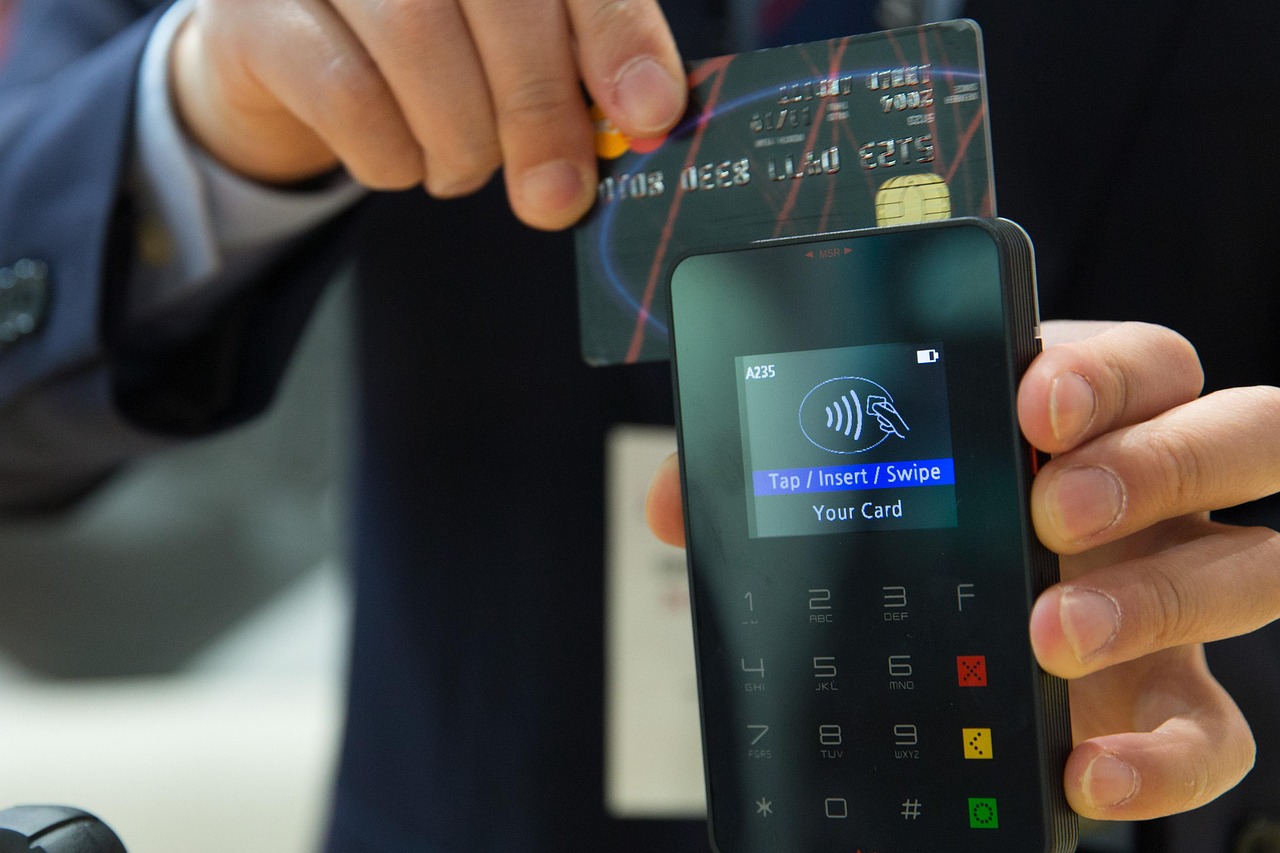
An EPOS (Electronic Point of Sale) system is a fully integrated hardware-and-software platform built to manage every aspect of a transaction — and everything around it. Where a traditional till records a sale and opens a cash drawer, an EPOS system simultaneously updates stock levels, logs the transaction against a staff member, offers a receipt by email or print, feeds into end-of-day reporting, and can trigger a reorder alert when a product runs low.
Traditional till vs. EPOS: a practical comparison
| Feature | Traditional Till / Cash Register | Modern EPOS System |
|---|---|---|
| Sales recording | Basic transaction total | Itemised, timestamped, staff-attributed |
| Stock management | Manual counts only | Real-time, automatic stock deduction |
| Payment types | Cash (sometimes card via separate terminal) | Cash, card, contactless, mobile wallets — integrated |
| Reporting | None or basic Z-read totals | Sales analytics, product performance, shift reports |
| Loyalty & promotions | Not supported | Built-in or third-party integration |
| Remote access | Not possible | Cloud dashboard accessible anywhere |
| Software updates | Hardware replacement required | Automatic over-the-air updates |
| Scalability | Limited; each till operates independently | Multi-terminal, multi-site capable |
For a deeper look at the cash register side of this transition, our guide on switching from a cash register to a modern EPOS system covers the practicalities in full.
Key Benefits of Switching to EPOS for UK Retail and Hospitality
The benefits of a well-chosen EPOS platform extend well beyond faster checkouts. Here's where businesses consistently report the most meaningful improvement:
For retailers
- Live inventory visibility across every product, variant, and location — reducing overstock and preventing stockouts.
- Barcode scanning and label printing integrated directly into the sales workflow, cutting staff training time and keying errors.
- Purchase order management that allows you to reorder from suppliers without leaving the system.
- Customer accounts and loyalty schemes that encourage repeat footfall with minimal admin overhead.
For hospitality and restaurants
- Table management and covers tracking so front-of-house staff always know the floor status at a glance.
- Kitchen display systems (KDS) that replace paper tickets and reduce order errors at the pass.
- Course management and modifier options for complex menus — allergen flags, dietary notes, and portion choices handled at the till.
- Split bills and service charge handling that speed up the end-of-meal experience and reduce friction.
Regardless of sector, cloud-based reporting gives owners and managers real-time visibility from any device — meaning you can check today's takings from a phone without being on site.
What to Look for When Choosing a New EPOS System in the UK
The UK market is crowded with EPOS providers, and not all systems are built for the same type of business. Before committing to any platform, apply these criteria:
- Sector fit: A system designed for grocery retail will have fundamentally different workflows to one built for table-service restaurants. Confirm the software is purpose-built — or at minimum deeply configurable — for your trade.
- Payment integration: Fragmented card processing remains one of the most common sources of end-of-day discrepancy. Our guide to EPOS systems with integrated card payments explains what to look for in a unified payment solution.
- Support quality: Hardware fails. Software has bugs. The question is whether your provider has UK-based support available during your trading hours — not just a ticketing system with a 48-hour SLA.
- Ownership vs. subscription: Both models have genuine merit depending on your cash flow and ambitions. Our analysis of monthly EPOS subscription versus outright purchase walks through the financial and operational trade-offs honestly.
- Scalability: If you plan to open a second site or add self-service kiosks, confirm the platform supports multi-location management from a single back office — before you sign anything.
- Data migration support: Ask specifically whether your product library, customer records, and historical sales data can be imported. Rebuilding a catalogue from scratch is a significant hidden cost.
For small and independent businesses in particular, our practical buyer's guide to till systems for small businesses offers targeted advice on balancing features against budget.
How the Upgrade Process Works: From Old Till to EPOS, Step by Step
A well-managed switch to EPOS should cause minimal disruption to your trading operation. Here's a realistic picture of what the process looks like:
- Needs assessment: A good provider will start by understanding your current workflows, transaction volumes, product count, and pain points — not by pushing hardware at you.
- System design: Your hardware configuration (touchscreen terminal, receipt printer, barcode scanner, cash drawer, card reader) is specified against your counter layout and trade patterns.
- Software configuration: Your product catalogue, pricing, tax rates, staff permissions, and any loyalty or discount rules are set up in advance — ideally by your provider's team, not left entirely to you.
- Data import: Existing stock and customer data is imported where possible, avoiding the need to re-enter thousands of product records manually.
- Staff training: On-site or remote training for your team — typically between two and four hours for a standard retail or hospitality setup.
- Go-live and parallel running: Some businesses choose to run the old till alongside the new system for a short period; others prefer a clean cutover. Your provider should advise on what's appropriate for your volume.
- Post-installation support: A reputable provider checks in after go-live — not just during the sale.
If you'd like to see the software before committing to any hardware conversation, you can request a retail EPOS software demo or explore the restaurant EPOS software demo at your own pace.
How Much Does It Cost to Upgrade to an EPOS System in the UK?
Cost is one of the most searched questions in this category, and it deserves an honest answer rather than a vague "it depends." The figures below are indicative market ranges based on typical UK installations — not quotes, and subject to your specific requirements.
Outright purchase (hardware + software licence)
- Entry-level single terminal (retail or hospitality): typically from around £500–£900 for hardware, plus software costs.
- Mid-range setup with integrated card reader, printer, and scanner: most single-site installations fall in the region of £900–£1,800 all-in.
- Multi-terminal or multi-site: costs scale with the number of terminals and complexity of the configuration; larger installations are quoted individually.
Monthly subscription model
- Software subscriptions typically start from around £20–£50 per month for a single terminal on entry plans.
- All-inclusive plans covering software, hardware rental, support, and payment processing integration are often available from approximately £50–£150 per month depending on the provider and specification.
Hidden costs to ask about explicitly include: payment processing transaction fees, ongoing software licence renewals, support contracts outside standard hours, and charges for additional users or integrations. Always request a written total cost of ownership breakdown before signing.
For businesses weighing up which commercial model suits them best, our guide on monthly EPOS subscription versus outright purchase sets out the financial case for each clearly.
If you'd like a figure specific to your business, request a free demo and quote from EPOS Direct — no obligation, and no pressure to commit on the day.
Why Choose EPOS Direct for Your Till Upgrade?
EPOS Direct is one of the UK's established EPOS providers, supplying systems to retail, hospitality, pharmacy, and specialist businesses across the country. Rather than offering a one-size-fits-all platform, the business configures systems around sector-specific workflows — with dedicated software builds for retail, restaurants, and pharmacy environments.
What sets EPOS Direct apart
- UK-based team providing pre-sales guidance, installation support, and after-sales care — not offshore call centres or automated ticketing.
- Sector-specific software that reflects how your business actually operates, rather than a generic POS platform with surface-level customisation.
- Integrated card payments through a single provider, removing the friction of managing separate merchant accounts and reconciling two systems.
- Flexible ownership options — outright purchase or subscription — with transparent pricing.
- Ongoing software development with updates pushed automatically, so your system improves without requiring hardware replacement.
You can explore current packages and offers — including sector-specific configurations — on the EPOS Direct UK home page, where you'll also find the latest deals and system bundles.
Retailers can view our retail EPOS offers directly, while restaurants and hospitality operators can explore our hospitality and restaurant EPOS packages. Pharmacy businesses can book a pharmacy EPOS software demo to see the sector-specific feature set before making any decisions.
Want to know how EPOS Direct compares to other options in the market? Our complete competitor comparison guide sets out the key differences objectively.
Ready to Make the Switch?
Moving from a traditional till to a modern EPOS system is not simply a technology purchase — it's an operational decision that touches every part of how your business runs. Done with the right partner, the transition is low-disruption, the payback period is measurable, and the day-to-day running of your business becomes considerably less reliant on manual processes and guesswork.
The EPOS Direct UK team is available to help you assess your current setup, recommend the right configuration for your sector, and walk you through the upgrade process from first conversation to go-live. Talk to an expert online for immediate guidance, or request a call back at a time that suits your schedule. There is no obligation and no hard sell — just straightforward advice from people who understand UK EPOS from the ground up.
Frequently asked questions
- How long does it take to set up a new EPOS system when switching from an old till?
- For most small to medium UK businesses, a new EPOS system can be fully set up and operational within one to three days. This includes hardware installation, software configuration, and importing your existing product catalogue. EPOS Direct typically provides onboarding support to minimise any disruption to your trading hours.
- How much should I budget to replace my old till with an EPOS system in the UK?
- Costs vary depending on your requirements, but as a general guide UK businesses can expect to pay from around £300 to £800 for a basic single-terminal EPOS bundle including hardware and software. Multi-terminal setups for larger retail or hospitality venues typically range from £800 to £2,500 or more. Many providers, including EPOS Direct, offer monthly payment plans starting from around £20 to £50 per month so you can spread the cost rather than paying upfront.
- Will I lose my sales data and product information when I switch to a new EPOS system?
- No — a reputable EPOS provider will help you migrate your existing product data, pricing, and where possible historical sales records to your new system. EPOS Direct includes data migration support as part of the setup process, so your menu or product catalogue is ready to use from day one.
