We use cookies to make your experience better.
To comply with the new e-Privacy directive, you agree to the privacy policy and our use of cookies

What Does an EPOS System Include? A Complete Guide for UK Businesses
What Does an EPOS System Include? Everything UK Businesses Need to Know
A modern EPOS system is far more than a till. It is an integrated business platform combining hardware, software, and payment processing into a single ecosystem that manages sales, stock, staff, and reporting — often in real time. Whether you are opening your first shop or upgrading from an ageing cash register, understanding exactly what a complete EPOS setup includes helps you choose the right solution and avoid paying for components you do not need.
The Core Components of a Modern EPOS System
At its simplest, every EPOS system has three layers: the hardware you touch, the software that runs your business logic, and the payment infrastructure that captures revenue. These layers must work together seamlessly. When they do, a well-specified system reduces human error, accelerates service, and gives you the management data to grow profitably.
Most UK EPOS packages bundle some or all of the following:
- Point-of-sale terminal — the central screen and processor
- EPOS software — the application layer managing products, sales, and reporting
- Receipt printer — thermal printing for customer and kitchen receipts
- Barcode scanner — for retail product lookup and stock management
- Cash drawer — for businesses that still handle notes and coins
- Card payment terminal (PDQ machine) — integrated or standalone
- Back-office management portal — cloud dashboard for reporting, stock, and staff
The exact combination varies significantly between industries. A convenience store needs a fast barcode scanner and a robust stock module; a restaurant needs table management and a kitchen display system. Choosing a provider with sector-specific expertise in till systems for small businesses is therefore as important as choosing the right hardware specification.
EPOS Hardware: Terminals, Scanners, Printers and More
Hardware is the physical foundation of the system, and the quality of the components determines day-to-day reliability — particularly in high-traffic environments where a failing screen or jammed printer costs real money.
POS Terminals
The terminal is the centrepiece: a touchscreen all-in-one unit or a separate screen connected to a processing unit. Commercial-grade terminals typically run robust operating systems designed for continuous, all-day use. Screen sizes commonly range from 10 inches for compact counters to 15 inches or larger for full-service tills. Some configurations include a customer-facing display so buyers can see itemised totals — useful for transparency and upselling.
Receipt Printers
Thermal receipt printers are standard across retail and hospitality because they are fast, quiet, and low-maintenance — no ink cartridges required. In restaurant environments, secondary kitchen printers (or kitchen display screens) route food and drink orders directly to the preparation area, removing paper tickets and miscommunication from the process.
Barcode Scanners and Scales
For retail, a handheld or presentation scanner reads product barcodes instantly, eliminating manual price look-ups. Businesses selling by weight — delis, bakeries, farm shops — integrate certified scales that pass the weight directly into the transaction. This is especially relevant given UK Weights and Measures Act requirements; always verify compliance specifications with your supplier and the National Measurement and Regulation Office (NMRO).
Cash Drawers and Peripherals
Even in an increasingly cashless market, most UK retail and hospitality businesses retain a cash drawer. A quality EPOS-connected drawer opens automatically on sale completion and logs every opening event, which is valuable for end-of-day reconciliation and loss prevention. Optional peripherals include customer-facing loyalty card readers, label printers for shelf-edge or food labelling, and handheld stock-take devices.
EPOS Software: Features That Run Your Business
Hardware is only the vessel; software is where genuine business value is created. The software layer manages every transaction and generates the intelligence you use to make decisions. Before committing to any system, exploring the full EPOS software feature set is essential — not all platforms are equal.
Core Software Capabilities
- Product and price management — create and edit your entire product catalogue, with variants, modifiers, and promotional pricing rules
- Stock control — real-time inventory tracking, low-stock alerts, and purchase order generation
- Sales reporting and analytics — hourly, daily, and period sales by product, category, staff member, or location
- Staff management — clock-in/clock-out, permissions by role, and individual sales performance
- Customer relationship management (CRM) — customer profiles, purchase history, and loyalty programme integration
- Multi-site management — centralised control of pricing, products, and reporting across multiple locations
- Accounting integrations — direct feeds to platforms such as Xero, QuickBooks, or Sage
Retailers considering a more detailed walkthrough of the software in action can book a retail EPOS software demo to see stock, sales, and reporting tools live.
Integrated Payment Processing: Card Readers and PDQ Machines
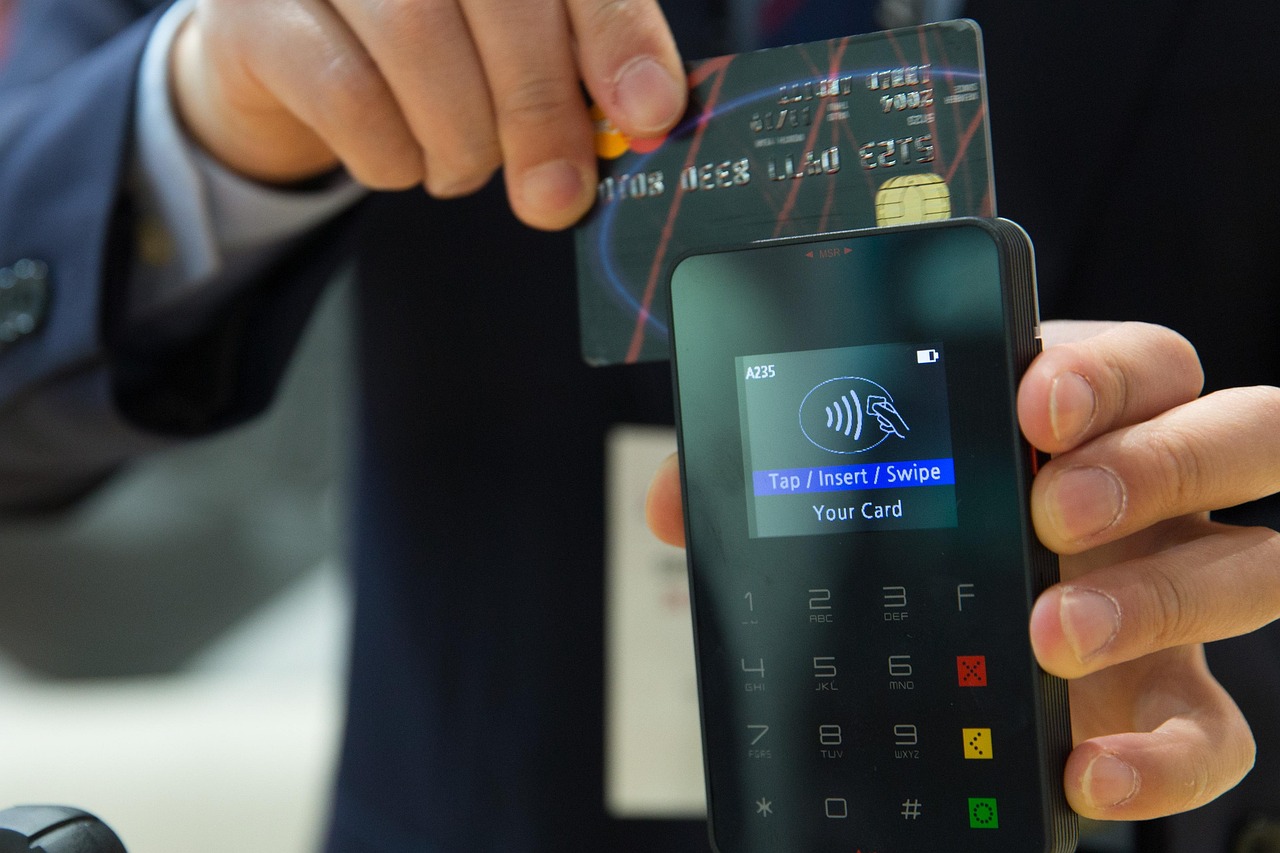
The card payment terminal — commonly called a PDQ machine — is increasingly considered a core part of the EPOS system rather than a separate device. Integrated card payments mean the sale total passes automatically from the EPOS software to the card reader, removing the need for manual entry and the costly errors that come with it.
UK businesses should look for terminals that support:
- Chip and PIN, contactless (including Apple Pay and Google Pay)
- Integration with Visa, Mastercard, and American Express
- Next-business-day or same-day settlement options
- PCI DSS compliance — a mandatory standard under UK card scheme rules
For businesses that need mobility — market traders, table-service restaurants, or pop-up retailers — a wireless card machine paired with the EPOS terminal is often the right solution. Our guide to the best wireless card machines for small businesses covers the key options in detail. For a thorough overview of how card machines and till systems work together, the guide on combining a card machine with a till system is a useful next step.
Cloud vs On-Premise EPOS: Which Setup Is Right for You?
One of the most consequential decisions when specifying an EPOS system is where the data lives and how the system is accessed. Both approaches have legitimate use cases.
| Feature | Cloud-Based EPOS | On-Premise EPOS |
|---|---|---|
| Data storage | Hosted securely offsite; accessible anywhere | Stored locally on your hardware |
| Internet dependency | Requires reliable connection; most offer offline mode | Operates fully without internet |
| Updates | Automatic, included in subscription | Manual; may incur upgrade costs |
| Multi-site management | Centralised and real-time across all locations | Requires additional infrastructure to synchronise |
| Upfront cost | Lower; hardware plus monthly subscription | Higher; perpetual licence plus server costs |
| Scalability | Add terminals or sites with minimal friction | Scaling requires hardware and IT investment |
| Typical best fit | Growing SMEs, multi-site, hospitality | High-volume single sites with connectivity concerns |
The majority of new installations in the UK now favour cloud-based EPOS, largely because of the lower entry cost, automatic updates, and the ability to monitor the business from anywhere. If you are weighing the cost implications of subscription versus outright purchase, our dedicated guide on monthly EPOS subscriptions vs outright purchase sets out the financial trade-offs clearly.
Industry-Specific EPOS Configurations for Retail and Hospitality
A generic system rarely serves any business as well as a purpose-configured one. EPOS Direct UK supplies tailored solutions across retail, hospitality, and specialist sectors, each with hardware and software selected to match the operational reality of that environment.
Retail EPOS
Retail configurations typically prioritise barcode scanning speed, deep stock management (including supplier ordering and goods-received workflows), multi-department reporting, and loyalty programme features. Businesses moving away from older technology can find practical, step-by-step advice in our guide on upgrading from a cash register to a modern EPOS system. To view current packages, explore our retail EPOS offers.
Hospitality and Restaurant EPOS
Restaurant and café systems require table plan management, course-by-course ordering, allergen flagging (which aligns with Natasha's Law requirements — verify current obligations with the Food Standards Agency), kitchen display screens or printer routing, and covers-based reporting. Operators can explore the feature set directly via a restaurant EPOS software demo, or browse our hospitality and restaurant EPOS offers.
Pharmacy EPOS
Pharmacy installations have unique requirements: NHS prescription workflows, controlled drug logging, age-verification prompts, and integration with dispensary management systems. A pharmacy EPOS software demo demonstrates how these compliance-critical features are handled within the platform.
What Does an EPOS System Cost in the UK?
Cost is among the first questions any buyer asks, and transparency matters. The figures below are honest indicative ranges based on typical UK market conditions — not guaranteed quotes. Contact EPOS Direct UK for a precise proposal based on your specific requirements.
- Entry-level single-terminal setup (software, basic hardware, card reader): typically from around £300–£600 upfront, plus a software subscription that commonly falls between £30 and £60 per month
- Mid-range retail or café setup (terminal, scanner, receipt printer, cash drawer, integrated payments): hardware typically from £800–£1,500, with monthly software from £50–£100
- Full hospitality or multi-terminal retail setup (multiple terminals, kitchen printers or displays, back-office management, integrated payments): hardware investment typically from £1,500 upward; software from £80–£200 per month depending on features and number of terminals
- Outright purchase: a perpetual licence model will have a higher initial cost but no ongoing software fee — weigh this carefully against a subscription's included updates and support
Transaction fees on card payments are separate from EPOS costs and are set by your payment processor; these typically range from 0.5% to 1.75% per transaction for card-present sales, depending on your volume and agreement. Always request a full written breakdown of all costs — hardware, software, support, and payment processing — before committing.
What to Look for When Choosing an EPOS Package in the UK
Beyond the component list, several criteria separate a system that truly serves your business from one that creates friction and regret.
- Sector fit — does the software natively support your industry's workflows, or will you need costly customisation?
- Scalability — can you add terminals, sites, or users as you grow without replacing the core system?
- Payment integration — is card processing built in, or do you manage a separate provider relationship? Fully integrated card payments within an EPOS system reduce errors and simplify reconciliation significantly.
- Support and training — what does the supplier offer at installation, and what ongoing support is available? UK business hours telephone support is often more valuable than it appears on a spec sheet.
- Contract terms — understand minimum terms, exit clauses, and what happens to your data if you switch providers.
- Reporting depth — does the analytics dashboard give you the specific insight your business model needs, or only generic summary data?
- Hardware warranty — commercial EPOS hardware should carry a minimum 12-month warranty; extended cover is worth considering for high-use environments.
Comparing providers carefully is worthwhile — our guide to how EPOS Direct compares with other till system providers walks through key differentiators in an honest, structured way. You can also explore the full range of current packages and offers on the EPOS Direct UK home page.
The Direct Answer: What Is Included in an EPOS System?
A complete EPOS system includes a touchscreen point-of-sale terminal, EPOS software (covering sales, stock, staff, and reporting), a receipt printer, a barcode scanner, a cash drawer, and an integrated or connected card payment terminal. Most modern solutions add a cloud-based back-office portal for remote management and analytics. The precise combination depends on your sector, site count, and transaction volume.
Ready to Build the Right EPOS Setup for Your Business?
Specifying an EPOS system confidently requires honest advice from people who understand your sector. The EPOS Direct UK team works daily with independent retailers, restaurants, pharmacies, and multi-site operators across the United Kingdom — helping each business identify exactly the hardware, software, and payment configuration they need without overselling or underselling.
You can request a free demo to see the system in action, talk to an expert online right now with a live question, or request a call back at a time that suits you. EPOS Direct UK — precise, practical, built for UK business.
Written by the EPOS Direct UK team, who help UK retailers, restaurateurs, and specialist businesses find the right EPOS and POS systems every day.
Frequently asked questions
- Do I need to buy the hardware and software separately, or does it come as a bundle?
- Most UK EPOS providers, including EPOS Direct, offer complete bundles that include the touchscreen terminal, receipt printer, barcode scanner, cash drawer, and software licence in a single package. Buying a bundle is usually more cost-effective and ensures all components are compatible from day one.
- How much does a complete EPOS system cost for a small UK business?
- In the UK, a single-till EPOS bundle typically costs between £300 and £800 for the hardware outright, plus a monthly software subscription that usually ranges from £20 to £60 per month depending on features. Payment processing fees are charged separately, often between 1% and 1.75% per card transaction. Multi-terminal setups for larger venues will cost more but often benefit from volume discounts. EPOS Direct UK offers competitive package pricing — contact the team for a tailored quote.
- Can an EPOS system handle online orders and in-store sales at the same time?
- Yes. Modern cloud-based EPOS systems can synchronise inventory and sales data across both your physical till and online store in real time. This means stock levels update automatically whether a customer buys in person or online, reducing the risk of overselling and saving significant admin time.
