We use cookies to make your experience better.
To comply with the new e-Privacy directive, you agree to the privacy policy and our use of cookies

Best Card Payment Machines for UK Businesses: An Honest Review Guide
Card Payment Machine Reviews: Finding the Right Terminal for Your UK Business
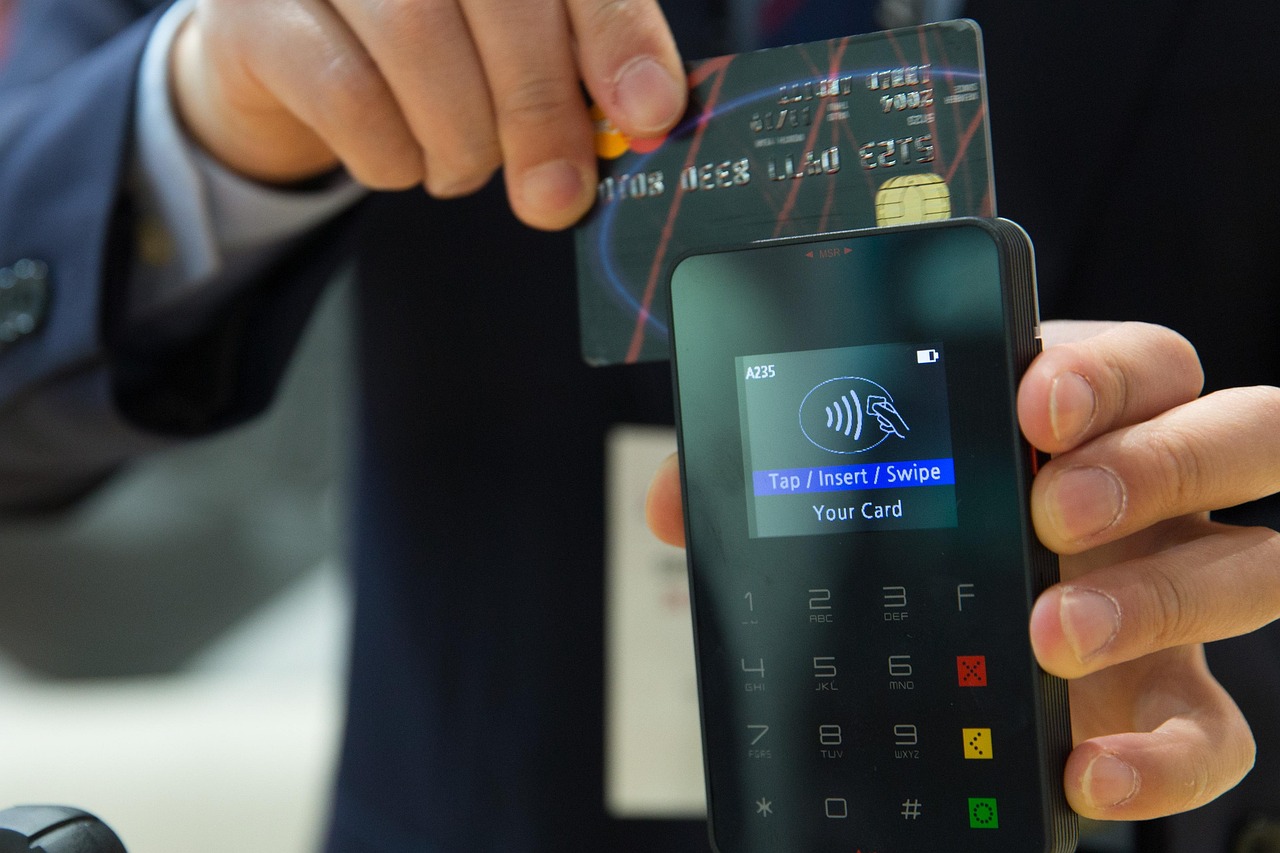
Choosing the right card payment terminal is one of the most consequential decisions a UK business owner makes — it affects transaction fees, customer experience, queue times and how seamlessly your payments integrate with your wider EPOS setup. The good news: once you understand what separates a capable terminal from a costly compromise, the decision becomes straightforward. This guide, written by the EPOS Direct UK team who work with British retailers and hospitality operators every day, cuts through the noise to give you an honest, practical framework for evaluating your options.
What to Look for in a Card Payment Terminal Before You Buy
Before comparing specific hardware, establish your criteria. The terminal that suits a busy restaurant differs significantly from the one that works best for a boutique retailer or a market trader. Ask yourself four questions before reading a single review:
- Where will payments happen? A fixed till point, tableside, on delivery runs, or all three?
- What volume do you process? High-volume environments demand faster receipt printing and robust connectivity; low-volume setups can often prioritise cost over speed.
- What does your EPOS system expect? Semi-integrated and fully integrated terminals save staff time and eliminate manual keying errors — but only if the hardware is compatible with your software.
- What are the true ongoing costs? Hardware price is rarely the largest expense. Transaction rates, monthly service fees and PCI DSS compliance costs often dwarf the cost of the device itself.
Connectivity is also critical. 4G-enabled terminals with Wi-Fi fallback are now considered best practice for any environment where a wired LAN connection is not guaranteed. Bluetooth-only machines can drop connections at the worst possible moment — mid-transaction during a Saturday rush.
Types of Card Payment Terminals: Countertop, Mobile and Integrated Explained
The UK market broadly divides terminals into three categories, each with a distinct use case.
Countertop Terminals
Wired and typically connected via Ethernet or a phone line, countertop terminals are the workhorses of high-footfall retail. They are generally the most cost-effective option per transaction because they are tied to a stable network connection, which reduces the risk of failed transactions. Ideal for supermarkets, convenience stores, pharmacies and any environment where customers approach a fixed till.
Portable and Mobile Terminals
Portable terminals communicate over Wi-Fi within a premises — perfect for pay-at-table service in pubs and restaurants — while fully mobile terminals use 4G SIM cards for untethered use at markets, festivals, pop-ups and on delivery vehicles. If your business moves, your terminal must move with it. Our in-depth look at the best wireless card machines for small businesses in the UK explores the leading portable options in more detail.
Integrated Terminals
Integrated terminals communicate directly with your EPOS software. When a sale is rung up, the payment amount is sent automatically to the terminal — no manual re-entry, no mis-keyed totals, no cash-up discrepancies. For any business processing more than a modest number of transactions each day, integration is not a luxury; it is a tangible return on investment. See our guide to the best EPOS systems with integrated card payments in the UK for a full breakdown of how this works in practice.
Comparing Terminal Approaches: A Practical Buyer's Matrix
The table below maps terminal types against the criteria that matter most to UK buyers. Use it as a starting filter before diving into individual models.
| Terminal Type | Best For | Connectivity | EPOS Integration | Typical Monthly Cost Range | Key Trade-Off |
|---|---|---|---|---|---|
| Countertop (wired) | Retail, pharmacies, convenience stores | Ethernet / phone line | Full integration available | Typically from £15–£30/month (terminal rental + fees) | No mobility; fixed to till point |
| Portable Wi-Fi | Restaurants, bars, hotels | Wi-Fi (premises-only) | Full integration available | Typically from £20–£40/month | Range limited to Wi-Fi coverage |
| Mobile 4G | Markets, delivery, pop-ups, field sales | 4G with Wi-Fi fallback | Partial / app-based | Typically from £20–£45/month | SIM data costs; battery management |
| Integrated EPOS terminal | Any multi-lane or high-volume environment | Ethernet / Wi-Fi / 4G | Fully integrated by design | Typically from £30–£60/month (bundled) | Higher upfront or subscription cost |
| Tap-to-pay (software terminal) | Very low-volume, sole traders | NFC via smartphone | Limited | Often pay-as-you-go; higher per-transaction rate | No receipt printer; less professional |
Cost ranges above are indicative and reflect typical UK market pricing as of 2025–2026. Your actual costs will vary based on volume, provider and contract terms. Always request a personalised quote.
Card Payment Machine Costs and Contract Terms in the UK
One of the most common questions EPOS Direct receives is: "What should I actually expect to pay?" The honest answer is that total cost of ownership has several distinct components, and providers sometimes advertise only the most attractive one.
What You Are Actually Paying For
- Terminal rental or purchase: Monthly rental typically ranges from around £15 to £50 per terminal depending on capability. Some providers allow outright purchase, which eliminates the monthly charge but shifts maintenance responsibility to you. Our article on monthly EPOS subscriptions versus outright purchase explores this trade-off in depth.
- Transaction fees: These are typically expressed as a percentage of each transaction (interchange-plus or flat-rate models) and represent your largest ongoing cost. Regulated interchange rates in the UK are set under the Interchange Fee Regulation (IFR) — consumer debit and credit card transactions are subject to caps. Your acquirer's margin sits on top of these regulated rates. Verify current caps with the Payment Systems Regulator (PSR) at psr.org.uk.
- Monthly service or gateway fees: Many acquirers charge a flat monthly fee regardless of volume, covering PCI DSS support, fraud monitoring and customer service.
- Contract length: Standard contracts run 12–36 months. Exiting early typically incurs penalties. Rolling monthly contracts exist but often carry higher per-transaction rates — a genuine trade-off worth calculating against your projected volume.
- PCI DSS compliance: All businesses accepting card payments must comply with the Payment Card Industry Data Security Standard. Non-compliance can result in fines and withdrawal of your ability to accept cards. Many providers charge a monthly PCI fee to cover their compliance support tools.
The safest approach is to model your total monthly cost across all fee categories at your realistic monthly card volume, not just the headline rate. A low transaction rate with high fixed fees can cost a low-volume business considerably more than a slightly higher rate with no fixed charges.
How Card Readers Integrate with Your EPOS System
Integration quality is the single biggest differentiator between a professional payment setup and a collection of disconnected tools. When your card terminal communicates with your EPOS software in real time, you gain:
- Elimination of manual keying errors — totals flow automatically from EPOS to terminal
- Faster transaction times — no double-handling of amounts
- Accurate end-of-day reconciliation — EPOS sales data and payment data match automatically
- Unified reporting — sales by payment type, refund tracking and staff performance in one dashboard
- Reduced shrinkage risk — mismatches between rung-up amounts and charged amounts are flagged immediately
If you are currently running a legacy cash register, the difference integration makes is transformative. Our guide for UK retailers switching from a cash register to a modern EPOS system walks through the transition step by step. For retail-specific setups, the complete buyer's guide to the best till systems for small businesses covers how integration fits into a broader system choice.
If you would like to see how integration looks in practice, request a retail EPOS software demo or, for hospitality, try the restaurant EPOS software demo — both show live payment flows within the EPOS Direct platform.
Common Pitfalls to Avoid When Choosing a Payment Terminal
Our team speaks with business owners every week who have made the same avoidable mistakes. Here are the most consequential ones:
1. Choosing a terminal that cannot integrate with your EPOS
The cheapest terminal on the market is expensive if it does not talk to your till software. Always confirm compatibility before signing any contract — ask the provider to confirm the specific integration protocol (typically PAX, Verifone, Ingenico or Paymentsense APIs) and verify this with your EPOS supplier.
2. Ignoring connectivity requirements
A portable Wi-Fi terminal in a venue with patchy wireless coverage will frustrate staff and customers alike. Test signal strength across your full premises before committing to a Wi-Fi-only device.
3. Underestimating contract lock-in
A 36-month contract with a 3% early-exit penalty can be crippling if your business model changes, you move premises or you find a better rate. Read the contract's termination clause carefully before signing.
4. Overlooking contactless and digital wallet limits
UK contactless limits have evolved in recent years and are subject to periodic review by the FCA and industry bodies. Ensure your terminal firmware is kept current so you are always processing at the latest approved limits. Your provider should handle this automatically; if they do not, it is a red flag.
5. Treating the terminal as separate from the customer experience
Payment is the final moment of every customer interaction. A slow terminal, a confusing PIN screen or a poorly positioned device damages the experience you have spent the rest of the transaction building. Hardware ergonomics matter — consider screen size, cable length, mounting options and receipt-printer speed as genuine business decisions.
6. Not comparing like-for-like
When evaluating providers, ensure you compare the same transaction types (debit vs credit, domestic vs international), the same monthly volumes and the same contract lengths. Our guide comparing EPOS Direct against competitors demonstrates how to structure a fair comparison across a full system, not just the terminal in isolation.
Card Payments for Specific UK Business Types
Different sectors have distinct requirements that a generic terminal review cannot fully address.
Retail
Retailers benefit most from fully integrated countertop terminals at fixed till points, with the option to add portable devices for queue-busting during peak periods. Age-verification prompts, loyalty integration and stock-level reporting are all features worth requesting from your EPOS provider. If you run a shop, explore our dedicated buyer's guide to the best till systems for small shops.
Hospitality and Restaurants
Pay-at-table via portable or handheld terminals dramatically improves table turn times and all but eliminates fraud risk from card-skimming at fixed terminals. Look for terminals that support split bills and gratuity prompts natively. View our hospitality and restaurant EPOS offers to see how integrated payment fits into a complete front-of-house solution.
Off-Licences and Convenience
Alcohol retailers have specific compliance needs — age verification, Challenge 25 prompts and sometimes Challenge 21 policies must be reflected in the EPOS workflow, not just staff training. Payment terminals that pause the transaction pending EPOS-level approval are preferable. Our guide to the best till systems for off-licences covers this in detail.
Pharmacies
Prescription exemption workflows, NHS integration and EPS compatibility mean pharmacy payments are not straightforward. If you operate a pharmacy, request a pharmacy EPOS software demo to see how integrated card payment sits alongside dispensary management.
Why EPOS Direct Customers Rate Our Payment Solutions
EPOS Direct UK operates as a complete commerce partner, not merely a hardware reseller. Our customers consistently highlight three advantages that distinguish our payment offering:
- True EPOS integration from day one: Our payment terminals are configured to work with our software before they leave our facility. There is no post-installation fidgeting with APIs or compatibility layers — it works out of the box.
- UK-based support: When something goes wrong during a Friday evening service or a Saturday morning market, you need someone who understands your environment, not a script-reading overseas call centre. Our support team is UK-based and operationally experienced.
- Scalable solutions for every business size: From a single portable terminal for a sole trader to a multi-lane integrated setup for a regional chain, our solutions scale without requiring a complete system replacement. Explore the full range on the EPOS Direct UK home page for current offers and further information.
- Transparent pricing conversations: We encourage every prospective customer to model total cost of ownership before committing. Our team will walk you through transaction fees, terminal costs and software licensing so there are no surprises after month one.
For retail businesses specifically, browse our current retail EPOS offers to see how payment hardware is bundled into complete system packages.
The Short Answer: Which Card Payment Terminal is Right for You?
If you need a single, citable recommendation: the right terminal is the one that integrates cleanly with your EPOS software, matches your physical environment (fixed, portable or fully mobile), and whose total cost — transaction fees, monthly charges and contract terms combined — is competitive at your actual processing volume. Hardware brand is secondary to integration quality and total cost of ownership.
The fastest way to find your answer is to speak with a specialist who knows both the payment hardware landscape and your specific type of business.
Ready to Find Your Ideal Payment Terminal?
EPOS Direct UK helps businesses across retail, hospitality, pharmacy and beyond make confident, well-informed decisions about their payment setup every day. Whether you are starting from scratch, replacing an under-performing terminal or building out a multi-site integrated system, our team has the expertise to guide you.
Talk to an expert online for immediate guidance, or request a free demo to see our integrated payment solutions in action. If you would prefer to speak at a time that suits you, request a call back and a member of our team will be in touch.
Frequently asked questions
- How much does a card payment machine cost for a small business in the UK?
- Costs vary widely depending on the type and provider. A basic standalone card reader can start from around £20–£50 as a one-off purchase with no monthly fee, but transaction rates are typically higher at 1.5%–2.5%. Countertop terminals through merchant services providers usually cost £15–£35 per month on a contract, with transaction fees of 0.3%–1%. Integrated EPOS-linked terminals may involve higher upfront hardware costs (£200–£600) but offer lower transaction fees and better reporting. Always compare the total cost of ownership, not just the headline rate.
- Which card payment machines work with an EPOS till system?
- Not all card terminals integrate natively with EPOS software. Devices that support semi-integrated or fully integrated payment work directly with your till, automatically pushing transaction amounts to the terminal and reconciling payments in your reports. EPOS Direct offers payment terminals designed to work seamlessly with our EPOS software, eliminating manual keying errors and speeding up checkout for retail and hospitality environments.
- Is it better to rent or buy a card payment machine for my shop or restaurant?
- For most UK businesses processing over £3,000 per month, renting through a merchant services contract often works out cheaper overall once you factor in support, replacements and integrated features. Buying outright suits very low-volume or seasonal businesses wanting no ongoing commitment. If you are also investing in an EPOS system, bundling your payment terminal with your till hardware from a single provider like EPOS Direct can simplify contracts and reduce overall costs.
