We use cookies to make your experience better.
To comply with the new e-Privacy directive, you agree to the privacy policy and our use of cookies

EPOS Systems Compared: How to Choose the Right Till System for Your UK Business
EPOS Systems Compared: How to Choose the Right Till System for Your UK Business
Choosing the right EPOS system is one of the most consequential technology decisions a UK business owner makes — it shapes how quickly you serve customers, how clearly you see your margins, and how smoothly your back office runs. The good news: once you understand what separates a capable system from a costly mismatch, the decision becomes far more straightforward. This guide breaks down every major consideration — hardware, software, pricing, deployment model and sector fit — so you can make a confident, informed choice.
What Actually Separates a Good EPOS System from a Poor One?
Most providers will tell you their system is "easy to use" and "feature-rich". What they rarely tell you is which features matter for your specific operation. A good EPOS system earns its place on your counter by solving real problems: reducing queue times, preventing stock discrepancies, surfacing the reports your accountant actually needs, and processing card payments without a separate device tangle.
When evaluating any system, apply these four lenses:
- Sector fit: Retail, hospitality, pharmacy and service businesses have fundamentally different workflows. A system built for cafés will frustrate a fashion boutique.
- Integration depth: Does it connect natively with your accountancy software, loyalty programme and ecommerce store, or does data sync require manual exports?
- Scalability: Can it grow from one till to ten without a platform change?
- Support model: UK-based telephone support during trading hours is worth more than a 24/7 chatbot that can't resolve a mid-Saturday crash.
For a broader view of what modern till systems can offer, the complete buyer's guide to till systems for small businesses covers the fundamentals in useful depth.
Cloud-Based vs. On-Premise EPOS: Which Deployment Model Suits You?
This is the question most buyers ask second — and arguably should ask first. Your answer determines everything from upfront cost to how you access reports at midnight from your phone.
| Factor | Cloud-Based EPOS | On-Premise EPOS |
|---|---|---|
| Upfront cost | Lower — hardware plus a monthly licence | Higher — full software licence purchased outright |
| Internet dependency | Requires reliable broadband; good systems offer offline mode | Operates independently of internet connectivity |
| Remote access | Full back-office access from any device, anywhere | Limited to the local network unless configured separately |
| Updates | Automatic, rolled out by provider — no IT effort | Manual updates, often requiring an engineer visit or IT resource |
| Data ownership | Hosted by provider; confirm GDPR-compliant UK/EU data residency | Data held on-site — owner has direct control |
| Best for | Multi-site retailers, cafés, fast-growth businesses | Businesses with unreliable connectivity or strict data policies |
For most UK businesses opening or upgrading today, a cloud-based system with a robust offline mode strikes the right balance. If you are weighing the financial implications of each approach, our article on monthly EPOS subscriptions versus outright purchase walks through the true cost of ownership in practical detail.
EPOS Features Compared: Retail Needs vs. Hospitality Needs
The feature set that makes a system excellent for a gift shop will leave a restaurant manager frustrated. Here is how the requirements diverge:
Retail priorities
- Barcode scanning and bulk product import (often thousands of SKUs)
- Supplier management and automated purchase orders
- Promotions engine — multibuy, percentage-off, loyalty points
- Age verification prompts (particularly important for off licences — see our guide to till systems for off licences)
- Ecommerce integration and click-and-collect workflows
- Detailed margin reporting by product, category or supplier
Hospitality priorities
- Table and course management with split-bill functionality
- Kitchen display system (KDS) or kitchen printer routing
- Modifier and allergen prompts at point of order
- Pre-authorisation and tab management for bars
- Covers and reservation integration
- Real-time sales-per-server reporting
If your business crosses both categories — a farm shop with a café counter, for example — look specifically for a platform that handles mixed-sector workflows natively rather than requiring two separate systems bolted together.
You can explore how EPOS Direct's software addresses both disciplines by browsing our EPOS software overview, or go straight to a sector-specific demonstration: retail EPOS software demo or restaurant EPOS software demo.
Hardware Compared: Touchscreen Tills, Card Readers and Essential Peripherals
Software capability means little if the hardware fails during a Saturday afternoon rush. When evaluating hardware, prioritise build quality, thermal receipt printer reliability, and whether the card reader is integrated or a separate device requiring manual reconciliation.
Core hardware components to compare
- Touchscreen till: Look for a screen of at least 15 inches for retail counters; 10–12 inches suits mobile hospitality use. Capacitive touch with a sealed bezel resists spills and cleaning chemicals.
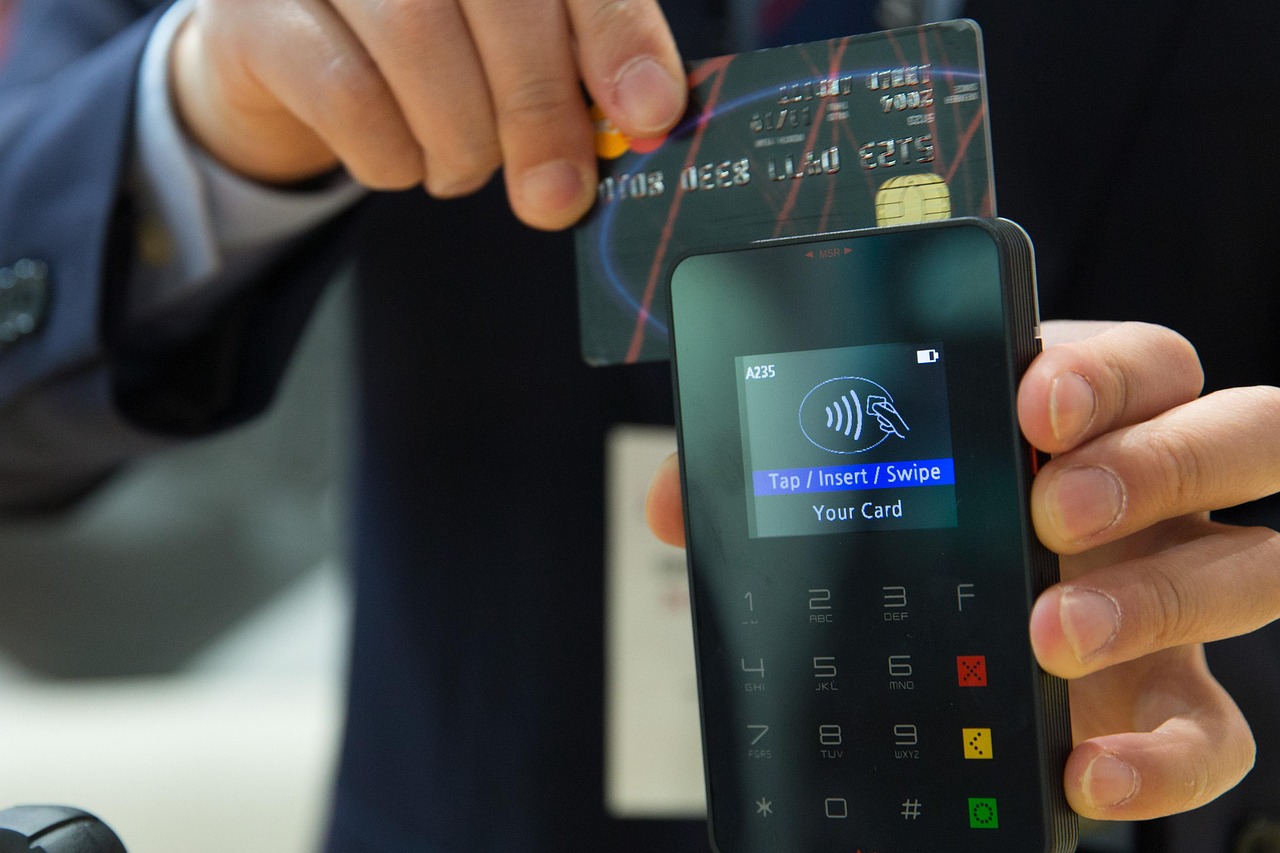
- Integrated card terminal: A fully integrated payment terminal means transactions post directly to the till — no separate daily reconciliation and fewer human errors. Our guide to EPOS systems with integrated card payments explains what to verify before signing a payment contract.
- Barcode scanner: Handheld 1D/2D scanners suit most retail; fixed presentation scanners suit high-volume supermarket-style checkout lanes.
- Cash drawer: Still essential for many UK businesses, even as card transactions dominate — ensure it connects via the receipt printer's kick port for reliable triggering.
- Receipt printer: Thermal printers (80mm paper width) are the standard; choose one rated for high daily print volumes if you run a busy café or convenience store.
- Customer-facing display: Builds trust, reduces disputes, and is increasingly expected by UK shoppers.
For businesses where portability matters — market traders, table-service restaurants, pop-ups — a wireless or handheld card machine integrated with your EPOS is worth investigating. The practical guide to wireless card machines for small businesses covers the key considerations.
EPOS Pricing Compared: What Do UK Businesses Actually Pay?
Pricing transparency is rare in the EPOS industry, so the ranges below are honest indicative guidance based on typical UK market conditions — not fixed quotes. Your actual cost will depend on the number of tills, chosen peripherals, software tier, and payment processing arrangement.
| Business type | Typical monthly software cost (per terminal) | Indicative hardware investment (single-till setup) | Notes |
|---|---|---|---|
| Small independent retailer | Typically from £30–£60/month | Typically from £500–£1,200 | Entry-level cloud licence with receipt printer and scanner |
| Independent café or restaurant | Typically from £40–£80/month | Typically from £700–£1,500 | Table management and KDS add-ons may increase software tier cost |
| Multi-site retail group | Typically from £25–£55/month per terminal (volume discounts apply) | Varies significantly by site | Central back-office and reporting tools often included at higher tiers |
| Pharmacy | Typically from £50–£100/month | Typically from £800–£1,800 | Specialist compliance features (PMR integration, age-restricted sales) required |
These figures cover software licences and typical hardware bundles. Payment processing fees are charged separately and vary by provider and transaction volume — always clarify whether a quoted rate is interchange-plus or blended. If you are currently running a cash register and considering the transition, our guide to upgrading from a cash register to a modern EPOS system helps you budget accurately for the switch.
A Side-by-Side Overview of EPOS Approaches Available to UK Businesses
Rather than publishing invented competitor pricing or unverifiable awards, the table below helps you identify which type of provider fits your circumstances — a more honest and useful framework.
| Provider type | Typical strengths | Common limitations | Best suited to |
|---|---|---|---|
| Tablet-app providers (iPad/Android-based) | Very low upfront cost, fast setup | Limited hardware durability; shallow inventory features; payment lock-in | Pop-ups, market stalls, early-stage sole traders |
| Generalist cloud EPOS platforms | Broad feature sets, marketplace integrations | Can be overly complex for simple operations; support often ticket-based | Mid-size multi-channel retailers |
| Sector-specialist UK providers | Deep sector knowledge, UK-based support, hardware optimised for sector | May require direct consultation to configure correctly | Hospitality, pharmacy, off licence, fashion retail |
| Enterprise ERP-integrated systems | Unified data across finance, logistics and POS | High implementation cost and complexity; overkill below ~20 tills | Large retail chains and franchise groups |
For an in-depth look at how EPOS Direct's offering holds up against alternative providers on specific criteria, the complete 2026 comparison guide is worth reading before you shortlist.
Why UK Businesses Choose EPOS Direct
EPOS Direct has supplied and supported point-of-sale systems to UK businesses across retail, hospitality, pharmacy and beyond for many years. The reasons businesses consistently return — and refer others — come down to a handful of practical differences:
- UK-based expert support: You speak to people who understand UK retail trading patterns, VAT reporting requirements and the specific pressures of British high street business.
- Sector-built software: Rather than one generic platform stretched to fit, EPOS Direct offers purpose-configured software for retail, restaurant and pharmacy — each with the workflows that sector actually demands.
- Full hardware and software under one roof: No finger-pointing between a hardware supplier and a software vendor when something needs resolving.
- Transparent offers: Clear pricing bundles rather than hidden renewal costs or surprise payment processing terms.
- Scalable from day one: Whether you are opening your first shop or expanding to a fifth site, the platform grows with you without a system migration.
You can see current deals and configurations on the EPOS Direct home page, or go directly to sector-specific offers: retail EPOS offers and hospitality and restaurant EPOS offers. For pharmacy businesses, the pharmacy EPOS software demo is a practical starting point.
If you run a smaller independent shop and want a focused recommendation, the buyer's guide to till systems for small shops narrows down exactly what matters at that scale.
Ready to Find the Right System for Your Business?
The right EPOS system reduces friction at your till, gives you the data to make better buying decisions, and pays for itself through stock accuracy and faster service alone. The wrong one costs you time, money and the goodwill of customers who queue a little too long.
EPOS Direct's team works with UK businesses every day across exactly these decisions — matching hardware, software and payment processing to the real shape of each operation. Talk to an expert online for a no-obligation conversation about your requirements, or request a free demo to see the software in action before you commit to anything.
Written by the EPOS Direct UK team, who support UK retail, hospitality and pharmacy businesses with EPOS and POS systems every day.
Frequently asked questions
- How much does an EPOS system cost for a small UK business?
- For a small UK business, a basic EPOS setup typically costs between £300 and £800 for entry-level hardware (touchscreen till, receipt printer and card reader). Monthly software subscriptions usually range from £20 to £80 per month depending on features. More advanced systems with full stock management, multi-site support and integrated payments can cost £1,000–£2,500+ upfront, with software plans from £50 to £150 per month. EPOS Direct offers flexible packages tailored to budget and business size, so it's worth getting a custom quote.
- What is the difference between a cloud EPOS system and a traditional till?
- A traditional till stores all data locally on the device, meaning you can only access reports and sales data on-site. A cloud-based EPOS system stores data online, so you can monitor sales, update menus or product catalogues, and manage staff from any device, anywhere. Cloud systems also receive automatic software updates and are easier to scale across multiple locations — making them the preferred choice for most modern UK businesses.
- Which EPOS system is best for a UK restaurant or café?
- Hospitality businesses need EPOS features that retail systems often lack, such as table management, split billing, kitchen display system (KDS) integration, allergen tracking and timed promotions. When comparing EPOS systems for restaurants or cafés in the UK, look for software designed specifically for hospitality workflows, reliable touchscreen hardware and integrated payment processing. EPOS Direct supplies hospitality-focused EPOS solutions with full after-sales UK support.
