We use cookies to make your experience better.
To comply with the new e-Privacy directive, you agree to the privacy policy and our use of cookies

How a POS System Works: A Plain-English Guide for UK Retailers & Hospitality Businesses
How a POS System Works: A Plain-English Guide for UK Retailers & Hospitality Businesses

A point-of-sale system is the combination of hardware and software that processes a customer's purchase, updates your stock, handles payment and produces a receipt — all in a matter of seconds. Modern POS technology goes far beyond a simple till: it connects your shop floor or restaurant floor to your back office, your accountant and, increasingly, your online channels. Whether you are opening your first store or replacing an ageing cash register, understanding how these systems work puts you in a much stronger position to choose the right one.
The Core Components of a POS System: Hardware and Software Explained
Every POS setup has two distinct layers working together: the physical hardware a customer and operator interact with, and the software running underneath that makes everything meaningful.
Hardware you will typically see
- Touchscreen terminal or tablet — the primary interface for staff, running the POS application. Sizes range from compact 10-inch tablets to large 15-inch all-in-one units.
- Barcode scanner — reads product barcodes to pull up price and stock information instantly. Handheld, fixed-mount and 2D imager variants are common in UK retail.
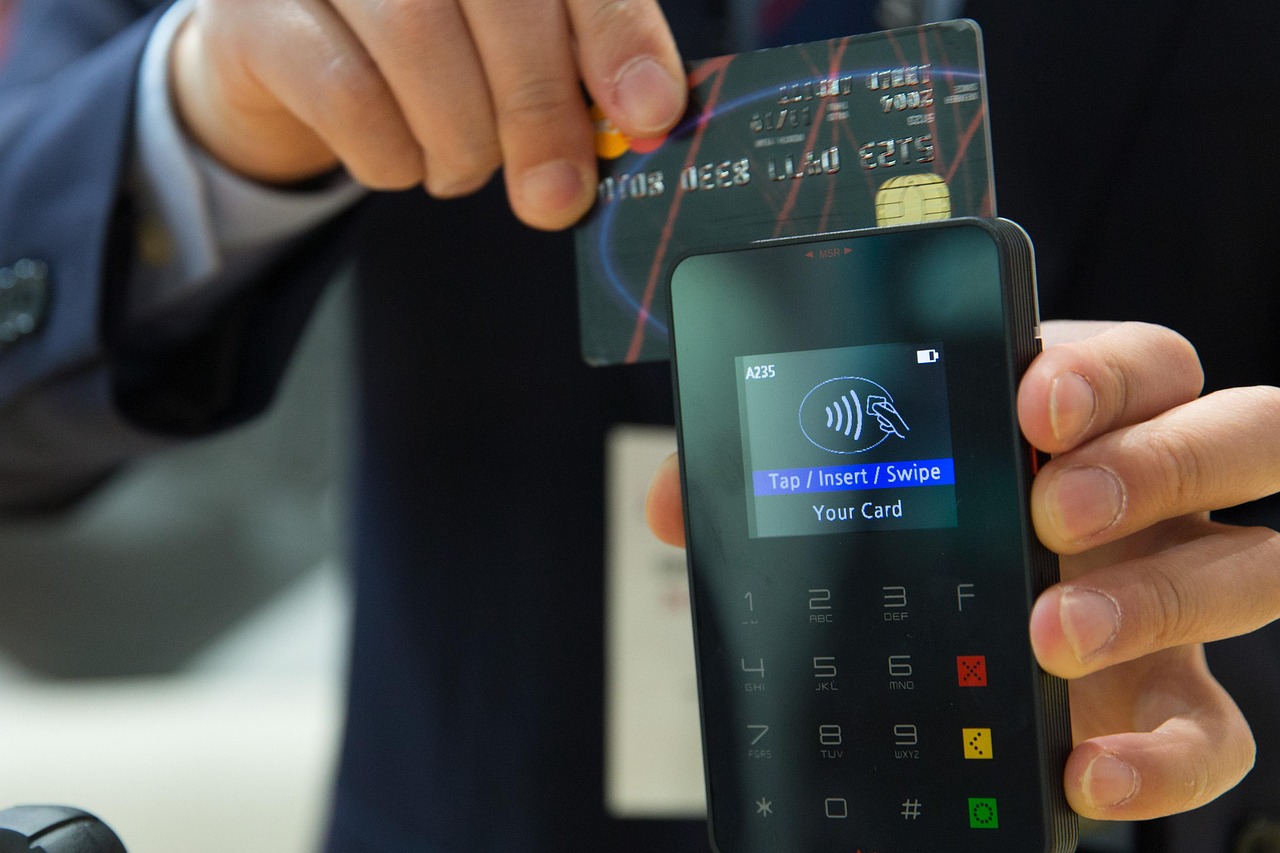
- Card payment terminal — processes chip-and-PIN, contactless and mobile wallet payments. For countertop and mobile use, see our guide to the best wireless card machines for small businesses in the UK.
- Receipt printer — thermal printers are the industry standard, producing receipts without ink cartridges.
- Cash drawer — still essential in many UK retail and hospitality environments, triggered automatically on cash transactions.
- Customer display — shows the transaction total to the buyer, building trust and reducing disputes.
- Kitchen display system (KDS) or kitchen printer — routes food and drink orders from the till directly to preparation areas in restaurants and cafés.
The software layer
The software is where the real intelligence lives. A modern EPOS (electronic point of sale) application handles product catalogues, pricing rules, promotions, staff permissions, sales reporting and, in hospitality, table management. The best platforms expose all of this through a clean, intuitive interface so staff can be trained in minutes rather than days. You can explore our EPOS software to see what a well-built system looks like in practice.
Step-by-Step: What Happens the Moment a Sale Is Made
The speed of a transaction hides a lot of coordinated activity. Here is what actually happens between a customer presenting their goods and walking out of the door:
- Item identification — the operator scans a barcode, taps a product on the touchscreen, or (in restaurants) selects dishes by course and table. The software retrieves the product record including price, VAT rate and current stock level.
- Basket assembly — additional items are added, discounts or loyalty points are applied, and the system calculates the running total including any applicable VAT.
- Payment selection — the operator selects cash, card or split tender. For card payments, the POS communicates with the integrated payment terminal, which contacts the card network and the customer's bank for authorisation.
- Authorisation and settlement — the bank either approves or declines. An approved transaction triggers the payment processor to queue funds for settlement, typically the next business day.
- Receipt generation — a printed or digital receipt is produced. UK-compliant receipts include the business name, VAT number (if VAT-registered), a breakdown of VAT charged and the date.
- Stock and data update — the software immediately decrements stock levels, records the sale against the relevant product and staff member, and feeds the transaction into reporting dashboards.
This entire sequence — from first scan to receipt — typically completes in under 30 seconds for a straightforward card transaction.
Cloud-Based vs. On-Premise POS: Which Setup Suits Your Business?
One of the most important structural decisions you will make is where your data lives and how the software is hosted. Neither option is universally better; the right choice depends on your connectivity, your IT appetite and how many sites you run.
| Factor | Cloud-based POS | On-premise POS |
|---|---|---|
| Data storage | Hosted on remote servers; accessible anywhere | Stored on a local server or PC on-site |
| Internet dependency | Requires a reliable connection; good systems have offline mode | Operates fully without internet |
| Software updates | Automatic, pushed remotely — no manual patching | Manual updates; may require an engineer visit |
| Multi-site management | Excellent — all locations visible on one dashboard | Complex; requires VPN or separate systems per site |
| Upfront cost | Lower — typically subscription-based | Higher — licence and server hardware costs |
| Data security | Managed by provider; look for ISO 27001 or SOC 2 certification | Your responsibility to maintain and back up |
| Best suited to | Growing businesses, multi-location groups, hospitality | Single sites with poor connectivity or strict data policies |
For most UK retailers and hospitality businesses opening or expanding today, cloud-based systems offer the better long-term proposition. To understand the financial implications of subscription versus outright purchase, our detailed article on monthly EPOS subscriptions versus outright purchase walks through the numbers clearly.
How POS Systems Handle Payments, Receipts and VAT in the UK
UK businesses have specific obligations around VAT that a well-configured POS system enforces automatically. If your business is VAT-registered (the current registration threshold is published by HMRC and should be verified at GOV.UK), your system must record the VAT rate applied to each product line and produce a VAT receipt on request.
A properly configured EPOS allows you to assign VAT rates per product — standard rate, reduced rate or zero rate — so the correct amount is captured at point of sale without relying on staff to remember rules. This matters enormously in hospitality, where the VAT treatment of food and drink can differ depending on whether items are consumed on or off the premises.
On the payments side, integrated card terminals — where the POS and the payment terminal share data directly — eliminate the manual reconciliation errors that come with separate devices. Our guide to EPOS systems with integrated card payments in the UK explains what to look for and which setups are worth considering.
Stock Control, Reporting and Back-Office Features That Save You Time
The greatest efficiency gains from a POS system come not at the till but behind the scenes. Here is what a strong back-office feature set looks like:
Stock management
- Real-time stock levels updated with every sale, return or goods receipt
- Low-stock alerts and automated reorder notifications
- Batch and serial number tracking for regulated products (useful in pharmacy and off-licence environments)
- Wastage and void recording for hospitality
Reporting and analytics
- End-of-day Z-reports for cash reconciliation
- Best-seller and dead-stock reports to inform buying decisions
- Staff performance reports linking sales to individual logins
- Hourly trading patterns to support rota planning
- Gross margin reporting per product or category
If you are weighing up whether your current setup is truly earning its place, it is worth requesting a retail EPOS software demo to see how a modern platform handles these functions compared with what you have today.
Connecting Your POS to Other Business Tools (Accounting, Loyalty and Delivery)
An isolated POS is a missed opportunity. The real power emerges when your till talks to the rest of your business ecosystem.
Accounting software
Direct integration with platforms such as Xero, QuickBooks or Sage means daily sales figures, VAT summaries and payment reconciliation flow into your accounts automatically. This reduces the risk of manual entry errors and makes month-end considerably less painful.
Loyalty and CRM
A POS-integrated loyalty scheme captures customer spend data that is otherwise invisible. Points-based programmes, tiered rewards and targeted promotions can all be managed from within the same system, with data feeding back into a CRM for email marketing campaigns.
Online ordering and delivery platforms
For restaurants and takeaways, integration with online ordering platforms (or a proprietary ordering module) means orders drop directly onto the kitchen display without a staff member manually re-entering them — eliminating one of the most common sources of error in busy kitchens. To see this workflow in action, a restaurant EPOS software demo is the most efficient way to evaluate the capability.
Ecommerce
Retailers operating both a physical shop and an online store benefit enormously from a unified stock pool. When a product sells in-store, it is reflected on the website immediately, preventing oversells and the customer disappointment that follows.
Choosing the Right POS System for UK Retail or Hospitality
A common question from buyers is: "Do I need a different system for retail than for a café or restaurant?" The answer is almost always yes. The workflows are fundamentally different — retail revolves around product scanning, stock accuracy and quick throughput; hospitality centres on table management, course sequencing, modifiers and split bills.
Key questions to work through before selecting a system:
- How many terminals do you need? A single-till corner shop has very different requirements from a 12-table restaurant with a bar.
- Do you need mobile or tableside ordering? Handheld devices for staff ordering at the table have become standard in modern hospitality.
- What are your integration requirements? List the software you already use before you evaluate any system.
- What level of support do you need? 24/7 phone support matters very differently for a business trading seven days a week versus a Monday-to-Friday trade counter.
- Are there sector-specific compliance needs? Off-licences and pharmacies, for example, have age-verification and controlled-stock requirements that not every system handles well. Our specialist guide on the best till systems for off licences in the UK addresses these specifically.
If you are replacing an older cash register rather than starting from scratch, the practical steps involved are covered in our guide to switching from a cash register to a modern EPOS system.
What Does a POS System Cost in the UK?
Cost is inevitably one of the first practical questions buyers raise, and it deserves an honest answer. Prices vary considerably depending on the number of terminals, the software tier, payment processing fees and whether hardware is purchased outright or taken on subscription.
The following are indicative market ranges to help you budget; they are not quotes. Your actual costs will depend on your specific requirements. Always request a formal quotation.
| Setup type | Indicative software cost | Indicative hardware cost | Typical for |
|---|---|---|---|
| Entry-level single terminal | Typically from £20–£50/month | Typically from £400–£800 outright | Market stalls, small independent shops |
| Mid-tier retail setup (1–3 tills) | Typically £50–£150/month | Typically £1,000–£3,000 outright | Independent retailers, convenience stores |
| Hospitality (restaurant/café, 2–4 terminals) | Typically £80–£200/month | Typically £2,000–£5,000 outright | Cafés, restaurants, pubs |
| Multi-site or enterprise | Custom pricing; typically £200+/month | Negotiated per project | Groups, franchises, large independents |
Payment processing fees are charged separately by your acquirer and are not part of the POS software subscription. They are typically expressed as a percentage of turnover or a per-transaction flat fee, negotiated directly with the payment processor.
For a fuller look at the options available — including current offers — visit the EPOS Direct UK home page for more information, or browse our curated guides to the best till systems for small businesses in the UK and the best till systems for small shops to narrow down your shortlist.
Ready to See It Working for Your Business?
Understanding how a POS system works is the first step; seeing the right one configured for your specific sector is what turns understanding into a confident buying decision. The EPOS Direct UK team works with retailers, restaurateurs, pharmacy owners and specialist independents across the United Kingdom every day, helping businesses find a setup that fits their workflow and their budget.
You can request a free demo at a time that suits you, talk to an expert online about your requirements, or explore our sector-specific offers directly: retail EPOS offers and hospitality and restaurant EPOS offers are a useful starting point. If you would prefer to speak with someone directly, request a call back and a member of the team will be in touch.
Written by the EPOS Direct UK team, who help UK retailers and hospitality businesses select, install and get the most from their EPOS systems every day.
Frequently asked questions
- What equipment do I actually need to run a POS system in my shop or café?
- At minimum you need a touchscreen terminal or tablet, a receipt printer, a barcode scanner, and a card payment reader. Many UK businesses also add a cash drawer and customer-facing display. EPOS Direct bundles all these components together so you receive a matched, pre-configured setup ready to use out of the box.
- How much does a POS system cost for a small UK business?
- In the UK, entry-level POS bundles typically start from around £300–£500 for basic hardware with free or low-cost software. A mid-range retail or hospitality setup with touchscreen terminal, scanner, printer and card reader commonly runs £600–£1,200 as a one-off purchase. Cloud software licences usually add £20–£60 per month per terminal. EPOS Direct offers competitive bundles with UK-based support, and finance options are available so you can spread the cost.
- Can a POS system work without an internet connection?
- Yes. Most modern cloud-based POS systems, including those from EPOS Direct, offer an offline mode that keeps recording sales locally and then syncs data automatically once connectivity is restored. This is particularly useful for market traders, pop-up shops, or hospitality venues where Wi-Fi can be unreliable.
