We use cookies to make your experience better.
To comply with the new e-Privacy directive, you agree to the privacy policy and our use of cookies


Best POS Systems with Contactless Payments in the UK (2026 Guide)
POS Systems with Contactless Payments in the UK: The Complete 2026 Guide
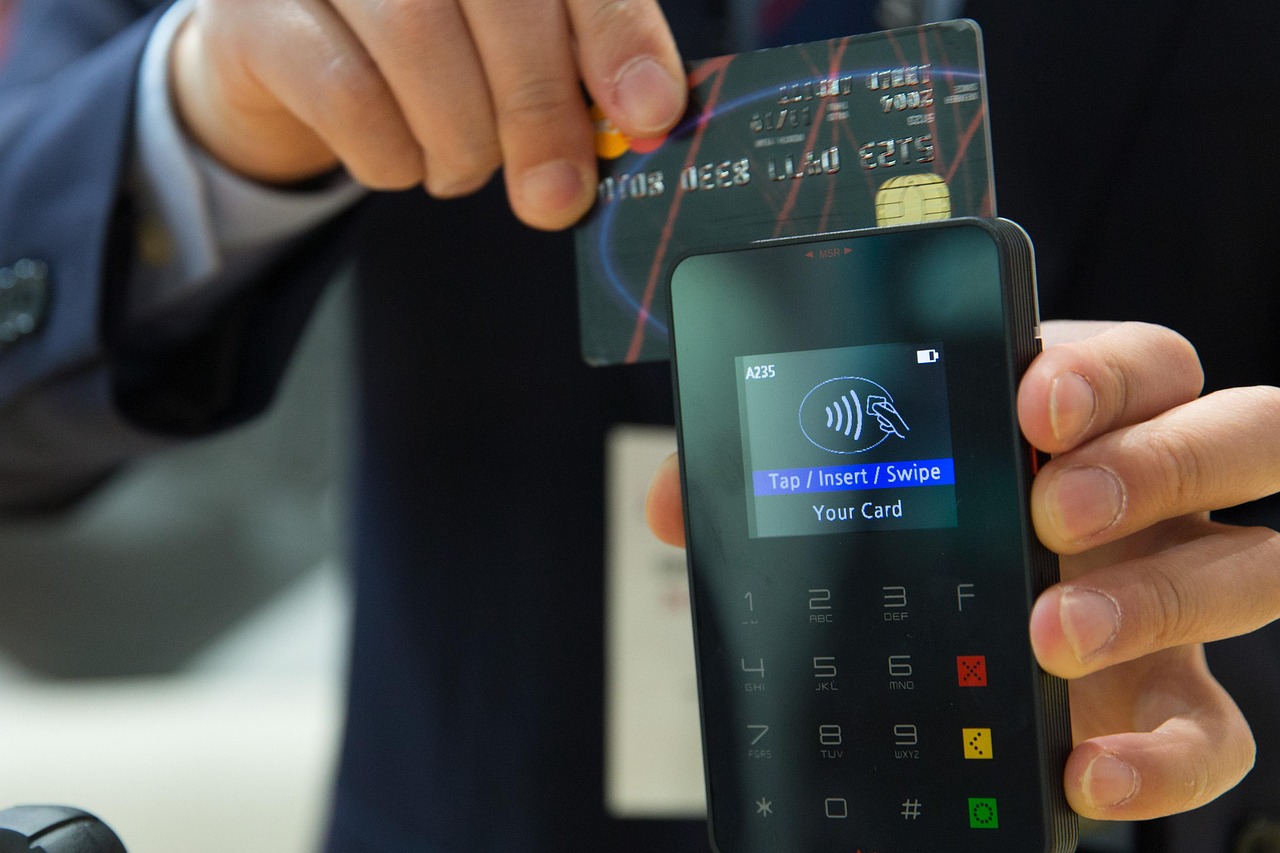
A modern point-of-sale system that accepts contactless payments is no longer a luxury for UK businesses — it is a practical necessity. Consumer expectations have shifted decisively towards tap-to-pay, and an EPOS setup that handles NFC cards, Apple Pay and Google Pay seamlessly can meaningfully improve queue times, reduce transaction friction and give your business a polished, professional edge. This guide covers everything UK retailers and hospitality operators need to know to choose, budget for and deploy the right contactless-ready POS setup.
Written by the EPOS Direct UK team, who work with independent retailers, restaurants, salons and multi-site operators across the United Kingdom every day.
What a Contactless-Ready POS System Actually Does — and Why It Matters
A contactless POS system combines a till or tablet running EPOS software with a card reader that supports Near Field Communication (NFC). When a customer taps a card, phone or wearable, the payment terminal exchanges an encrypted token with their bank, and the transaction is authorised in seconds — typically under two seconds. The EPOS software records the sale, updates stock levels, prints or emails a receipt, and feeds the data into your reporting dashboard, all without a PIN or signature for qualifying transactions.
For UK businesses, this matters for a concrete reason: contactless payments now account for the majority of face-to-face card transactions in the United Kingdom, according to UK Finance's annual payments data. Businesses that cannot accept them risk losing sales to competitors who can. Beyond convenience, an integrated contactless setup eliminates manual reconciliation errors that arise when a standalone card machine and till run separately.
Key Features to Look for in a UK Contactless POS System
Not all contactless-ready EPOS systems are equal. Before committing to a solution, assess the following criteria carefully:
- True NFC integration: The card reader should be embedded in — or tightly paired with — the EPOS software so that totals pass automatically to the terminal. Manually keying amounts into a standalone machine is a reconciliation risk.
- Support for all major wallets: Look for explicit compatibility with Apple Pay, Google Pay and Samsung Pay, not just contactless cards. Wallet payments are growing fastest among younger shoppers.
- High contactless limit compliance: The UK contactless card limit has been raised to £100 per transaction (verify the current limit with UK Finance or your acquirer, as it can change). Your terminal firmware must be up to date to honour this.
- Offline resilience: A system that fails completely when the internet drops will cost you sales. Look for local transaction queuing that syncs when connectivity returns.
- PCI DSS compliance: Your payment hardware and software must adhere to the Payment Card Industry Data Security Standard. Reputable providers manage compliance on your behalf — confirm this in writing.
- Real-time reporting: Every contactless sale should appear instantly in your back-office dashboard, including payment method breakdown, so you can monitor cash versus card splits.
- Receipt flexibility: Printed receipts, email receipts and no-receipt options should all be configurable per customer preference.
If you are also evaluating whether a combined device makes sense, our guide to card machines and till systems combined covers the trade-offs in detail.
Contactless Payment Methods Supported by Modern UK EPOS Systems
Understanding the payment landscape helps you ask the right questions when comparing systems.
NFC Contactless Cards
Visa, Mastercard and American Express all issue contactless cards that use NFC. These are the most common payment method for tap transactions in the UK. Your terminal must hold a valid kernel for each scheme you want to accept.
Apple Pay
Apple Pay uses a device-specific number and a transaction-specific dynamic security code, making it arguably more secure than a physical card. UK consumers use it widely via iPhone and Apple Watch. Because Apple Pay has no transaction value ceiling on the device side (the limit is set by the merchant's acquirer agreement), it is increasingly preferred for higher-value purchases.
Google Pay
Google Pay operates on the same tokenisation model as Apple Pay and works across Android phones and Wear OS devices. Adoption has grown steadily as Android dominates UK smartphone market share in the mid-market segment.
Samsung Pay and Other Wallets
Samsung Pay supports MST (Magnetic Secure Transmission) as well as NFC, meaning it can work with some older terminals. However, a fully NFC-capable terminal handles all wallet types without relying on legacy emulation.
For a deeper look at the wireless hardware side of the equation, our guide to the best wireless card machines for small businesses in the UK explains the key hardware differences.
Retail vs Hospitality: Different Environments, Different Requirements
The right contactless EPOS configuration depends heavily on the environment in which it operates.
Retail
Retail environments — whether a fashion boutique, pharmacy or convenience store — typically need a fixed counter terminal paired with a customer-facing contactless reader, plus robust product and variant management. Barcode scanning speed and accurate stock tracking are as important as the payment step itself. Clothing retailers, for example, need size and colour matrix management alongside contactless acceptance; see our detailed guide on EPOS systems for clothing shops for sector-specific advice.
Hospitality
Restaurants, cafés, pubs and hotels have more complex requirements. Table-side contactless payment — where a handheld terminal is brought to the guest — is now an expectation, not a premium feature. The EPOS system must handle split bills, course-by-course ordering, cover counts and table mapping, all while feeding payment data back to a central back office. Kitchens need order tickets or KDS integration that remains stable regardless of payment method chosen.
Summary Comparison
| Requirement | Retail Focus | Hospitality Focus |
|---|---|---|
| Payment terminal placement | Fixed counter reader, customer-facing | Handheld / table-side terminals |
| Core EPOS priority | Stock management, barcode scanning | Table management, course ordering |
| Receipt preference | Printed or email | Itemised bill, then payment receipt |
| Split payment handling | Occasional (gifts, deposits) | Frequent (split bills, partial pay) |
| Offline tolerance | Low–medium | Very low (service cannot pause) |
| Integration priorities | Accounting, loyalty, e-commerce | Reservations, delivery platforms, COGS |
How Much Does a Contactless EPOS System Cost in the UK?
Pricing varies depending on hardware specification, software tier, number of terminals and whether you opt for a one-off purchase or a subscription model. The ranges below are indicative guidance based on typical UK market rates — not a formal quote. Always request a tailored proposal for your specific setup.
Hardware
- Entry-level tablet and NFC reader: typically from around £300–£600 per terminal as a one-off purchase.
- All-in-one countertop EPOS terminal with integrated contactless: typically £600–£1,200 per unit depending on screen size, processing power and peripheral ports.
- Handheld wireless terminals (hospitality): typically £200–£500 per device, often leased rather than purchased outright.
Software
- Cloud EPOS software subscription: most UK systems are priced in the range of £30–£100 per month per terminal, depending on feature tier.
- One-off perpetual licence models do exist, particularly from established UK EPOS providers, and may suit multi-terminal operators with stable needs.
Payment Processing
Card processing fees are separate from software costs and are negotiated with an acquiring bank or payment facilitator. Rates vary by card type (debit, credit, corporate), transaction volume and scheme. Businesses processing higher volumes typically negotiate lower interchange-plus rates. Some operators prefer a flat-rate model for simplicity; others find interchange-plus more economical at volume. Our guide to EPOS systems with integrated card payments covers processing models in detail.
If avoiding monthly software fees is a priority, it is worth reading our overview of card machines with no monthly fee to understand the trade-offs.
For small businesses evaluating total cost of ownership, our guide to till systems for small businesses provides a practical framework for comparing total spend against feature return.
Why EPOS Direct Is a Leading Choice for Contactless POS in the UK
EPOS Direct has been supplying point-of-sale systems to UK businesses across retail, hospitality, pharmacy and beyond for many years. The core reasons operators choose EPOS Direct for contactless-enabled setups include:
- Fully integrated payment terminals: EPOS Direct systems are designed so that the EPOS software and the contactless payment terminal communicate natively — no manual amount entry, no reconciliation guesswork.
- Sector-specific software: Dedicated software builds for retail, restaurant and pharmacy environments mean the system ships with the workflows your team actually needs, rather than a generic interface requiring heavy configuration. You can explore live examples through the retail EPOS software demo or the restaurant EPOS software demo.
- UK-based support: Hardware failures and software issues do not respect business hours. EPOS Direct provides UK-based technical support rather than routing queries through overseas call centres.
- Scalable architecture: Whether you operate one terminal in a market stall or twenty across multiple sites, the back-office platform scales without requiring a change of system.
- Transparent commercial model: Hardware, software and support are clearly separated so you understand exactly what you are committing to — no hidden processing mark-ups bundled into opaque monthly fees.
You can browse current packages and offers on the EPOS Direct home page, or go directly to the relevant sector offer pages: retail EPOS offers or hospitality and restaurant EPOS offers.
If you are still scoping your requirements, the complete guide to EPOS systems for small businesses provides a structured framework for working through your decision before you speak to a vendor.
How to Get Started: Setting Up Your Contactless POS System
Getting a contactless EPOS system live is a straightforward process when you work with an experienced supplier. Here is what to expect:
- Scoping: Define your sector, number of terminals, key integrations (accounting software, loyalty programmes, delivery platforms) and whether you need handheld devices. If you are unsure, talk to an expert online — the EPOS Direct specialist team can map requirements to a recommended configuration quickly.
- Demo: Before committing, see the software in action with your own product data if possible. Request a free demo to walk through real workflows rather than a polished presentation deck.
- Acquirer setup: Your payment processing account (with a bank or payment facilitator) needs to be active before terminals can go live. EPOS Direct can advise on compatible acquirers; this step typically takes a few business days to a couple of weeks depending on the acquirer's onboarding process.
- Hardware delivery and configuration: Terminals arrive pre-configured where possible. Staff training typically takes a few hours for the core workflows — contactless payments specifically are intuitive for staff once the till integration is demonstrated.
- Go live and review: Run end-of-day reports for the first week to confirm that card totals reconcile with your payment processing statements. Flag any discrepancies to your support team immediately.
If you would prefer to discuss your requirements over the phone rather than online, you can request a call back from the EPOS Direct team at a time that suits you.
Conclusion
Choosing a contactless-ready EPOS system is one of the most consequential operational decisions a UK business can make. The right setup reduces transaction time, eliminates reconciliation errors and gives customers the frictionless experience they expect from a well-run business. The wrong setup — a poorly integrated card machine bolted onto generic till software — creates daily friction for staff and erodes confidence at the point of payment.
EPOS Direct combines purpose-built sector software, fully integrated contactless terminals and UK-based support into a coherent, scalable solution. Whether you run an independent boutique, a busy restaurant or a multi-branch operation, the team is ready to help you specify and deploy a system that works from day one. Request your free demo today and see exactly what a modern, contactless-ready EPOS system can do for your business.
Frequently asked questions
- Do all UK POS systems support contactless payments?
- Not all POS systems come with built-in contactless payment support. You need a system that includes an NFC-enabled card reader compatible with UK payment methods such as Visa, Mastercard, Apple Pay and Google Pay. EPOS Direct supplies fully integrated contactless hardware as standard with its UK POS packages.
- What is the contactless payment limit in the UK in 2026?
- As of 2026, the UK contactless payment limit remains £100 per transaction for standard contactless cards. However, mobile wallet payments via Apple Pay and Google Pay have no upper transaction limit when the customer authenticates with biometrics, making them ideal for higher-value retail and hospitality sales.
- Can I add contactless payment capability to my existing POS system?
- In many cases yes — you can add a standalone NFC-enabled card terminal to an existing POS setup. However, for seamless integration, real-time reporting and reduced transaction errors, it is generally better to use a fully integrated contactless EPOS system like those offered by EPOS Direct UK, where the card reader and software communicate directly.
