We use cookies to make your experience better.
To comply with the new e-Privacy directive, you agree to the privacy policy and our use of cookies


Restaurant EPOS System UK: A Practical Guide to Hospitality EPOS Systems from EPOS Direct
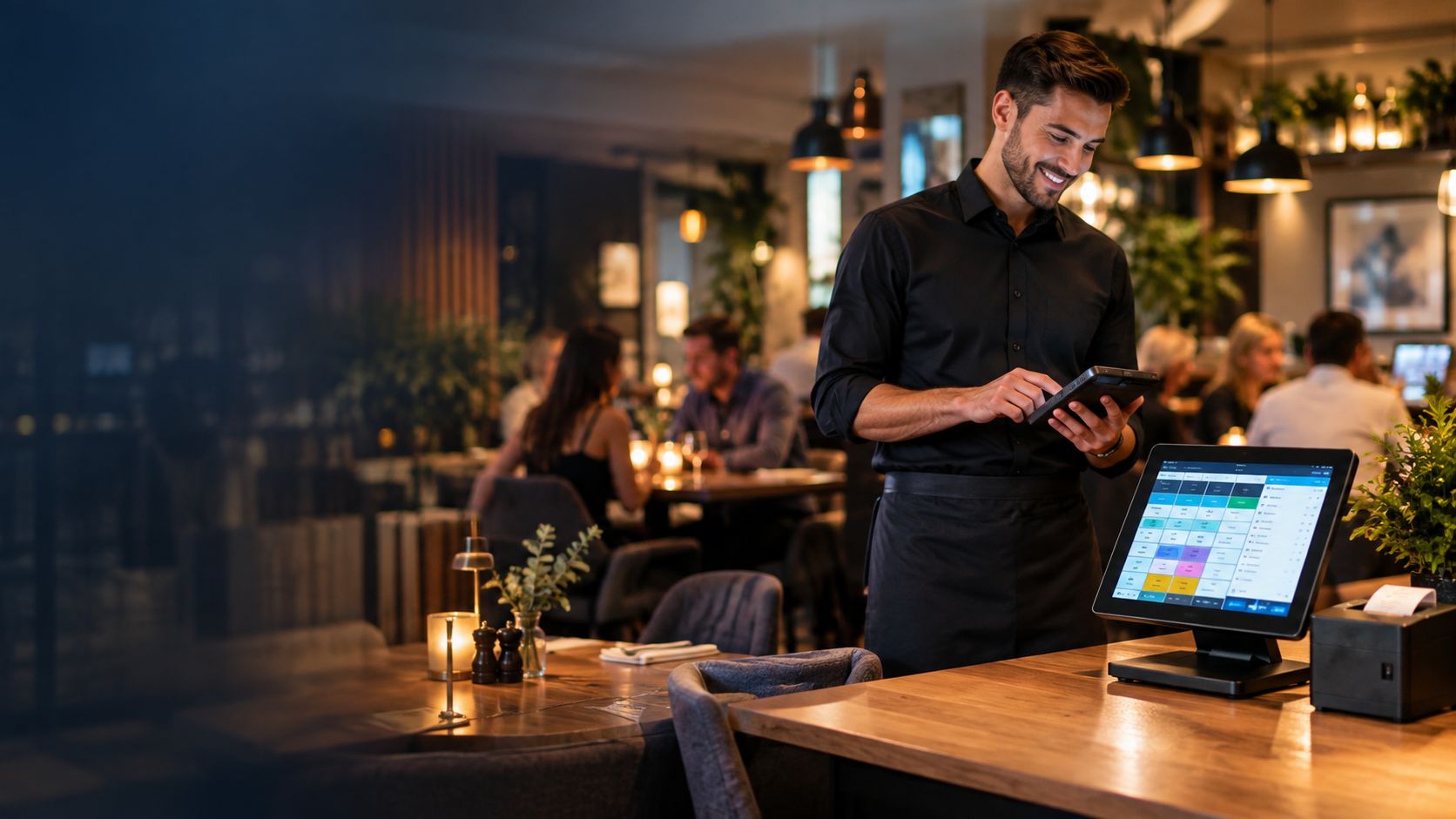
Choosing an epos system restaurant owners can rely on is one of the biggest operational decisions you will make. At EPOS Direct, we have helped independent restaurants, cafés, pubs and multi-site groups replace slow, error-prone till setups with systems that fit how their teams actually work. This guide explains what to look for, what to avoid and how to compare options honestly.
What Is an EPOS System for Restaurants?
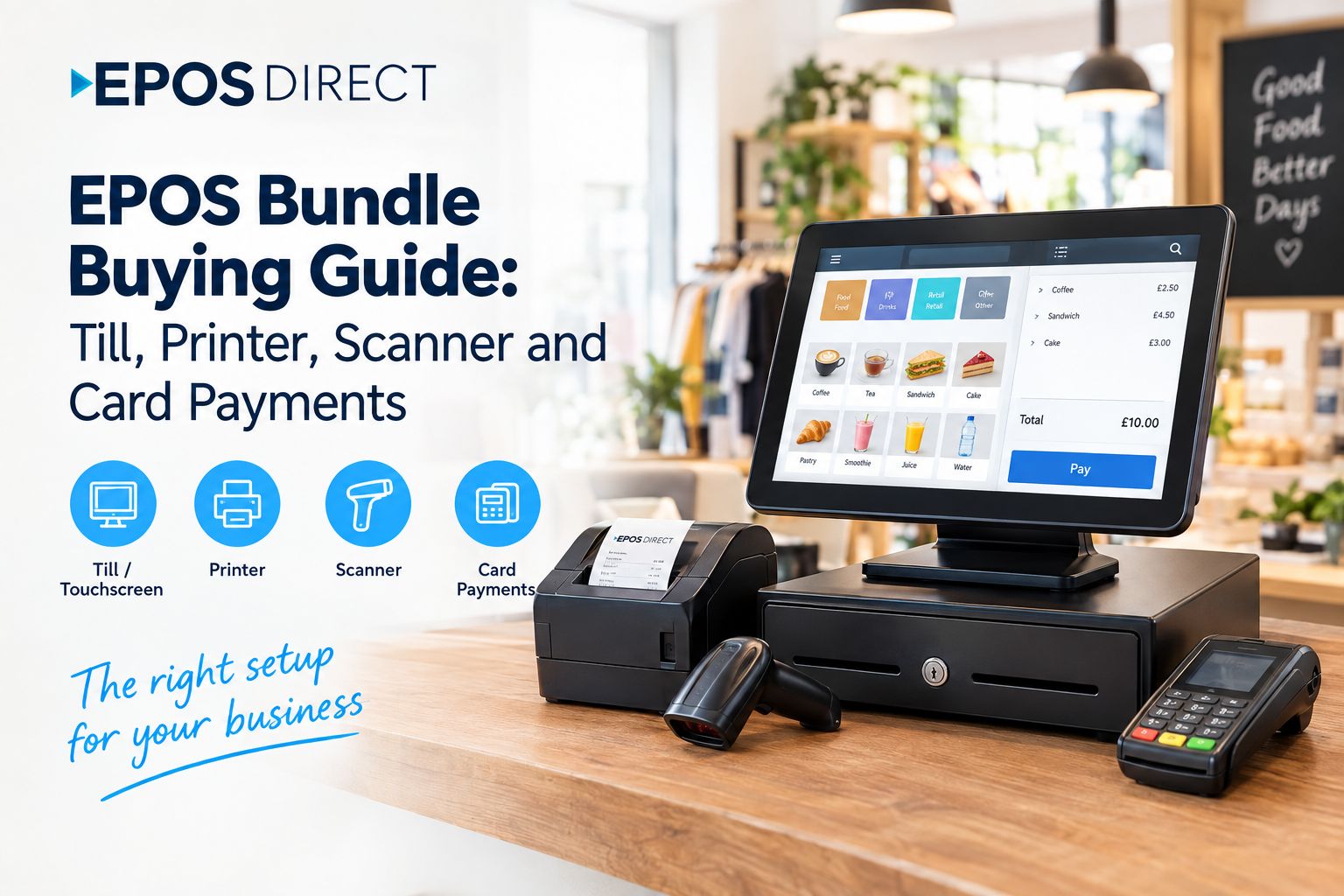
An EPOS (Electronic Point of Sale) system is the combined software and hardware that takes orders, processes payments, routes tickets to the kitchen and records every transaction. EPOS for restaurants goes further than retail tills, adding table plans, split bills, course timing and modifiers such as "no onions" or "gluten-free base".
How a Hospitality EPOS System Differs from a Standard Till
A hospitality EPOS system is built around service flow rather than quick scan-and-pay sales. Orders are fired to the correct station, tabs stay open across tables, and tips and service charges are tracked. In our experience, venues using retail-style tills usually hit the same problems: handwritten tickets, mistimed courses and end-of-day reconciliation that takes an hour or more.
Why Hospitality EPOS Systems Matter for UK Venues
Epos systems for hospitality deliver the most value in three areas.
Faster, More Accurate Service
Orders go straight from the handheld or terminal to the kitchen or bar, which cuts transcription errors and shortens ticket times. Fewer remakes mean less food waste.
Tighter Stock and Cost Control
Linking menu items to ingredients shows your real gross profit per dish. Many operators discover that their best-selling dish is not their most profitable one.
Easier UK Compliance
A restaurant epos system UK operators choose should support 20% VAT reporting, itemised receipts and clear sales records for your accountant. It should also help with Making Tax Digital requirements and allergen information under Natasha's Law, which applies to food prepared and packed on the premises for direct sale. Always confirm current obligations with HMRC and your local authority, as rules change.
Core Features of the Best Restaurant EPOS Systems
Whether you search for restaurant epos systems, epos for hospitality or hospitality pos systems, these are the features that separate useful software from expensive clutter.
Table Management and Floor Plans
A drag-and-drop floor plan shows which tables are occupied, waiting to order or ready for the bill. Staff can transfer, merge and split tables in seconds.
Kitchen Display and Order Routing
Kitchen display screens (KDS) replace paper tickets, and routing rules send drinks to the bar and starters to the cold section automatically. This is where a hospitality epos solution usually pays back fastest.
Integrated Payments
Look for a system that supports contactless, chip-and-PIN, mobile wallets and pay-at-table. Your provider should confirm PCI DSS compliance, the card-security standard that protects customer payment data.
Reporting You Will Actually Use
Good reporting shows sales by hour, item, server and site, along with labour cost against revenue. If the reports need a specialist to interpret them, they will not get used.
Hospitality POS vs EPOS Till Systems for Restaurants
The terms hospitality pos, hospitality epos and epos till systems for restaurants are often used interchangeably. In the UK, "EPOS" is the common term, while "POS" appears in international software listings. What matters is the configuration.
| Setup | Best for | Typical hardware |
|---|---|---|
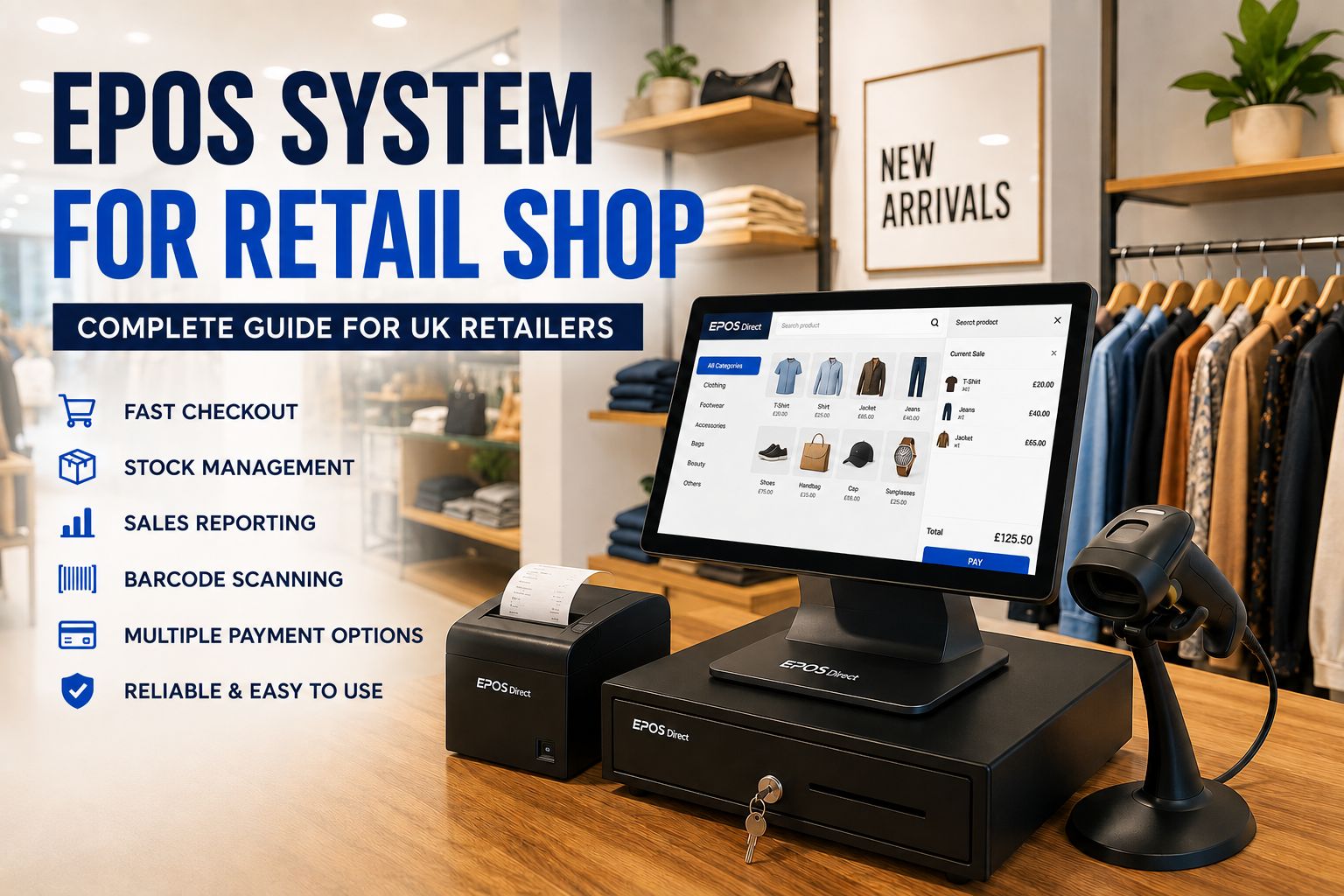
| Counter-service | Cafés, takeaways, quick-service | Touchscreen terminal, receipt printer, cash drawer |
| Table-service | Restaurants, gastropubs | Fixed terminal, handhelds, kitchen printer or KDS |
| Multi-site | Groups and franchises | Cloud back office, central menu and reporting |
Cloud-based systems store data online, so you can view sales from your phone and menu changes reach every till immediately. Offline mode matters here, because a good system keeps taking orders and syncs when the internet returns.
EPOS System for Café Owners: What to Prioritise
An epos system for café businesses has different priorities from a full-service restaurant. Speed at the counter is critical during the morning rush, so look for:
- Quick-access buttons for your top 20 items
- Simple modifiers for milk types, sizes and extra shots
- Loyalty and stamp-card features for regulars
- Integration with online ordering or click-and-collect
- Easy cash-up for busy, short-staffed shifts
Cafés often need less hardware than restaurants, but the software still has to handle high transaction volumes without lag.
How to Choose a Hospitality EPOS Solution
Follow this process before you sign a contract.
- Map your service style. Counter, table service or both? This decides your hardware.
- List your must-have features. Separate essentials such as KDS and pay-at-table from nice-to-haves.
- Ask for total cost. Include hardware, software licences, payment processing rates, support and any contract length. Be wary of quotes that only show the monthly software fee.
- Check integrations. Accounting software, delivery platforms, booking systems and stock tools should connect without workarounds.
- Test support. Ask about UK-based help, response times and out-of-hours cover for weekends, when restaurants need it most.
- Request a live demo. Run a real order with modifiers, a split bill and a refund. Watch how many taps each takes.
What We Have Seen at EPOS Direct
Working with UK venues has taught us a few consistent lessons:
- Training beats features. A simpler system your team understands will outperform a complex one they avoid.
- Menu setup is the hidden task. Building modifiers and pricing correctly on day one prevents months of workarounds.
- Peak-hour testing matters. Trial your epos system for restaurants during a real service, not an empty Tuesday afternoon.
- One size does not fit all. A 20-cover bistro and a 200-cover brasserie need different set-ups, and we will say so if a cheaper option suits you better.
Frequently Asked Questions
What is the best EPOS system for a restaurant in the UK?
The best restaurant epos system UK operators can choose depends on service style, size and budget. Table-service venues should prioritise floor plans, kitchen display integration and pay-at-table. Compare total cost, UK support and offline capability before deciding.
How much does a restaurant EPOS system cost in the UK?
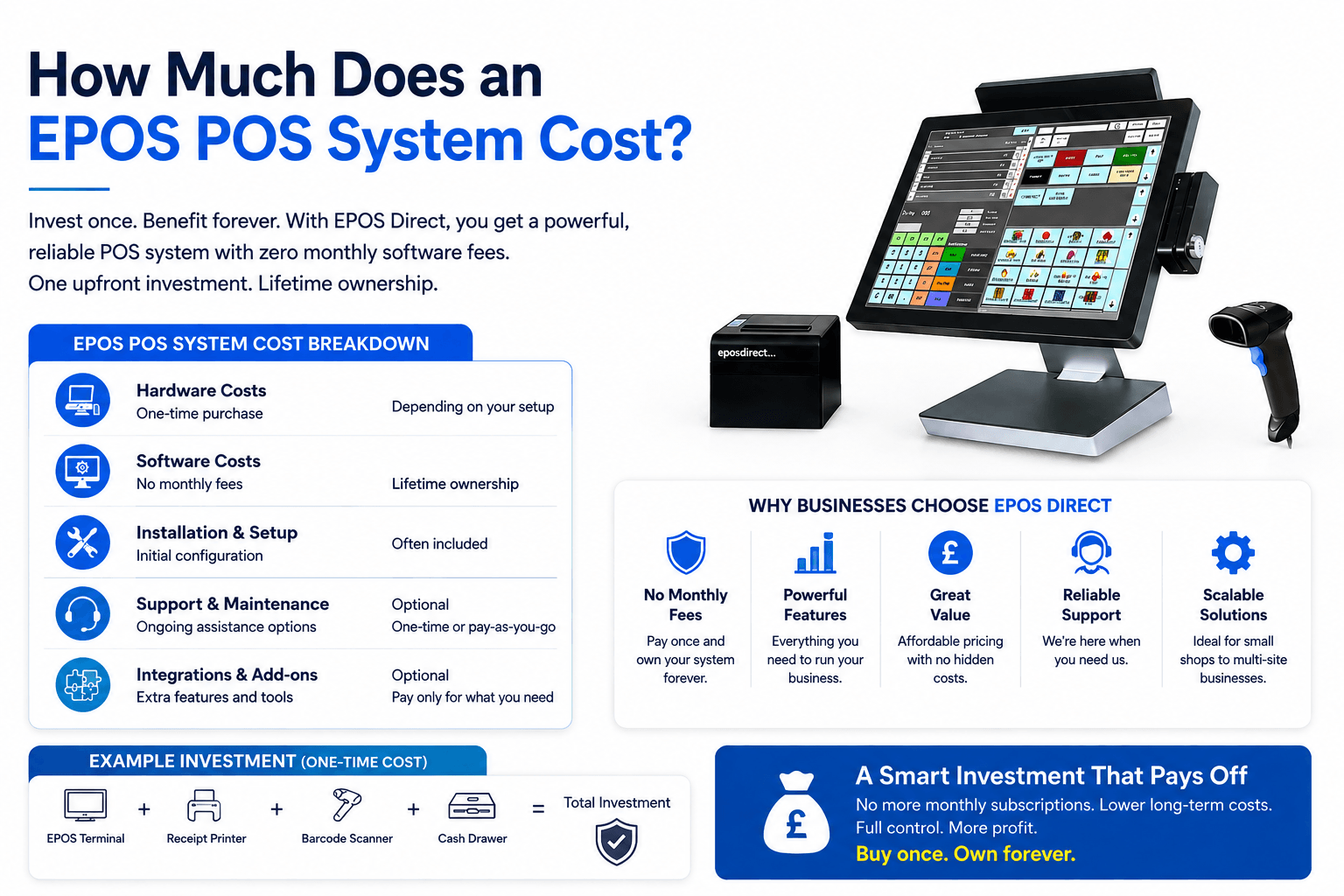
Costs vary widely. A basic single-terminal setup is far cheaper than a multi-terminal system with handhelds and KDS. Budget for hardware, monthly software fees, payment processing charges and support. Ask for a fully itemised quote so there are no hidden extras.
What is the difference between EPOS and POS?
They mean essentially the same thing. "EPOS" (Electronic Point of Sale) is the standard UK term, while "POS" is used more internationally. Both describe systems that process sales, payments and reporting, and both terms are used for hospitality software.
Do cafés need a different EPOS system from restaurants?
Usually, yes. An epos system for café use focuses on fast counter service, simple modifiers and loyalty tools. Restaurants need table management, course timing and kitchen routing. Some hospitality platforms handle both through configurable modes.
Can a hospitality EPOS system work without the internet?
Many can. Systems with offline mode keep processing orders and cash payments during an outage, then sync data once connectivity returns. Card payments may be limited offline, so ask your provider exactly how each payment type behaves.
What features should hospitality EPOS systems include?
Core features are table management, kitchen display or printer routing, split billing, integrated payments, stock tracking, staff permissions and sales reporting. Integrations with accounting, delivery and booking platforms add further value for growing venues.
How long does it take to install an EPOS system in a restaurant?
Hardware installation is often completed within a day, but menu building, staff training and testing take longer. Plan for a few days of preparation, and avoid switching over during your busiest trading period.
Is a cloud-based EPOS better for restaurants?
For most venues, yes. Cloud systems allow remote reporting, instant menu updates across sites and automatic backups. The trade-off is reliance on connectivity, which is why offline mode should be a selection criterion.
Choose the Right Hospitality EPOS with EPOS Direct
The right hospitality epos setup should speed up service, protect your margins and simplify compliance, without adding complexity for your team. Talk to EPOS Direct about your venue, and we will recommend a configuration that fits your service style and budget, even if that means a simpler system than you expected.
Recent Posts